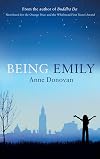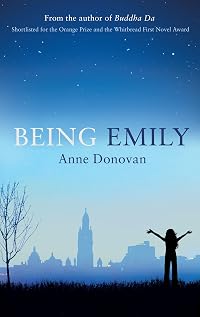
Being Emily
by Anne Donovan
On This Page
Description
'Being Emily' is a novel about one girl trying to find her place in the world, and the turmoil that only one's own family can create.Tags
Recommendations












Member Reviews
Fiona is the middle, unnoticed child in a chaotic Glaswegian working-class family, negotiating unfamiliar lifestyles and choices and a burgeoning interest in art. When tragedy strikes, who will hold the family together?
I absolutely loved this book and couldn't put it down, staying up to read it fast and furiously late last night. From the moment we meet the bright, intelligent heroine to the scene where we say goodbye, the book is fast-paced, truthful and engaging.
Donovan's books are always thoughtful as well as engaging, and look at different sectors of society through the eyes of working class Glaswegians. The characters are beautifully drawn, and not just the major ones - I loved Declan, seemingly so boring but actually wonderful, show more and the delicious, accepting, Scrabble-addicted Mrs Kaur. The contrasts between those who go away and those who stay are done well, and the book is given depth by its meditations on art and truth, when to tell and when be silent, and flashes of lyrical description among the dialect and plot.
The dialect: personally, I had no trouble with it. True, there are a few unfamiliar words, but they can be made out from the context. If you read passages aloud, you can hear the sense more easily. I love the voice of this book. It would be a boring world of books if we only read narrations that matched our own.
I will re-read this at leisure; it deserves at least one more read. Highly recommended. show less
I absolutely loved this book and couldn't put it down, staying up to read it fast and furiously late last night. From the moment we meet the bright, intelligent heroine to the scene where we say goodbye, the book is fast-paced, truthful and engaging.
Donovan's books are always thoughtful as well as engaging, and look at different sectors of society through the eyes of working class Glaswegians. The characters are beautifully drawn, and not just the major ones - I loved Declan, seemingly so boring but actually wonderful, show more and the delicious, accepting, Scrabble-addicted Mrs Kaur. The contrasts between those who go away and those who stay are done well, and the book is given depth by its meditations on art and truth, when to tell and when be silent, and flashes of lyrical description among the dialect and plot.
The dialect: personally, I had no trouble with it. True, there are a few unfamiliar words, but they can be made out from the context. If you read passages aloud, you can hear the sense more easily. I love the voice of this book. It would be a boring world of books if we only read narrations that matched our own.
I will re-read this at leisure; it deserves at least one more read. Highly recommended. show less
 This review was written for LibraryThing Early Reviewers.
This is a warm, human story which I found surprisingly compelling.
I liked the structure of the novel, which introduces the reader to Fiona's family and then jumps four years for the main action, concluding with another four-year jump. It's an effective way of showing us the family dynamic before the tragedy which changes everything for Fiona and her siblings.
Anne Donovan has chosen an unusual narrator in Fiona, who is a quiet, somewhat old-fashioned girl who has little confidence in herself. It's hard to express these characteristics in a first-person narration and not have the character come across as weak or pathetic. However, Donovan pulls it off; Fiona may not be tough, but she's very self-aware, and frequently undercuts the show more reader's judgement of her with a dry wit - for example, when she realises she's being snobbish about her teen-mother sister and her boyfriend. There's a repeated joke throughout the novel, the punchline of which is "[Can something] not be done about all these assumptions?" This is the moral message of the book, and the reader's assumptions - both about the characters and about what will happen to them - are indeed gently challenged at various steps throughout.
I had only a few issues with the book: firstly, the family's misfortunes seemed a little overdone. I can see that Donovan's intention is that the central tragedy affects every member of the family and every aspect of its life, but after a while I began to become a little blasé about yet another thing going wrong.
Secondly, the ending was a bit neat. All the ends are tied up very symmetrically (although one "assumption" I'd had - what would eventually happen to Patric(k) - turned out to be false. Evidently I should have paid more attention!) That said, I was enormously cheered by the ending, so I can't really say I'd have changed it!
Lastly, for a book which is titled "Being Emily" - a reference to Fiona's girlhood interest in Emily Brontë - the parallels with Emily Brontë's life seemed a little contrived. On the other hand, when Fiona uses these parallels in an art project, exactly this point is made by a critic of the project; so it may be that I was missing the point, and it's Fiona's identification with Emily which is important to the story, not whether her life or character is really like Emily's.
A note on the dialect! As every other reviewer has mentioned, this book is written in a Glaswegian vernacular. After the first twenty pages, I barely noticed it. It's a much lighter touch than in the books of Irvine Welsh, for example - it's about level with Iain Banks, except with more phonetic spelling. On the other hand, I'm Scottish so I didn't have any problems with the vocabulary; if you're not familiar with Scottish fiction at all, you may have more difficulty. show less
I liked the structure of the novel, which introduces the reader to Fiona's family and then jumps four years for the main action, concluding with another four-year jump. It's an effective way of showing us the family dynamic before the tragedy which changes everything for Fiona and her siblings.
Anne Donovan has chosen an unusual narrator in Fiona, who is a quiet, somewhat old-fashioned girl who has little confidence in herself. It's hard to express these characteristics in a first-person narration and not have the character come across as weak or pathetic. However, Donovan pulls it off; Fiona may not be tough, but she's very self-aware, and frequently undercuts the show more reader's judgement of her with a dry wit - for example, when she realises she's being snobbish about her teen-mother sister and her boyfriend. There's a repeated joke throughout the novel, the punchline of which is "[Can something] not be done about all these assumptions?" This is the moral message of the book, and the reader's assumptions - both about the characters and about what will happen to them - are indeed gently challenged at various steps throughout.
I had only a few issues with the book: firstly, the family's misfortunes seemed a little overdone. I can see that Donovan's intention is that the central tragedy affects every member of the family and every aspect of its life, but after a while I began to become a little blasé about yet another thing going wrong.
Secondly, the ending was a bit neat. All the ends are tied up very symmetrically (although one "assumption" I'd had - what would eventually happen to Patric(k) - turned out to be false. Evidently I should have paid more attention!) That said, I was enormously cheered by the ending, so I can't really say I'd have changed it!
Lastly, for a book which is titled "Being Emily" - a reference to Fiona's girlhood interest in Emily Brontë - the parallels with Emily Brontë's life seemed a little contrived. On the other hand, when Fiona uses these parallels in an art project, exactly this point is made by a critic of the project; so it may be that I was missing the point, and it's Fiona's identification with Emily which is important to the story, not whether her life or character is really like Emily's.
A note on the dialect! As every other reviewer has mentioned, this book is written in a Glaswegian vernacular. After the first twenty pages, I barely noticed it. It's a much lighter touch than in the books of Irvine Welsh, for example - it's about level with Iain Banks, except with more phonetic spelling. On the other hand, I'm Scottish so I didn't have any problems with the vocabulary; if you're not familiar with Scottish fiction at all, you may have more difficulty. show less
This review was written for LibraryThing Early Reviewers.Fiona O'Connell is a Glaswegian teenager, living in a tenement flat with her Catholic family, reading Emily Bronte while she washes the dishes and dreaming (initially) of becoming a poet. Bracketed with a prologue and epilogue set four years apart from it, the central narrative follows Fiona through her late teenage years as she copes with a series of tragic family events.
I say "copes" - but what I found most strange about this novel was Fiona's emotional distance from the tragedies she lives through. While revealed to the reader in hints and clues, climactic events and pivotal moments are often not fully acknowledged by Fiona herself for many pages. If she acknowledges emotion, she counters it by asserting her control over it: "A great show more pain welled up inside me, though nae tears broke ma frost." Even the pain of others appears to Fiona somehow controlled, contained, moulded: her twin sisters' eventual collapse into weeping at a family Christmas seems to her "like some classical sculpture of grief." Many of the events of the novel demonstrate Fiona's attempts to impose order and structure on her life. Her religion is significant: after the pivotal event in the novel, everything gets "intae a guddle" as the family's church attendance lapses, and Fiona's anxiety about the mechanics of confession is a recurring theme even when her behaviour would suggest she had left her religious beliefs far behind.
The title of Anne Donovan's novel sets up certain expectations of the way the narrative will play out - but as Stevie Smith suggested in her review for the Guardian, it might have been more accurate to entitle it 'Not Being Emily' (oh, how I wish I'd put it that neatly first!). Although Emily Bronte serves as both the inspirational spark for Fiona's interest in arts and culture, and a key subject in her later work as an artist, 'Being Emily' moves far beyond the templates of the life of Emily Bronte and of her most celebrated work. Fiona, although she identifies with Emily - and shares significant values with her - isn't trying to emulate her. When she visits the National Portrait Gallery and looks at the portrait of Emily painted by her brother Branwell, she is able to recognise the romantic artifice, the lack of true likeness to the writer she feels she knows.
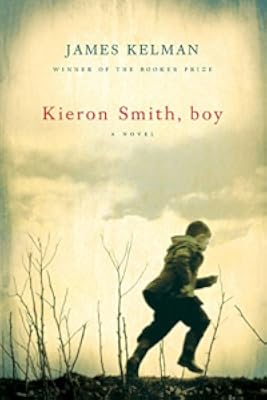
The shade of 'Wuthering Heights' hovers over the book, invoked in the exploration of family tragedy and the narrator's language. A significant decision Fiona makes about her relationship to her brother Patric(k) is explicitly compared to a plotline in 'Wuthering Heights'. More importantly, Anne Donovan has Fiona 'speak' in a Glaswegian dialect (albeit a not especially thick one), recalling the dialect passges in 'Wuthering Heights'. It's a shame that the near-simultaneous publication of James Kelman's 'Kieron Smith, Boy' has stolen Donovan's thunder and seen this novel less widely reviewed (UK critics being generally too exercised by the attempt to comprehend the dialect of a working-class Protestant Glaswegian teenage boy to be much concerned with a working-class Catholic Glaswegian teenage girl). The lanugage is readable, musical, and important in defining who Fiona is; Donovan engineers a couple of scenes with former schoolfriends of Fiona who rarely use dialect words, once again throwing into relief Fiona's own home background, and emphasising the choices she is making for her own life.
(Incidentally, there's a great article by John Mullan on dialect in the Guardian Book Club on Irvine Welsh's Trainspotting: http://books.guardian.co.uk/bookclub/story/0,,2283080,00.html)
It's a pity that Donovan felt it necessary to tie up the ends of the tale quite so neatly. Some of the angry energy of Fiona's final show, and her family and friends' reactions to it, is dissipated in the (mostly) happy ending. But Fiona's strong sense of place and family is central to her identification with Emily Bronte. She chooses to stay at home for her university studies, and seems mildly surprised that anyone would think it made sense to go elsewhere. Ultimately her love for her home is what finally 'breaks her frost': "The love that had been put intae it had made it hame, Mammy'd made it hame, and since she'd been gone it wasnae hame any mair. And it never would be again." As her career as an artist begins to bear fruit, she starts to acknowledge in her work how important her upbringing is rather than rejecting it; the climactic installation in the novel sees her take ownership of the climactic moment of her life and turn it into something creative.
This is not blow-you-away classic, but it's definitely a cut above the average. Beautifully written, characterised and structured, this is a thoughtfully crafted coming-of-age story about the search for female identity and the power of art. show less
I say "copes" - but what I found most strange about this novel was Fiona's emotional distance from the tragedies she lives through. While revealed to the reader in hints and clues, climactic events and pivotal moments are often not fully acknowledged by Fiona herself for many pages. If she acknowledges emotion, she counters it by asserting her control over it: "A great show more pain welled up inside me, though nae tears broke ma frost." Even the pain of others appears to Fiona somehow controlled, contained, moulded: her twin sisters' eventual collapse into weeping at a family Christmas seems to her "like some classical sculpture of grief." Many of the events of the novel demonstrate Fiona's attempts to impose order and structure on her life. Her religion is significant: after the pivotal event in the novel, everything gets "intae a guddle" as the family's church attendance lapses, and Fiona's anxiety about the mechanics of confession is a recurring theme even when her behaviour would suggest she had left her religious beliefs far behind.
The title of Anne Donovan's novel sets up certain expectations of the way the narrative will play out - but as Stevie Smith suggested in her review for the Guardian, it might have been more accurate to entitle it 'Not Being Emily' (oh, how I wish I'd put it that neatly first!). Although Emily Bronte serves as both the inspirational spark for Fiona's interest in arts and culture, and a key subject in her later work as an artist, 'Being Emily' moves far beyond the templates of the life of Emily Bronte and of her most celebrated work. Fiona, although she identifies with Emily - and shares significant values with her - isn't trying to emulate her. When she visits the National Portrait Gallery and looks at the portrait of Emily painted by her brother Branwell, she is able to recognise the romantic artifice, the lack of true likeness to the writer she feels she knows.
The shade of 'Wuthering Heights' hovers over the book, invoked in the exploration of family tragedy and the narrator's language. A significant decision Fiona makes about her relationship to her brother Patric(k) is explicitly compared to a plotline in 'Wuthering Heights'. More importantly, Anne Donovan has Fiona 'speak' in a Glaswegian dialect (albeit a not especially thick one), recalling the dialect passges in 'Wuthering Heights'. It's a shame that the near-simultaneous publication of James Kelman's 'Kieron Smith, Boy' has stolen Donovan's thunder and seen this novel less widely reviewed (UK critics being generally too exercised by the attempt to comprehend the dialect of a working-class Protestant Glaswegian teenage boy to be much concerned with a working-class Catholic Glaswegian teenage girl). The lanugage is readable, musical, and important in defining who Fiona is; Donovan engineers a couple of scenes with former schoolfriends of Fiona who rarely use dialect words, once again throwing into relief Fiona's own home background, and emphasising the choices she is making for her own life.
(Incidentally, there's a great article by John Mullan on dialect in the Guardian Book Club on Irvine Welsh's Trainspotting: http://books.guardian.co.uk/bookclub/story/0,,2283080,00.html)
It's a pity that Donovan felt it necessary to tie up the ends of the tale quite so neatly. Some of the angry energy of Fiona's final show, and her family and friends' reactions to it, is dissipated in the (mostly) happy ending. But Fiona's strong sense of place and family is central to her identification with Emily Bronte. She chooses to stay at home for her university studies, and seems mildly surprised that anyone would think it made sense to go elsewhere. Ultimately her love for her home is what finally 'breaks her frost': "The love that had been put intae it had made it hame, Mammy'd made it hame, and since she'd been gone it wasnae hame any mair. And it never would be again." As her career as an artist begins to bear fruit, she starts to acknowledge in her work how important her upbringing is rather than rejecting it; the climactic installation in the novel sees her take ownership of the climactic moment of her life and turn it into something creative.
This is not blow-you-away classic, but it's definitely a cut above the average. Beautifully written, characterised and structured, this is a thoughtfully crafted coming-of-age story about the search for female identity and the power of art. show less
This review was written for LibraryThing Early Reviewers.There are only so many basic plots in literature and this is one of the simplest , boy meets girl , falls in love , stuff happens and they marry and start a family, its the bit in the middle that makes a good book and this is very, very good stuff. Fiona is a talented girl in a happy enough Glasgow family who meets a decent, loving Sikh boy (Jas) but then her mother dies setting the family dynamics into chaos and all sorts of complicated mishaps and disasters happen including and affair with Jas's brother, a miscarriage, winning a major art prize for students, a house fire and more. It all manages to be totally believable, funny and deeply moving (even thinking of the miscarriage and its aftermath makes my eyes water just thinking about show more it).
As in 'Buddha Da' Ms Donovan writes in a watered down version of Wegie (Glasgow Scots) with only limited use of Scots vocabulary managing to describe a wally close without calling it that and naery a lum in sight, I think there are only two (maybe three) words that are not in the standard lexicon (but then I have absorbed so much Scots I might have just not noticed some).
One of the best books I have read in a while.
Definitions
Close - communal entrance way/ stairwell in a tenement
Wally close - the close is tiled throughout , the grander the tenement (and some are very grand) the more ornate is the tiling, some of these are works of art.
Lum - chimney show less
As in 'Buddha Da' Ms Donovan writes in a watered down version of Wegie (Glasgow Scots) with only limited use of Scots vocabulary managing to describe a wally close without calling it that and naery a lum in sight, I think there are only two (maybe three) words that are not in the standard lexicon (but then I have absorbed so much Scots I might have just not noticed some).
One of the best books I have read in a while.
Definitions
Close - communal entrance way/ stairwell in a tenement
Wally close - the close is tiled throughout , the grander the tenement (and some are very grand) the more ornate is the tiling, some of these are works of art.
Lum - chimney show less
This review was written for LibraryThing Early Reviewers.I did not initially take to this book. I found it insipid and unengaging, and as a result in the early part found the use of Glasweigan vernacular distracting and unhelpful. But just as I was about to dismiss it completely, about half way through it suddenly caught me completely. At that point, I stopped noticing the vernacular and started to enjoy this book. Specifically from the moment when things go wrong between Fiona and her childhood sweetheart, Donovan's tale picked up pace and suddenly became a page turner. In the end, Donovan delivers a heart-warming story and an interesting reflections of a young girl's trials, her expression of them through art, herself and her sense of place - and her relationships with her family, show more sweetheart and friends. I have problems with the ending: that abrupt four-year jump glosses over a decision Fiona made at that point that did not seem credible to me in context. But nevertheless, Donovan delivers engaging characters and a moving narrative. It's just a pity one has to wait so long for it to take off. show less
This review was written for LibraryThing Early Reviewers.A book about loss and the things we create to fill the spaces left behind. I haven't read Donovan's first book 'Buddha Da' so I really had no idea what to expect when I started this one and I have to admit my first impressions weren't good. Halfway through the first paragraph I found myself reaching for a pencil to correct the typos and spelling mistakes, then I realised they weren't mistakes at all and we were speaking Glaswegian. I guess the argument for and against the use of dialect will still be going on long after I am food for the worms and I'm not going to get into the argument here of which is right and which is wrong (by the way, I'm not talking about dialogue, but about the whole novel being told using the Scottish show more vernacular), I can only give my own opinion, which is to say that I found it distracting. I didn't need a dictionary and the author managed to make her meanings clear by the context but it broke the rhythm of my reading to have to stop every now and again to wonder what exactly was meant by 'peelywally', 'slitter', 'dwam', 'scunner', 'scooby', or 'guddle'.
Anyway, leaving that behind, after a while I found myself warming to the book. Donovan's characters are believable and sympathetic. Fiona, the chief protagonist, is the girl who wishes her life were more like Emily Bronte's. As she grows up she finds that even the most apparently-tedious lives have their own share of tragedy and 'Being Emily' takes us on Fiona's journey as she has to find her own ways of coping with bereavement, miscarriage and failed relationships. Fiona is an artist and one of the topics the book addresses is whether artists have a responsibility to spare the feelings of others. On a broader canvas - what responsibility do any of us have for another person's happiness, and is it fair to make another person responsible for our own happiness in return?
Despite my initial reservations, I cared about Fiona and Jas - her childhood sweetheart, who she betrays with his brother. Since I finished reading, I find that these people have taken up residence in my brain and I think it will be a while before I forget them. Would I read another book by this author? I think I would have to take a sneaky look inside the front page first to determine what language was being used. Maybe I've learned enough Glaswegian from this book to see me through any others, or maybe a glossary would be a help. For anyone who doesn't have a problem with that I'd recommend this as a hearty good read. If the author's final conclusion - that all you need is truth - sounds a little simplistic, the journey that takes us there is an enjoyable one and well worth a couple of evenings of anyone's time. show less
Anyway, leaving that behind, after a while I found myself warming to the book. Donovan's characters are believable and sympathetic. Fiona, the chief protagonist, is the girl who wishes her life were more like Emily Bronte's. As she grows up she finds that even the most apparently-tedious lives have their own share of tragedy and 'Being Emily' takes us on Fiona's journey as she has to find her own ways of coping with bereavement, miscarriage and failed relationships. Fiona is an artist and one of the topics the book addresses is whether artists have a responsibility to spare the feelings of others. On a broader canvas - what responsibility do any of us have for another person's happiness, and is it fair to make another person responsible for our own happiness in return?
Despite my initial reservations, I cared about Fiona and Jas - her childhood sweetheart, who she betrays with his brother. Since I finished reading, I find that these people have taken up residence in my brain and I think it will be a while before I forget them. Would I read another book by this author? I think I would have to take a sneaky look inside the front page first to determine what language was being used. Maybe I've learned enough Glaswegian from this book to see me through any others, or maybe a glossary would be a help. For anyone who doesn't have a problem with that I'd recommend this as a hearty good read. If the author's final conclusion - that all you need is truth - sounds a little simplistic, the journey that takes us there is an enjoyable one and well worth a couple of evenings of anyone's time. show less
This review was written for LibraryThing Early Reviewers.Ehhh. This one is difficult. On one hand, Donovan is great at drawing realistic characters and especially at putting realistic Glaswegian dialogue into their mouths (she does equally well here as in the more well-known Buddha Da). However, once she puts the characters in motion things tend to get a bit more complicated and I find her writing harder to like. I wasn't crazy about the choice that she made to include the four years before part as it felt like a waste of space - if she'd left that out and beefed up the main section of the book I feel like it would have been improved. The main section itself is good, but moves too quickly, which makes it difficult to fully believe the characters' motivations. For example, I just didn't show more believe Fiona's fascination/relationship with Amrik. It arrived far too quickly - I understand that she was trying to convey the sudden nature of the lustful relationships that can come upon you in your teens but it didn't really work for me. I didn't feel that jumping off the page - it came across as unreal. I think overall I did enjoy this, and I love love love seeing my home city depicted "properly" in literature, but I feel like a few small changes could have made this a really excellent read.
I did love Jas, though. show less
I did love Jas, though. show less
Members
- Recently Added By
Lists

real people in fiction circumstances
74 works; 10 members
Author Information
7 Works 684 Members
Series
Belongs to Publisher Series
Sammlung Luchterhand (62148)
Common Knowledge
- Original title
- Being Emily
- Original publication date
- 2008
Classifications
Statistics
- Members
- 123
- Popularity
- 265,808
- Reviews
- 18
- Rating
- (3.90)
- Languages
- English, German
- Media
- Paper, Audiobook, Ebook
- ISBNs
- 9
- ASINs
- 2