On This Page
Description
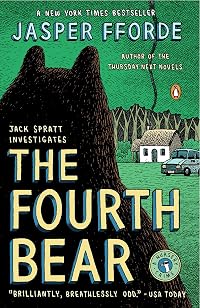
Return to the world of the Nursery Crime Division in this novel from Jasper Fforde, the New York Times bestselling author of the Thursday Next series and The Constant RabbitThe inimitable Jasper Fforde gives readers another delightful mash-up of detective fiction and nursery rhyme, returning to those mean streets where no character is innocent. The Gingerbreadman—sadist, psychopath, cookie—is on the loose in Reading, but that’s not who Detective Jack Spratt and Sergeant Mary show more Mary are after. Instead, they’ve been demoted to searching for missing journalist “Goldy” Hatchett. The last witnesses to see her alive were the reclusive Three Bears, and right away Spratt senses something furry—uh, funny—about their story, starting with the porridge. The Fourth Bear is a delirious new romp from our most irrepressible fabulist. show less
Tags
Recommendations

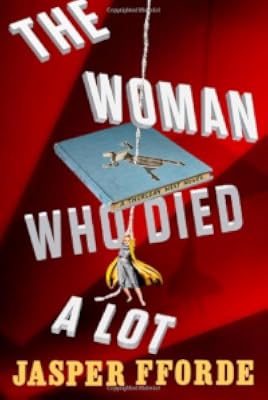
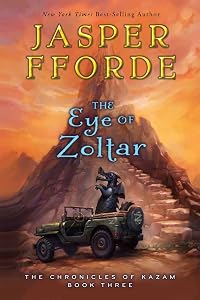
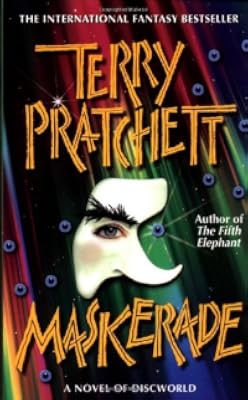
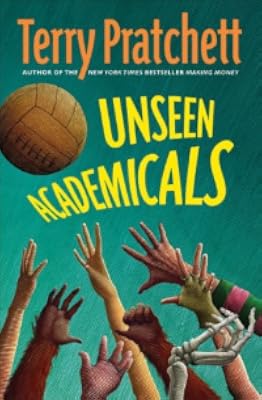
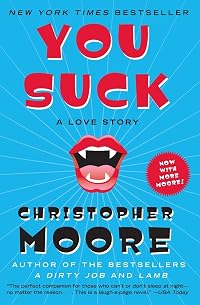
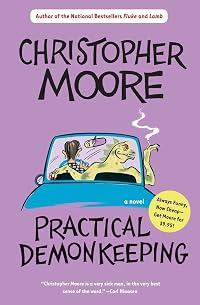
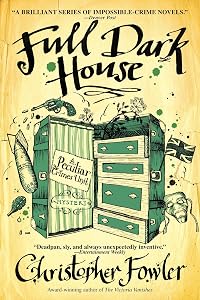
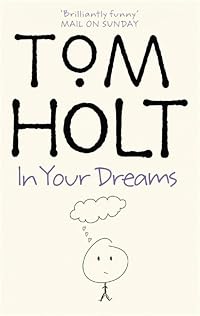

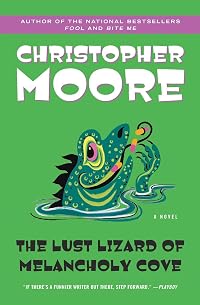
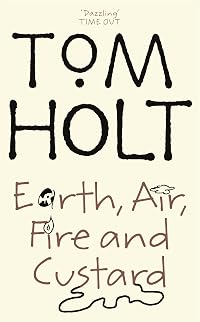
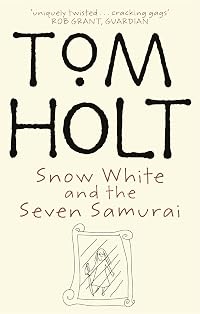
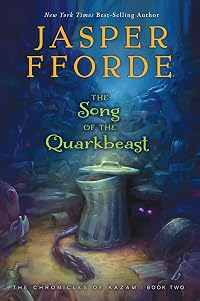

Member Recommendations
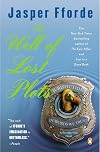
TomWaitsTables See how this book was constructed, with the help of Thursday Next!
90
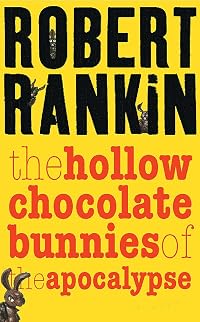
tortoise Rankin's book covers a lot of the same comedic ground as The Fourth Bear, and I found it considerably better-constructed.
04
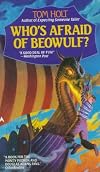
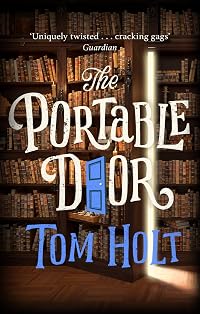
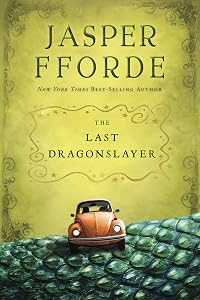
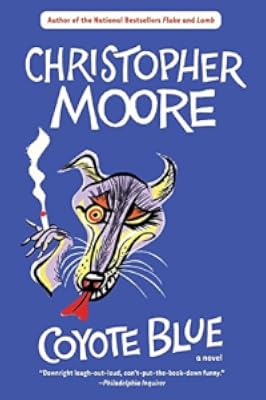
Dr.Science The English author Tom Holt is relatively unknown in America, but very popular in England. If you enjoy Jasper Fforde or Christopher Moore you will most certainly enjoy Tom Holt's wry sense of English humor and the absurd. He has written a number of excellent books including Expecting Someone Taller, and Flying Dutch, but they may be difficult to find at your library or bookstore.
Member Reviews
Oh, goodness, I'm not even sure where to start. The Gingerbread Man is a psychotic killer who escapes from jail. Goldilocks is found dead in a partly-finished WWI theme park. Sinister events plague the cutthroat world of competitive cucumber-growing. Bears deal in illicit porridge paraphernalia. Punch and Judy are marriage counselors. The whole thing is absolutely ridiculous, but Detective Jack Spratt is on the case. I got quite a few chuckles out of this one, but most of the really good laughs were from the excerpts from The Barkshire Bumper Book of Records at the beginning of each chapter. If you're familiar with nursery rhymes and enjoy absurd humor, you'll probably enjoy this one. I don't know how well it stands on its own, but as show more the sequel to The Big Over Easy it's quite entertaining. Too bad Fforde hasn't written any more in this series. show less
The Fourth Bear, the second Nursery Crime mystery, opens in Obscurity and begins with a giant cucumber and a tremendous explosion. The action picks up from there. Once again, DCI Jack Spratt and DS Mary Mary are on the case. And, once again, the case is much larger than it initially appears. The Gingerbread Man has escaped from the nuthouse, Goldilocks is brutally murdered, and somehow all these things are deliciously linked to one another.
As in the previous book, the joy in this one comes again and again from the little throwaway references...what can I say, they just make me happy. Here's one: Spratt buys a used car from Dorian Gray, a questionable car dealer who cuts him a too-good-to-be-true deal. Can you guess what happens to the show more portrait that resides in the car's boot? Here's another: Punch and Judy move in next door to the Spratts and save their marriage.
Read Jasper Fforde for a light, sly, jokey, and most of all fun experience. show less
As in the previous book, the joy in this one comes again and again from the little throwaway references...what can I say, they just make me happy. Here's one: Spratt buys a used car from Dorian Gray, a questionable car dealer who cuts him a too-good-to-be-true deal. Can you guess what happens to the show more portrait that resides in the car's boot? Here's another: Punch and Judy move in next door to the Spratts and save their marriage.
Read Jasper Fforde for a light, sly, jokey, and most of all fun experience. show less
Summary: Detective Jack Spratt and the rest of the Nursery Crimes division have got big problems: the psychotic Gingerbread man has escaped from prison, and is loose on a murderous spree in Reading. Or rather, they would have big problems, if they hadn't been bumped off the case by the higher-ups, and reassigned to searching for the missing journalist Goldilocks, last known to have been investigating a competitive cucumber grower who died in a freak explosion. The three bears were the last ones to see her alive, and something about their story just doesn't add up in Jack's reckoning... but how can he explain his theories to his superiors without losing his job and being sent to the loony bin to boot?
Review: This book was pretty much show more solid Fforde - wall-to-wall literary allusions and zany wackiness that somehow all fits together right at the end. Unfortunately, I picked this one up when I wasn't really in the mood for enforced wackiness, so although I can't really find any fault with the novel itself, I wound up finding it more tiresome than fun. Some of the jokes worked for me, but some felt like they were trying too hard, and when you even have your characters point out that the jokes are trying too hard, that little puff of metafictional cleverness just felt like really trying too hard.
I didn't solve the mystery on my own, but all of the pieces somehow (miraculously) did fit together and make their own kind of sense by the end. But my favorite parts of the books were neither the central story elements nor the throwaway gags, but rather the secondary plots and long-running threads. I was particularly charmed by Mary Mary's and Ashley (the alien)'s relationship, and I thought Jack's new magical self-healing car, sold to him by one strange Mr. Dorian Gray, was clever without being blaringly zany, and was used very effectively.
So: can't really fault it for anything, but also didn't really love it... although in another time and another mood, I might have had a very different reaction. 3.5 out of 5 stars.
Recommendation: If you like metafiction and are in the mood for a bunch of terrible puns and general silliness wrapped around a detective story, The Fourth Bear should fit the bill quite nicely. It's technically the second book in the Nursery Crimes series, but could easily stand alone. show less
Review: This book was pretty much show more solid Fforde - wall-to-wall literary allusions and zany wackiness that somehow all fits together right at the end. Unfortunately, I picked this one up when I wasn't really in the mood for enforced wackiness, so although I can't really find any fault with the novel itself, I wound up finding it more tiresome than fun. Some of the jokes worked for me, but some felt like they were trying too hard, and when you even have your characters point out that the jokes are trying too hard, that little puff of metafictional cleverness just felt like really trying too hard.
I didn't solve the mystery on my own, but all of the pieces somehow (miraculously) did fit together and make their own kind of sense by the end. But my favorite parts of the books were neither the central story elements nor the throwaway gags, but rather the secondary plots and long-running threads. I was particularly charmed by Mary Mary's and Ashley (the alien)'s relationship, and I thought Jack's new magical self-healing car, sold to him by one strange Mr. Dorian Gray, was clever without being blaringly zany, and was used very effectively.
So: can't really fault it for anything, but also didn't really love it... although in another time and another mood, I might have had a very different reaction. 3.5 out of 5 stars.
Recommendation: If you like metafiction and are in the mood for a bunch of terrible puns and general silliness wrapped around a detective story, The Fourth Bear should fit the bill quite nicely. It's technically the second book in the Nursery Crimes series, but could easily stand alone. show less
What can ever be said about a Jasper Fforde book that would make sense to anyone that hasn't read one? This is the second in what is, so far, a two book series about what crime would look like if Nursery Characters lived in the real world. Jack Spratt, the head of the Nursery Crimes Division, investigates several seemingly unrelated crimes: Porridge smuggling, a missing Goldilocks, the escape of the Gingerbread man, and his new car that never ages, with a painting in the boot that does. All while fighting suspension based on a pending psych evaluation after being swallowed by the Big Bad Wolf.
It's not all Mother Goose either, side characters include Spratt's daughter Pandora and her soon to be husband, Prometheus and at least one show more character from Shakespeare. Oh, and an alien. Because, why not?
In spite of sounding (and mostly being) silly, it's not an easy/breezy book to read. There are layers in the writing and the jokes and the references that are easy to miss. There's a subtle - very subtle - disregard for the fourth wall, where the characters not only recognise they're in a book (a la Thursday Next), but will make subtle reference to the author and the reader. So not only is it a book where the overload of satire is best enjoyed in small doses, but one that if carefully read will give more humorous dividends than a quick read would.
Generally it's just a hell of a lot of fun to read. The puns get punnier towards the end and there was at least one *snort*chuckle in the last 30%. It might have been it was late and I was tired, but
cuculear power
made me laugh.
I read this for the Modern Noir square in Halloween Bingo. It's a gimme for the Grimm Tale square, but I've already read that terrible retelling of Snow White and it's not going to have been for nothing, and Spratt's attitude and methods are definitely noir-ish. show less
It's not all Mother Goose either, side characters include Spratt's daughter Pandora and her soon to be husband, Prometheus and at least one show more character from Shakespeare. Oh, and an alien. Because, why not?
In spite of sounding (and mostly being) silly, it's not an easy/breezy book to read. There are layers in the writing and the jokes and the references that are easy to miss. There's a subtle - very subtle - disregard for the fourth wall, where the characters not only recognise they're in a book (a la Thursday Next), but will make subtle reference to the author and the reader. So not only is it a book where the overload of satire is best enjoyed in small doses, but one that if carefully read will give more humorous dividends than a quick read would.
Generally it's just a hell of a lot of fun to read. The puns get punnier towards the end and there was at least one *snort*chuckle in the last 30%. It might have been it was late and I was tired, but
made me laugh.
I read this for the Modern Noir square in Halloween Bingo. It's a gimme for the Grimm Tale square, but I've already read that terrible retelling of Snow White and it's not going to have been for nothing, and Spratt's attitude and methods are definitely noir-ish. show less
Once again, The Fourth Bear makes the personal library cut. Oh, don't get me wrong; it's as meandering as bumblebee at the height of spring, but somehow Fforde manages to pull it together for a smashing finale.
The beginning is slow and feels more like a set of loosely connected stories instead of the noir mystery it is modeled after. After starting the reader off with Henny Hatchett, a reporter who is also known as 'Goldilocks,' investigating some prizewinning cucumbers, and a successful capture of the Scissor-man by Detective Inspector Jack Spratt's team, we jump to a bust on a porridge-dealing anthropomorphized bear. After a stop car-shopping with Jack, it's on to St. Cerebellum's where a team is discussing the heinous crimes of the show more Gingerbread Man. You can see where this tends to get a little choppy. As if that wasn't enough, aliens have landed, and they are surprisingly boring, notwithstanding their tendency to lapse into binary. Eventually--and by 'eventually,' I mean probably halfway into the book--the joint plots of the missing Goldilocks and the escaped Gingerbread Man start to take shape.
The characters are fun, and for those who argue whether or not they are tropes, well, that's the whole premise of the Nursery Crime Division, isn't it? I mean, besides being crimes committed by literary--literally--people, the question is, can they step outside how they are written? But these do, most certainly, with all of them behaving in interesting and complicated ways, even Punch and Judy.
All that said, the fact that it's a little more about cleverness and a little less about plot means I was able to take my time reading until probably halfway or more. As my friend Daniel noted, there's a lot that is excess in this book, although some of it is enjoyable excess, such as when Mary and the alien Ashley go on a date.
There's a lot that made me smile, including whether or not Gingerbread was a cake or a cookie (although wouldn't a biscuit also be possible?) and an absent Professor McGuffin. Mostly it was the set-ups that has me smiling, such as the one-liners at a party at a hotel called Deja Vu, or the complete daffy scene when Mary meets an alien couple. Fforde is also quite free about breaking the fourth wall. A small example:
"Vinnie kicked the bike into life, revved the engine, clonked it into first and tore off up the road with a screech of tire.
'You know what this means? said Jack as Vinnie Craps vanished from view around a bend in the road.
'That the singular 'screech of tire' looks and sounds wrong even if it's quite correct?'"
I don't particularly mind those moments, and these don't happen as nearly as often as they do in a Thursday Next book, but it's something to keep in mind if excessive cleverness annoys.
I still don't think I understood the final solution, but honestly, not sure it matters. I love the two page character update after the book ends (a sort of 'what are they doing now'). There's a couple of faux posters at the end as well, include one for a supposed third book called 'The Tortoise and the Hare' that looks to be never forthcoming. Overall, fun if you have the patience and attention. show less
The beginning is slow and feels more like a set of loosely connected stories instead of the noir mystery it is modeled after. After starting the reader off with Henny Hatchett, a reporter who is also known as 'Goldilocks,' investigating some prizewinning cucumbers, and a successful capture of the Scissor-man by Detective Inspector Jack Spratt's team, we jump to a bust on a porridge-dealing anthropomorphized bear. After a stop car-shopping with Jack, it's on to St. Cerebellum's where a team is discussing the heinous crimes of the show more Gingerbread Man. You can see where this tends to get a little choppy. As if that wasn't enough, aliens have landed, and they are surprisingly boring, notwithstanding their tendency to lapse into binary. Eventually--and by 'eventually,' I mean probably halfway into the book--the joint plots of the missing Goldilocks and the escaped Gingerbread Man start to take shape.
The characters are fun, and for those who argue whether or not they are tropes, well, that's the whole premise of the Nursery Crime Division, isn't it? I mean, besides being crimes committed by literary--literally--people, the question is, can they step outside how they are written? But these do, most certainly, with all of them behaving in interesting and complicated ways, even Punch and Judy.
All that said, the fact that it's a little more about cleverness and a little less about plot means I was able to take my time reading until probably halfway or more. As my friend Daniel noted, there's a lot that is excess in this book, although some of it is enjoyable excess, such as when Mary and the alien Ashley go on a date.
There's a lot that made me smile, including whether or not Gingerbread was a cake or a cookie (although wouldn't a biscuit also be possible?) and an absent Professor McGuffin. Mostly it was the set-ups that has me smiling, such as the one-liners at a party at a hotel called Deja Vu, or the complete daffy scene when Mary meets an alien couple. Fforde is also quite free about breaking the fourth wall. A small example:
"Vinnie kicked the bike into life, revved the engine, clonked it into first and tore off up the road with a screech of tire.
'You know what this means? said Jack as Vinnie Craps vanished from view around a bend in the road.
'That the singular 'screech of tire' looks and sounds wrong even if it's quite correct?'"
I don't particularly mind those moments, and these don't happen as nearly as often as they do in a Thursday Next book, but it's something to keep in mind if excessive cleverness annoys.
I still don't think I understood the final solution, but honestly, not sure it matters. I love the two page character update after the book ends (a sort of 'what are they doing now'). There's a couple of faux posters at the end as well, include one for a supposed third book called 'The Tortoise and the Hare' that looks to be never forthcoming. Overall, fun if you have the patience and attention. show less
I read The Big Over Easy a number of years ago, and liked it well enough to pick up its sequel, this book, The Fourth Bear, immediately upon its release, but I didn't quite like the first well enough to read the second and it has thus sat on my shelves for years collecting dust. In the meantime, I've read a number of other Jasper Fforde novels (three in the Thursday Next series which I liked immensely and Shades of Grey which I like not quite as much) and have developed quite an appreciation for the man. So when this one was recommended to me—nicely fitting into my need for something light and airy after reading a trilogy Margaret Atwood novels—I figured it would serve my "palate cleansing" needs nicely. Quite right.
If you're show more looking for serious fiction, this isn't it. Nor is any of Fforde's books, so I can steer you away from that entire section of the bookstore if that's the case. He is, first and foremost, fun. This book is an excellent example. He doesn't take himself too seriously.
Here's an example of what I'm talking about (and only very minor spoilers to follow). After sprinkling a few odd references to "PC Philippa Piper" in the first 317 pages of text ("odd" because she has absolutely nothing to do with any of the narrative, plot or our main characters at all), mostly dealing with her being "the most attractive officer at Reading Central" with ample speculation about her single status and who she might choose to date next, Fforde delivers this exchange:
"Did you know that Pippa has a bun in the oven?"
"You're kidding!"
"No, she was talking to her mother all about it. And what's more," continued Ashley, "the father is Peck—you know, in uniform with the pockmarked face and the twin over in Palmer Park?"
"What's going on?" asked Mary.
"Pippa's pregnant by Peck."
"Pippa Piper picked Peck over Pickle or Pepper?" exclaimed Mary incredulously.
"Which of the Peck pair did Pippa Piper pick?"
"Peter 'pockmarked' Peck of Palmer Park. He was the Peck that Pippa Piper picked."
"No, no," returned Mary, "you've got it all wrong. Paul Peck is the Palmer Park Peck; Peter Peck is the pockmarked Peck from Pembroke Park. Pillocks. I'd placed a pound on Pippa Piper picking PC Percy Proctor from Pocklington."
But what I really love about this book is the post-modern, metafictional elements, evidenced here in the very next lines in the book following the above:
There was a pause.
"It seems a very laborious setup for a pretty lame joke, doesn't it?" mused Jack.
"Yes," agreed Mary, shaking her head sadly. "I really don’t know how he gets away with it."
Now, on TV or in the movies, that would be a fourth-wall breaking aside to the audience, a little wink and a nod, but in a novel, the "he" referred to is Fforde himself. He litters the novel with self-referential (metafictions) elements like that, from the characters openly discussing common plot devices to this line near the end where Jack (our protagonist) tries to jump to conclusions and reveal a big plot twist, not once but twice, both incorrectly, in quick succession, when another character steps in and says:
"Jack, calm down. I think you're suffering a temporary excess of resolutions."
Post-modernism was never so much fun. And while I doubt The Fourth Bear is going to make it onto any graduate level literature syllabi, it's a joy to read for anyone interested in various metafictional tricks an author might employ to allow a reader to slip in and out of the frame of the novel.
(And before I forget, it's actually a very clever mystery novel. That's been discussed at length in other reviews, so I'll skip it here, but Fforde really put a lot of thought into it. The fact that the entire plot grows from the "porridge temperature differential" in the original Goldilocks tale is genius.) show less
If you're show more looking for serious fiction, this isn't it. Nor is any of Fforde's books, so I can steer you away from that entire section of the bookstore if that's the case. He is, first and foremost, fun. This book is an excellent example. He doesn't take himself too seriously.
Here's an example of what I'm talking about (and only very minor spoilers to follow). After sprinkling a few odd references to "PC Philippa Piper" in the first 317 pages of text ("odd" because she has absolutely nothing to do with any of the narrative, plot or our main characters at all), mostly dealing with her being "the most attractive officer at Reading Central" with ample speculation about her single status and who she might choose to date next, Fforde delivers this exchange:
"Did you know that Pippa has a bun in the oven?"
"You're kidding!"
"No, she was talking to her mother all about it. And what's more," continued Ashley, "the father is Peck—you know, in uniform with the pockmarked face and the twin over in Palmer Park?"
"What's going on?" asked Mary.
"Pippa's pregnant by Peck."
"Pippa Piper picked Peck over Pickle or Pepper?" exclaimed Mary incredulously.
"Which of the Peck pair did Pippa Piper pick?"
"Peter 'pockmarked' Peck of Palmer Park. He was the Peck that Pippa Piper picked."
"No, no," returned Mary, "you've got it all wrong. Paul Peck is the Palmer Park Peck; Peter Peck is the pockmarked Peck from Pembroke Park. Pillocks. I'd placed a pound on Pippa Piper picking PC Percy Proctor from Pocklington."
But what I really love about this book is the post-modern, metafictional elements, evidenced here in the very next lines in the book following the above:
There was a pause.
"It seems a very laborious setup for a pretty lame joke, doesn't it?" mused Jack.
"Yes," agreed Mary, shaking her head sadly. "I really don’t know how he gets away with it."
Now, on TV or in the movies, that would be a fourth-wall breaking aside to the audience, a little wink and a nod, but in a novel, the "he" referred to is Fforde himself. He litters the novel with self-referential (metafictions) elements like that, from the characters openly discussing common plot devices to this line near the end where Jack (our protagonist) tries to jump to conclusions and reveal a big plot twist, not once but twice, both incorrectly, in quick succession, when another character steps in and says:
"Jack, calm down. I think you're suffering a temporary excess of resolutions."
Post-modernism was never so much fun. And while I doubt The Fourth Bear is going to make it onto any graduate level literature syllabi, it's a joy to read for anyone interested in various metafictional tricks an author might employ to allow a reader to slip in and out of the frame of the novel.
(And before I forget, it's actually a very clever mystery novel. That's been discussed at length in other reviews, so I'll skip it here, but Fforde really put a lot of thought into it. The fact that the entire plot grows from the "porridge temperature differential" in the original Goldilocks tale is genius.) show less
Let me be clear - I don't like fairy tales or nursery rhymes. That said, I remember a lot of them, which made this book more funny than it would have been. In an England where some people are real and others imagined (or imagined but think they're real) being in the nursery division of the police is no easy job. A fun book, but not sure I'll be reading the others.
Members
- Recently Added By
Published Reviews
ThingScore 90
Fforde is crazy; he’s all over the place. He’s aware of the conventions he’s mocking, he mocks them openly, and he still has a really decent romp of a mystery novel on his hands.
added by Katya0133
Though his characters' self-awareness may ultimately defeat the suspense of The Fourth Bear, the loss of the more standard forms of mystery magic is more than compensated for by Fforde's superb comedic skills.
added by Katya0133
Great fun for all fiction collections.
added by Katya0133
Lists

Favorite Fairy Tale Retellings
210 works; 62 members

Genre Benders: Comic Fantasy
97 works; 16 members

Myth (Reuse and Retelling)
188 works; 24 members

Amusing Book Titles
146 works; 39 members
Talk Discussions
Past Discussions
The Fourth Bear in Fforde Ffans (June 2011)
Author Information

39+ Works 74,743 Members
He worked for many years in the film industry as a camera technician. He was raised in England, he lives & works in Wales. (Publisher Provided) Author Jasper Fforde was born on January 11, 1961 in London, England. He spent numerous years as a focus puller in the film industry, where he worked on films such as Quills, Golden Eye, and Entrapment. show more His first novel, The Eyre Affair, was published in 2001. He is the author of the Thursday Next, Nursery Crime and Dragonslayer series and the novel Shades of Gray. In 2004, he won the Wodehouse Prize for comic fiction for The Well of Lost Plots. In 2013, his title The Last Dragonslayer made The New York Times best seller list. (Bowker Author Biography) show less
Some Editions
Series

Work Relationships
Was inspired by
Common Knowledge
- Canonical title
- The Fourth Bear
- Original publication date
- 2006
- People/Characters
- Jack Spratt (DCI); Mary Mary (DS); Gingerbread Man; Great Red-Legg'd Scissorman; Punch & Judy; Prometheus (show all 16); Dorian Gray; Henrietta 'Goldilocks' Hatchett (Goldilocks); Ashley; Josh Hatchett; David Copperfield; Ed Bruin (bear); Madeleine Spratt; Pandora Spratt; Goldilocks; The Three Bears
- Important places
- Reading, Berkshire, England, UK; The Deja Vu Hotel, Reading; Andersen's Wood; SommeWorld
- Epigraph
- Because the Forest will always be there...and anybody who is Friendly with Bears can find it. --A.A. Milne
- Dedication
- For my mother
- First words
- Last known regional post-code allocation: Obscurity, Berkshire, Pop.: 35.
The little village of Obscurity is remarkable only for its unremarkableness. - Quotations
- "When did he escape?"
"Ninety-seven minutes ago," replied Copperfield. "Killed two male nurses and his doctor with his bare hands. The other three orderlies who accompanied him are critical in the hospital."
"Critical?"... (show all)
"Yes. Don't like the food, beds uncomfortable, waiting lists too long—usual crap. Other than that they're fine." - Last words
- (Click to show. Warning: May contain spoilers.)They continue to eat porridge and take long walks in the forest.
- Original language
- English
Classifications
Statistics
- Members
- 4,311
- Popularity
- 3,486
- Reviews
- 120
- Rating
- (4.01)
- Languages
- English, German
- Media
- Paper, Audiobook, Ebook
- ISBNs
- 24
- UPCs
- 1
- ASINs
- 14