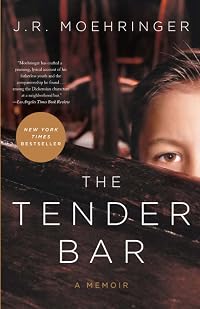
The Tender Bar
by J. R. Moehringer
On This Page
Description
The New York Times bestseller and one of the 100 Most Notable Books of 2005. In the tradition of This Boy's Life and The Liar's Club, a raucous, poignant, luminously written memoir about a boy striving to become a man, and his romance with a bar. J.R. Moehringer grew up captivated by a voice. It was the voice of his father, a New York City disc jockey who vanished before J.R. spoke his first word. Sitting on the stoop, pressing an ear to the radio, J.R. would strain to hear in that plummy show more baritone the secrets of masculinity and identity. Though J.R.'s mother was his world, his rock, he craved something more, something faintly and hauntingly audible only in The Voice. At eight years old, suddenly unable to find The Voice on the radio, J.R. turned in desperation to the bar on the corner, where he found a rousing chorus of new voices. The alphas along the bar-including J.R.'s Uncle Charlie, a Humphrey Bogart look-alike; Colt, a Yogi Bear sound-alike; and Joey D, a softhearted brawler-took J.R. to the beach, to ballgames, and ultimately into their circle. They taught J.R., tended him, and provided a kind of fathering-by-committee. Torn between the stirring example of his mother and the lurid romance of the bar, J.R. tried to forge a self somewhere in the center. But, when it was time for J.R. to leave home, the bar became an increasingly seductive sanctuary, a place to return and regroup during his picaresque journeys. Time and again the bar offered shelter from failure, rejection, heartbreak-and eventually from reality. In the grand tradition of landmark memoirs, The Tender Bar is suspenseful, wrenching, and achingly funny. A classic American story of self-invention and escape, of the fierce love between a single mother and an only son, it's also a moving portrait of one boy's struggle to become a man, and an unforgettable depiction of how men remain, at heart, lost boys. show lessTags
Recommendations
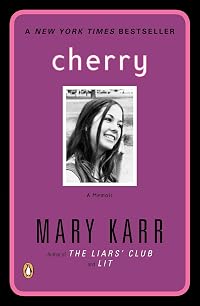
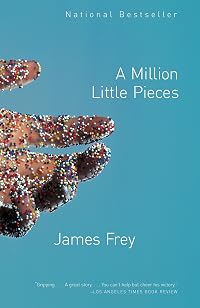
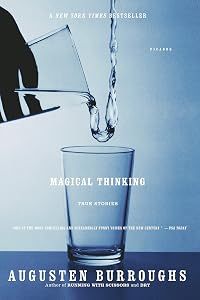
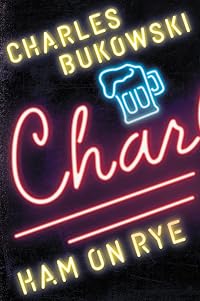
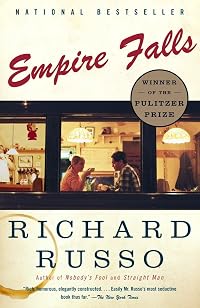
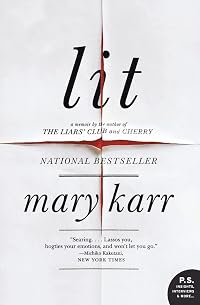
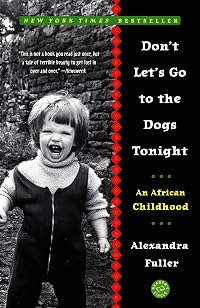

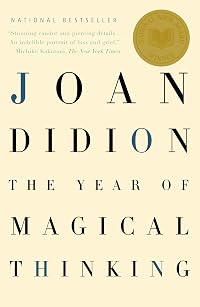
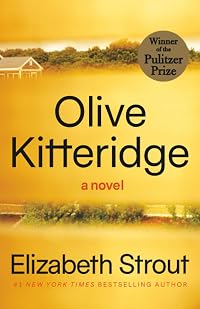
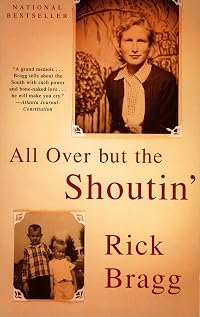
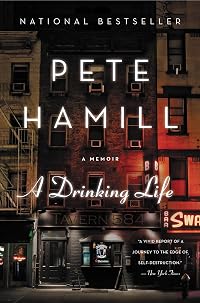
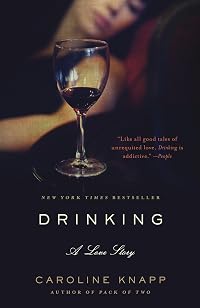
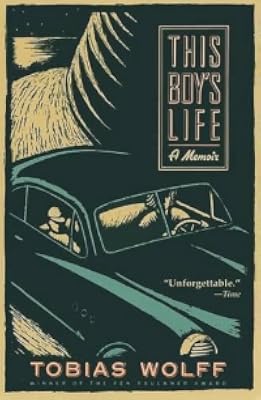

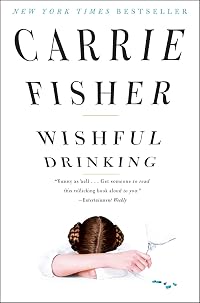
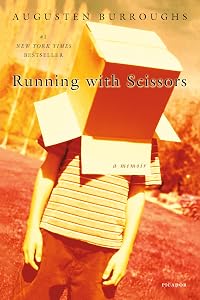
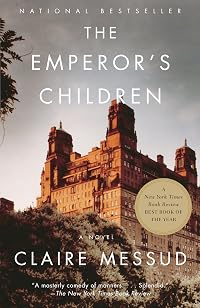

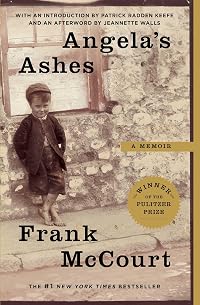
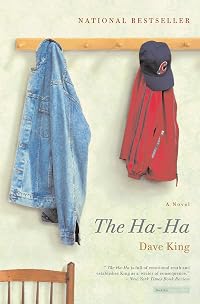
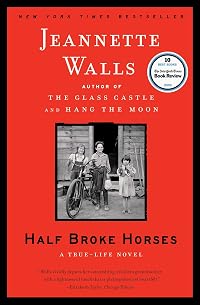
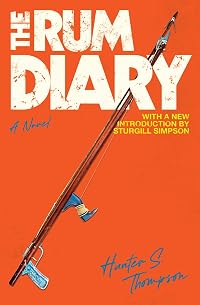
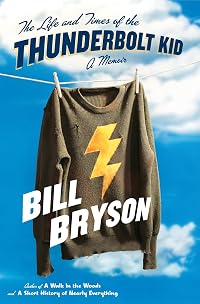
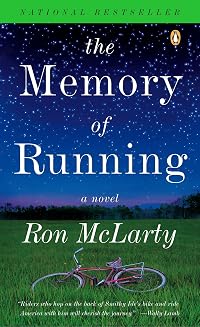
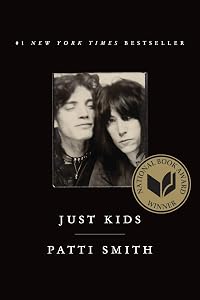
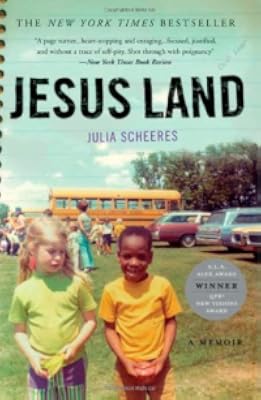

Member Recommendations

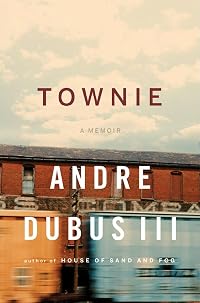
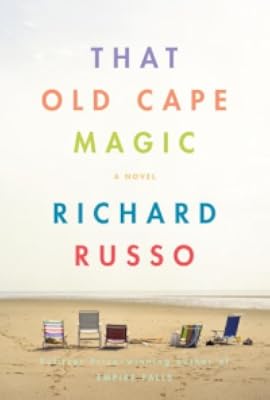
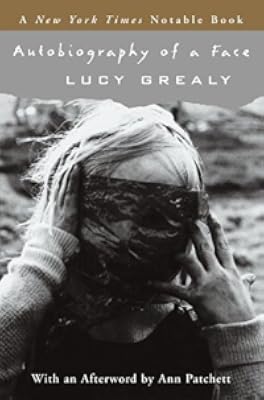
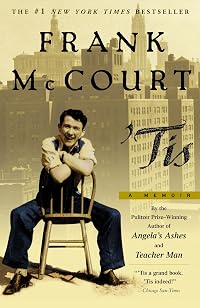
lahochstetler Memoirs about bars and family
Member Reviews
Far too many of the reviews for this book here on LT criticize the book and the author for 'whining' about his childhood. I can only deduce these readers had their humanity removed in some kind of surgical procedure meant to bolster their own perception of themselves. Honestly, the reveiwers/readers all must come from perfectly well-adjusted families and are themselves superior to everyone else in every way. Far from whining, Moehringer regularly castigates himself for his faults, even though they are largely not of his own making. He came from an altogether dysfunctional family and struggled for everything, particularly a grounded sense of himself. The characters are so credible and unique that they would never be believed in a show more fictional account. It's the kind of book that is wildly popular these days, only from a female perspective. Don't get me wrong, there are far too few female authors and female narratives because of the gender gaps in publishing. But, I'd argue, there are also too few honest male voices writing sincerely about male identity and struggles - Moehringer fills this void with class. For those who reviewed this book negatively, I'd say, "Get over yourselves." For everyone else, "Read this book."
The book was recently adapted to film, and the producers, which included Moehringer, did a nice job of capturing the tone of the narrative - boy basically grows up in a bar, raised by ne'er-do-well barflies - but the book is much more evocative, lighter on the Hollywood moments and heavier on the heart-felt emotion.
Highly Recommended!
5 bones!!!!! show less
The book was recently adapted to film, and the producers, which included Moehringer, did a nice job of capturing the tone of the narrative - boy basically grows up in a bar, raised by ne'er-do-well barflies - but the book is much more evocative, lighter on the Hollywood moments and heavier on the heart-felt emotion.
Highly Recommended!
5 bones!!!!! show less
I read about this book in a menu.
No kidding.
There's a great sushi joint in town called Miya's that has a menu with facetious descriptions of food, stories on how dishes and drinks came to be, and even footnotes and an epilogue. Most fun menu I know- even better than the color-you-own ones.
And in this menu. _The Tender Bar_ was mentioned as "a short story" where the son of a single mother grows up in a bar using the men around him as the father figure (collectively) he doesn't have. This intrigued me and I saw the possibilty of a puppet piece coming from it, and so I marched my butt to Strand's the next time I was in the City and looked for a short story collection containing _The Tender Bar_.
Low, and behold, it was a 368-page hardback show more memoir, but it was on the sale table and I was on a mission, so it went home with me.
The book is not what I expected, not what I wanted, and so I hated it. But I could never really get up the steam I needed to really let that hatred set in because I was turning pages rapidly (for me, at least), chuckling and weeping (shh- don't tell).
Moeringer has such a clear remembrance of so many events, such clarity on what he felt and how to say it, even as a very young child, that I often wondered if I was reading the next LeRoy. But I didn't care too much, because I wanted to believe it and, ultimately, it didn't affect me one way or another if it was completely true, mostly true, or inspired by truth.
The book has unlovable, unlikeable characters who Moehringer manager to have me empathizing with even though their behavior is despicable. Fromt he outside, I saw that if this one character, Grandpa, had been different, that everything else, all the horrid things that happened and the terrible way people treated each other and their self-destructive behaviors could have been different, and probably better in some cases. ANd yet, I found myself saying, "Poor Fella" as I saw little acts of humanity in him.
It is not a nice, neat book.
It's a heartbreaker that goes on and on with little mendings and perpetual chipping away at J.R.'s heart- and mine. And then, it's about what happens after your heart breaks wide open and you're still alive.
The book is not always well-paced, and drags significantly in parts. I can't tell if that is the author trying to convey how his life was also dragging interminably at that time, or poor editing. And if you can stomach the heartache, it's surely a quick-ish read: no dense concepts, no giant vocab.
And despite the realtvely short time I spent reading it (under a week?), I sometimes find myself thinking about "that guy I knew, the one who hung out at the bar a lot and kept that kid out of trouble"-- and then I realize I am thinking about his very, very real portrayal of (presumably) real people he loves very much, and I kind of do, too. show less
No kidding.
There's a great sushi joint in town called Miya's that has a menu with facetious descriptions of food, stories on how dishes and drinks came to be, and even footnotes and an epilogue. Most fun menu I know- even better than the color-you-own ones.
And in this menu. _The Tender Bar_ was mentioned as "a short story" where the son of a single mother grows up in a bar using the men around him as the father figure (collectively) he doesn't have. This intrigued me and I saw the possibilty of a puppet piece coming from it, and so I marched my butt to Strand's the next time I was in the City and looked for a short story collection containing _The Tender Bar_.
Low, and behold, it was a 368-page hardback show more memoir, but it was on the sale table and I was on a mission, so it went home with me.
The book is not what I expected, not what I wanted, and so I hated it. But I could never really get up the steam I needed to really let that hatred set in because I was turning pages rapidly (for me, at least), chuckling and weeping (shh- don't tell).
Moeringer has such a clear remembrance of so many events, such clarity on what he felt and how to say it, even as a very young child, that I often wondered if I was reading the next LeRoy. But I didn't care too much, because I wanted to believe it and, ultimately, it didn't affect me one way or another if it was completely true, mostly true, or inspired by truth.
The book has unlovable, unlikeable characters who Moehringer manager to have me empathizing with even though their behavior is despicable. Fromt he outside, I saw that if this one character, Grandpa, had been different, that everything else, all the horrid things that happened and the terrible way people treated each other and their self-destructive behaviors could have been different, and probably better in some cases. ANd yet, I found myself saying, "Poor Fella" as I saw little acts of humanity in him.
It is not a nice, neat book.
It's a heartbreaker that goes on and on with little mendings and perpetual chipping away at J.R.'s heart- and mine. And then, it's about what happens after your heart breaks wide open and you're still alive.
The book is not always well-paced, and drags significantly in parts. I can't tell if that is the author trying to convey how his life was also dragging interminably at that time, or poor editing. And if you can stomach the heartache, it's surely a quick-ish read: no dense concepts, no giant vocab.
And despite the realtvely short time I spent reading it (under a week?), I sometimes find myself thinking about "that guy I knew, the one who hung out at the bar a lot and kept that kid out of trouble"-- and then I realize I am thinking about his very, very real portrayal of (presumably) real people he loves very much, and I kind of do, too. show less
A memoir of a young man whose mother struggled to raise him alone after leaving his abusive father. In place of the man he never really knew, JR (it doesn't STAND FOR ANYTHING!) latched on to his Uncle Charlie and a motley assortment of bartenders and patrons at "The Bar", the neighborhood watering hole in his hometown of Manhasset on Long Island. Throughout his teenage years, these men took him under their collective and individual wings, took him to the beach, discussed books with him, gave him advice (of varying degrees of usefulness), encouraged him to dream of and eventually apply to Yale and made him feel he had a home beyond the bedlam of his grandparents' house, where he and his mother most often lived. Later, they supported him show more through failed love affairs, demoralizing attempts at novel-writing and dead-end jobs, taught him by example (mostly how to drink and survive hangovers), and gave him unconditional love. The story could be depressing as all get-out, but it's not. There is so much humor and tenderness in it--and after all, here is this supremely well-written memoir you're reading, as proof that it all turned out OK in the end. show less
Like Andre Agassi who chose Moehringer to help him with his autobiography, Open, I too can identify with this memoir. For one, Moehringer grew up in Manhassat, Long Island, a stone's throw from Manhattan. More so, he's less than a year older than me and just two classes ahead of me. When he was a kid, excitedly going to NY Mets games and collecting their baseball cards I was doing the same thing. When he was getting drunk at college, I was only a step behind him, and so on.
Moehringer has written a "tender" memoir spanning from childhood, through his coming of age in the 1980s early 1990s with an epilogue reflecting on 9/11. It's at times incredilby funny, often sad, and always very well written. The heart of the memoir is Publicans, show more where his Uncle Charlie tended bar and Moehringer the boy first met the assortment of bar flies with whom we would spend many a happy hour. Hilary Clinton wrote that "it takes a village" to raise a child. In Moehringer's case it took a pub. He struggled his whole life to write a book on Publicans, the place and the people who called it home. It took him a while, but The Tender Bar is definitively that book. show less
Moehringer has written a "tender" memoir spanning from childhood, through his coming of age in the 1980s early 1990s with an epilogue reflecting on 9/11. It's at times incredilby funny, often sad, and always very well written. The heart of the memoir is Publicans, show more where his Uncle Charlie tended bar and Moehringer the boy first met the assortment of bar flies with whom we would spend many a happy hour. Hilary Clinton wrote that "it takes a village" to raise a child. In Moehringer's case it took a pub. He struggled his whole life to write a book on Publicans, the place and the people who called it home. It took him a while, but The Tender Bar is definitively that book. show less
This episodic memoir of a boy becoming a man in the 70s and 80s, centered on his hometown bar and its characters, is deeply confessional and almost always engaging. It has humor, it has heartbreak--probably more of the latter--and it has a tremendous amount of truth in it as the young writer struggles to find his way in life. At times, it lags, and midway through, it lacks the momentum to keep the reader turning pages into the night, but as the author begins to realize and address his shortcomings, the pace picks up and the book comes to a memorable--and sad--conclusion with an epilogue that takes place right after 911. In addition to his relationships with the men at the bar, his relationship with his mother is well described, and the show more epiphany he comes to near the book's conclusion is unforgettable. His relationship with his troubled father--both at a distance and later, occasionally, in person--is also fascinating. All in all, this a memoir unlike any other I have read. Like the best such books, it makes us reflect upon our own relationships. show less
I have two confessions... I didn't know this was a memoir until I started reading it. Actually (not the second confession yet), I didn't know a memoir is quite close to a biography. And I don't read biographies. I read long time ago Bob Marley's biography and just hated it. Will this change? probably not, but this was an amazing read.
The second confession? It made me think about myself as a father, a lot. This book is able to get to your guts. And it's just so beautifully written. Absolutely worth it.
The second confession? It made me think about myself as a father, a lot. This book is able to get to your guts. And it's just so beautifully written. Absolutely worth it.
J.R. Moehringer grew up in Manhasset, New York, estranged from his father and living with his mother in his grandparents' ramshackle home filled with cousins, aunts, and uncles. Though it was a somewhat chaotic upbringing, he was a mostly happy child, though he would sit by the radio on a regular basis just to get a chance to hear his father's voice as a New York City radio DJ. Without a true father figure, he spent his younger years hanging out in or near the bar near his home where his uncle worked. Here, he met an eclectic group of men who eventually welcomed him into their circle and taught him about life. As J.R. eventually entered college, struggled to find his career, and fell in and out of love, he continued his relationship show more with these men and kept coming back to the bar which was like a second home to him.
I remember putting this book on my wishlist shortly after it had been published, and it saddens me that it took me so long to get around to reading it. I actually listened to an abridged version on audio, despite at one time having a hardcover version, which I've since given away. It's a shame, because after reading the abridgment, I wish I still had the original hardcover so that I could go back and re-read this. All that is to say that I was quite pleasantly surprised by how much I enjoyed this memoir. Despite Moehringer being a Pulitzer Prize winner, a journalist, and co-author of Andre Agassi's memoir, I knew none of that and virtually nothing about him prior to picking this up to read. But like I said, I'd added it to my wishlist a long time ago, apparently because I'd seen some hype or good reviews. This is basically a coming-of-age memoir, and I generally enjoy novels of that genre. There is just something about Moehringer's writing voice (although he also has a pleasant actual voice on audio as well) that spoke to me -- a combination of nostalgia, honesty, humor, and feel-good that was very appealing. The brief smooth jazz interludes between sections was a nice touch as well on the audiobook. I was honestly sad to reach the end and as stated above, I now regret that I read an abridged copy because I was left wanting more. I just recently read that Prince Harry has chosen Moehringer to co-write his autobiography, supposedly due to be published later this year, so I'm definitely going to have to get my hands on that. show less
I remember putting this book on my wishlist shortly after it had been published, and it saddens me that it took me so long to get around to reading it. I actually listened to an abridged version on audio, despite at one time having a hardcover version, which I've since given away. It's a shame, because after reading the abridgment, I wish I still had the original hardcover so that I could go back and re-read this. All that is to say that I was quite pleasantly surprised by how much I enjoyed this memoir. Despite Moehringer being a Pulitzer Prize winner, a journalist, and co-author of Andre Agassi's memoir, I knew none of that and virtually nothing about him prior to picking this up to read. But like I said, I'd added it to my wishlist a long time ago, apparently because I'd seen some hype or good reviews. This is basically a coming-of-age memoir, and I generally enjoy novels of that genre. There is just something about Moehringer's writing voice (although he also has a pleasant actual voice on audio as well) that spoke to me -- a combination of nostalgia, honesty, humor, and feel-good that was very appealing. The brief smooth jazz interludes between sections was a nice touch as well on the audiobook. I was honestly sad to reach the end and as stated above, I now regret that I read an abridged copy because I was left wanting more. I just recently read that Prince Harry has chosen Moehringer to co-write his autobiography, supposedly due to be published later this year, so I'm definitely going to have to get my hands on that. show less
Members
- Recently Added By
Lists

Best Biographies, Autobiographies and Memoirs
465 works; 160 members

Best Autobiographies and Memoirs
370 works; 67 members

Books To Get From The Library
115 works; 5 members

Read These Too
458 works; 9 members
100 Biographies and Memoirs to Read in a (Single) Lifetime
98 works; 12 members

Biggest Disappointments
606 works; 164 members

Llibres que he llegit el 2016
36 works; 1 member

End of Your Life Book Club
134 works; 4 members

LIT - Il Bookclub Della McMusa
51 works; 1 member
Author Information

10+ Works 3,721 Members
J. R. Moehringer is a Pulitzer Prize-winning journalist and novelist. He is the author of The Tender Bar (2005) and Sutton (2012). He collaborated on Andre Aggassi's memoir Open (2012). Moehringer graduated from Yale University in 1986. He began his journalism career as a news assistant at The New York Times later moving to Breckenridge, Colorado show more to work at the Rocky Mountain News and even later he became a reporter for the Orange County bureau of the Los Angeles Times. Moehringer eventually was sent to Atlanta to serve as the LA Times national correspondent on the south. Moehringer received the Literary Award, PEN Center USA West and the Livingston Award for Young Journalists, both in 1997 and a Pulitzer Prize for Feature Writing in 2000. (Bowker Author Biography) show less
Some Editions
Awards and Honors
Common Knowledge
- Canonical title
- The Tender Bar
- Original title
- The Tender Bar
- Original publication date
- 2005
- People/Characters
- J.R. Moehringer
- Important places
- Arizona, USA; Long Island, New York, USA
- Related movies
- The Tender Bar (2021 | IMDb)
- Dedication
- For my mother
- First words
- We went there for everything we needed.
- Last words
- (Click to show. Warning: May contain spoilers.)"Do you remember where the old Publicans used to be?"
- Blurbers
- Halberstam, David; Russo, Richard; Salter, James; Fleming, Anne Taylor
Classifications
- Genres
- Biography & Memoir, Nonfiction, General Nonfiction
- DDC/MDS
- 070.92 — Computer science, information & general works News media, journalism & publishing Documentary media, educational media, news media; journalism; publishing Biography And History Biographies
- LCC
- CT275 .M5719 .A3 — Auxiliary Sciences of History Biography Biography National biography
- BISAC
Statistics
- Members
- 3,026
- Popularity
- 5,871
- Reviews
- 107
- Rating
- (3.84)
- Languages
- 6 — Dutch, English, German, Italian, Romanian, Spanish
- Media
- Paper, Audiobook, Ebook
- ISBNs
- 44
- ASINs
- 17