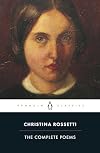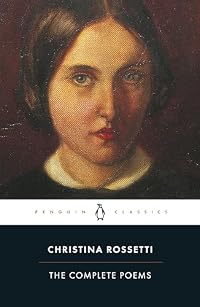
The Complete Poems
by Christina Rossetti
On This Page
Description
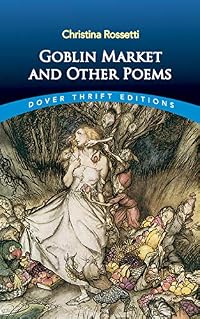
Ranked among the finest English poets of the nineteenth century, Christina Rossetti is a widely read, though not widely imitated poet recognized for her devotional poetry, influenced by the religious conservatism and asceticism of the Church of England. This complete collection of poems includes her most renowned work, Goblin Market, as well as The Prince's Progress, and a vast array of love lyrics, sonnets, hymns, ballads and sprightly verses for children. Rossetti's poetry is remarkable show more for its clarity and simplicity of diction in dealing with themes of truth, beauty, love, death, heavenly joys and earthly pleasures, and purity of faith. These poems, broad in their range of subject matter and variety of verse form, continue to spark scholarly study and debate throughout the world. However, these endearing works of inward contemplation and timeless vision will inspire and delight readers of all ages. show lessTags
Recommendations








Member Reviews
I'm not sure if this contains all of Christina Rossetti's poems (the apparatus of my "Wordsworth Poetry Library" edition is terrible), but it certainly contains a lot. Previously, my Rossetti experience was limited to selections contained in things like the Norton and Longman anthologies of Victorian literature, so it was enlightening to read a (seemingly) uncurated group of her poetry; I spent the first couple months of summer reading this in chunks.
We all know her now for "Goblin Market," of course, and justly so, but it's an oddity in her œuvre, by far the longest and not Christian. Not that all of poems are overtly Christian, but certainly a great deal of them are. On the whole, her work is less... well... sexy than the editors of show more college-level period anthologies had led me to believe, and more pious. Perhaps the nadir of this is one poem that simply has all of creation praising God, one by one, and to my atheist eyes looks more like rampaging egotism on the part of the Creator. But that's not to say they there isn't good stuff here. Other than "Goblin Market," I quite enjoyed her other sustained narrative poem, the fairy tale "The Prince's Progress." I marked each page with a poem that I particularly enjoyed, and beyond those two, ended up with over twenty-five such poems.
When next I teach Rossetti, I will have my own curated selection of poems to hand out, and a much stronger conception of her work as a whole. Though it was hard to read 450 pages of pure poetry, it was well worth it! I was surprised to realize that she could be political sometimes, such as depicting a revolution in "A Royal Princess" or even war in "The German-French Campaign, 1870-1871."
I was struck by the number of poems about death, many of them quite morose, especially in the way the dead are remembered: in "At Home," a dead person stops to hear their friends while remaining unseen, to find they talk of other things entirely ("I all-forgotten shivered, sad / To stay and yet to part how loth..."), while in "The Poor Ghost," someone does remember a dead friend, causing their ghost to complain ("'But why did your tears soak through the clay, / And why did your sobs wake me where I lay?'").
This one is echoed by "Remember: Sonnet," told by a dead narrator who wants to be forgotten ("Better by far you should forget and smile / Than that you should remember and be sad."); the same thing happens in one of her many poems called "Song" ("Plant thou no roses at my head"). Or there's "After Death: Sonnet," where someone is only remembered once they are dead ("He did not love me living; but once dead / He pitied me..."). They're very haunting, and some of her best work, well evoking the pain and emptiness of death in unusual ways.
Already in my conception of Rossetti (because they are commonly anthologized) were the poems of spurned love, such as "Noble Sisters," where one sister drives away the other's only potential suitor ("'I have none other love but him, / Nor will have till I die.'"), reminding one of the way female community trumps all in "Goblin Market." Or there's "Love Lies Bleeding," where (I think) a woman encounters a man she was once involved with who knows her not anymore. I liked "Freaks of Fashion," too, where birds consider that what is fashionable does not make one beautiful; it reminded me of one of L. Frank Baum's Animal Fairy Tales, though from quite a different angle!
It's disheartening to realize that today's male entitlement problems have deep roots as per "'No, Thank You, John'" ("Don't call me false, who owed not to be true"). Though I suppose Rossetti's concern with that kind of thing should be no surprise to anyone who'd read "Goblin Market" (when I taught that to my undergrads, some were quick to bring up "rape culture"). And I really liked the conceit of the "Monna Innominata: A Sonnet of Sonnets," where she imagines how those muses of the great Italian poets might have thought themselves, giving them the interior life that they lack as depicted by male poets ("you construed me / And loved me for what might or might not be--" or "Many in aftertimes will say of you / 'He loved here'-- while of me what will they say?").
Some of the poems are just evocative in their imagery, like "A Ballad of Boding," about the dangerous mission of three glorious ships, or "Hollow-Sounding and Mysterious," which really conjures the sound of wind. And I don't quite get the metaphor in "The Queen of Hearts" (indeed, you might say it "baffles me to puzzle out the clue"), but I like the imagery it conjures.
And, of course, a number of her Christian-themed poems can still appeal to the non-Christian reader; I always forget that she wrote "A Christmas Carol," better known as the lyrics to "In the Bleak Midwinter," one of my top five Christmas carols (I like Katherine Jenkins's version best). "Despised and Rejected," the story of one who accidentally rejected Christ is haunting ("Others were dear, / Others forsook me: what art thou indeed / That I should heed / Thy lamentable need?"). "De Profundis" conjures how far heaven always seems ("I would not care to reach the moon, / One round monotonous of change; / Yet even she repeats her tune / Beyond my range"). And you don't need to be a Christian to appreciate the "Weary in Well-Doing" ("Now I would rest; God bids me work") or the despair of "Why?" ("If all my heart loves Thee, what need the amaze, / Struggle and dimness of an agony?"). Would it be that I could always be so weary.
Some are still just bleak in their very conception of humanity, like "The World: Sonnet," about how the beautiful-seeming world reveals its true self at night ("A very monster void of love and prayer"), or "A Testimony," which concerns how all is vanity ("Our treasures moth and rust corrupt"). Slightly more optimistic is "Pastime," which postulates that there is meaning but it might come at a terrible cost ("Better a wrecked life than a life so aimless").
But even in the end, there is hope, as the last poem in the book, "'Love Is Strong as Death,'" tells us: "'Now the Everlasting Arms surround thee,-- / Through death's darkness I look and see / And clasp thee to Me.'" show less
We all know her now for "Goblin Market," of course, and justly so, but it's an oddity in her œuvre, by far the longest and not Christian. Not that all of poems are overtly Christian, but certainly a great deal of them are. On the whole, her work is less... well... sexy than the editors of show more college-level period anthologies had led me to believe, and more pious. Perhaps the nadir of this is one poem that simply has all of creation praising God, one by one, and to my atheist eyes looks more like rampaging egotism on the part of the Creator. But that's not to say they there isn't good stuff here. Other than "Goblin Market," I quite enjoyed her other sustained narrative poem, the fairy tale "The Prince's Progress." I marked each page with a poem that I particularly enjoyed, and beyond those two, ended up with over twenty-five such poems.
When next I teach Rossetti, I will have my own curated selection of poems to hand out, and a much stronger conception of her work as a whole. Though it was hard to read 450 pages of pure poetry, it was well worth it! I was surprised to realize that she could be political sometimes, such as depicting a revolution in "A Royal Princess" or even war in "The German-French Campaign, 1870-1871."
I was struck by the number of poems about death, many of them quite morose, especially in the way the dead are remembered: in "At Home," a dead person stops to hear their friends while remaining unseen, to find they talk of other things entirely ("I all-forgotten shivered, sad / To stay and yet to part how loth..."), while in "The Poor Ghost," someone does remember a dead friend, causing their ghost to complain ("'But why did your tears soak through the clay, / And why did your sobs wake me where I lay?'").
This one is echoed by "Remember: Sonnet," told by a dead narrator who wants to be forgotten ("Better by far you should forget and smile / Than that you should remember and be sad."); the same thing happens in one of her many poems called "Song" ("Plant thou no roses at my head"). Or there's "After Death: Sonnet," where someone is only remembered once they are dead ("He did not love me living; but once dead / He pitied me..."). They're very haunting, and some of her best work, well evoking the pain and emptiness of death in unusual ways.
Already in my conception of Rossetti (because they are commonly anthologized) were the poems of spurned love, such as "Noble Sisters," where one sister drives away the other's only potential suitor ("'I have none other love but him, / Nor will have till I die.'"), reminding one of the way female community trumps all in "Goblin Market." Or there's "Love Lies Bleeding," where (I think) a woman encounters a man she was once involved with who knows her not anymore. I liked "Freaks of Fashion," too, where birds consider that what is fashionable does not make one beautiful; it reminded me of one of L. Frank Baum's Animal Fairy Tales, though from quite a different angle!
It's disheartening to realize that today's male entitlement problems have deep roots as per "'No, Thank You, John'" ("Don't call me false, who owed not to be true"). Though I suppose Rossetti's concern with that kind of thing should be no surprise to anyone who'd read "Goblin Market" (when I taught that to my undergrads, some were quick to bring up "rape culture"). And I really liked the conceit of the "Monna Innominata: A Sonnet of Sonnets," where she imagines how those muses of the great Italian poets might have thought themselves, giving them the interior life that they lack as depicted by male poets ("you construed me / And loved me for what might or might not be--" or "Many in aftertimes will say of you / 'He loved here'-- while of me what will they say?").
Some of the poems are just evocative in their imagery, like "A Ballad of Boding," about the dangerous mission of three glorious ships, or "Hollow-Sounding and Mysterious," which really conjures the sound of wind. And I don't quite get the metaphor in "The Queen of Hearts" (indeed, you might say it "baffles me to puzzle out the clue"), but I like the imagery it conjures.
And, of course, a number of her Christian-themed poems can still appeal to the non-Christian reader; I always forget that she wrote "A Christmas Carol," better known as the lyrics to "In the Bleak Midwinter," one of my top five Christmas carols (I like Katherine Jenkins's version best). "Despised and Rejected," the story of one who accidentally rejected Christ is haunting ("Others were dear, / Others forsook me: what art thou indeed / That I should heed / Thy lamentable need?"). "De Profundis" conjures how far heaven always seems ("I would not care to reach the moon, / One round monotonous of change; / Yet even she repeats her tune / Beyond my range"). And you don't need to be a Christian to appreciate the "Weary in Well-Doing" ("Now I would rest; God bids me work") or the despair of "Why?" ("If all my heart loves Thee, what need the amaze, / Struggle and dimness of an agony?"). Would it be that I could always be so weary.
Some are still just bleak in their very conception of humanity, like "The World: Sonnet," about how the beautiful-seeming world reveals its true self at night ("A very monster void of love and prayer"), or "A Testimony," which concerns how all is vanity ("Our treasures moth and rust corrupt"). Slightly more optimistic is "Pastime," which postulates that there is meaning but it might come at a terrible cost ("Better a wrecked life than a life so aimless").
But even in the end, there is hope, as the last poem in the book, "'Love Is Strong as Death,'" tells us: "'Now the Everlasting Arms surround thee,-- / Through death's darkness I look and see / And clasp thee to Me.'" show less
Christina Rossetti's writing is lovely and rich. 'Goblin Market' is probably the best known, or it's the one I knew anyway, and that's a good example of how rich and sensual her writing can be, but the rest of her poetry is definitely worth a look, too.
Ratings
Members
- Recently Added By
Lists

Harold Bloom - The Western Canon: C. The Democratic Age
336 works; 15 members

The Well-Educated Mind, Susan Wise Bauer, 2016
179 works; 3 members
Author Information

135+ Works 5,482 Members
Some Editions
Awards and Honors
Notable Lists
Series
Belongs to Publisher Series
Common Knowledge
- Canonical title
- The Complete Poems
- People/Characters
- Christina Rossetti
- Important events
- 19th century; Victorian Era; Pre-Raphaelites
Classifications
Statistics
- Members
- 592
- Popularity
- 49,117
- Reviews
- 2
- Rating
- (4.01)
- Languages
- English
- Media
- Paper, Ebook
- ISBNs
- 12
- ASINs
- 9