On This Page
Description
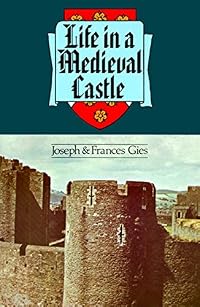
From acclaimed historians Frances and Joseph Gies comes the reissue of this definitive classic on medieval castles, which was a source for George R.R. Martin's Game of Thrones series. "Castles are crumbly and romantic. They still hint at an age more colorful and gallant than our own, but are often debunked by boring people who like to run on about drafts and grumble that the latrines did not work. Joseph and Frances Gies offer a book that helps set the record straight-and keeps the romance show more too."-Time A widely respected academic work and a source for George R.R. Martin's Game of Thrones, Joseph and Frances Gies's bestselling Life in a Medieval Castle remains a timeless work of popular medieval scholarship. Focusing on Chepstow, an English castle that survived the turbulent Middle Ages with a relative lack of violence, the book offers an exquisite portrait of what day-to-day life was actually like during the era, and of the key role the castle played. The Gieses take us through the full cycle of a medieval year, dictated by the rhythms of the harvest. We learn what lords and serfs alike would have worn, eaten, and done for leisure, and of the outside threats the castle always hoped to keep at bay. For medieval buffs and anyone who wants to learn more about this fascinating era, Life in a Medieval Castle is as timely today as when it was first published. show lessTags
Recommendations

















Member Reviews
Life in a Medieval Castle was originally published in 1974 and reissued in 2015, and was used by the author George R. R. Martin as a primary resource when writing his A Song of Ice and Fire series, upon which the legendary A Game of Thrones adaptation is based. Authors Joseph Gies and Frances Gies were both historians and published many books focussed on medieval history and the Middle Ages, before the married couple passed away in 2006 and 2013 respectively.
I learned a great deal reading this non fiction title which was broken down into many chapters, including 'The Castle Comes to England', 'A Day in the Castle' and 'The Castle at War'. I will say that the black and white photos were terrible and I could hardly make out what was show more pictured, which is disappointing given the opportunity to include better photography in the reprinting stage in 2015. This is best rectified by having Google Images at your disposal while reading, which is how I enjoyed this title.
There's nothing better than getting down into the nitty gritty of everyday life, and I knew that castle floors were strewn with rushes and herbs which were regularly replaced, but this quote from Erasmus in the book was gold. Erasmus observed that often under the rushes lay:
"an ancient collection of beer, grease, fragments, bones, spittle, excrement of dogs and cats and everything that is nasty." Page 60
Gross! It was interesting to learn on page 76 that the medieval feminine ideal was "blonde, delicate, fair-skinned, boyish of figure." That was a bit of a surprise, although I guess it's not that different to the lean and flat chested ideal in women's fashion in the 1920s.
I love learning about the different roles in households from different eras, and discovered that the role of butler (or bottler) originally worked in the buttery where beverages were kept in butts or bottles. A completely new job title to me was the pantler, who was the servant in charge of the pantry and the bread. I also enjoy identifying surnames that survive today that originate in the duties the person once would have held, like: Archer, Baker, Carter, Cook, Cooper, Chandler, Gardener, Knight, Miller, Smith, and Thatcher to name a few. Joseph Gies and Frances Gies were able to introduce me to a few new ones in Hayward, who was in charge of the haie, and repairing the hedges and fences; and the Woodward, who had charge of the lord's woods and was elected by his fellow villagers.
The descriptions of the food eaten in the period set the taste buds watering, although I don't think I'd like this dish:
"In addition to roasting and stewing, meat might be pounded to a paste, mixed with other ingredients, and served as a kind of custard." Page 112
The authors managed to take the reader through many facets of the medieval castle, focussing on Chepstow as their case study or best example. I think they best summarise the appeal of castles and castle ruins to tourists and wannabe tourists like me in their following conclusion to the book:
"In Britain, France, Germany, Spain, Italy, and elsewhere, with the aid of a guide or a guidebook and some imagination, one can stand in the grassy bailey and re-people the weathered stone ramparts and towers and the vanished wooden outbuildings with archers and knights, servants, horses, and wagoners, the lord and lady and their guests, falcons and hunting dogs, pigs and poultry - all the unkempt, unsafe, unsavoury but irresistibly appealing life of the thirteenth century." Page 224
Life in a Medieval Castle by Joseph Gies and Frances Gies is recommended for readers with an interest in history, castles (obviously) the Middle Ages and the medieval way of life. show less
I learned a great deal reading this non fiction title which was broken down into many chapters, including 'The Castle Comes to England', 'A Day in the Castle' and 'The Castle at War'. I will say that the black and white photos were terrible and I could hardly make out what was show more pictured, which is disappointing given the opportunity to include better photography in the reprinting stage in 2015. This is best rectified by having Google Images at your disposal while reading, which is how I enjoyed this title.
There's nothing better than getting down into the nitty gritty of everyday life, and I knew that castle floors were strewn with rushes and herbs which were regularly replaced, but this quote from Erasmus in the book was gold. Erasmus observed that often under the rushes lay:
"an ancient collection of beer, grease, fragments, bones, spittle, excrement of dogs and cats and everything that is nasty." Page 60
Gross! It was interesting to learn on page 76 that the medieval feminine ideal was "blonde, delicate, fair-skinned, boyish of figure." That was a bit of a surprise, although I guess it's not that different to the lean and flat chested ideal in women's fashion in the 1920s.
I love learning about the different roles in households from different eras, and discovered that the role of butler (or bottler) originally worked in the buttery where beverages were kept in butts or bottles. A completely new job title to me was the pantler, who was the servant in charge of the pantry and the bread. I also enjoy identifying surnames that survive today that originate in the duties the person once would have held, like: Archer, Baker, Carter, Cook, Cooper, Chandler, Gardener, Knight, Miller, Smith, and Thatcher to name a few. Joseph Gies and Frances Gies were able to introduce me to a few new ones in Hayward, who was in charge of the haie, and repairing the hedges and fences; and the Woodward, who had charge of the lord's woods and was elected by his fellow villagers.
The descriptions of the food eaten in the period set the taste buds watering, although I don't think I'd like this dish:
"In addition to roasting and stewing, meat might be pounded to a paste, mixed with other ingredients, and served as a kind of custard." Page 112
The authors managed to take the reader through many facets of the medieval castle, focussing on Chepstow as their case study or best example. I think they best summarise the appeal of castles and castle ruins to tourists and wannabe tourists like me in their following conclusion to the book:
"In Britain, France, Germany, Spain, Italy, and elsewhere, with the aid of a guide or a guidebook and some imagination, one can stand in the grassy bailey and re-people the weathered stone ramparts and towers and the vanished wooden outbuildings with archers and knights, servants, horses, and wagoners, the lord and lady and their guests, falcons and hunting dogs, pigs and poultry - all the unkempt, unsafe, unsavoury but irresistibly appealing life of the thirteenth century." Page 224
Life in a Medieval Castle by Joseph Gies and Frances Gies is recommended for readers with an interest in history, castles (obviously) the Middle Ages and the medieval way of life. show less
In "Life in a Medieval Castle" Joseph and Frances Gies allow the reader to step inside Chepstow Castle, most famously occupied by soldier and statesman William Marshal. Construction began in 1066, and was ordered by no less than William the Conqueror. It's a great example of how castles architecturally evolved over time. But as the Gies point out, castles were built next to a village for strategic protection or to draw the village closer and therefore populate a remote area.
But the life of a Lord wasn't all dancing, gaming and lounging about like so many 18th c. nobility. Estate administration and maintenance was a full-time job. Should a Lord be reluctantly called off to war by his King, the Lady was expected to take charge. She show more directed staff, made financial and legal decisions, and arranged feasts for important guests. Ladies also enjoyed falconry and hunting as much as men. Outside, the Lord did not have absolute control over his vassals, who could forswear loyalty if a Lord did not fulfill his duties. But as you can see, this work was written with a singular perspective in mind: the nobility. This work does not include the "life" of those with specific roles within the castle. While I did learn about medieval village farming, "Villagers" are described in a broad context, en masse.
I was off to a rocky start with the first two chapters, which was a muddled timeline of politics mixed with a running tour of Chepstow. Utilizing the castle is actually a brilliant idea, but rather difficult to imagine without proper illustrations. Thankfully the narrative gains traction and subsequent chapters cover the life of a castellan, his household, war, etc. If that is what you're looking for, then it's a fine introduction, otherwise it can give the reader the wrong impression of how everyone else might have lived. show less
But the life of a Lord wasn't all dancing, gaming and lounging about like so many 18th c. nobility. Estate administration and maintenance was a full-time job. Should a Lord be reluctantly called off to war by his King, the Lady was expected to take charge. She show more directed staff, made financial and legal decisions, and arranged feasts for important guests. Ladies also enjoyed falconry and hunting as much as men. Outside, the Lord did not have absolute control over his vassals, who could forswear loyalty if a Lord did not fulfill his duties. But as you can see, this work was written with a singular perspective in mind: the nobility. This work does not include the "life" of those with specific roles within the castle. While I did learn about medieval village farming, "Villagers" are described in a broad context, en masse.
I was off to a rocky start with the first two chapters, which was a muddled timeline of politics mixed with a running tour of Chepstow. Utilizing the castle is actually a brilliant idea, but rather difficult to imagine without proper illustrations. Thankfully the narrative gains traction and subsequent chapters cover the life of a castellan, his household, war, etc. If that is what you're looking for, then it's a fine introduction, otherwise it can give the reader the wrong impression of how everyone else might have lived. show less
This is a fascinating and clearly written look at life in medieval Europe among all classes of people, from the aristocracy to the villagers. It covers their daily concerns: status and warfare, privilege, and hunting for the rich and farming for the less well off, the life of knights, the construction of castles and their architecture to their strategic importance in warfare and their gradual loss of importance with the rise of the nation state funded by the new wealth produced by merchants in growing cities.
This was really great to read after reading historical mysteries and other history books. Helps one to see the life of the characters we have read about, as well as learning the how, why and where the castles were built. The chapter on falconry was fascinating. The writing is not pedantic. The photos are not great, since this was published in the 1970s and not color, however, a quick search on the internet brought up the castles spoken of with terrific photographs.
Quite enjoyed this accessible history. I liked how it explained broadly but also had the thread of one castle that we followed through every chapter.
This was the first and thus far the only book I have read by these authors (though I own several others I have yet to find the time to read) – it is a fascinating exploration of socio-political history the authors help to put flesh on the ‘bare bones’ of the crumbling stone ruins and empty shells which are all that sadly remains of castles today. They go beyond examining only the political or military function of castles (though this is covered) to explore castles in their roles as homes, and the ‘headquarters’ of estates with the central focus on Chepstow on the Welsh borders, but also other castles.
In chapters under titles such as ‘The Lord of the Castle’ ‘The Lady’ and the ‘The Household’ the inhabitants of show more castles are vividly bought to life, from the highest to the lowest, and the society in which castles played such an important role is examined. Along the way there are many gems of information, useful, enlightening and entertaining. One of my personal favourites was the section on table manners and dining etiquette which belies the popular misconception that medieval people were uncouth, uncivilised and vulgar- and reveals striking parallels between the etiquette of the middle ages and today. The sections on hunting, which reveal its roles as a social activity, ‘The Making of a Knight’ and ‘The Castle as a House’ are also fascinating.
My only complaint was that some of the information the first chapter did seem a little over simplified in some parts, and the claim that the Normans beat the English and Hastings because they were ‘better’ than them seemed represent a rather outdated interpretation- although this may be a reflection of the fact that the book was written in the 70s. As a result of the nationality of the authors there are some Americanisms (such as Richard the Lionhearted) which may prove a slight annoyance to British readers, and some might find the numerous photographs peppered throughout a history book distracting or irksome. Personally I had to problem with these, and felt they illustrated some of the themes and points made rather well.
The writing style of the authors makes the book accessible and not too high-brow or scholarly but not at the expense of primary source material which is used and included throughout the book. This said, those looking for a more detailed and in-depth examination of some of the subject matter with and academic slant which analysis and some of the sources won’t find much of it here. Although written by Medievalist Historians, ‘Life in a Medieval Castle’ is very much popular history- and very good popular history too. show less
In chapters under titles such as ‘The Lord of the Castle’ ‘The Lady’ and the ‘The Household’ the inhabitants of show more castles are vividly bought to life, from the highest to the lowest, and the society in which castles played such an important role is examined. Along the way there are many gems of information, useful, enlightening and entertaining. One of my personal favourites was the section on table manners and dining etiquette which belies the popular misconception that medieval people were uncouth, uncivilised and vulgar- and reveals striking parallels between the etiquette of the middle ages and today. The sections on hunting, which reveal its roles as a social activity, ‘The Making of a Knight’ and ‘The Castle as a House’ are also fascinating.
My only complaint was that some of the information the first chapter did seem a little over simplified in some parts, and the claim that the Normans beat the English and Hastings because they were ‘better’ than them seemed represent a rather outdated interpretation- although this may be a reflection of the fact that the book was written in the 70s. As a result of the nationality of the authors there are some Americanisms (such as Richard the Lionhearted) which may prove a slight annoyance to British readers, and some might find the numerous photographs peppered throughout a history book distracting or irksome. Personally I had to problem with these, and felt they illustrated some of the themes and points made rather well.
The writing style of the authors makes the book accessible and not too high-brow or scholarly but not at the expense of primary source material which is used and included throughout the book. This said, those looking for a more detailed and in-depth examination of some of the subject matter with and academic slant which analysis and some of the sources won’t find much of it here. Although written by Medievalist Historians, ‘Life in a Medieval Castle’ is very much popular history- and very good popular history too. show less
Interesting look at life during the middle ages in and around castles. A lot of info about economics which was over my head.
Members
- Recently Added By
Lists

al.vick-parents books
301 works; 1 member
Author Information

Joseph Gies was born on October 8, 1916 in Ann Arbor, Mich and attended the University of Michigan and Columbia University. He held jobs with several publishers including Encyclopaedia Britannica, and was editor-in-chief for a division of Doubleday. Gies is best known for several books, such as Life in a Medieval Castle, Life in a Medieval City, show more and Life in a Medieval Village. These books, written with his wife Frances Carney, explore existence in Medieval times. The works, and his others, are noted for their highly readable, but thorough quality. Topics such as archaeology, government, dining, entertainment, and daily life are presented in fascinating detail. (Bowker Author Biography) show less

All Editions
Some Editions
Series

Belongs to Publisher Series
Pocket (18121)
Work Relationships
Common Knowledge
- Canonical title
- Life in a Medieval Castle
- Original title
- Life in a medieval castle
- Alternate titles*
- Chūsei Yōroppa no shiro no seikatsu
- Original publication date
- 1974
- People/Characters
- Alexander III, King of Scots; Roger Bigod, 2nd Earl of Norfolk; Sir Falkes de Breauté (as Falkes de Breaute); Hubert de Burgh, 1st Earl of Kent; Chrétien de Troyes; Edward I, King of England (show all 33); Eleanor of Aquitaine; Frederick I / Frederick Barbarossa, Holy Roman Emperor; Frederick II, Holy Roman Emperor; Gerald of Wales; Robert Grosseteste; Ralph de Gaël (as Ralph de Guader); Harold II Godwinson; Henry I, King of England; Henry II, King of England; Henry III, King of England; John, King of England; Louis VIII, King of France; Louis IX, King of France; Gilbert Marshal, 4th Earl of Pembroke; William Marshal, 1st Earl of Pembroke; Matilda of Anjou; Eleanor de Montfort, Princess of Wales and Lady of Snowdon; Simon de Montfort the Younger (Simon VI de Montfort); Matthew Paris; Philippe II, King of France; Richard I, King of England; Richard II, King of England; Cardinal Richelieu; Samson, Abbot of Bury St. Edmonds; Stephen, King of England; William the Conqueror; Charlemagne
- Important places
- Chepstow Castle, Monmouthshire, Wales, UK; Tower of London, London, England, UK; Dover Castle, Dover, Kent, England, UK; Castel de Monte, Apulia, Italy; Castel Nuovo, Naples, Campania, Italy; Monmouthshire, Wales, UK
- Dedication
- To Lynn, who builds castles
- First words
- North of the new Severn suspension bridge, on the Welsh border in Monmouthshire, Chepstow Castle rises from a narrow ridge commanding the River Wye, a broad, shallow stream that fluxes daily with the tidal Severn from a navig... (show all)able river to a nearly dry mud flat.
- Last words
- (Click to show. Warning: May contain spoilers.)In Britain, France, German, Spain, Italy, and elsewhere, with the aid of a guide or a guidebook and some imagination, one can stand in the grassy bailey and re-people the weathered stone ramparts and towers and the vanished wooden outbuildings with archers and knights, servants, horses, and wagoners, the lord and lady and their guests, falcons and hunting dogs, pigs and poultry--all the unkempt, unsafe, unsavory but irresistibly appealing life of the thirteenth century.
- Original language*
- Anglais (Etats-Unis) (Etats-Unis)
*Some information comes from Common Knowledge in other languages. Click "Edit" for more information.
Classifications
- Genres
- History, Nonfiction, General Nonfiction
- DDC/MDS
- 940.1 — History & geography History of Europe History of Europe Europe in the Middle Ages
- LCC
- GT3520 .G53 — Geography, Anthropology and Recreation Manners and customs (General) Manners and customs (General) Customs relative to public and social life
- BISAC
Statistics
- Members
- 1,481
- Popularity
- 15,633
- Reviews
- 11
- Rating
- (3.60)
- Languages
- 5 — English, French, Japanese, Polish, Russian
- Media
- Paper, Ebook
- ISBNs
- 13
- ASINs
- 12