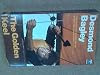
The Golden Keel
by Desmond Bagley
On This Page
Description
The first action thriller by the classic adventure writer, set in Italy. When the Allies invaded southern Italy in 1943, Mussolini's personal treasure was moved north to safety under heavily armed guard. It was never seen again. Now, an expedition plans to unearth the treasure and smuggle it out of Italy. But their reckless mission is being followed - by enemies who are as powerful and ruthless as they are deadly...Tags
Recommendations










Member Reviews
Published in 1963, this was Bagley's first thriller. Apart from a slightly pedestrian style at the very beginning as the scene is set, it sets the reader on a roller coaster ride of 'thrills' as a successful small businessman pulls together a team to recover gold and other goodies hidden in the war.
They say you should write about what you know so Bagley gives us a partial alter ego who, like him, is an English emigre to South Africa who has made a success of himself in a minor way (in Bagley's case as journalist) and then adds some knowledge from working in the gold industry.
The novel is what you would want and without pretension. It is largely very well written, unliterary (which is a blessing) and with sufficient knowledgeable detail show more to create verisimilitude without boring or confusing the reader - though it might help to be a yachtsman in places.
The crew is interesting with a few plot twists and turns - a weak alcoholic and a troublesome and aggressive South African Boer who know where the gold is hidden, joined later by the 'love interest' (handled curtly and not interrupting the flow) in Francesca with her gang of former partisans.
Characterisation is excellent with many side characters of which the most interesting (enough to regret that Bagley was not to use him more than once) is the smuggler/gangster Metcalfe who is possibly the most intrinsically likeable sociopath ever to appear in fiction.
The action moves from South Africa to Tangier (with a nice picture of an anarchic trading post in its last days of freedom, a Beirut before Beirut) and then to Rapallo and the Ligurian hills where the gold is buried, with some wild sea action inbetween.
There is nothing too deep to say about this book which is possibly why it is so enjoyable. The story is set in a marginal world where the events of the Second World War are in their final stages of resolution before the action is going to have to move to more exotic climes.
In 1963, the capture of Mussolini's gold and its recovery and the anti-communist partisans seem like a swansong for the dominant wartime thrillers of the 1950s but it is largely set in the 'present' and it is no accident that Metcalfe is inclined to give up on Tangier for the Congo.
The other thing to note is that these people are unsentimental (except when in love and then rather practical about the business) and only interested in profit. A huge cache of papers of huge historical interest is of no interest - only tradeable gold and jewels.
Money (capital) is there to meet personal dreams and freedom from subservience. This is not a bunch of people who trust each other very much. The stab in the back is assumed at all times. This is not a collective enterprise so much as a temporary merger of self-interested pirates.
In this, Bagley captures much of the post-war mentality of the last of the old imperial generation still under the delusion of an empire (the book was published only as Macmillan was unravelling that delusion) - individualist, exploitative, competitive, 'macho', entrepreneurial and tough.
It is also an essay in leadership. Halloran, our hero, is not only leader because he finances the expedition (the businesslike nature of petty organised crime is well explained here) but because he is the best psychologist and the most intelligent in what starts out as a company of equals.
If there is something to take out of this book other than enjoyment, it is Bagley's take on how alpha males become alpha males, what constitutes weakness and strength, what deserves respect or disdain and when to act and when not to act.
Although from an entirely different world to ours, young men and women today could learn things from old-fashioned thrillers like these without necessarily abandoning what we have learned since. Francesca, incidentally, is clearly as 'alpha' as Halloran and more so than most males in the tale.
The lightly-worn Halloran-Francesca relationship has its interest in this context, if only because Halloran is recovering from the death of a much-loved wife in an accident but this is a new Halloran and a committed 'alpha' adventuress is pretty close to most alpha male dreams.
The implication of the story is that, if his wife had lived, Halloran would have done the conventional thing and built his boat-building business to a prosperous retirement. Loss has turned him into an adventurer and his mate must now be an adventuress but a loyal one too.
Nothing better describes the two sides of the male psyche that thrillers are designed to tap. Most readers chose or are stuck in the former world but those readers are reading these thrillers because they crave the world created by loss where risks can be taken.
It is actually an attempt to revert to an early state of youthful adventure. After all, Halloran ended up in South Africa as the result of a risk-taking adventure and made something of himself. Once the structure of that achievement had been broken, he had to start again to 'find a mate'.
The implication is that he may not end up a career adventurer after all. The second start simply returns him to where he was - a more experienced boat builder with a new wife and a possible family. And that might in itself be psychologically reassuring to the reader.
After all, it is all very well vicariously experiencing such 'thrills' but the right sort of ending is still required - a reaffirmation of the conservative order of solid business achievement and household. And, by the way, that is not a spoiler, just an interpretation of something that surprises to the end.
The point is that post-war late-imperial Britain was simultaneously built on adventurism and reliant on conformity. Literature of this sort had an unconscious mission to square the implicit dialectic and its best works generally do.
Within a few years, the 1960s would have cast great doubt on conformity while the end of empire would wind down the opportunities for independent non-criminal adventure - or rather much adventure would be redefined as criminal where once it was just entrepreneurial risk-taking.
It is as if the two worlds of conformity and risk-taking swapped places to create an entirely different culture with the same basic dialectic - domestic life became a game of risk-taking and economic life a game of global corporate and managerial conformity.
This may be why there is no communication between the British past and the liberal present. Thrillers like Bagley's allow us to open the door on the past and take stock of what we have gained but also what we have lost. show less
They say you should write about what you know so Bagley gives us a partial alter ego who, like him, is an English emigre to South Africa who has made a success of himself in a minor way (in Bagley's case as journalist) and then adds some knowledge from working in the gold industry.
The novel is what you would want and without pretension. It is largely very well written, unliterary (which is a blessing) and with sufficient knowledgeable detail show more to create verisimilitude without boring or confusing the reader - though it might help to be a yachtsman in places.
The crew is interesting with a few plot twists and turns - a weak alcoholic and a troublesome and aggressive South African Boer who know where the gold is hidden, joined later by the 'love interest' (handled curtly and not interrupting the flow) in Francesca with her gang of former partisans.
Characterisation is excellent with many side characters of which the most interesting (enough to regret that Bagley was not to use him more than once) is the smuggler/gangster Metcalfe who is possibly the most intrinsically likeable sociopath ever to appear in fiction.
The action moves from South Africa to Tangier (with a nice picture of an anarchic trading post in its last days of freedom, a Beirut before Beirut) and then to Rapallo and the Ligurian hills where the gold is buried, with some wild sea action inbetween.
There is nothing too deep to say about this book which is possibly why it is so enjoyable. The story is set in a marginal world where the events of the Second World War are in their final stages of resolution before the action is going to have to move to more exotic climes.
In 1963, the capture of Mussolini's gold and its recovery and the anti-communist partisans seem like a swansong for the dominant wartime thrillers of the 1950s but it is largely set in the 'present' and it is no accident that Metcalfe is inclined to give up on Tangier for the Congo.
The other thing to note is that these people are unsentimental (except when in love and then rather practical about the business) and only interested in profit. A huge cache of papers of huge historical interest is of no interest - only tradeable gold and jewels.
Money (capital) is there to meet personal dreams and freedom from subservience. This is not a bunch of people who trust each other very much. The stab in the back is assumed at all times. This is not a collective enterprise so much as a temporary merger of self-interested pirates.
In this, Bagley captures much of the post-war mentality of the last of the old imperial generation still under the delusion of an empire (the book was published only as Macmillan was unravelling that delusion) - individualist, exploitative, competitive, 'macho', entrepreneurial and tough.
It is also an essay in leadership. Halloran, our hero, is not only leader because he finances the expedition (the businesslike nature of petty organised crime is well explained here) but because he is the best psychologist and the most intelligent in what starts out as a company of equals.
If there is something to take out of this book other than enjoyment, it is Bagley's take on how alpha males become alpha males, what constitutes weakness and strength, what deserves respect or disdain and when to act and when not to act.
Although from an entirely different world to ours, young men and women today could learn things from old-fashioned thrillers like these without necessarily abandoning what we have learned since. Francesca, incidentally, is clearly as 'alpha' as Halloran and more so than most males in the tale.
The lightly-worn Halloran-Francesca relationship has its interest in this context, if only because Halloran is recovering from the death of a much-loved wife in an accident but this is a new Halloran and a committed 'alpha' adventuress is pretty close to most alpha male dreams.
The implication of the story is that, if his wife had lived, Halloran would have done the conventional thing and built his boat-building business to a prosperous retirement. Loss has turned him into an adventurer and his mate must now be an adventuress but a loyal one too.
Nothing better describes the two sides of the male psyche that thrillers are designed to tap. Most readers chose or are stuck in the former world but those readers are reading these thrillers because they crave the world created by loss where risks can be taken.
It is actually an attempt to revert to an early state of youthful adventure. After all, Halloran ended up in South Africa as the result of a risk-taking adventure and made something of himself. Once the structure of that achievement had been broken, he had to start again to 'find a mate'.
The implication is that he may not end up a career adventurer after all. The second start simply returns him to where he was - a more experienced boat builder with a new wife and a possible family. And that might in itself be psychologically reassuring to the reader.
After all, it is all very well vicariously experiencing such 'thrills' but the right sort of ending is still required - a reaffirmation of the conservative order of solid business achievement and household. And, by the way, that is not a spoiler, just an interpretation of something that surprises to the end.
The point is that post-war late-imperial Britain was simultaneously built on adventurism and reliant on conformity. Literature of this sort had an unconscious mission to square the implicit dialectic and its best works generally do.
Within a few years, the 1960s would have cast great doubt on conformity while the end of empire would wind down the opportunities for independent non-criminal adventure - or rather much adventure would be redefined as criminal where once it was just entrepreneurial risk-taking.
It is as if the two worlds of conformity and risk-taking swapped places to create an entirely different culture with the same basic dialectic - domestic life became a game of risk-taking and economic life a game of global corporate and managerial conformity.
This may be why there is no communication between the British past and the liberal present. Thrillers like Bagley's allow us to open the door on the past and take stock of what we have gained but also what we have lost. show less
You have found a treasure containing 3 million pounds of gold. The problem is how to take it across the ocean without somebody noticing?
You make the keel of your boat with that gold, of course! A good thriller by Desmond Bagley. One of his best.
You make the keel of your boat with that gold, of course! A good thriller by Desmond Bagley. One of his best.
A good adventure / thriller story with some twists.
"We sloegen de eerste smelting gezamenlijk gade. Coertze liet het klompje goud op het grafietmatje vallen en schakelde de machine in. Het matje begon te gloeien en straalde een fel wit licht uit. Het goud werd vloeibaar en kon binnen luttele seconden in de vorm gegoten worden. Coertze en Pietro zagen er in de felle flitslichten uit als demonen. Walker had een flink aantal baren in stukken gezaagd. We werkten zestien uur per dag, maar dat tempo konden we niet lang volhouden. De zaak zag er somber uit. Het zou ons zeker nog acht dagen hard werken kosten om de kiel klaar te krijgen."
Aan het eind van de Tweede Wereldoorlog liet een SS-commandant de schatten van Mussolini verdwijnen. In De gouden kiel beschrijft Desmond Bagley de show more levensgevaarlijke expeditie van drie oorlogskameraden die op ingenieuze wijze het goud van Mussolini uit Italië willen smokkelen. show less
Aan het eind van de Tweede Wereldoorlog liet een SS-commandant de schatten van Mussolini verdwijnen. In De gouden kiel beschrijft Desmond Bagley de show more levensgevaarlijke expeditie van drie oorlogskameraden die op ingenieuze wijze het goud van Mussolini uit Italië willen smokkelen. show less
Mar 9, 2025Dutch
Ratings
Members
- Recently Added By
Author Information

45+ Works 5,666 Members
Some Editions
Series
Belongs to Publisher Series
Work Relationships
Common Knowledge
- Canonical title*
- Kultainen köli
- Original title
- The Golden Keel
- Original publication date
- 1963
- People/Characters
- Peter Halloran; Tom Sanford
- Dedication
- for Joan - who else?
- First words
- My name is Peter Halloran, but everyone calls me "Hal" excepting my wife, Jean, who always calls me Peter.
- Last words
- (Click to show. Warning: May contain spoilers.)She shivered and said, "Get rid of it, Hal; please throw it away."
So I tossed it over the side and there was just one glint of gold in the green water and then it was gone for ever. - Original language
- English
*Some information comes from Common Knowledge in other languages. Click "Edit" for more information.
Classifications
Statistics
- Members
- 344
- Popularity
- 90,979
- Reviews
- 5
- Rating
- (3.37)
- Languages
- 8 — Danish, Dutch, English, Finnish, German, Norwegian (Bokmål), Polish, Swedish
- Media
- Paper, Audiobook, Ebook
- ISBNs
- 27
- ASINs
- 17