My feudal lord
by Tahmīna Durrānī (Author), Marilyn Mona Hoffer (Co-author), William Hoffer (Co-author)
On This Page
Description
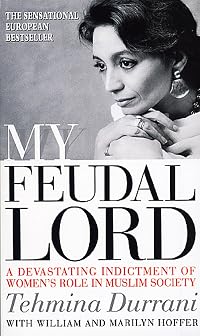
When a woman with brains and beauty from a wealthy background decides to take her fate into her own hands and challenge the restrictions of a male-oriented, conservative society, the consequences can be devastating.Born into one of Pakistan's most influential families, Tehmina Durrani was raised in the privileged milieu of Lahore high society, and educated at the same school as Benazir Bhutto. Like all women of her rank, she was expected to marry a prosperous Muslim from a respectable show more family, bear him many children, and lead a sheltered life of air-conditioned leisure. When she married Mustafa Khar, one of Pakistan's most eminent political figures, she continued to move in the best circles, and learned to keep up the public fa ade as a glamorous, cultivated wife, and mother of four children.In private, however, the story-book romance of the most talked-about couple in Pakistan rapidly turned sour. Mustafa Khar became violently possessive and pathologically jealous, and succeeded in cutting his wife off from the outside world. For the course of the fourteen-year marriage, she suffered alone, in silence.When Tehmina decided to rebel, the price she paid was extremely high- as a Muslim woman seeking a divorce, she signed away all financial support, lost the custody of her four children, and found herself alienated from her friends and disowned by her parents.Following the divorce, she felt she had to tell her story. When Pakistan publishers balked at the controversial nature of her manuscript, she published it herself. The book was a bombshell and shook Pakistani society to its foundations. Her at last was someone who had succeeding in reconciling her faith in Islam with her ardent belief in women's rights. Tehmina's story, adapted now for western readers, provides extraordinary insights into the vulnerable position of women caught in the complex web of Muslim society. show lessTags
Recommendations












Member Reviews
The author was "born into one of Pakistan's most influential families". Tehmina Durrani was raised among the privileged of Lahore high society. She eventually became the sixth wife of Mustafa Khar, "the lion of the Punjab". He cut her off from the outside world, violently possessive and fiendishly jealous of others. Tehmina filed for divorce, and was forced to sign away all support, custody of her four children, disowned by pious parents, and abandoned by friends loyal to the male. She documents not only her life, but the bent virulence of the wealthy "feudal lords" against vulnerable women and the poor.
I gave it 3 stars just for the effort of the author to come out and tell her story. Otherwise it is an ordinary story of a failed marriage (that should have ended years ago than it did), made extraordinary by the presence of big names.
The obvious fault lay with her husband's psychology but she had several chances to get out of that life. Still she kept herself entangled in that miserable relationship.
Before marriage she was warned at several occasions by his wife (at that time), still she wouldn't listen. Her sister did to her marriage what she did to her husband's previous.
Still at some level her ambivalence is understandable regarding divorce. One has to keep in mind that ours is a conservative society that rarely accepts a divorced show more woman. And keep in mind that this is that 70s and 80s she is talking about, social norms were ultra conservative then. But at the same time, she had a chance in London to walk out of that marriage - she missed.
After reading the book I don't know if I feel sorry for her, or pity for fer fallibility or gullible nature, fear of society, contempt for her ego which forced her to live with such a sadistic person (than going to her parents) or I laud her for telling this story.
Today, there are a lot of women in Pakistan that are suffering quitely in failed marriages. Most of them did not have the chance to walk out (like the author had quite a few) or cannot do so in fear of the future (theirs and childrens') and for the most part because the society won't support them. I hope books like these bring some respite to those poor souls. show less
The obvious fault lay with her husband's psychology but she had several chances to get out of that life. Still she kept herself entangled in that miserable relationship.
Before marriage she was warned at several occasions by his wife (at that time), still she wouldn't listen. Her sister did to her marriage what she did to her husband's previous.
Still at some level her ambivalence is understandable regarding divorce. One has to keep in mind that ours is a conservative society that rarely accepts a divorced show more woman. And keep in mind that this is that 70s and 80s she is talking about, social norms were ultra conservative then. But at the same time, she had a chance in London to walk out of that marriage - she missed.
After reading the book I don't know if I feel sorry for her, or pity for fer fallibility or gullible nature, fear of society, contempt for her ego which forced her to live with such a sadistic person (than going to her parents) or I laud her for telling this story.
Today, there are a lot of women in Pakistan that are suffering quitely in failed marriages. Most of them did not have the chance to walk out (like the author had quite a few) or cannot do so in fear of the future (theirs and childrens') and for the most part because the society won't support them. I hope books like these bring some respite to those poor souls. show less
I read this book after reading Owen Bennett Jones' excellent book, Pakistan, as I felt it would be interesting to read a personal, inside-out version of many of the historical events recounted by Jones in his work, and he included a brief but interesting reference to this book. It was a good choice; Tehmina was one of the many wives of the politician known as the "Lion of the Punjab", Mustafa Khar, and therefore was witness to one of Pakistan's most colourful decades. Her "tell all" autobiography of these years reveals as much about the decadent lifestyles and behaviour of the Pakistani elite during this period as it does about Pakistani politics. Betrayals, lies and constant power scrambles seem to have been the order of the day show more whether by disobedient children, pummeled or pampered wives or the provinces' feudal lords. show less
Can't believe such things happen in real life! Vivid and stays with you.
Can't believe such things happen in real life! Vivid and stays with you.
women needs to believe the belief of how hard we can be in times, as well how lovely we are within.
Toen Tehmina Durrani trouwde met Mustafa Khar, sprak heel Pakistan van een sprookjeshuwelijk: Zij was mooi, ontwikkeld en behoorde tot een van de meest invloedrijke families in Pakistan. Hij was rijk, knap en een vooraan-staand politicus. Maar prive bleek het huwelijk een hel. Mustafa Khar. de leeuw van Punjab, was ziekelijk jaloers en beestachtig tiranniek. Veertien jaar lang huilde Tejmina in stilte, terwijl zij naar buiten toe de schone schijn bleef ophouden en meewerkte aan zijn politieke campagnes.
Na haar moeizaam bevochten scheiding schreef Tehmina dit boek over de verschrikkingen van haar huwelijk. Tranen van vernedering doet westerse lezers beseffen hoe kwetsbaar de positie van vrouwen is in een gesloten islamitische show more samenleving, en hoe moeilijk het kan zijn zich te onttrekken aan de macht van een heerszuchtige moslim-echtgenoot. show less
Na haar moeizaam bevochten scheiding schreef Tehmina dit boek over de verschrikkingen van haar huwelijk. Tranen van vernedering doet westerse lezers beseffen hoe kwetsbaar de positie van vrouwen is in een gesloten islamitische show more samenleving, en hoe moeilijk het kan zijn zich te onttrekken aan de macht van een heerszuchtige moslim-echtgenoot. show less
Dec 19, 2007Dutch
Members
- Recently Added By
Author Information


Some Editions
Awards and Honors
Notable Lists
Common Knowledge
- Canonical title
- My feudal lord
- Original title
- My feudal lord
- Original publication date
- 1991
- People/Characters
- Tehmina Durrani; Mustafa Khar; Shakirulla Durrani
- Important places
- Pakistan; Punjab, Pakistan
- First words
- The 6:30 a.m. flight from Lahore to Islamabad was the one I had been taking every Sunday for over a year.
- Last words
- (Click to show. Warning: May contain spoilers.)I sat down. I wrote.
- Original language*
- Englisch
*Some information comes from Common Knowledge in other languages. Click "Edit" for more information.
Classifications
Statistics
- Members
- 270
- Popularity
- 120,226
- Reviews
- 8
- Rating
- (3.33)
- Languages
- 10 — Dutch, English, Finnish, French, German, Italian, Norwegian (Bokmål), Portuguese, Spanish, Swedish
- Media
- Paper
- ISBNs
- 26
- UPCs
- 1
- ASINs
- 3