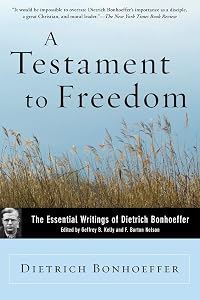
A Testament to Freedom: The Essential Writings of Dietrich Bonhoeffer
by Dietrich Bonhoeffer
On This Page
Description
Dietrich Bonhoeffer was just thirty-nine years old when he was executed by the Nazis in 1945, yet his influence on Christian theology and life has been enormous. "A testment to freedom" takes readers along a biographical-historical journey that follows Bonhoeffer through the various stages of his life and career, including his final years in the underground resistance against the Nazi government and his subsequent martyrdom. This book features previously untranslated writings, sermons, and show more selections from his letters spanning his entire pastoral-theological career, including his prison letters. show lessTags
Recommendations


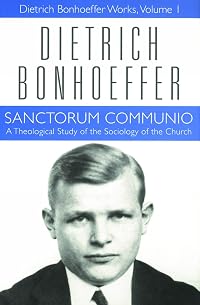

Member Reviews
A Testament to Freedom, completely revised and expanded for this edition, includes previously untranslated writings, excerpts from major books, sermons, and selected letters spanning the years of Bonhoeffer's pastoral and theological career. This magnificent volume takes readers on a historical and biographical journey that follows Bonhoeffer through the various stages of his life--as teacher, ecumenist, pastor, preacher, seminary director, prophet in the Nazi era and, finally, as martyr in pursuit of peace and justice.
The authors have not only made available the necessary texts from every period of Bonhoeffer's life, but also have provided the indispensable commentary and interpretation to allow them to be understood properly.
Ratings
Members
- Recently Added By
Lists

Mike's Theology Books
74 works; 2 members

In Our Time books
4,934 works; 2 members
Author Information

286+ Works 33,716 Members
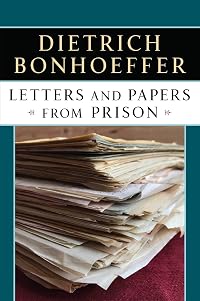
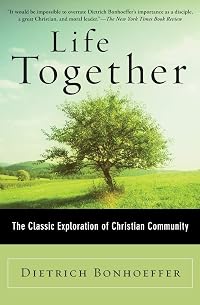
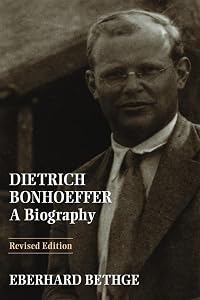
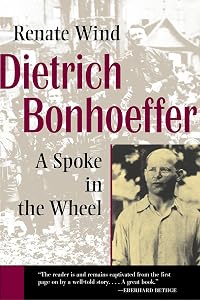
Born in 1906 in Breslau, Germany, now part of Poland, Dietrich Bonhoeffer became a radical theologian. He was raised in a home where the intellect was honored. His father was a physician and professor of psychiatry at the University of Berlin. Such scholars as the church historian Adolph von Harnack, the theologian and sociohistorian Ernst show more Troeltsch, and Max Weber, a founder of modern sociology, were frequent guests of the Bonhoeffers. A precocious student who evidenced a degree of independence of thought that was at odds with the reverence in which his fellow students held their professors, Bonhoeffer decided early on the church and theology as his life's work. He was a product of liberal studies that were greatly influenced by Karl Barth. Bonhoeffer's doctoral dissertation, Sanctorum Communio: A Dogmatic Investigation of the Sociology of the Church, was published in 1930, at the time he was teaching theology at the University of Berlin. A year's study in the United States followed and leadership of the World Alliance of Churches, where his flair for languages and his genial disposition won him many friends. His American and British friends tried unsuccessfully to dissuade him from returning to Germany after the rise of Hitler in 1932. But Bonhoeffer returned, and joining the so-called Confessing Church of those who resisted Germanizing the church, he conducted an illegal seminary in Finkenwalde. Out of this experience came his Life Together; out of his struggles to encourage Christians to resist the Nazis came The Cost of Discipleship, his study of the Sermon on the Mount. Although Bonhoeffer escaped military duty by joining the intelligence service, he was eventually arrested and imprisoned by the Gestapo and was linked to the attempt on Hitler's life. His Letters and Papers from Prison (translated in 1953), was his testimony of faith; the writing gave the American death of God movement the term religionless Christianity. Bonhoeffer was killed in 1945 while he was in prison in Flossenburg. (Bowker Author Biography) show less
Common Knowledge
- Canonical title
- A Testament to Freedom: The Essential Writings of Dietrich Bonhoeffer
Classifications
Statistics
- Members
- 454
- Popularity
- 67,066
- Reviews
- 2
- Rating
- (3.96)
- Languages
- English
- Media
- Paper
- ISBNs
- 2
- ASINs
- 4