
Son of the Morning Star
by Evan S. Connell
On This Page
Description
Custer's Last Stand is among the most enduring events in American history--more than one hundred years after the fact, books continue to be written and people continue to argue about even the most basic details surrounding the Little Bighorn. Evan S. Connell, whom Joyce Carol Oates has described as "one of our most interesting and intelligent American writers," wrote what continues to be the most reliable--and compulsively readable--account of the subject. Connell makes good use of his show more meticulous research and novelist's eye for the story and detail to re-vreate the heroism, foolishness, and savagery of this crucial chapter in the history of the West. show lessTags
Recommendations




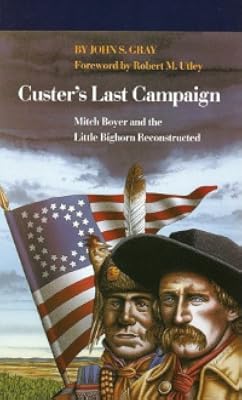
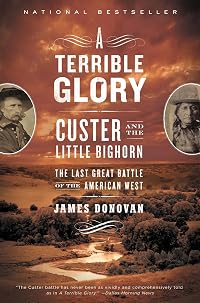
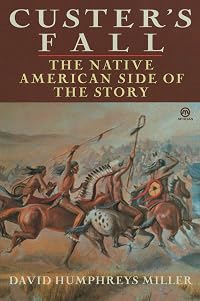

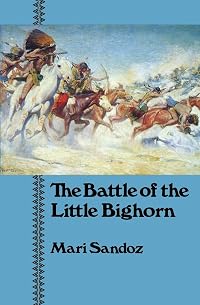













Member Recommendations

Member Reviews
My book group is reading Mrs. Bridge which is just an amazing perfect little book. and while I am re-reading it for the group I am also casting eyes on my favorite book of all time, Evan S. Connells Son of the Morning Star.
This is the book that takes the deepest dive imaginable into the Custer Battle, the Battle of Little Big Horn, where 300 plus US Calvary faced off against perhaps 3000 plus hostile Indians.
It's an important moment in American History so for that alone its a lovely little book.
But it's also a quiet little meditation on America at the turn of the Century, frontier washerwomen, hard scrabble "journalists", Indians, dogs, horses and just about everything else too.
Connell takes each chapter and seizes on a thread - show more Custer, or Mrs. Custer, or Reno, or Benteen, or Sitting Bull. and then tells you everything you wanted to know about them and how they relate to the big event. You might think this is uninteresting. Actually its deeply fascinating and engaging.
If you want to know if Sitting Bull ever went to West Point (he didn't) or if Custer took an Indian woman as his "forest wife" (he did) this is the book for you.
"Son of the Morning Star" was the name that the Indians gave to Custer. Curiously it's also one of the names given to Sitting Bull.
Just lovely wonderful elegant writing about people and history and America. How we got from there to here.
My favorite book ever. Not kidding. show less
This is the book that takes the deepest dive imaginable into the Custer Battle, the Battle of Little Big Horn, where 300 plus US Calvary faced off against perhaps 3000 plus hostile Indians.
It's an important moment in American History so for that alone its a lovely little book.
But it's also a quiet little meditation on America at the turn of the Century, frontier washerwomen, hard scrabble "journalists", Indians, dogs, horses and just about everything else too.
Connell takes each chapter and seizes on a thread - show more Custer, or Mrs. Custer, or Reno, or Benteen, or Sitting Bull. and then tells you everything you wanted to know about them and how they relate to the big event. You might think this is uninteresting. Actually its deeply fascinating and engaging.
If you want to know if Sitting Bull ever went to West Point (he didn't) or if Custer took an Indian woman as his "forest wife" (he did) this is the book for you.
"Son of the Morning Star" was the name that the Indians gave to Custer. Curiously it's also one of the names given to Sitting Bull.
Just lovely wonderful elegant writing about people and history and America. How we got from there to here.
My favorite book ever. Not kidding. show less
Too few historians focus on honing the craft of writing. Too often, it is the novelists and journalists who know how to tell the story. Sadly, these good writers often over-estimate their historical research skills. Fortunately, the novelist Evan S. Connell was no slouch when it came to writing history. Son of the Morning Star is a rambling, dry-wit recount of the horrific Battle of the Little Bighorn in 1876 – "Custer’s last stand".
This fantastic book tells the story through anecdotes, half-heard rumours, and malicious lies. It is by no means chronological in the usual sense. In fact, negative reviewers of the book accuse it of being a hodge-podge, all over the place, lacking in clear chronology, etc. It absolutely is those things, show more but successfully. I knew next to nothing about Custer, the battle, the campaign, or America in the 1870s. Yet I learnt a lot despite the lack of the usual historical guideposts in this book.
The reality that Connell was trying to get across to us is that this battle and everything associated with it had been mythologised out of all perspective in the century preceding this book’s publication. In such an atmosphere, perhaps the best way of approaching the history was to report on the myths, the rumours, the colourful characters, and the ways it has all been retold over time.
By repeating the tall tales, and reporting the rumours, rehashing the lies, and so on (but always with a skeptical eye), Connell brings to us the complexities of the past. A pessimist might say that Son of the Morning Star shows the utter futility of historical research.
You don’t know what the 1870s were like. Nor do I. Nor did Evan S. Connell. And, truthfully, we can’t know. However, I don’t read this as a pessimistic book. The myths, the lies, the self-aggrandisement (not just Custer’s), and the uncertainty are the story. And Connell’s method of relating them to us is precisely what is needed.
Connell’s book is often described as a masterpiece. It means nothing for me to add my voice to the crowds of people acclaiming his work. On a personal level, though, reading this book was mind-expanding. It helped me see what history could be. show less
This fantastic book tells the story through anecdotes, half-heard rumours, and malicious lies. It is by no means chronological in the usual sense. In fact, negative reviewers of the book accuse it of being a hodge-podge, all over the place, lacking in clear chronology, etc. It absolutely is those things, show more but successfully. I knew next to nothing about Custer, the battle, the campaign, or America in the 1870s. Yet I learnt a lot despite the lack of the usual historical guideposts in this book.
The reality that Connell was trying to get across to us is that this battle and everything associated with it had been mythologised out of all perspective in the century preceding this book’s publication. In such an atmosphere, perhaps the best way of approaching the history was to report on the myths, the rumours, the colourful characters, and the ways it has all been retold over time.
By repeating the tall tales, and reporting the rumours, rehashing the lies, and so on (but always with a skeptical eye), Connell brings to us the complexities of the past. A pessimist might say that Son of the Morning Star shows the utter futility of historical research.
You don’t know what the 1870s were like. Nor do I. Nor did Evan S. Connell. And, truthfully, we can’t know. However, I don’t read this as a pessimistic book. The myths, the lies, the self-aggrandisement (not just Custer’s), and the uncertainty are the story. And Connell’s method of relating them to us is precisely what is needed.
Connell’s book is often described as a masterpiece. It means nothing for me to add my voice to the crowds of people acclaiming his work. On a personal level, though, reading this book was mind-expanding. It helped me see what history could be. show less
Evan S. Connell wrote an objective narrative about the people and events surrounding the epic battle at Little Bighorn on that hot June day in 1876 on the plains of Montana. He did an admirable amount of research that allowed him to present both sides of this tragic story. Custer himself is a paradox and his last battle is a puzzle to this day. Connell puts forth the evidence found in journals, eyewitness accounts, letters, and court testimony but offers only suggestions, not conclusions, about what happened on that sunny June 25. There are so many contradictions in the evidence that the only certainty is that Custer and his men of the 7th Cavalry were slaughtered by the Lakota Sioux and Cheyenne warriors. "The mutilation of Custer's show more troops may be explained partly by the grief and bewilderment these Indians felt. They could not understand why soldiers pursued them when all they ever wanted was to be left alone so that they might live as they had lived for centuries: hunting, fishing, trailing the munificent buffalo. They failed to see whey they should live in one place all year, why they should become farmers when they had been hunters. They did not see how the land could be divided, allotted, owned. They thought the earth was created for everybody..." (286)
*Gore Alert!* There is plenty of carnage in this book. Scalpings are depicted in detail and other atrocities are vividly described. There don't seem to be any real heroes or villains here, however. They are all fighting for their lives on this day and anything goes. Looking at the broad picture, the natives are fighting for the right to maintain their way of life and the soldiers are advancing Manifest Destiny which only works if the Indians will stay put on their allotted reservations. It was a clash of cultures that failed to be settled peacefully. Only more bloodshed would do the job.
This book reads like a novel because it's written by a gifted novelist. It is much more than a book about a famous battle. It contains a wealth of details about life in the west during the second half of the 19th century. Read it and learn. Read it and weep. show less
*Gore Alert!* There is plenty of carnage in this book. Scalpings are depicted in detail and other atrocities are vividly described. There don't seem to be any real heroes or villains here, however. They are all fighting for their lives on this day and anything goes. Looking at the broad picture, the natives are fighting for the right to maintain their way of life and the soldiers are advancing Manifest Destiny which only works if the Indians will stay put on their allotted reservations. It was a clash of cultures that failed to be settled peacefully. Only more bloodshed would do the job.
This book reads like a novel because it's written by a gifted novelist. It is much more than a book about a famous battle. It contains a wealth of details about life in the west during the second half of the 19th century. Read it and learn. Read it and weep. show less
Once in a while you find a book that is so well written that beyond the days of reading, long after you have finished it, the book continues to haunt you. Son of the Morning Star is one of those books. The beauty of Evan Connell's prose and the excellence of his history make this book a minor masterpiece. Perhaps the larger-than-life presence of the central character, who the Indians named "son of the morning star", General George Armstrong Custer, is partly the reason for the magnificence of the book.
“Even now,” Evan Connell writes in his book, “after a hundred years, his name alone will start an argument. More significant men of his time can be discussed without passion because they are inextricably woven into a tapestry of the show more past, but this hotspur refuses to die. He stands forever on that dusty Montana slope.”
Who knows the mind of Custer and the reasons that led to his demise at Little Big Horn. Maybe Evan S. Connell hits on the right one by thinking the most simply: Custer had never known defeat, perhaps couldn’t see it even when it was only one hilltop away. Few non-academic histories have been so well-written as this and have such compelling central themes that you can't put them down. Near-masterpiece is the best thing I can say when recommending this to anyone who enjoys reading a great book. It was simply a delight to read. show less
“Even now,” Evan Connell writes in his book, “after a hundred years, his name alone will start an argument. More significant men of his time can be discussed without passion because they are inextricably woven into a tapestry of the show more past, but this hotspur refuses to die. He stands forever on that dusty Montana slope.”
Who knows the mind of Custer and the reasons that led to his demise at Little Big Horn. Maybe Evan S. Connell hits on the right one by thinking the most simply: Custer had never known defeat, perhaps couldn’t see it even when it was only one hilltop away. Few non-academic histories have been so well-written as this and have such compelling central themes that you can't put them down. Near-masterpiece is the best thing I can say when recommending this to anyone who enjoys reading a great book. It was simply a delight to read. show less
Okay, admit it, most people's eyes glaze over at the thought of a history book. Even people like me, who like reading history books, have to admit that too many works of history can be a heavy slog to get through. I mean, it actually feels like working to read some histories.
Because of this, I have tremendous respect for any author who, like this one, can write a history book that is both hard to put down, and conveys an enormous amount of solidly researched information, and then leaves you with a picture in your mind of a different place and time than the one you live in, or perhaps just a different time, which might as well be a different place.
Layers and layers of mythology have accumulated like so much sediment over the story of show more George Armstrong Custer and the Battle of the Little Bighorn in 1876. It is one example of the mythologizing of the entire Old West, such that many people think they have a feel for the period, but in fact have a distorted view. People of a certain age, like myself, grew up when Westerns were still a dominant American movie and TV genre. They were not meant to be documentaries, of course, but these Hollywood spectacles have infected our whole American culture (and that of the world beyond), with a romanticized version of the Old West.
This book is a not at all romanticized telling of one of the last of the Indian Wars, in all its complexity and brutality, with all its ironies and surprising facts. This also requires telling a lot of other stories: the life and military career of Custer; the sad postwar fate of another less famous US officer who survived the campaign, the many different accounts of the campaign and battle gathered from the Cheyenne, Lakota, Dakota, and Arapaho who defeated Custer's force. Through all these stories, a picture emerges of a whole era of US culture, as well as an era of Plains Indian cultures, as well as of many individuals.
Surprises abound. According to Indian accounts, they of course knew of the US cavalry's approach long before the battle. They were still surprised by the attack, though, because they assumed the smaller force was coming to talk to them. And they were ready to go to the reservation, if asked! They had no idea who Custer was, by the way. A substantial unit of the US force was near Custer's detachment, but did not know exactly what was happening when the battle occurred. They were engaged by the Indians as well, and spent a long night expecting to be overrun and killed. But the Indians did not actually want to destroy them, so they did not.
Then there are the facts that are not so surprising if you take the time to think about them, but are nonetheless hard to fathom. For example, some of the Indians present at the battle were still alive in the 1950s. Because of the mythology of the "Old West", we find that kind of continuity with post-World-War-II America startling.
I actually read this book several years ago, and I haven't consulted it since. I mention this because this book stayed with me. I can still recall vividly some of the scenes and people described in it. Also, I much appreciated the author's objectivity. It comes through pretty clearly that he didn't think much of Custer, but this emerges mainly through the telling of actual incidents in the man's life.
Especially notable to me was that he didn't render the Plains Indians as some sort of unknowable, exotic people, different than us normal (i.e. white) people, you see. Yes, he carefully describes a lot of distinctive aspects of the Indians' cultures and traditions, but the individuals he writes about are always fully imaginable as the same sort of people that inhabit the rest of the world. That is, he writes about all the people in this book as individuals, who fit within their own time and place as much as anyone else. show less
Because of this, I have tremendous respect for any author who, like this one, can write a history book that is both hard to put down, and conveys an enormous amount of solidly researched information, and then leaves you with a picture in your mind of a different place and time than the one you live in, or perhaps just a different time, which might as well be a different place.
Layers and layers of mythology have accumulated like so much sediment over the story of show more George Armstrong Custer and the Battle of the Little Bighorn in 1876. It is one example of the mythologizing of the entire Old West, such that many people think they have a feel for the period, but in fact have a distorted view. People of a certain age, like myself, grew up when Westerns were still a dominant American movie and TV genre. They were not meant to be documentaries, of course, but these Hollywood spectacles have infected our whole American culture (and that of the world beyond), with a romanticized version of the Old West.
This book is a not at all romanticized telling of one of the last of the Indian Wars, in all its complexity and brutality, with all its ironies and surprising facts. This also requires telling a lot of other stories: the life and military career of Custer; the sad postwar fate of another less famous US officer who survived the campaign, the many different accounts of the campaign and battle gathered from the Cheyenne, Lakota, Dakota, and Arapaho who defeated Custer's force. Through all these stories, a picture emerges of a whole era of US culture, as well as an era of Plains Indian cultures, as well as of many individuals.
Surprises abound. According to Indian accounts, they of course knew of the US cavalry's approach long before the battle. They were still surprised by the attack, though, because they assumed the smaller force was coming to talk to them. And they were ready to go to the reservation, if asked! They had no idea who Custer was, by the way. A substantial unit of the US force was near Custer's detachment, but did not know exactly what was happening when the battle occurred. They were engaged by the Indians as well, and spent a long night expecting to be overrun and killed. But the Indians did not actually want to destroy them, so they did not.
Then there are the facts that are not so surprising if you take the time to think about them, but are nonetheless hard to fathom. For example, some of the Indians present at the battle were still alive in the 1950s. Because of the mythology of the "Old West", we find that kind of continuity with post-World-War-II America startling.
I actually read this book several years ago, and I haven't consulted it since. I mention this because this book stayed with me. I can still recall vividly some of the scenes and people described in it. Also, I much appreciated the author's objectivity. It comes through pretty clearly that he didn't think much of Custer, but this emerges mainly through the telling of actual incidents in the man's life.
Especially notable to me was that he didn't render the Plains Indians as some sort of unknowable, exotic people, different than us normal (i.e. white) people, you see. Yes, he carefully describes a lot of distinctive aspects of the Indians' cultures and traditions, but the individuals he writes about are always fully imaginable as the same sort of people that inhabit the rest of the world. That is, he writes about all the people in this book as individuals, who fit within their own time and place as much as anyone else. show less
Connell has written fiction, history, poetry, and essays. Son of the Morning Star is non-fiction though some of the other genres he writes in leak through. It is history with a definite flavor of its own. He starts on a subject, then digresses, then digresses from the digression. Sometimes there are several levels of this digressing. Instead of being maddening, something wonderful starts to happen. He is filling in all the blank spots on the canvas of the era and a full detailed picture emerges. Connell will quote from a diary or journal from a source of the day and follow with a one word sentence from himself like- Really. These sources conflict one another so often it's hard to divine the truth from wild imaginations. The end result show more is not formal buttoned-down history.
At times, Son of the Morning Star out Blood Meridians Blood Meridian. There is violence of every imaginable sort. It was a bloody rough and tumble world on the Plains and Mountain West in the latter half of the nineteenth century. White on white violence. Native American on native violence. White on Red violence. Red on White violence. It was perpetrated against animals, women, children, and even the grasses of the prairie. Slaughter-fests would not be an inappropriate term. The writing doesn't glory in the violence but does record it in some detail.
General George Armstrong Custer. What a bundle of contradictions contained in human form. Many soldiers who went through much of the Civil War claimed they never knew hardship until they served under him. He was known as Hard-Ass or Iron Butt. Some years the desertion rate of his unit was more than fifty percent. He made enemies by the hundreds. He also had his supporters. He needed them after being court-martialed. President Grant didn't want him on the frontier but he begged his way back onto the field. He took his wife to several posts with him and pampered her endlessly but also had mistresses. He loved animals. He caught a field mouse and kept it in a inkpot on his desk. It would run up his arm then nest in his hair. He let a porcupine sleep on his bed. He wrote poems about some of his dogs when they died. Once, he had his column march around a meadowlark's nest because he didn't want it disturbed. It wasn't all consistency though, even when it came to animals. He saw a white pelican flying and shot it to measure its wingspan. When he visited his parents he would be sobbing like a baby when it was time to part ways. He was flawed to the bone but probably wasn't evil incarnate.
The Battle of the Little Bighorn is one of those American events that just won't fade into oblivion. Each generation keeps the interest and myths and legends of the battle alive. There have been hundreds of books, paintings, and historical interpretations of that battle in 1876. Custer's intentions and performance at Little Bighorn will always be a contentious subject. This book is a good one covering many angles of the battle, the era, and the man. show less
At times, Son of the Morning Star out Blood Meridians Blood Meridian. There is violence of every imaginable sort. It was a bloody rough and tumble world on the Plains and Mountain West in the latter half of the nineteenth century. White on white violence. Native American on native violence. White on Red violence. Red on White violence. It was perpetrated against animals, women, children, and even the grasses of the prairie. Slaughter-fests would not be an inappropriate term. The writing doesn't glory in the violence but does record it in some detail.
General George Armstrong Custer. What a bundle of contradictions contained in human form. Many soldiers who went through much of the Civil War claimed they never knew hardship until they served under him. He was known as Hard-Ass or Iron Butt. Some years the desertion rate of his unit was more than fifty percent. He made enemies by the hundreds. He also had his supporters. He needed them after being court-martialed. President Grant didn't want him on the frontier but he begged his way back onto the field. He took his wife to several posts with him and pampered her endlessly but also had mistresses. He loved animals. He caught a field mouse and kept it in a inkpot on his desk. It would run up his arm then nest in his hair. He let a porcupine sleep on his bed. He wrote poems about some of his dogs when they died. Once, he had his column march around a meadowlark's nest because he didn't want it disturbed. It wasn't all consistency though, even when it came to animals. He saw a white pelican flying and shot it to measure its wingspan. When he visited his parents he would be sobbing like a baby when it was time to part ways. He was flawed to the bone but probably wasn't evil incarnate.
The Battle of the Little Bighorn is one of those American events that just won't fade into oblivion. Each generation keeps the interest and myths and legends of the battle alive. There have been hundreds of books, paintings, and historical interpretations of that battle in 1876. Custer's intentions and performance at Little Bighorn will always be a contentious subject. This book is a good one covering many angles of the battle, the era, and the man. show less
Shocked out of my cowboy boots to see a review calling this book "disorganized". The reason why I love it is that the author circles and circles around the main event, talking about everything from frontier laundresses to dance hall recreastion and never loses sight of the main event.
It works for me.
It works for me.
Members
- Recently Added By
Lists

Biggest Disappointments
606 works; 168 members

Novels that you shouldn't waste your time on
94 works; 50 members

Manning's Prairie List
5 works; 1 member

Mustich's 1000 Books to Read Before You Die: A Life Changing List
1,001 works; 20 members
Author Information

30+ Works 5,308 Members
Evan S. Connell was born August 17, 1924 in Kansas City, Missouri. He graduated from the University of Kansas in 1947. His first work, The Anatomy Lesson and Other Stories, was published in 1957. His first novel, Mrs. Bridge, was published in 1959. The sequel, Mr. Bridge, was published ten years later. In 1990, both novels were adapted into the show more film Mr. and Mrs. Bridge starring Paul Newman and Joanne Woodward. He wrote more than 15 books during his lifetime including Son of the Morning Star: Custer and the Little Bighorn, The Patriot, The Diary of a Rapist, The Connoisseur, Deus Lo Volt!, and Lost in Uttar Pradesh. He died on January 10, 2013 at the age of 88. (Bowker Author Biography) show less
Awards and Honors
Awards
Distinctions
Series
Belongs to Publisher Series
Work Relationships
Common Knowledge
- Canonical title*
- Custer : La masacre del 7.º de Caballería
- Alternate titles
- Son of the Morning Star: General Custer and the Battle of the Little Bighorn
- Original publication date
- 1984
- People/Characters
- George Armstrong Custer; Crazy Horse; Sitting Bull; Frederick Benteen; Marcus Reno; Myles Keogh (show all 8); Tom Custer; Alfred Terry
- Important places
- Little Bighorn, Montana, USA; Montana, USA
- Important events
- Battle of the Little Bighorn (1876-06-25 | 1876-06-26)
- Related movies
- Son of the Morning Star (1991 | IMDb)
- Epigraph
- We do not see our hand in what happens,
so we call certain events melancholy accidents. . .
Stanley Cavell - Dedication
- To Curt Gentry
- First words
- Lt. James Bradley led a detachment of Crow Indian scouts up the Bighorn Valley during the summer of 1876.
- Last words
- (Click to show. Warning: May contain spoilers.)"And I have often wondered if, when I was riding among the dead where he was lying, my pony may have kicked dirt upon his body."
- Blurbers
- Stegner, Page ; Brown, Dee; Matthiessen, Peter
- Canonical DDC/MDS
- 973.82
- Canonical LCC
- E83.876
*Some information comes from Common Knowledge in other languages. Click "Edit" for more information.
Classifications
- Genres
- History, Nonfiction, Biography & Memoir, General Nonfiction
- DDC/MDS
- 973.82 — History & geography History of North America United States The Gilded Age, Reconstruction, Spanish American War (1865-1901) Ulysses S. Grant (1869-1877) 15th Amendment, Enforcements Acts, Panic of 1873
- LCC
- E83.876 — History of the United States America Indians of North America Indian wars
- BISAC
Statistics
- Members
- 1,473
- Popularity
- 15,882
- Reviews
- 21
- Rating
- (4.18)
- Languages
- English, Portuguese, Spanish
- Media
- Paper, Audiobook, Ebook
- ISBNs
- 23
- ASINs
- 18