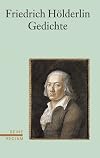
Gedichte
by Friedrich Hölderlin
On This Page
Description
Friedrich Hölderlin was one of Europe's greatest poets. The strange and beautiful language of his late poems is recreated by David Constantine in these remarkable verse translations. This edition, winner of the European Poetry Translation Prize, has since been superseded by two enlarged editions, most recently Selected Poetry (2018).Tags
Recommendations













Member Reviews
Hölderlin led quite a tragic life, influenced by mental illness and his mutual love for Susette Gontard, wife of his employer. He worked as a house teacher and taught the Gontards' children until the affair was discovered and he was dismissed.
I think that Hölderlin is a fascinating character, but unfortunately, reading his poems was mostly a chore to me. I did enjoy the love poems he wrote to Susette Gontard and several others that were easier to understand, but most of them went over my head, despite the extensive notes provided by the editor. It seems that even specialists struggle with the texts sometimes, as is apparent in the many questions and uncertainties included in the notes.
The book includes 77 poems, chosen by Hölderlin show more expert Gerhard Kurz. Many of them are really long and also hard to grasp. It does not help that the topics do not seem that relevant or even understandable today, such as the course of history flowing from the "orient" to the "occident" and the Christian god as a kind of successor or ending point of the old world of Greek gods. Most poems are heavily influenced by Greek and Roman mythology, and it was hard to follow them without having an extensive knowledge of that. The French Revolution also plays a big part, as Hölderlin had high hopes for it.
The language is very complicated, too. The poems are full of inversions and long, complex sentences.
As said above, I liked the poems that had more personal topics. The others are certainly artistic and show the work of a very smart and capable mind, but they did not have much to say to me today. show less
I think that Hölderlin is a fascinating character, but unfortunately, reading his poems was mostly a chore to me. I did enjoy the love poems he wrote to Susette Gontard and several others that were easier to understand, but most of them went over my head, despite the extensive notes provided by the editor. It seems that even specialists struggle with the texts sometimes, as is apparent in the many questions and uncertainties included in the notes.
The book includes 77 poems, chosen by Hölderlin show more expert Gerhard Kurz. Many of them are really long and also hard to grasp. It does not help that the topics do not seem that relevant or even understandable today, such as the course of history flowing from the "orient" to the "occident" and the Christian god as a kind of successor or ending point of the old world of Greek gods. Most poems are heavily influenced by Greek and Roman mythology, and it was hard to follow them without having an extensive knowledge of that. The French Revolution also plays a big part, as Hölderlin had high hopes for it.
The language is very complicated, too. The poems are full of inversions and long, complex sentences.
As said above, I liked the poems that had more personal topics. The others are certainly artistic and show the work of a very smart and capable mind, but they did not have much to say to me today. show less
Por lo visto, esta edición reúne los poemas que Hölderlin escribió en apenas cinco años, de 1797 a 1802, y que suelen considerarse los mejores de su producción, antes de que cayese en la enfermedad mental. Son 17 poemas de extensión variable, pero nunca demasiado largos.
A mí me han gustado. Es verdad que no siempre he alcanzado a pillarles todo el significado, pero eso me pasa con casi todos los poetas que conozco. Me ha parecido que Hölderlin habla casi siempre de esperanza precisamente porque mira mucho al pasado. El poema que más me ha gustado, de hecho, es el más largo, llamado "El archipiélago", en el que hace un emocionado canto a la Grecia antigua, que también aparecerá en otros poemas de esta serie. Pero la mirada show more al pasado no es solamente para lamentarse del presente (algo que el poeta solo hace de pasada) sino, sobre todo, para esperar que el futuro sea mucho mejor. Es verdad que ese futuro redentor está "arriba" y frecuentemente "en la noche", como Novalis, pero también es un futuro para nuestro mundo. show less
A mí me han gustado. Es verdad que no siempre he alcanzado a pillarles todo el significado, pero eso me pasa con casi todos los poetas que conozco. Me ha parecido que Hölderlin habla casi siempre de esperanza precisamente porque mira mucho al pasado. El poema que más me ha gustado, de hecho, es el más largo, llamado "El archipiélago", en el que hace un emocionado canto a la Grecia antigua, que también aparecerá en otros poemas de esta serie. Pero la mirada show more al pasado no es solamente para lamentarse del presente (algo que el poeta solo hace de pasada) sino, sobre todo, para esperar que el futuro sea mucho mejor. Es verdad que ese futuro redentor está "arriba" y frecuentemente "en la noche", como Novalis, pero también es un futuro para nuestro mundo. show less
Oct 17, 2025Spanish
Ratings
Members
- Recently Added By
Author Information

416+ Works 3,348 Members
The German lyric poet John Christian Friedrich Hölderlin was born in 1770. Admired for his ability to re-create the forms of classical Greek poetry in German verse, Holderlin also completed the novel Hyperion. Holderlin studied theology at the University of Tubingen, where he obtained a Master's degree. As a young man he worked as a tutor, show more including in the house of a wealthy Frankfurt banker, where he and his employer's wife, Susette, fell in love. After a short, happy affair, Holderlin was forced to leave. Though he was shaken by the experience, Holderlin created much of his finest work during this period, including elegies and odes. Shortly thereafter, Holderlin began to suffer from schizophrenia and composed several poems that were notable for their apocalyptic grandeur. For the last thirty-six years of his life, he suffered from chronic mental illness. Holderlin died in 1843. (Bowker Author Biography) show less
Awards and Honors
Series
Belongs to Publisher Series
Common Knowledge
- Original language
- German
- Disambiguation notice
- Poems selected by Stephan Hermlin
Classifications
- Genres
- Poetry, Fiction and Literature
- DDC/MDS
- 831.6 — Literature & rhetoric German & related literatures German poetry 1750–1832 : 18th century; classical period; romantic period
- LCC
- PT2359 .H2 — Language and Literature German, Dutch and Scandinavian literatures German literature Individual authors or works 1700-ca. 1860/70
- BISAC
Statistics
- Members
- 176
- Popularity
- 186,735
- Reviews
- 2
- Rating
- (3.76)
- Languages
- English, German, Portuguese, Spanish
- Media
- Paper, Audiobook, Ebook
- ISBNs
- 23
- ASINs
- 12