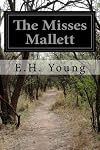
The Misses Mallett
by E. H. Young
On This Page
Description
The virtue of this quiet and accomplished piece of writing lies in its quality and in its character-drawing to summarize it would be to give no idea of its charm. Neither realism nor romance, it is a book by a writer of insight and sensibility.Tags
Recommendations











Member Reviews
'The Malletts don't marry, Henrietta. Look at us, as happy as the day is long, with all the fun and none of the trouble. We've been terrible flirts, Sophia and I. Rose is different, but at least she hasn't married. The three Miss Malletts of Nelson Lodge! Now there are four of us, and you must keep up our reputation.' (p. 79)
And that's the book, in a nutshell. Caroline, Sophia, and their stepsister Rose are all unmarried women of a certain age, although Rose is several years younger and still considered attractive. When their niece Henrietta comes to live with them, she upsets the gentle rhythm of spinsterhood. These women have become very, very comfortable just being themselves:
Sitting up in bed looking grotesquely terrible, they show more discussed the event. Caroline, like Medusa, but with hair curlers instead of snakes sprouting from her head, and Sophia with her heavy plait hanging over her shoulder and defying with its luxuriance the yellowness of her skin, they sat side by side, propped up with pillows, inured to the sight of each other in undress. (p. 32)
Hmm ... perhaps they're a little too comfortable!
Henrietta is young and has a mind of her own. While she loves and admires her aunts, she has no intention of following in their footsteps. And so she sets her sights on local heart-throb Francis Sales who, incidentally, has had a secret "thing" with Rose for some time. And who, incidentally, is also married to an invalid confined to her bed. Meanwhile Henrietta is being pursued by the dull but caring Charles Batty, a man who loves music, but can't stand to attend concerts because other patrons whisper and crinkle their programs. Rose attempts to resolve the conflict with Henrietta in many ways, all indirect because heaven forbid the situation be brought out into the open. I found this infuriating, and lost patience with them more than once.
While Young's social satire is amusing, autobiographical details add much interest to this story. E. H. Young's husband died at Ypres, and later she went to live with Ralph Henderson, a school headmaster, and his wife, who was a wife in name only. They were inseparable, and while those in their social circle understood the situation, their relationship was not publicly acknowledged. Young wrote The Misses Mallett when her living arrangement was still fairly new, and I can see how she used the experience to work through issues she must have wrestled with at the time. Oh, how I wish she could have written more openly about that situation! show less
And that's the book, in a nutshell. Caroline, Sophia, and their stepsister Rose are all unmarried women of a certain age, although Rose is several years younger and still considered attractive. When their niece Henrietta comes to live with them, she upsets the gentle rhythm of spinsterhood. These women have become very, very comfortable just being themselves:
Sitting up in bed looking grotesquely terrible, they show more discussed the event. Caroline, like Medusa, but with hair curlers instead of snakes sprouting from her head, and Sophia with her heavy plait hanging over her shoulder and defying with its luxuriance the yellowness of her skin, they sat side by side, propped up with pillows, inured to the sight of each other in undress. (p. 32)
Hmm ... perhaps they're a little too comfortable!
Henrietta is young and has a mind of her own. While she loves and admires her aunts, she has no intention of following in their footsteps. And so she sets her sights on local heart-throb Francis Sales who, incidentally, has had a secret "thing" with Rose for some time. And who, incidentally, is also married to an invalid confined to her bed. Meanwhile Henrietta is being pursued by the dull but caring Charles Batty, a man who loves music, but can't stand to attend concerts because other patrons whisper and crinkle their programs. Rose attempts to resolve the conflict with Henrietta in many ways, all indirect because heaven forbid the situation be brought out into the open. I found this infuriating, and lost patience with them more than once.
While Young's social satire is amusing, autobiographical details add much interest to this story. E. H. Young's husband died at Ypres, and later she went to live with Ralph Henderson, a school headmaster, and his wife, who was a wife in name only. They were inseparable, and while those in their social circle understood the situation, their relationship was not publicly acknowledged. Young wrote The Misses Mallett when her living arrangement was still fairly new, and I can see how she used the experience to work through issues she must have wrestled with at the time. Oh, how I wish she could have written more openly about that situation! show less
The Misses Mallet is the first of E.H. Young's novels set in Radstowe (Bristol), England in the early 20th century. Among other things it is a love poem to the place in its descriptions of the changing seasons both in town and in the countryside on the other side of the bridge. For the characters it is also a love story.
There are four Misses Mallet. Caroline and Sophia are old maids who continue to dress in the bright colors of their youth and to fascinate men as they always did. Caroline is big and commands attention; Sophia is fair and quieter. They live in practical luxury in their very comfortable home with their half-sister Rose. Rose is thirty-something, dark, beautiful, self-contained. She is loved by Francis Sales, a gentleman show more farmer, a perfectly acceptable match for her - equally handsome and rich - except that Rose doesn't love him. Into this quiet family comes Henrietta, daughter of the Mallets' profligate but charming brother, now deceased. Henrietta has lived in a poor boarding house with her mother since her father's death and comes to them when her mother, decidedly the Mallets' social inferior, dies.
Meanwhile, Francis has returned from an extended trip to Canada with a wife, blond, lovely Christabel, but he still loves Rose. Henrietta, who is 18 or 19, sees Francis in the countryside and immediately falls in love with him. Charles Batty, son of the Mallets' solicitor, sees Henrietta and falls in love with her.
The book is a working out of these relationships. It fails for me in the character of Rose, who is central to the plot. We see her inmost thoughts and feelings, and I find them hard to believe. Francis is also an unsatisfactory character. On the other hand, Charles with a touch of Asperger's is such a charming bumbler that I don't care whether he's true-to-life or not. All in all, this is a charming book as the two youngest Misses Mallet are pulled from danger to safety from boredom to adventure from selfishness to love and back again and again. show less
There are four Misses Mallet. Caroline and Sophia are old maids who continue to dress in the bright colors of their youth and to fascinate men as they always did. Caroline is big and commands attention; Sophia is fair and quieter. They live in practical luxury in their very comfortable home with their half-sister Rose. Rose is thirty-something, dark, beautiful, self-contained. She is loved by Francis Sales, a gentleman show more farmer, a perfectly acceptable match for her - equally handsome and rich - except that Rose doesn't love him. Into this quiet family comes Henrietta, daughter of the Mallets' profligate but charming brother, now deceased. Henrietta has lived in a poor boarding house with her mother since her father's death and comes to them when her mother, decidedly the Mallets' social inferior, dies.
Meanwhile, Francis has returned from an extended trip to Canada with a wife, blond, lovely Christabel, but he still loves Rose. Henrietta, who is 18 or 19, sees Francis in the countryside and immediately falls in love with him. Charles Batty, son of the Mallets' solicitor, sees Henrietta and falls in love with her.
The book is a working out of these relationships. It fails for me in the character of Rose, who is central to the plot. We see her inmost thoughts and feelings, and I find them hard to believe. Francis is also an unsatisfactory character. On the other hand, Charles with a touch of Asperger's is such a charming bumbler that I don't care whether he's true-to-life or not. All in all, this is a charming book as the two youngest Misses Mallet are pulled from danger to safety from boredom to adventure from selfishness to love and back again and again. show less
Two spinsters of middling years, Caroline and Sophia Mallett, live in their beautiful and exceedingly comfortable home willed to them by their father, the Colonel. Their half sister, Rose Mallet, a product of the Colonel’s second marriage and therefore much younger (late 20s at the start of the novel) lives with them as well. Caroline maintains that the Malletts are always unmarried and yet are confirmed flirts but as the story unfolds, we learn that Rose is idolised by a local landowner, Francis Sales, and has teetered on reciprocating his love, while Sophia has had a deep love of her own in her past.
Into this ordered world comes the young Henrietta, their niece, with her beauty, vigour and intelligence. She will not be moulded into show more the format created by the older Misses Mallet but, freed from awful poverty, strikes out to make her own life in their village.
Young’s characters are finely drawn, from the saucy Caroline to the deeply reserved Rose, the delicate Sophia to the sparkling Henrietta. Letter perfect are her depictions of the interiors of each of the three homes forming the triangle of the story: Nelson Lodge of the Malletts, the Batty’s home and the Sales’ farm. But also perfect are her descriptions of the countryside, the woods, fields, river and roads–so much so that you feel that you are there on horseback with Rose or walking across the village green with Henrietta.
Underneath the veneer of calm and order there are deep waters swirling, treacherous at times, threatening to pull Henrietta astray and Rose's serene exterior apart. There is danger and death, possible betrayal and misbehaviour, all held at bay by the control and strength of Rose.
The men in the story are flawed and weak: Henrietta’s father, Reginald Mallet, was an impulsive and philandering cad with a huge streak of egocentric selfishness. Francis Sales is Heathcliffian in his striking handsomeness and strength, sultry and sulky, but ultimately weak, with almost no understanding of women or even his own mind, which is probably why Rose rejected his proposal when she was twenty-two (although she claimed it was for his lack of romance). Charles Batty is an odd duck whose mannerisms and eccentricities struck me as owing no little to autism spectrum disorder, with strong hints of Asperger’s, and yet he has a strength to him that Sales lacks, proving himself a good and true friend. The women, by contrast, are strong and centred.
How it all falls out and is resolved might seem slightly predictable or even unsatisfactory to a reader wanting more action or crisper resolutions but I enjoyed this story immensely. It wasn’t so much the arrival at the destination as the journey–and definitely the writing. show less
Into this ordered world comes the young Henrietta, their niece, with her beauty, vigour and intelligence. She will not be moulded into show more the format created by the older Misses Mallet but, freed from awful poverty, strikes out to make her own life in their village.
Young’s characters are finely drawn, from the saucy Caroline to the deeply reserved Rose, the delicate Sophia to the sparkling Henrietta. Letter perfect are her depictions of the interiors of each of the three homes forming the triangle of the story: Nelson Lodge of the Malletts, the Batty’s home and the Sales’ farm. But also perfect are her descriptions of the countryside, the woods, fields, river and roads–so much so that you feel that you are there on horseback with Rose or walking across the village green with Henrietta.
Underneath the veneer of calm and order there are deep waters swirling, treacherous at times, threatening to pull Henrietta astray and Rose's serene exterior apart. There is danger and death, possible betrayal and misbehaviour, all held at bay by the control and strength of Rose.
The men in the story are flawed and weak: Henrietta’s father, Reginald Mallet, was an impulsive and philandering cad with a huge streak of egocentric selfishness. Francis Sales is Heathcliffian in his striking handsomeness and strength, sultry and sulky, but ultimately weak, with almost no understanding of women or even his own mind, which is probably why Rose rejected his proposal when she was twenty-two (although she claimed it was for his lack of romance). Charles Batty is an odd duck whose mannerisms and eccentricities struck me as owing no little to autism spectrum disorder, with strong hints of Asperger’s, and yet he has a strength to him that Sales lacks, proving himself a good and true friend. The women, by contrast, are strong and centred.
How it all falls out and is resolved might seem slightly predictable or even unsatisfactory to a reader wanting more action or crisper resolutions but I enjoyed this story immensely. It wasn’t so much the arrival at the destination as the journey–and definitely the writing. show less
The narrative of the enormously charming novel, concerns aging spinster sisters Caroline and Sophia, and their younger half sister Rose, and their niece, the young Henrietta. Henrietta comes to live with the sisters upon the death of her mother, and is immediately drawn into their beautiful genteel world. This is world instantly recognisable, although it is gone forever now. It is a small world of good manners, and gentility.
Caroline, often heard to say "Mallets don't marry" - is not keen on the thought of Henrietta marrying, however Sophia is more romantic. Rose has a complex unconsummated relationship with a married man - Francis Sales - whom she has known since childhood. Beautiful, young Henrietta comes to the attention of Francis show more Sales, but is also admired by the wonderfully eccentric Charles Batty. These strained and flawed relationships are wonderfully explored, the characters beautifully drawn. The novel does have a lovely easy feel to it, and yet E H Young doesn't let her readers off with a mere cosy read. There is real drama to be mulled over, in this story of love, jealousies and missed opportunities. show less
Caroline, often heard to say "Mallets don't marry" - is not keen on the thought of Henrietta marrying, however Sophia is more romantic. Rose has a complex unconsummated relationship with a married man - Francis Sales - whom she has known since childhood. Beautiful, young Henrietta comes to the attention of Francis show more Sales, but is also admired by the wonderfully eccentric Charles Batty. These strained and flawed relationships are wonderfully explored, the characters beautifully drawn. The novel does have a lovely easy feel to it, and yet E H Young doesn't let her readers off with a mere cosy read. There is real drama to be mulled over, in this story of love, jealousies and missed opportunities. show less
In her first novel written after the Great War, the death of her husband, and her embarkation on a rather unconventional new life, E H Young tells the story of four Misses Mallett.
There are two sisters in late middle age, Caroline and Sophia Mallett. They live in a large, beautiful and comfortable home that had been left to them by their father, the Colonel; together with their much younger half-sister, Rose Mallet, the child of the Colonel’s second marriage.
Caroline is delighted with their situation, and she explains to their niece:
‘The Malletts don’t marry, Henrietta. Look at us, as happy as the day is long, with all the fun and none of the trouble. We’ve been terrible flirts, Sophia and I. Rose is different, but at least she show more hasn’t married. The three Miss Malletts of Nelson Lodge! Now there are four of us, and you must keep up our reputation.’
Henrietta was the fourth Miss Mallett, the daughter of the Colonel’s disinherited son, who had come to live with her aunts after her mother’s death. She had lived a very different life, she had an independent spirit, and she wanted to make her own decisions and not be told that she must follow a particular traditions.
She would learn that things were not quite as simple and straightforward as Caroline suggested.
Sophia had a great love in her past, and she cherished her memories of him
Rose had been beloved by a local landowner, Francis Sales, but she had rejected his proposals because she wasn’t sure that she loved him enough. She wondered if she had made the right decision when he went away, and when he returned with a bride who was quite unlike her; but she knew that she had to live with her decision.
And then there was a particularly cruel twist of fate ...
Henrietta and Rose learned each other’s stories, but they were of different generations, they had different backgrounds and different outlooks, they didn’t talk about the things that were most important to them and so they didn’t understand what the other was feeling and what the other would do.
E H Young drew and delineated four the Misses Mallett quite beautifully. Caroline was warm and vibrant, Sophia was delicate and empathic, Rose was reserved and controlled, Henrietta was modern and independent; and as she portrayed their lives and their relationships she showed the advantages and disadvantages of being an unmarried woman between the wars.
By contrast, the men in the story were all flawed: Henrietta’s father, Reginald Mallet, was charming but he was utterly self-centred. Francis Sales was completely lacking in self knowledge and in understanding of the women he said he loved. Charles Batty, the son of Caroline’s dearest friend, was eccentric, and today it would probably be said that he was somewhere on the autistic spectrum, but he was true to himself and he would be a reliable friend to the younger Misses Mallett.
They were all interesting and believable characters; but it was the women who were strong and who set the course of the story.
That story was simple, but there were deep waters swirling below the calm surface. There was danger that Henrietta could be led astray, that Rose’s control could snap, that the good name of the Malletts’ could be tainted by scandal …
The playing out and the resolution of the story is a little predictable, and maybe a little unsatisfactory in that it wasn’t exactly what I wanted for characters I had come to know vey well; but I believed that it could have happened, I understand why it could have happened, and I loved my journey through this book.
I loved spending time with each of the Misses Mallett, and I loved spending time in their world.
E H Young wrote so well. She could capture so much in a single sentence, and she could sustain a point over much longer passages.
The depictions of the family home and the other homes that are part of the story are so perfect, every detail is so well drawn, that I was transported there. The descriptions of the countryside, the woods, and the fields, are so evocative that I wished that I could be there, riding with Rose or walking with Henrietta.
It was lovely, but there times when it was a almost too much and I would have liked to get back to the story a little more quickly.
I can’t say that this is E H Young’s strongest book; the later books that I have read are more subtle and more sophisticated, and I am inclined to think that she grew as a writer over the years.
I can say that this is a lovely period piece, that it is a wonderfully engaging human drama, and that it has made me eager to fill in the gaps in my reading of its author’s backlist. show less
There are two sisters in late middle age, Caroline and Sophia Mallett. They live in a large, beautiful and comfortable home that had been left to them by their father, the Colonel; together with their much younger half-sister, Rose Mallet, the child of the Colonel’s second marriage.
Caroline is delighted with their situation, and she explains to their niece:
‘The Malletts don’t marry, Henrietta. Look at us, as happy as the day is long, with all the fun and none of the trouble. We’ve been terrible flirts, Sophia and I. Rose is different, but at least she show more hasn’t married. The three Miss Malletts of Nelson Lodge! Now there are four of us, and you must keep up our reputation.’
Henrietta was the fourth Miss Mallett, the daughter of the Colonel’s disinherited son, who had come to live with her aunts after her mother’s death. She had lived a very different life, she had an independent spirit, and she wanted to make her own decisions and not be told that she must follow a particular traditions.
She would learn that things were not quite as simple and straightforward as Caroline suggested.
Sophia had a great love in her past, and she cherished her memories of him
Rose had been beloved by a local landowner, Francis Sales, but she had rejected his proposals because she wasn’t sure that she loved him enough. She wondered if she had made the right decision when he went away, and when he returned with a bride who was quite unlike her; but she knew that she had to live with her decision.
And then there was a particularly cruel twist of fate ...
Henrietta and Rose learned each other’s stories, but they were of different generations, they had different backgrounds and different outlooks, they didn’t talk about the things that were most important to them and so they didn’t understand what the other was feeling and what the other would do.
E H Young drew and delineated four the Misses Mallett quite beautifully. Caroline was warm and vibrant, Sophia was delicate and empathic, Rose was reserved and controlled, Henrietta was modern and independent; and as she portrayed their lives and their relationships she showed the advantages and disadvantages of being an unmarried woman between the wars.
By contrast, the men in the story were all flawed: Henrietta’s father, Reginald Mallet, was charming but he was utterly self-centred. Francis Sales was completely lacking in self knowledge and in understanding of the women he said he loved. Charles Batty, the son of Caroline’s dearest friend, was eccentric, and today it would probably be said that he was somewhere on the autistic spectrum, but he was true to himself and he would be a reliable friend to the younger Misses Mallett.
They were all interesting and believable characters; but it was the women who were strong and who set the course of the story.
That story was simple, but there were deep waters swirling below the calm surface. There was danger that Henrietta could be led astray, that Rose’s control could snap, that the good name of the Malletts’ could be tainted by scandal …
The playing out and the resolution of the story is a little predictable, and maybe a little unsatisfactory in that it wasn’t exactly what I wanted for characters I had come to know vey well; but I believed that it could have happened, I understand why it could have happened, and I loved my journey through this book.
I loved spending time with each of the Misses Mallett, and I loved spending time in their world.
E H Young wrote so well. She could capture so much in a single sentence, and she could sustain a point over much longer passages.
The depictions of the family home and the other homes that are part of the story are so perfect, every detail is so well drawn, that I was transported there. The descriptions of the countryside, the woods, and the fields, are so evocative that I wished that I could be there, riding with Rose or walking with Henrietta.
It was lovely, but there times when it was a almost too much and I would have liked to get back to the story a little more quickly.
I can’t say that this is E H Young’s strongest book; the later books that I have read are more subtle and more sophisticated, and I am inclined to think that she grew as a writer over the years.
I can say that this is a lovely period piece, that it is a wonderfully engaging human drama, and that it has made me eager to fill in the gaps in my reading of its author’s backlist. show less
The Misses Mallett took me what seemed like forever to read I think this has meant that I didn't enjoy it as much as I could have done. It was a lovely read, with Young's descriptions of the countryside and the changes of the seasons really beautifully written. I did feel that at times there was a slight overkill on these descriptions, but this was only a minor complaint.
I really loved all of Young's characters, who were all perfectly drawn. I really felt for both Rose and Henrietta, the two central characters, as they developed through the story, whilst the elder Misses Mallett were eccentric and enjoyable, without being absurd caricatures with no depth. Whilst Rose was the character I felt most connected with, with her early youthful show more dreams, her calm and controlled facade and her later acceptance of her lot in life, I loved the development of the relationship between Charles and Henrietta, in which one could sense the excitement and fears of young love.
What was interesting in Young's novel was how far clothes were used to represent the characters - each of the central characters' distinctive personalities were intrinsically linked with their clothing; for example, Rose and her dark elegant outfits, Henrietta and the clothes that reflect her father's portrait and Christabel and her invalid's garments of pink and blue. Young includes considerable descriptions of these outfits, demonstrating the importance of their role in her characterisation.
I did enjoy the novel very much; it wasn't just a light fluffy novel, but it had depth in it, delving into the hurt of unfulfilled dreams and the realities of what life can offer. I did struggle a bit in the middle, as I was taking so long to get through it, but overall, it was one I would recommend, and am looking forward to reading some more of Young's novels. show less
I really loved all of Young's characters, who were all perfectly drawn. I really felt for both Rose and Henrietta, the two central characters, as they developed through the story, whilst the elder Misses Mallett were eccentric and enjoyable, without being absurd caricatures with no depth. Whilst Rose was the character I felt most connected with, with her early youthful show more dreams, her calm and controlled facade and her later acceptance of her lot in life, I loved the development of the relationship between Charles and Henrietta, in which one could sense the excitement and fears of young love.
What was interesting in Young's novel was how far clothes were used to represent the characters - each of the central characters' distinctive personalities were intrinsically linked with their clothing; for example, Rose and her dark elegant outfits, Henrietta and the clothes that reflect her father's portrait and Christabel and her invalid's garments of pink and blue. Young includes considerable descriptions of these outfits, demonstrating the importance of their role in her characterisation.
I did enjoy the novel very much; it wasn't just a light fluffy novel, but it had depth in it, delving into the hurt of unfulfilled dreams and the realities of what life can offer. I did struggle a bit in the middle, as I was taking so long to get through it, but overall, it was one I would recommend, and am looking forward to reading some more of Young's novels. show less
6 Aug 2011 - from LT Virago Group member Stuck-in-a-Book
Read for All Virago All August. A marvellous read about a set of rather eccentric aunts, the niece who comes among them and the slightly unseemly fight for a neighbourhood gentleman. Lovely character and the acerbic and highly observational work I'm already coming to associate with this author.
Read for All Virago All August. A marvellous read about a set of rather eccentric aunts, the niece who comes among them and the slightly unseemly fight for a neighbourhood gentleman. Lovely character and the acerbic and highly observational work I'm already coming to associate with this author.
Members
- Recently Added By
Lists

Favourite Virago Modern Classics
183 works; 38 members

For Further Reading: A List of 160 Novels from 15 Literatures
160 works; 4 members
Author Information

14+ Works 1,551 Members
Some Editions
Series
Belongs to Publisher Series
Work Relationships
Common Knowledge
- Canonical title
- The Misses Mallett
- Original title
- The Bridge Dividing
- Alternate titles
- The Misses Mallett (The Bridge Dividing) (The Bridge Dividing); The Malletts
- Original publication date
- 1922
- People/Characters
- Rose Mallett
- Important places
- Radstowe
- First words
- On the high land overlooking the distant channel and the hills beyond it, the spring day, set in azure, was laced with gold and green.
Book I. Rose. § 1.
In 1902, when she was twenty-two, Emily Young, the daughter of a Northumbrian ship-broker, married J.A.H. Daniell, a solicitor, and went to live with him in the district of Clifton, in Bristol.
Introduction, by Sall... (show all)y Beauman, 1983 (Virago ed., 1984). - Last words
- (Click to show. Warning: May contain spoilers.)There seemed to be a strange weight in her body, pressing her down, but, as she looked through her open window at the summer sky deepening to night and letting out the stars, which seemed to be much amused, there was a lightness in her mind and, smiling back at them, she was able to share their appreciation of the joke.
Book III. Rose and Henrietta. § 12. - Original language
- English
Classifications
Statistics
- Members
- 199
- Popularity
- 164,021
- Reviews
- 11
- Rating
- (3.72)
- Languages
- English
- Media
- Paper, Ebook
- ISBNs
- 24
- ASINs
- 12