On This Page
Description
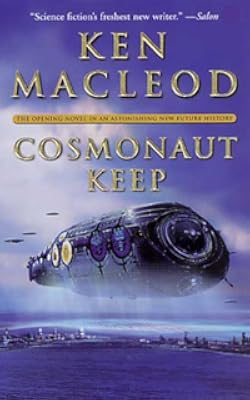
Matt Cairns is a 21st-century outlaw Programmer who takes on the shady jobs no one else will touch. Against his better judgment, he accepts an assignment to crack the Marshall Titov, a top-secret orbital station operated by the European Space Agency. But what Matt will discover there will propel him on an extraordinary and quite unexpected journey.Gregor Cairns is an exobiology student and descendant of one of Terra Nova's first families. Hopelessly infatuated with a lovely young trader's show more daughter, he is unaware that his research partner, Elizabeth, has fallen in love with him. Together, Gregor and Elizabeth confront the great work his family began three centuries earlier-to rediscover the secret of interstellar travel.Ranging from a gritty near-future Earth to a distant alien world, Cosmonaut Keep is contemporary science fiction at its highest level, a visionary epic filled with daring individuals seeking a place for themselves in a vast, complex, and enigmatic universe.Cosmonaut Keep is a 2002 Hugo Award Nominee for Best Novel.At the Publisher's request, this title is being sold without Digital Rights Management Software (DRM) applied. show lessTags
Recommendations
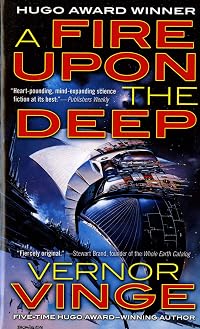
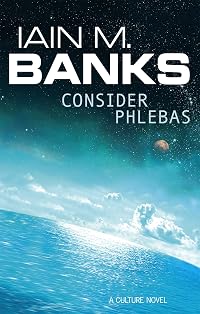
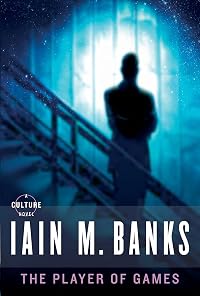
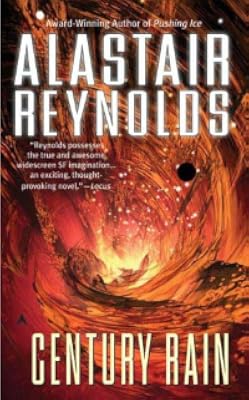




Member Recommendations
pgmcc Sames series. The trilogy is more than the sum of the parts.
Member Reviews
Another Ken Macleod novel with alternating plotlines and an assumption that the reader will be fairly up to speed with Leftist politics, though not the same factions of the Left explored in the Fall Revolution novels. The near-future plotline in this novel starts out with a Soviet-dominated EU in the aftermath of World War Three (or is it Four? People have lost count) pitched against a fairly Republican and politically active USA, and the way things get confused when the Soviets suddenly announce First Contact with an alien species. It soon becomes clear that this First Contact isn't a new event; the near-future politics get rather thrown into disarray. In the middle of this, the protagonists, an Edinburgh-based hacker, an American show more freedom fighter (depending on whose viewpoint you adopt) working for West Coast tech money in Europe, and an American flying saucer pilot (no, this one's all our own work) get involved with the race to exploit the new technology the aliens are bringing us.
By the way, the aliens are microbial super-colonies; and they provide one link to the other plotline in the novel.
That plotline takes place in the future, on a distant world colonised from Earth. Humans live in close relations with saurs, reptilian aliens we would identify as Greys, but who have personalities that are both alien and relatable to our sensibilities. They also have a sense of humour that we definitely relate to. Other human-settled worlds also have working relationships with the saurs and the krakens, who navigate starships between the inhabited worlds of this part of the galaxy. The colony world, Mingulay, is well-drawn (though it's fairly clear that it's a thinly-disguised Hebridean island); there are hidden Ancestors, and First Families, and a castle, and pubs, and fishermen who go out in trawlers in oilskins; it all feels very Scottish. One of the First Families has a Great Work, and that will take the humans back to the stars, if they get to collect certain techie plot tokens...
This is very much the first book in a trilogy, although it doesn't end on a cliff-hanger as such and you can read it quite happily on its own. But it's as much about world-building as advancing the plot. And there's fun to be had sorting out how the two plot strands join up. So what starts out looking like another Ian Macleod novel with Scottish socialists plotting and swapping Leftie in-jokes with each other ends as something rather different. show less
By the way, the aliens are microbial super-colonies; and they provide one link to the other plotline in the novel.
That plotline takes place in the future, on a distant world colonised from Earth. Humans live in close relations with saurs, reptilian aliens we would identify as Greys, but who have personalities that are both alien and relatable to our sensibilities. They also have a sense of humour that we definitely relate to. Other human-settled worlds also have working relationships with the saurs and the krakens, who navigate starships between the inhabited worlds of this part of the galaxy. The colony world, Mingulay, is well-drawn (though it's fairly clear that it's a thinly-disguised Hebridean island); there are hidden Ancestors, and First Families, and a castle, and pubs, and fishermen who go out in trawlers in oilskins; it all feels very Scottish. One of the First Families has a Great Work, and that will take the humans back to the stars, if they get to collect certain techie plot tokens...
This is very much the first book in a trilogy, although it doesn't end on a cliff-hanger as such and you can read it quite happily on its own. But it's as much about world-building as advancing the plot. And there's fun to be had sorting out how the two plot strands join up. So what starts out looking like another Ian Macleod novel with Scottish socialists plotting and swapping Leftie in-jokes with each other ends as something rather different. show less
Cosmonaut Keep has a peculiar structure that alternates chapters between a first-person account set in the mid-21st century on and near Earth, and a third-person narrative an unknown number of centuries later on the planet Mingualay within a remote interstellar polity called the "Second Sphere." The protagonist of the later thread is evidently the great-grandson of the hero in the earlier one. Both lines of narrative read quickly, although there is more "action" in the terrestrial one, and the alternating structure allows for the routine creation of cliffhangers and unresolved suspense. The bouncing between first- and third-person narrative voices is awkward at first, but I got used to it, and it was justified in the end.
There are many show more parallels between the two plot lines. Both stories concern themselves with the human achievement of interstellar travel in the context of encounters with extraterrestrial intelligences. The nature of the aliens is informed by actual 20th- and 21st-century ufological lore, and the 21st-century characters have varying degrees of knowledge about and regard for that body of knowledge. In both threads, there is a lot of attention to politics: Earth politics framed by a conflict between a Soviet-style consolidated socialist EU and the capitalist technocracy of the US, and Mingualayan politics involving different intelligent species of the Second Sphere. There is also a fair amount of love story, or at least "sex story," as the two lead characters each proceed through major amorous relationships.
Cosmonaut Keep is the first volume of a trilogy titled "Engines of Light," and it has impressively satisfying dramatic closure for the opening book of a defined series of this sort. At the same time, the novel opens up a variety of intriguing enigmas that certainly create room for its sequels. show less
There are many show more parallels between the two plot lines. Both stories concern themselves with the human achievement of interstellar travel in the context of encounters with extraterrestrial intelligences. The nature of the aliens is informed by actual 20th- and 21st-century ufological lore, and the 21st-century characters have varying degrees of knowledge about and regard for that body of knowledge. In both threads, there is a lot of attention to politics: Earth politics framed by a conflict between a Soviet-style consolidated socialist EU and the capitalist technocracy of the US, and Mingualayan politics involving different intelligent species of the Second Sphere. There is also a fair amount of love story, or at least "sex story," as the two lead characters each proceed through major amorous relationships.
Cosmonaut Keep is the first volume of a trilogy titled "Engines of Light," and it has impressively satisfying dramatic closure for the opening book of a defined series of this sort. At the same time, the novel opens up a variety of intriguing enigmas that certainly create room for its sequels. show less
The story alternates between a planet, Mingulay, present, and Earth, several generations earlier. On Mingulay humans, saurs, and a couple of other species of more or less the same shape, opposable thumbs, eyes front, etc. live together fairly harmoniously, having been relocated at various times by "the gods" -- a culture of microorganisms (tiny and green, really tiny) for reasons no one understands. There are also kraken on this planet, yep, giant brilliant squid and how they interface with the little greens is never even broached. Only one spaceship has ever arrived independently at Mingulay from Earth, but the saurs, who live far longer than humans and turn up immediately when it arrives and remove the cosmonauts and leave the ship in show more orbit. These folk have a secret, well, several secrets one of them never really explained to my satisfactions. The Earth story follows Matt Cairns, a super programmer who gets snared into a conspiracy and ends up on the space station building what seems to be an FTL engine while all hell breaks loose on an Earth which appears to have an alternate history (all of Russia and Europe are essentially run by communists). In the Mingulay story a descendant of Matt - one, Gregor Cairns, has been tapped by his family to finish their great project, rediscovering the secret of the FTL drive and getting back on the spaceship. The plot itself was pretty good, but I wasn't much convinced by the love interest side story and there were just too many "convenient" little twists and turns for me -- basically too much stuff stuffed in and definitely wayyyy over my and 99% of even a decently informed cyber-public of the geeky bits. The Mingulay side of the tale was more lively, better paced. The Earth side was just too acronymy, complexly political and geeky. It had its moments and is kind of worth reading especially if you enjoy MacLeod and super geeky stuff. I see it is part of a series -- I won't kill myself seeking out the sequels, but I wouldn't spurn them entirely either. *** show less
Sometimes when you read a book you can really tell that it is designed to be part of a trilogy. Even three quarters of the way through there wasn't really a major plot, it was all build up. But good build up, I really enjoyed it, the main character is an idiot everyman, the social environment involves a sensible critique of the successes and failures of communism and capitalism, and the science is believeable. Looking forward to reading the next part.
Grand scale SF with various levels of mostly benign aliens, intertwined with a second story set in a near future after Soviet invasion and control of the UK, where alien contact happens and the roots of the other story begin. Some good social commentary and extraordinarily imaginative world building.
My catalogue record for this book came from the British Library. Somebody there was having a bad day; or perhaps someone at the publisher supplied bad data. So let's correct some misconceptions at the outset: this is not a "toy or movable book", nor is it about house-cleaning. Still interested ?
Good. Because this is a book about intelligence, technology (its rise and fall and reinvention), alienness, cultural difference and politics. With two love stories, each of a man pursued by two women in two different centuries, intertwined.
Some of these themes - the politics and the musings on human and machine intelligence - are familiar territory for Macleod, and if you've read any of his other work, particularly the "Fall Revolution" series, show more you'll find much to recognise here. What's also familiar from those books is the device of telling a story that's split in two, with one part taking place in a near future and the other some hundreds of years later. But Macleod takes some of his themes further, and the future part of the story involves humans interacting both with other human groups whose development has taken very different paths, and with aliens who are markedly different in mysterious ways from the humans they mix with.
Some of these themes are explored in more depth than others, and I found some of this frustrating. But this is the first book of a series and it's possible that they are picked up in later books. Macleod retains his ability to tell a political adventure story in which programmers play a central role, and his humour still features and makes the book an even more enjoyable read.
I didn't get the sense of sheer joy I got when I first read "The Star Fraction", but that's probably because the themes, and Macleod's ability to portray political cliques with sharp, observational wit, aren't so new to me any more. He still does it well. show less
Good. Because this is a book about intelligence, technology (its rise and fall and reinvention), alienness, cultural difference and politics. With two love stories, each of a man pursued by two women in two different centuries, intertwined.
Some of these themes - the politics and the musings on human and machine intelligence - are familiar territory for Macleod, and if you've read any of his other work, particularly the "Fall Revolution" series, show more you'll find much to recognise here. What's also familiar from those books is the device of telling a story that's split in two, with one part taking place in a near future and the other some hundreds of years later. But Macleod takes some of his themes further, and the future part of the story involves humans interacting both with other human groups whose development has taken very different paths, and with aliens who are markedly different in mysterious ways from the humans they mix with.
Some of these themes are explored in more depth than others, and I found some of this frustrating. But this is the first book of a series and it's possible that they are picked up in later books. Macleod retains his ability to tell a political adventure story in which programmers play a central role, and his humour still features and makes the book an even more enjoyable read.
I didn't get the sense of sheer joy I got when I first read "The Star Fraction", but that's probably because the themes, and Macleod's ability to portray political cliques with sharp, observational wit, aren't so new to me any more. He still does it well. show less
It's been a long time since I've read anything by this author and while I enjoyed what I read in the early 2K's I'm going to admit that MacLeod didn't entertain me as much as in the past. A lot of this boils down to how his quirky take on left-wing politics doesn't seem to have dated very well. As they say, the future isn't what it used to be! If I didn't have newer and shinier things calling to me I might have been more patient with this novel.
Members
- Recently Added By
Lists

Arthur C. Clarke Award Winners and Shortlisted Books
219 works; 14 members
Author Information

61+ Works 12,411 Members
Some Editions
Awards and Honors
Awards
Distinctions
Notable Lists
Series

Work Relationships
Is contained in
Common Knowledge
- Canonical title
- Cosmonaut Keep
- Original title
- Cosmonaut Keep
- Original publication date
- 2000-04
- People/Characters
- Elizabeth Harkness; Gregor Cairns; Salasso; James Cairns; Margaret Cairns
- Important places
- Keep of Aird; Kyohvic; Heresiarchy of Tain; Edinburgh, Scotland, UK
- Dedication
- For Iain
- First words
- You're not here. Try to remember this. (prologue)
- Last words
- (Click to show. Warning: May contain spoilers.)You press what you hope is the right switch, and you--jump, becoming light.
- Publisher's editor
- Nielsen Hayden, Patrick
- Original language
- English
Classifications
Statistics
- Members
- 1,325
- Popularity
- 18,064
- Reviews
- 24
- Rating
- (3.38)
- Languages
- 5 — Czech, English, Hungarian, Italian, Spanish
- Media
- Paper, Ebook
- ISBNs
- 13
- ASINs
- 12