On This Page
Description
A Tale of Humans In a Universe of Ubiquitous Alien LifeIntelligence, it turns out, is rare on planetary surfaces. It thrives everywhere else, from the Oort-cloud fringes of star systems to the magma furnaces beneath planetary crusts. And among the most powerful of the galaxy's intelligences, there are profound differences of opinion about how to deal with surface life-forms such as human beings.For, untold light years from Earth, the powers that rule the universe have been, for millennia, show more plucking humans (and other intelligent beings) from Earth and forcibly resettling them in a number of star systems close to one another, leaving them to develop on their own. A few generations ago, a small cadre of humans from Earth's 21st century arrived in this "Second Sphere" on their own power the first humans ever to do so. Their descendants have formed the "Cosmonaut" class that dominates Mingulay. Now, two hundred years later, Gregor Cairns and a small group of associates have rediscovered faster-than-light travel and traveled to the star system next door. They're determined to find more of the original, mysteriously long-lived cosmonauts. They want answers. And for those answers, they intend to interrogate the gods.At the Publisher's request, this title is being sold without Digital Rights Management Software (DRM) applied." show lessTags
Recommendations
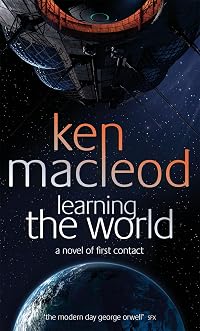
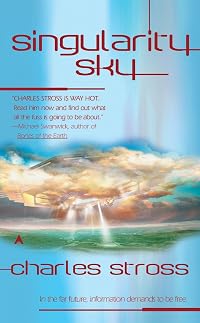
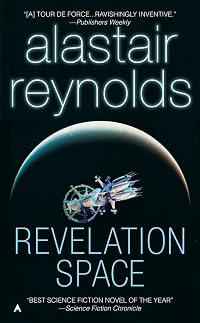
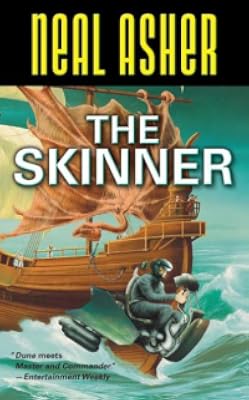
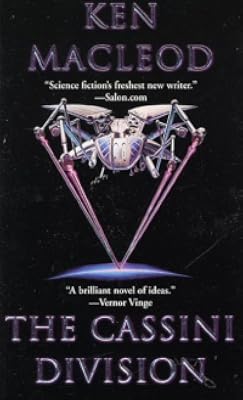
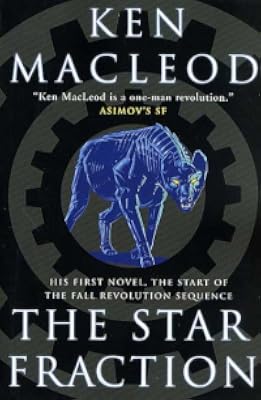
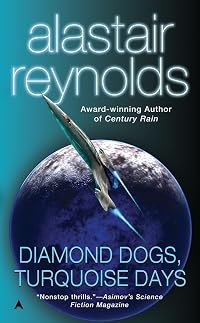

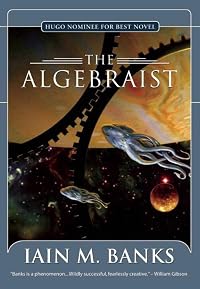
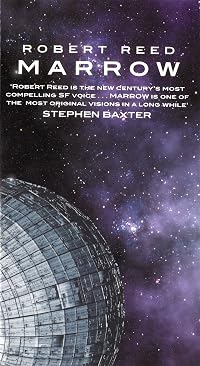



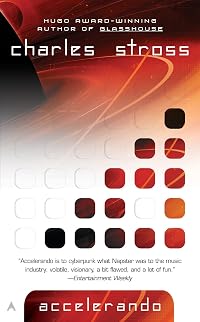
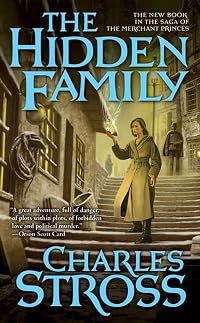
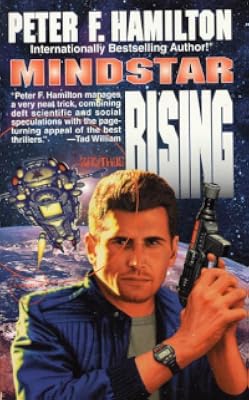
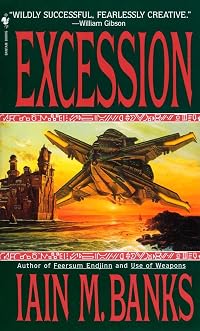
Member Recommendations
pgmcc Sames series. The trilogy is more than the sum of the parts.
Member Reviews
Once I figured out the premise of this book, It was a very enjoyable book. Unfortunately, this is the second in the series, and it picks up exactly where the first left off, and it ends quite abruptly. It feels more like the middle part of a 3 part novel, rather than 3 books in a series.
The premise is quite intriguing - Intelligence is quite common in the universe, but lives in a from that is almost God-like. Planet based intelligence is quite rare, and is at the mercy of the "Gods" I didn't read the first book so am not sure how the humans from Earth got to the Second Plane, that is, worlds planted by different groups of humanity in different historical ages. Also, there are a number of different species that originated from Earth but show more evolved on a different planet forming new intelligence. Travel between planets is possible, but it still is constrained to the speed of light. As a result, big trader ships go from world to world, where decades or centuries pass since the last visit.
This is the story of the crew of the Brightstar, The original ship from earth and the first ship created by humanity and not sanctioned by the Gods. In an attempt to recreate spacesuits that have crumbled in the eons since the Earthmen came to the Second Sphere, they meet a culture that does not use metal, but have knowledge to create an important resin.
The world building is quite amazing, with each culture described vividly and believably. The characters are also well written, although without knowing them from the first book, once in awhile blended together.
I highly recommend this book, but only if you read the first book first. This book ends quite abruptly, so you might want to pick up all three books before starting this series. If I had read the first story, my rating would have been higher. The first third of the book was a bit confusing. show less
The premise is quite intriguing - Intelligence is quite common in the universe, but lives in a from that is almost God-like. Planet based intelligence is quite rare, and is at the mercy of the "Gods" I didn't read the first book so am not sure how the humans from Earth got to the Second Plane, that is, worlds planted by different groups of humanity in different historical ages. Also, there are a number of different species that originated from Earth but show more evolved on a different planet forming new intelligence. Travel between planets is possible, but it still is constrained to the speed of light. As a result, big trader ships go from world to world, where decades or centuries pass since the last visit.
This is the story of the crew of the Brightstar, The original ship from earth and the first ship created by humanity and not sanctioned by the Gods. In an attempt to recreate spacesuits that have crumbled in the eons since the Earthmen came to the Second Sphere, they meet a culture that does not use metal, but have knowledge to create an important resin.
The world building is quite amazing, with each culture described vividly and believably. The characters are also well written, although without knowing them from the first book, once in awhile blended together.
I highly recommend this book, but only if you read the first book first. This book ends quite abruptly, so you might want to pick up all three books before starting this series. If I had read the first story, my rating would have been higher. The first third of the book was a bit confusing. show less
This book is the second in the trilogy 'Engines of Light'; it certainly cannot stand on its own, requiring the reader to be reasonably familiar with the events of the first novel, 'Cosmonaut Keep'. A number of reviewers have commented that they feel it suffers from 'middle book syndrome', wherein nothing much happens at considerable length to fulfil the requirement for a trilogy to have a Middle. I'm not so sure about that. This certainly isn't identikit space opera fare; as such, I suspect some people are seeing "Book Two" on the cover and putting their poor reaction to the story down to middle book syndrome.
The thing is this: Ken Macleod has not written a conventional space opera. In book one, we were introduced to the Second Sphere, show more a distant star system populated by a mix of humans and evolved creatures whose origin was Earth but whose ancestors were all abducted from this world in prehistoric times by alien superbeings, for reasons as yet undiscovered. Also in the Second Sphere are the descendents of the crew of the first human starship to leave Earth. Some of those descendents aren't; a number of the original crew appear to have acquired great longevity. Trade between the worlds ot the Second Sphere is conducted by faster-than-light starships, but having an ftl drive does not excuse those who travel from system to system from the inconveniences of relativistic star flight; centuries can pass between starship visits. Traders' ships are piloted by krakens, one of the evolved ancient species abducted from Earth. Humans are not permitted starflight - until the cosmonaut familiies of the world of Mingulay rediscover its secrets and recommission the only human starship, the Bright Star, to travel to nearby worlds to try to find Answers to all the Big Questions.
'Cosmonaut Keep' was written as one of Macleod's stranded narratives, with two different stories at two different times and places intertwined and coming together at the end (although the reader has to infer this). But that bringing together of the strands means that there is only a single story going forward; the arrival of the Bright Star at the world of Croatan, and the impact that arrival has on local politics and the lives of some of its inhabitants.
In the course of the story, the crew of the Bright Star communicate with two of the godlike entities that can be found around each of the inhabited worlds. What they find spurs them to action; and that action forces change on the inhabitants of Croatan. Those inhabitants have a society divided between an urban, technologically savvy (but roughly mid-20th Century level) society, inhabiting one major, industrialised city; and an isolated, roughly Celtic level society descended from transplanted prehistoric humans who have no access to metals but have evolved a society and an econonic niche based on handicrafts and the manufacture of gliders and sophisticated hot-air balloons. This second society also has a different take on issues of gender identity and assignation. Whether an individual in this society identifies (or is identified) as male or female is dependant on role and status, and not on biology. Macleod plays with these ideas in a very easy way.
The second half of the novel is taken up with the cosmonauts' reactions to what they learn from the planetary superbeings and how they play out those reactions against the political backdrop of Croatan. We are looking here at two characters who are skilled political organisers. It's a Ken Macleod novel, so of course there's radical politics in it, though once more he rings the changes on political organisation and actually shows that organisation in action on the ground.
At the end of the novel, the lives of the POV characters on Croatan are changed. In that, this isn't a typical 'middle book'. At the same time, the characters who came along from 'Cosmonaut Keep' have changed, learnt, and made their decisions about how they take matters forward. There is the continuity of the trilogy. The plot of events on Croatan is self-contained, though I said at the outset that you need to have read 'Cosmonaut Keep' and that remains true because without it, the reader will not understand the motivations of the cosmonaut characters. But the world-building is well handled, and the political machinations have their own momentum.
One criticism: two characters from the first book, who featured fairly heavily in it, are sent off to a university laboratory to Do Important Sciency Things and do not reappear until the end of the novel. It may be that this book didn't need them but that they will be needed in the third volume; but their sidelining is irritatingly obvious.
So, a book which confounds those expecting the obvious. The thrid book promises more encounters with the godlike aliens. show less
The thing is this: Ken Macleod has not written a conventional space opera. In book one, we were introduced to the Second Sphere, show more a distant star system populated by a mix of humans and evolved creatures whose origin was Earth but whose ancestors were all abducted from this world in prehistoric times by alien superbeings, for reasons as yet undiscovered. Also in the Second Sphere are the descendents of the crew of the first human starship to leave Earth. Some of those descendents aren't; a number of the original crew appear to have acquired great longevity. Trade between the worlds ot the Second Sphere is conducted by faster-than-light starships, but having an ftl drive does not excuse those who travel from system to system from the inconveniences of relativistic star flight; centuries can pass between starship visits. Traders' ships are piloted by krakens, one of the evolved ancient species abducted from Earth. Humans are not permitted starflight - until the cosmonaut familiies of the world of Mingulay rediscover its secrets and recommission the only human starship, the Bright Star, to travel to nearby worlds to try to find Answers to all the Big Questions.
'Cosmonaut Keep' was written as one of Macleod's stranded narratives, with two different stories at two different times and places intertwined and coming together at the end (although the reader has to infer this). But that bringing together of the strands means that there is only a single story going forward; the arrival of the Bright Star at the world of Croatan, and the impact that arrival has on local politics and the lives of some of its inhabitants.
In the course of the story, the crew of the Bright Star communicate with two of the godlike entities that can be found around each of the inhabited worlds. What they find spurs them to action; and that action forces change on the inhabitants of Croatan. Those inhabitants have a society divided between an urban, technologically savvy (but roughly mid-20th Century level) society, inhabiting one major, industrialised city; and an isolated, roughly Celtic level society descended from transplanted prehistoric humans who have no access to metals but have evolved a society and an econonic niche based on handicrafts and the manufacture of gliders and sophisticated hot-air balloons. This second society also has a different take on issues of gender identity and assignation. Whether an individual in this society identifies (or is identified) as male or female is dependant on role and status, and not on biology. Macleod plays with these ideas in a very easy way.
The second half of the novel is taken up with the cosmonauts' reactions to what they learn from the planetary superbeings and how they play out those reactions against the political backdrop of Croatan. We are looking here at two characters who are skilled political organisers. It's a Ken Macleod novel, so of course there's radical politics in it, though once more he rings the changes on political organisation and actually shows that organisation in action on the ground.
At the end of the novel, the lives of the POV characters on Croatan are changed. In that, this isn't a typical 'middle book'. At the same time, the characters who came along from 'Cosmonaut Keep' have changed, learnt, and made their decisions about how they take matters forward. There is the continuity of the trilogy. The plot of events on Croatan is self-contained, though I said at the outset that you need to have read 'Cosmonaut Keep' and that remains true because without it, the reader will not understand the motivations of the cosmonaut characters. But the world-building is well handled, and the political machinations have their own momentum.
One criticism: two characters from the first book, who featured fairly heavily in it, are sent off to a university laboratory to Do Important Sciency Things and do not reappear until the end of the novel. It may be that this book didn't need them but that they will be needed in the third volume; but their sidelining is irritatingly obvious.
So, a book which confounds those expecting the obvious. The thrid book promises more encounters with the godlike aliens. show less
In Cosmonaut Keep, the first volume of the trilogy for which Dark Light is the second, there is a distinctive dichotomy of narrative voice around the character Matt Cairns. In this second book, "his" sections are set off by being written in the present tense, while others are in past tense. It's not as clear to me in this case why author Ken MacLeod made that choice, but it didn't interfere with my enjoyment of the story.
A lot of this book concerns dilemmas set up by the ethical conflicts created by perspective and timescale. These are a function of relativistic interstellar travel, the mysterious longevity of the cosmonaut heroes, and the longer lifespans of some non-human intelligences. Perhaps this focus of interest played into the show more differentiation of tenses.
Another key topic is the cultural creation of gender, and the possibility of dissociating it from both organic sexual difference and sexual preference. The demonstrations in this case are centered on the Sky People, descendants of stone-age space emigrants from terrestrial Europe, who have a balloon-and-glider aeronautic technology.
Most of the central characters from the first book continue here, and this second volume is very much a series artifact. Where I was pleased with the sense of completion at the end of the first book, this one would not suit as a beginning or an end. There is not enough exposition to make up for any omission of the setting information and character motives introduced in Cosmonaut Keep, and the little bit of closure that Dark Light seemed to hold out in the final chapter was yanked away at the end.
Still, I enjoyed it all the way through, and will be going on to the final book directly. show less
A lot of this book concerns dilemmas set up by the ethical conflicts created by perspective and timescale. These are a function of relativistic interstellar travel, the mysterious longevity of the cosmonaut heroes, and the longer lifespans of some non-human intelligences. Perhaps this focus of interest played into the show more differentiation of tenses.
Another key topic is the cultural creation of gender, and the possibility of dissociating it from both organic sexual difference and sexual preference. The demonstrations in this case are centered on the Sky People, descendants of stone-age space emigrants from terrestrial Europe, who have a balloon-and-glider aeronautic technology.
Most of the central characters from the first book continue here, and this second volume is very much a series artifact. Where I was pleased with the sense of completion at the end of the first book, this one would not suit as a beginning or an end. There is not enough exposition to make up for any omission of the setting information and character motives introduced in Cosmonaut Keep, and the little bit of closure that Dark Light seemed to hold out in the final chapter was yanked away at the end.
Still, I enjoyed it all the way through, and will be going on to the final book directly. show less
The story line of this saga (of which Dark Light is book 2) is so complex I hesitate to even try to outline it. Krakens, humans, saurs, all sentient beings from old Earth were relocated to a solar system on the far side of the galaxy. But why? Well, it appears the gods--that is the complex life forms that have evolved in the vacuum iof outer space have had a hand in that. In the first book the goal is to re-achieve mastery of light speed travel, this second installment addresses the Why Did They Put Us Here? The answer is . . . well, that would be a spoiler, eh? I like the story and many aspects of the characters but there is something about MacLeod's writing style I don't like and find annoying. That would be too many short-hand show more sentences, that is, rough writing, choppy and often without a subject or verb. I've questioned my periods of confusion about who is fighting whom and why wondering if I'm just stupid but I don't think so. The political piece here mainly human-human and comprised of a socialist/democratic/capitalist debate that crops up in the conflict between some human immortals (to tinker or not to tinker in politics) plus the issue of interstellar trading and the enormous effect the infrequent visits of huge trading ships on the peoples they visit (as well as themselves). Any one of these could have been a fine focus -- I truly think there is too much crammed in here for any one aspect to be analyzed sufficiently. It is also seems improbable to me that the other alien races don't have their own compelling agendas - the books seem very anthropocentric. On the other hand, MacLeod just about pulls it off. Not easy reading is what I'm saying, this is relatively demanding sf many-layered, worth it though. ***1/2 show less
I've not read the prequel to this (and didn't know there was one til partway into the book), which judging from the other reviews was a good thing. I adored his exploration of gender construction and fluidity, and that he had queer and trans characters included in an organic way. & I'm interested in his ideas about deity. I loved the idea that a guy from Russia was still a die-hard socialist hundreds of years later, and similarly the anarchist, but the political machinations drug on too much for me. I am skeptical that 2 guys could wreak as much havoc as they did so quickly, but I suppose that it's feasible that they'd both become really good organizers in all that time, and I was engrossed enough in the story that I could handwave that show more away. I was also interested in the ethical questions in living much, much longer than other folks and in space travel meaning some folks drop in on a planet every hundred years, but more in the questions raised than the answers in the book. Gail and the Heathens were the best part of the book for me, so I'm not sure what I'll think about the other books in the trilogy, but I do plan to check them out. show less
The second book in this series is more similar to the star fraction series of books. More political and urban oriented than the first book. I was a little dissapointed that it kind of dropped two of the characters from the first book and focussed on new characters but in hindsight now I like it that there was some variation. I get the impression that all of the characters will make more appearances in the third book which I'm about to start on.
Anyway, if you like Ken Macleod's other books then this is more of the same. Again, the stand out stuff was even more mixing of technology from different era's of human history. A new element was the introduction to a group of tribal people and some pretty funny stuff around their sexuality.
I show more can't wait to read the last book now and see where it's all headed. I have a bit of an idea - some of it is just a logical progression but I'm sure there'll be a few interesting pot-holes along the way. show less
Anyway, if you like Ken Macleod's other books then this is more of the same. Again, the stand out stuff was even more mixing of technology from different era's of human history. A new element was the introduction to a group of tribal people and some pretty funny stuff around their sexuality.
I show more can't wait to read the last book now and see where it's all headed. I have a bit of an idea - some of it is just a logical progression but I'm sure there'll be a few interesting pot-holes along the way. show less
When the human-crewed spaceship from Mingulay, the Bright Star, arrives at Croatan, it triggers social and political upheaval. And when the Bright Star's crew fly out to an asteroid to communicate with the gods, they find out more about the gods' intentions in setting up the Second Sphere.
"Dark Light" was even more exciting and fast-moving than "Cosmonaut Keep", and has set the scene for a dramatic conclusion to the trilogy in "Engine City".
"Dark Light" was even more exciting and fast-moving than "Cosmonaut Keep", and has set the scene for a dramatic conclusion to the trilogy in "Engine City".
Members
- Recently Added By
Author Information

61+ Works 12,411 Members
Some Editions
Awards and Honors
Series

Work Relationships
Is contained in
Common Knowledge
- Canonical title
- Dark Light
- Original title
- Dark Light
- Original publication date
- 2001-10
- Epigraph
- Don't fear that philosophy's an impious way
--superstition's more likely to lead folks astray.
--Lucretius, De rerum natura Book One paraphrased by Joanna Taine - Dedication
- To Andrew and Lesley
- First words
- Ralistron sprawls; from space it's a grubby smudge, staining the glassy clarity of the atmosphere along fifty kilometers of coastline.
- Quotations
- In their short and relatively privileged lives they've never encountered any authority that wasn't light-handed and legitimate, and Matt's pretty sure they don't know how to behave when they encounter the other sort. For him... (show all)self, he'll try disrespect first, and if that doesn't work, and resistance isn't an option, he'll grovel. The important thing is not to pretend that voluntary consent is involved, either way.
Anyone convicted of a heinous crime may be sentenced to death by public stoning. There is no need to be alarmed by this. The maximum sentence is seldom applied, and when it is, it is usually commuted to death by firing squa... (show all)d.
Have a safe journey, and enjoy your stay. - Last words
- (Click to show. Warning: May contain spoilers.)"I'll sell machines," said Volkov.
- Publisher's editor
- Nielsen Hayden, Patrick
- Original language
- English
Classifications
Statistics
- Members
- 861
- Popularity
- 31,741
- Reviews
- 19
- Rating
- (3.47)
- Languages
- English, Hungarian, Italian, Spanish
- Media
- Paper, Ebook
- ISBNs
- 10
- ASINs
- 6