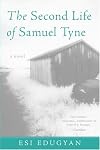
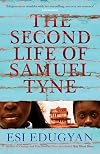
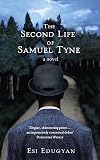
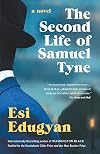
The Second Life of Samuel Tyne
by Esi Edugyan
On This Page
Description
The first novel from the acclaimed author of Washington Black--an exploration of explores the sweep of history, the binds of blood, the challenges of middle age, and the pain of exile, witnessed through the experiences of one family whose hope blinds them to threatening forces that could tear them apart. It is 1968 and Samuel Tyne has lived in exile in the chaotic New World for more than a dozen years. Born in Ghana, educated at Oxford, Samuel was expected to accomplish great things. But show more the middling government employee fears he has fallen short of that promise. When he inherits a crumbling mansion in the small, provincial town of Aster, Canada, he packs up his protesting family, believing that he has been offered a fabled second chance--and this time, he will not fail. An all-white enclave that was originally settled by freed slaves and runaways from America, the idyllic Aster feels like a miracle. But as time passes, Samuel begins to see the town is not the haven he hoped: riven by political infighting, a community resistant to change, and most disturbing, a number of mysterious fires that have put the townsfolk on edge. His family, too, begins to splinter. Stubbornly clinging to his ambitious dreams, Samuel finds the successful life he's struggled to build is disintegrating around him, and a dark current of menace in the town is turned upon his family--that they may be too powerless to fight. show lessTags
Recommendations
























Member Reviews
An unusual novel about a Ghanaian/Canadian family that seeks a second chance for themselves in a small rural town in Alberta, Canada.
Esi Edugyan is the talented daughter of Ghanaian parents who grew up in Alberta, Canada. Samuel Tyne, the main character in her first book, is also from Ghana and has lived in Canada for years. His story is not that of a new immigrant, but he has been deeply shaped by his African childhood. Like immigrants in other stories, he believes in his own special destiny and is susceptible to shame and guilt over not doing right by the uncle who raised him or by his family back in Africa. When he unexpectedly receives word that he has inherited a house from that uncle, he quits his unfulfilling civil service job show more and moves his reluctant family to a tiny town in Alberta. Rather than giving him a chance to live up to what he sees as his potential, the events that follow result in new shame and confusion for him. Focusing on the little known experience of Africans coming to Canada, Edugyan tells a story that touches all of us who have failed to accomplish what others dreamed for us and have turned inward to avoid more immediate responsibilities.
The Second Life of Samuel Tyne is a complicated book, with numerous subplots and unresolved mysteries. I find it hard to review, unsure if the confusion is an intentional reflection of Tyne’s understanding or if it is the flaw of a new novelist trying to do too much. Either way, my view of the book fluctuated widely as I read. At times Edugyan is a clear master of the written word. The novel is full of perfect phrases and sentences that make a chill run up your back. Her characters and plot are somewhat strange, but not in an alienating way. Tyne is a fully developed character, but one clearly intent on limiting what he is willing to see. Although the book is not written in first person, readers see everything from his perspective. He is a surprisingly insular person, closing himself off from his wife and twelve-year-old twin girls. The result is that Tyne’s wife and daughters appear as flat annoyances, not real people with personal needs of their own. When the twins slip into sullen resistance and silence, we can only guess the causes. When they appear dangerous and evil, we have no way of knowing why, but their descent lies at the core of the story, expressed as: how can Ghanaians, brought up to value family, behave like this?
READ MORE: http://wp.me/p24OK2-1a3 show less
Esi Edugyan is the talented daughter of Ghanaian parents who grew up in Alberta, Canada. Samuel Tyne, the main character in her first book, is also from Ghana and has lived in Canada for years. His story is not that of a new immigrant, but he has been deeply shaped by his African childhood. Like immigrants in other stories, he believes in his own special destiny and is susceptible to shame and guilt over not doing right by the uncle who raised him or by his family back in Africa. When he unexpectedly receives word that he has inherited a house from that uncle, he quits his unfulfilling civil service job show more and moves his reluctant family to a tiny town in Alberta. Rather than giving him a chance to live up to what he sees as his potential, the events that follow result in new shame and confusion for him. Focusing on the little known experience of Africans coming to Canada, Edugyan tells a story that touches all of us who have failed to accomplish what others dreamed for us and have turned inward to avoid more immediate responsibilities.
The Second Life of Samuel Tyne is a complicated book, with numerous subplots and unresolved mysteries. I find it hard to review, unsure if the confusion is an intentional reflection of Tyne’s understanding or if it is the flaw of a new novelist trying to do too much. Either way, my view of the book fluctuated widely as I read. At times Edugyan is a clear master of the written word. The novel is full of perfect phrases and sentences that make a chill run up your back. Her characters and plot are somewhat strange, but not in an alienating way. Tyne is a fully developed character, but one clearly intent on limiting what he is willing to see. Although the book is not written in first person, readers see everything from his perspective. He is a surprisingly insular person, closing himself off from his wife and twelve-year-old twin girls. The result is that Tyne’s wife and daughters appear as flat annoyances, not real people with personal needs of their own. When the twins slip into sullen resistance and silence, we can only guess the causes. When they appear dangerous and evil, we have no way of knowing why, but their descent lies at the core of the story, expressed as: how can Ghanaians, brought up to value family, behave like this?
READ MORE: http://wp.me/p24OK2-1a3 show less
In the 1960s, Samuel and his wife Maud live in Calgary, Alberta. They had immigrated from Ghana (or the Gold Coast, as it was called when they lived there when younger, and as they still call it). When Samuel’s uncle (in small town Alberta) dies and leaves his house and land to Samuel, he up and moves his family (they also have twin daughters) to this small town. The twins are 12 or 13-years old and bring their “friend” (really, an acquaintance, as they don’t really have friends), Ama, with them for the summer while her parents are in France.
This was pretty slow-moving, but it was better than I expected. I didn’t like the first book I read by this author (can’t currently recall the title), but I decided to give this a try, show more anyway. Wow, those twins… something a little (a lot) wrong in their heads. Did not like the twins at all. In fact, none of the characters were particularly likable (oh, Ama’s likable, but that’s about it; felt really bad for her, actually). But the story was ok, better than expected. show less
This was pretty slow-moving, but it was better than I expected. I didn’t like the first book I read by this author (can’t currently recall the title), but I decided to give this a try, show more anyway. Wow, those twins… something a little (a lot) wrong in their heads. Did not like the twins at all. In fact, none of the characters were particularly likable (oh, Ama’s likable, but that’s about it; felt really bad for her, actually). But the story was ok, better than expected. show less
I thought the characters in this story were so strange that they were difficult to relate to. Even so, I found myself pulled in...a little like a "rubber necker" slowing down to stare at an accident. Eventually, I was surprised to find myself very empathic to many of the characters, whether I liked them or not.
The story of a Caribbean immigrant to Canada and his family who gradually lose their way as the adolescent confusion of Samuel's twin daughters turns inward toward destruction.
Did not finish this . Too depressing and weird.
Ratings
Members
- Recently Added By
Lists

Canadian Historical Fiction 🇨🇦
157 works; 8 members
Author Information

9+ Works 4,679 Members
Awards and Honors
Awards
Common Knowledge
- Original publication date
- 2004
- First words
- The house had always had a famished look to it. At least in Samuel's imagination, for he had never once seen it.
- Blurbers
- Richards, David Adams; Hodgins, Jack
Classifications
Statistics
- Members
- 151
- Popularity
- 216,345
- Reviews
- 5
- Rating
- (2.94)
- Languages
- Dutch, English
- Media
- Paper, Audiobook, Ebook
- ISBNs
- 11
- ASINs
- 6