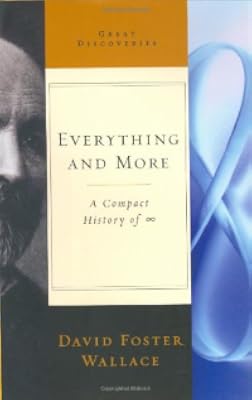
Everything and More: A Compact History of Infinity
by David Foster Wallace 
On This Page
Description
David Foster Wallace brings his intellectual ambition and bravura style to the story of how mathematicians have struggled to understand the infinite, from the ancient Greeks to the nineteenth-century mathematical genius Georg Cantor's counterintuitive discovery that there is more than one kind of infinity.Tags
Recommendations
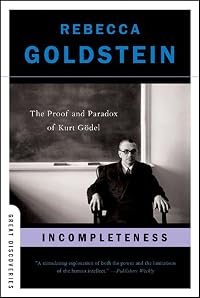

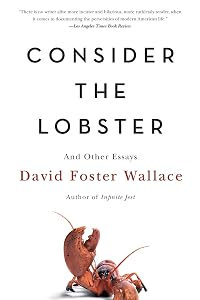
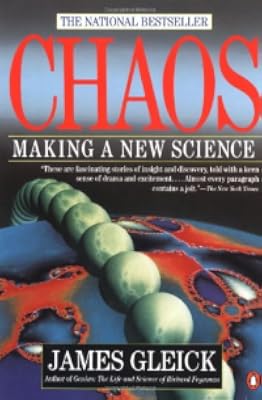
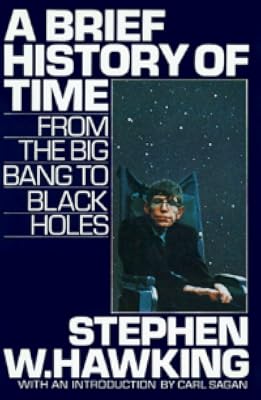


Member Recommendations
Member Reviews
Popular history of various concepts of the infinite, from the ancient Greeks up through Cantor. This has some real math in it, but it's all explained very well, and I found it all accessible. Very full of Wallacisms, however, comprising abbreviations, asides, and footnotes galore. I actively enjoy that, however, so for me this is one of the best pop math books I've ever read. If you're inclined to pick up such a book in the first place, that will probably be true for you as well, provided his style doesn't get on your nerves.
Partiamo dal principio. La nuova copertina della nuova edizione del libro è favolosa. La traduzione è quella corretta (ma lo era già nelle ristampe del 2011), salvo gli eventuali svarioni di DFW e due o tre tecnicalità di cui non vi accorgerete se non sapete già di che si sta parlando. Ma la cosa più bella del libro è la sua genesi. L'edizione originaria faceva infatti parte di una collana "Great Discoveries", pubblicata da Norton, nata come serie di biografie tecniche di scienziati. DFW non era un matematico, anche se aveva studiato abbastanza per poterne parlare con cognizione di causa, e questo lo si vede dal modo in cui approccia il tema, con una forte componente metafisica che in genere viene trascurata quando si arriva show more all'Ottocento. Ma era per l'appunto DFW, il che significa che il testo non è per niente lineare e parte per la tangente con le note NCVI ("Nel Caso Vi Interessi", in originale IYI, If You"re Interested) che naturalmente sono imprescindibili, e una serie di rimandi incrociati. Poi lo stile è al solito scanzonato, il che darà al lettore la falsa impressione che tutto sia facile nonostante i mille caveat nel testo. Diciamo che non credo che nessuno imparerà qualcosa sull'infinito leggendolo, ma tanto non era quello il suo scopo. show less
Fantastic! And I'm not even a huge DFW fan. But man do I like this non-fiction.
To all the naysayers who say this is full of mistakes. Yes. Yes, of course. He's simplifying things in order to get the message across. But DFW is like an obsessive-compulsive, who is both trying to simplify but isn't happy with hand-waving... so you get a complex mess. I love it.
I will say that his description of Dedekind's schnittzing to prove irrationals has me completely bamboozled. But at least after reading this I am VERY interested in it.
I've read about Cantor's diagonalizing before, and once again was delighted to learn about it. It is seriously delightful.
I think the story that I loved the most, running through this, was the intuitionists vs the show more platonists (vs the formalists?) and I have no idea where I stand on this issue. Intuitionism is seriously lovely, and when you consider how all math is essentially done on computers (discrete)... then what does it matter if we don't allow transfinite math into existence? Anyways, it makes me really excited to learn more about discrete math and computability etc. etc.
I now want to read What is Mathematic, Really? by some guy... I can't remember.
And Ian Hacking's new book on math.
Which is to say: DFW's book on infinite has given me a boner for math. A boner I have not had for a long, long time. I missed this boner.
:) show less
To all the naysayers who say this is full of mistakes. Yes. Yes, of course. He's simplifying things in order to get the message across. But DFW is like an obsessive-compulsive, who is both trying to simplify but isn't happy with hand-waving... so you get a complex mess. I love it.
I will say that his description of Dedekind's schnittzing to prove irrationals has me completely bamboozled. But at least after reading this I am VERY interested in it.
I've read about Cantor's diagonalizing before, and once again was delighted to learn about it. It is seriously delightful.
I think the story that I loved the most, running through this, was the intuitionists vs the show more platonists (vs the formalists?) and I have no idea where I stand on this issue. Intuitionism is seriously lovely, and when you consider how all math is essentially done on computers (discrete)... then what does it matter if we don't allow transfinite math into existence? Anyways, it makes me really excited to learn more about discrete math and computability etc. etc.
I now want to read What is Mathematic, Really? by some guy... I can't remember.
And Ian Hacking's new book on math.
Which is to say: DFW's book on infinite has given me a boner for math. A boner I have not had for a long, long time. I missed this boner.
:) show less
Another reviewer used the phrase "entertaining mess" (alongside a 5-star rating), and I think it perfectly summarizes Everything and More. Now that I think about it, the messiness parallels, in a way, the history and theory of (mathematical) infinity itself. So, I don't think this book would appeal to many people, both due to the subject matter and the writing (the former unappealing to the literary and the latter unappealing to the mathematician). I happened to love it. I felt like I was having a drunken conversation with someone (admittedly and pleasantly a non-expert) equally fascinated by the philosophy and history of mathematics as I am.
David Foster Wallace was a great writer of fiction. He was not a great writer of popular math exposition, as this book shows.
The main reason I read this book, besides just curiosity about one of the lesser-read Wallace books, was my interest in figuring out a certain infamous scene in Wallace's wonderful novel Infinite Jest. In that scene, one character (Michael Pemulis) dictates to another a description of a mathematical method, based on the Mean Value Theorem, that he says will simplify the calculations involved in playing a certain complicated wargame. But Pemulis' proposed method does not actually make any mathematical sense. (He states the Mean Value Theorem correctly, but there is no useful way to apply it to the problem he wants show more to solve.) Ever since reading that scene, I've wondered if this was a mistake on Wallace's part or a deliberate choice intended to cast doubt on Pemulis' mathematical ability. Since Everything and More deals with some of the same sort of math that appeared in that scene (elementary calculus), it seemed like a good place to look for answers about Wallace's own grasp of that material.
Unfortunately, it was. This book is full of errors. A lot of them are just terminological solecisms that general readers won't notice or care about, but there are also some mathematical arguments in the book that are seriously flawed -- some of them much worse, in fact, than Pemulis' argument. (Some of them are wrong in an utterly weird, "only a stoned undergrad at 3 AM could think like this" way, which makes me wonder how on earth they got found their way into the book -- extreme time pressure, maybe?) I'm now forced to conclude that the Mean Value Theorem thing in IJ is not a sly bit of characterization, but simple authorial incompetence.
Everything and More is also very poorly written and organized. There's very little of the usual Wallace charm and cleverness, and a lot of aimless rambling, needless distinctions and clarifications-that-don't-really-clarify. Anyone who reads this book without no knowledge of the relevant math will come out of the experience with the impression that it is incredibly thorny and complicated and that Wallace has done his heroic best to shape it into some popularly presentable form. As it happens, most of the math is actually quite simple, and most of the appearance of complexity here is an artifact of Wallace's style -- the result of inconsequential (or incorrect!) nitpicking and a dizzying, needlessly scattered order of presentation.
It makes me sad to think that there are people out there whose first impression of Wallace will come from this book. show less
The main reason I read this book, besides just curiosity about one of the lesser-read Wallace books, was my interest in figuring out a certain infamous scene in Wallace's wonderful novel Infinite Jest. In that scene, one character (Michael Pemulis) dictates to another a description of a mathematical method, based on the Mean Value Theorem, that he says will simplify the calculations involved in playing a certain complicated wargame. But Pemulis' proposed method does not actually make any mathematical sense. (He states the Mean Value Theorem correctly, but there is no useful way to apply it to the problem he wants show more to solve.) Ever since reading that scene, I've wondered if this was a mistake on Wallace's part or a deliberate choice intended to cast doubt on Pemulis' mathematical ability. Since Everything and More deals with some of the same sort of math that appeared in that scene (elementary calculus), it seemed like a good place to look for answers about Wallace's own grasp of that material.
Unfortunately, it was. This book is full of errors. A lot of them are just terminological solecisms that general readers won't notice or care about, but there are also some mathematical arguments in the book that are seriously flawed -- some of them much worse, in fact, than Pemulis' argument. (Some of them are wrong in an utterly weird, "only a stoned undergrad at 3 AM could think like this" way, which makes me wonder how on earth they got found their way into the book -- extreme time pressure, maybe?) I'm now forced to conclude that the Mean Value Theorem thing in IJ is not a sly bit of characterization, but simple authorial incompetence.
Everything and More is also very poorly written and organized. There's very little of the usual Wallace charm and cleverness, and a lot of aimless rambling, needless distinctions and clarifications-that-don't-really-clarify. Anyone who reads this book without no knowledge of the relevant math will come out of the experience with the impression that it is incredibly thorny and complicated and that Wallace has done his heroic best to shape it into some popularly presentable form. As it happens, most of the math is actually quite simple, and most of the appearance of complexity here is an artifact of Wallace's style -- the result of inconsequential (or incorrect!) nitpicking and a dizzying, needlessly scattered order of presentation.
It makes me sad to think that there are people out there whose first impression of Wallace will come from this book. show less
Magnificent. If you're phobic about mathematics, don't even try - but if you're even mildly interested in the subject, this is a fascinating book. Lots of equations, a lot of acronyms and shorthand expressions (which he does explicitly identify, in glossaries within the text). I suspect the book would have been half again as long if he hadn't done all the shortening. And - I do enjoy mathematics, and have studied at least some of what he's explaining here (things like Zeno's Paradox) - but I really didn't expect to be laughing as much as I did. One example - a highly convoluted, 11-line sentence, followed by a footnote: "There is really nothing to be done about the preceding sentence except to apologize." He knows his math, and his math show more history - the concept (or concepts) of infinity is traced from its first appearance among the Greeks up to more or less current thought and applications. He also knows, and enjoys playing with, English. I now want to read Infinite Jest and his essays to see if they're all up to this level. Loved it, will read it again (though probably not soon), want more.
On a reread - I lost my footing in the math about 2/3rds of the way through (I don't remember that from the first time), which made it far less interesting. I still enjoyed his language, but it wasn't enough to make me enjoy the last part of the book. I was reading the ebook (I wonder if that really makes a difference?), and it ends unexpectedly - there's a huge stretch at the end that's the endnotes from the last chapter, then the bibliography and index. I thought I had a lot more to (read/wade through) and I'd hit the end. Still good, probably worth rereading - but I think I'll do it in paper and see if it improves my comprehension. show less
On a reread - I lost my footing in the math about 2/3rds of the way through (I don't remember that from the first time), which made it far less interesting. I still enjoyed his language, but it wasn't enough to make me enjoy the last part of the book. I was reading the ebook (I wonder if that really makes a difference?), and it ends unexpectedly - there's a huge stretch at the end that's the endnotes from the last chapter, then the bibliography and index. I thought I had a lot more to (read/wade through) and I'd hit the end. Still good, probably worth rereading - but I think I'll do it in paper and see if it improves my comprehension. show less
I'm still reading this book, but what I find most interesting thus far is DFW's use of abbreviations and symbols as a part of his writing--for example, using the lemniscate instead of writing the word "infinity". It has the effect of making the reader aware of concepts that essentially exist beyond language (in this particular occasion) and in others, makes one aware of how highly developed and ingrained linguistic sign patterns are that we can use either symbols, acrostics or initials to represent words, phrases, concepts, without ever doubting their meaning. More to come on this book that I find fascinating.
Members
- Recently Added By
Published Reviews
David Foster Wallace is a great writer, known for his stories and essays as well as the inspiring novel Infinite Jest. Wallace’s work is revelatory, funny, and post-ironic. I fully expected to enjoy Everything and More. But it’s a train wreck of a book, a disaster. Non-mathematicians will find Everything and More unreadable, and mathematicians will view it with, at best, sardonic show more amusement. Crippling errors abound...
The book closes in a red haze of shame. Wallace doesn’t have time to explain the transfinite ordinals after all. As a parting shot, he gives an incorrect characterization of Kurt Godel’s beliefs regarding the power of the continuum and a misleading characterization of Godel’s demise. Godel in fact believed the size of the continuum to be X 2 {4, 5), and rather than dying “in confinement,” he lived at home until the last two weeks of his life and coherently discussed mathematical philosophy until the end. show less
The book closes in a red haze of shame. Wallace doesn’t have time to explain the transfinite ordinals after all. As a parting shot, he gives an incorrect characterization of Kurt Godel’s beliefs regarding the power of the continuum and a misleading characterization of Godel’s demise. Godel in fact believed the size of the continuum to be X 2 {4, 5), and rather than dying “in confinement,” he lived at home until the last two weeks of his life and coherently discussed mathematical philosophy until the end. show less
added by SnootyBaronet
Lists

My Wishlist
40 works; 1 member

al.vick-wishlist-science and nature
83 works; 1 member

HS Mathematics class library
79 works; 6 members
Talk Discussions
Past Discussions
RSVP Thread for Infinite Jest, Opening the First Page on 01.01.2013 in Infinite Jesters (January 2013)
Author Information

89+ Works 47,649 Members
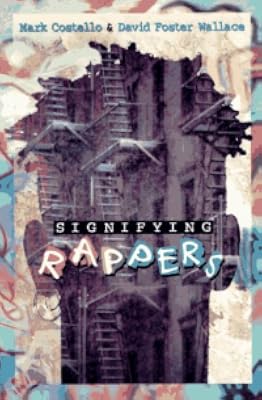
Writer David Foster Wallace was born in Ithaca, New York on February 21, 1962. He received a B.A. from Amherst College in Massachusetts. He was working on his master's degree in creative writing at the University of Arizona when he published his debut novel The Broom of the System (1987). Wallace published his second novel Infinite Jest (1996) show more which introduced a cast of characters that included recovering alcoholics, foreign statesmen, residents of a halfway house, and high-school tennis stars. He spent four years researching and writing this novel. His first collection of short stories was Girl with Curious Hair (1989). He also published a nonfiction work titled Signifying Rappers: Rap and Race in the Urban Present. He committed suicide on September 12, 2008 at the age of 46 after suffering with bouts of depression for 20 years. (Bowker Author Biography) show less
David Foster Wallace has a Legacy Library. Legacy libraries are the personal libraries of famous readers, entered by LibraryThing members from the Legacy Libraries group.
Some Editions
Awards and Honors
Distinctions
Series
Belongs to Publisher Series
Common Knowledge
- Canonical title
- Everything and More: A Compact History of Infinity
- Original publication date
- 2003
- Blurbers
- Papineau, David; Paulos, John Allen; Handler, Daniel; Doerr, Anthony; Lim, Dennis
Classifications
Statistics
- Members
- 1,666
- Popularity
- 13,373
- Reviews
- 31
- Rating
- (3.59)
- Languages
- 6 — English, French, German, Hebrew, Italian, Spanish
- Media
- Paper, Audiobook, Ebook
- ISBNs
- 15
- ASINs
- 13