
David Foster Wallace (1962–2008)
Author of Infinite Jest
About the Author
Writer David Foster Wallace was born in Ithaca, New York on February 21, 1962. He received a B.A. from Amherst College in Massachusetts. He was working on his master's degree in creative writing at the University of Arizona when he published his debut novel The Broom of the System (1987). Wallace show more published his second novel Infinite Jest (1996) which introduced a cast of characters that included recovering alcoholics, foreign statesmen, residents of a halfway house, and high-school tennis stars. He spent four years researching and writing this novel. His first collection of short stories was Girl with Curious Hair (1989). He also published a nonfiction work titled Signifying Rappers: Rap and Race in the Urban Present. He committed suicide on September 12, 2008 at the age of 46 after suffering with bouts of depression for 20 years. (Bowker Author Biography) show less
Works by David Foster Wallace
This Is Water: Some Thoughts, Delivered on a Significant Occasion, about Living a Compassionate Life (2009) — Author — 1,819 copies, 60 reviews
Quack This Way: David Foster Wallace & Bryan A. Garner Talk Language and Writing (2013) 118 copies, 3 reviews
McCain's Promise: Aboard the Straight Talk Express with John McCain and a Whole Bunch of Actual Reporters, Thinking About Hope (2008) 83 copies, 1 review
Selected Essays from: Consider the Lobster and Other Essays {abridged audio} (2005) 34 copies, 3 reviews
Here and There [short story] 3 copies
Forever Overhead 3 copies
Derivative Sport in Tornado Alley 3 copies
He ballat breument la conga. 3 copies
The Gospel of God Romans 2 copies
On His Deathbed, Holding Your Hand 2 copies
Oblivion [short story] 2 copies
Lyndon [short story] 2 copies
Mr. Squishy [short story] 1 copy
Say Never [short story] 1 copy
Uncollected Works of DFW 1 copy
Backbone 1 copy
A New Examiner 1 copy
John Billy [short story] 1 copy
My Appearance [short story] 1 copy
Greatly Exaggerated [essay] 1 copy
Sonora Review 12 (Summer 1987) — Fiction Editor — 1 copy
Associated Works
Touchstone Anthology of Contemporary Creative Nonfiction: Work from 1970 to the Present (2007) — Contributor — 219 copies, 3 reviews
There's No Toilet Paper on the Road Less Traveled: The Best of Travel Humor and Misadventure (1998) — Contributor — 217 copies, 5 reviews
The Graphic Canon, Vol. 3: From Heart of Darkness to Hemingway to Infinite Jest (2013) — Contributor — 162 copies, 1 review
Shiny Adidas Tracksuits and the Death of Camp and Other Essays from Might Magazine (1998) — Contributor — 152 copies, 3 reviews
An American Album: One Hundred and Fifty Years of Harper's Magazine (2000) — Contributor — 146 copies, 1 review
The Ecco Anthology of Contemporary American Short Fiction (2008) — Contributor — 141 copies, 2 reviews
The Glorious American Essay: One Hundred Essays from Colonial Times to the Present (2020) — Contributor — 119 copies
The Chaffey Review: Volume 1 (January 2009) — Contributor — 2 copies
Thomas Demand: L'Esprit d'Escalier — Contributor — 1 copy
Clarion: Writing at Amherst 1985 — Contributor — 1 copy
Sonora Review 56 — Contributor — 1 copy
Sonora Review 13 (Fall 1987) — Contributor — 1 copy
The New Yorker, Dec. 14, 2009 — Contributor - Fiction — 1 copy
Tagged
Common Knowledge
- Birthdate
- 1962-02-21
- Date of death
- 2008-09-12
- Gender
- male
- Education
- Amherst College (BA|1985)
University of Arizona (MFA|1987) - Occupations
- author
professor (Creative Writing) - Organizations
- Illinois State University
Pomona College - Awards and honors
- MacArthur Fellowship (1997)
Lannan Literary Award (Fiction, 1996)
Whiting Writers' Award (1987) - Cause of death
- suicide
- Nationality
- USA
- Birthplace
- Ithaca, New York, USA
- Places of residence
- Claremont, California, USA
Ithaca, New York, USA
Champaign-Urbana, Illinois, USA
Normal, Illinois, USA - Place of death
- Claremont, California, USA
- Associated Place (for map)
- USA
Members
Discussions
I Think, Therefore I Jest: EFs recursive IJ reading thread in Infinite Jesters (December 2015)
David Foster Wallace in Legacy Libraries (August 2015)
Into the heart of America, zenomax's IJ thread. in Infinite Jesters (January 2013)
RSVP Thread for Infinite Jest, Opening the First Page on 01.01.2013 in Infinite Jesters (January 2013)
anna reads IJ in Infinite Jesters (January 2013)
Why you shouldn't read Infinite Jest; or, A Thread for Haters in Infinite Jesters (January 2013)
Year of Beelzebubba singing unforgettable Ethel Merman covers and reading Infinite Jest for the seco in Infinite Jesters (December 2012)
When Art and Infinite Jest Collide in Infinite Jesters (December 2012)
Out-of-the-Blue Question Thread: In which Infinite Jest's Themes are mined obliquely in Infinite Jesters (December 2012)
INFINITE JEST: Its Structure in Infinite Jesters (November 2012)
Looking for a prospective Infinite Jest reader willing to take the plunge in Book talk (November 2010)
Requesting the help of some Infinite Jesters in Book talk (November 2010)
Infinite Jest? in 1001 Books to read before you die (November 2007)
Reviews
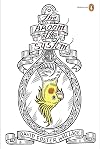
The story centers around Lenore Beadsman, a slightly neurotic young woman with a lackluster job by choice, who is in a relationship with her boss (editor of a literary magazine who is in therapy for various reasons himself), looking for her grandmother (who suddenly disappeared from her nursing home), dealing with her rich CEO dad (who resents her for rejecting the family privilege), and coping with a pet bird that abruptly decided to start talking. It's not surprising that there are just show more bunches to unpack here: Wittgenstein is present is a big way (meaning = function drives much of the dialogue and thought of the characters). There are stories within stories, various modes and methods of presenting the main story, and strange characters doing strange things. It's smart and funny (although Wallace's brand of humor may not be for everyone) and weird in a good way. Think Philip K. Dick if PKD were much less self-serious. show less
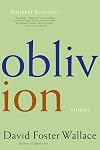
Not only in light of DFW's suicide I don't think, but certainly in light of it, the despair that this collection of stories is shot through with is sobering. There is here a merciless, microlevel, and exacting existential critique both of our outward facing lives in contemporary society, centered in the banalities and inanities of work life, showing through the characters' very commitment to their jobs and roles the utter meaninglessness of them without having to stoop to any even tiny bit show more of triteness in making the point (instead depending heavily on, ahem, irony), and of our inner lives, or at least of his own inner life, I'm afraid, weighted down heavily with contradictory feelings of grandiosity and insignificance, of feeling like a genius and feeling like the worst fraud imaginable.
I don't know how exactly true to life the hilarious and pathetic workplace procedures and terminology and culture and such of the focus group and market testing company as portrayed in the opener, "Mister Squishy", are, as the characters revolve around a new snack cake confection, but the existential horror of finding oneself spending one's life in such an environment is effectively (and comprehensively... some might say too comprehensively!) portrayed.
"The Soul Is Not A Smithy" continues this theme of the horror of modern adult life in a story from the point of view of a grown man looking back to when he was a grade school student involved in an "incident" when he failed to notice his teacher having a mental breakdown at the blackboard, so occupied was he in his own creative imaginations that his soul could be said to be absent from the classroom his body is sat in. The adult narrator at one point remarks,
In "Good Old Neon" the narrator turns from the despair over one's outward-facing life to despair over one's core inner self. Essentially, the feeling that human nature is fundamentally bad, in some sense. He expresses this through a focus on how his connection to other people is inauthentic due to an inability to be honest about himself:
I mean. Ouch.
I can imagine a "love it or hate it" reaction to the prose itself in this collection. I listened to it as an audiobook and thought it worked really well. I'm curious how I would have taken the prose if I was reading it in print instead.
Normally I think I wouldn't be a fan of something that comes off overall so, well, nihilistic. But it's not for effect, not to be transgressive, not fraudulent one might say. The voices here are at root sympathetically all too human, even good, it seems to me. They just can't see their way out into something more of the light. show less
I don't know how exactly true to life the hilarious and pathetic workplace procedures and terminology and culture and such of the focus group and market testing company as portrayed in the opener, "Mister Squishy", are, as the characters revolve around a new snack cake confection, but the existential horror of finding oneself spending one's life in such an environment is effectively (and comprehensively... some might say too comprehensively!) portrayed.
"The Soul Is Not A Smithy" continues this theme of the horror of modern adult life in a story from the point of view of a grown man looking back to when he was a grade school student involved in an "incident" when he failed to notice his teacher having a mental breakdown at the blackboard, so occupied was he in his own creative imaginations that his soul could be said to be absent from the classroom his body is sat in. The adult narrator at one point remarks,
For my own part, I had begun having nightmares about the reality of adult life as early as perhaps age seven. I knew, even then, that the dreams involved my father’s life and job and the way he seemed when he returned home from work at the end of the day.
In "Good Old Neon" the narrator turns from the despair over one's outward-facing life to despair over one's core inner self. Essentially, the feeling that human nature is fundamentally bad, in some sense. He expresses this through a focus on how his connection to other people is inauthentic due to an inability to be honest about himself:
There was a basic logical paradox that I called the 'fraudulence paradox' that I had discovered more or less on my own while taking a mathematical logic course in school...The fraudulence paradox was that the more time and effort you put into trying to appear impressive or attractive to other people, the less impressive or attractive you felt inside - you were a fraud. And the more of a fraud you felt like, the harder you tried to convey an impressive or likable image of yourself so that other people wouldn't find out what a hollow, fraudulent person you really were.
I mean. Ouch.
I can imagine a "love it or hate it" reaction to the prose itself in this collection. I listened to it as an audiobook and thought it worked really well. I'm curious how I would have taken the prose if I was reading it in print instead.
Normally I think I wouldn't be a fan of something that comes off overall so, well, nihilistic. But it's not for effect, not to be transgressive, not fraudulent one might say. The voices here are at root sympathetically all too human, even good, it seems to me. They just can't see their way out into something more of the light. show less
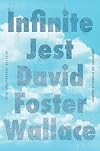
My first read in about fourteen years. There were times in the first half where I found all the "likes" and comically long acronyms very annoying, but once everything started clicking, I was as blown away as I was the first time. This book's online reputation among people who almost definitely haven't read it should just be ignored. It's funny, sad, and insightful and all the rest, but the real achievement here has to be in its structure. Michael Silverblatt famously identified the novel's show more form as being derived from fractals, and though I have pretty much zero understanding of fractals, this time I could finally see what he meant by this. The first three hundred pages or so are highly fragmented, with very short chapters often composed of discrete monologues or set-pieces. But as the text develops, the chapters begin to stretch out, and little bits of information from those initial fragments start to pop up, just like the leitmotif phrases in Gaddis's JR (by which I remember Wallace saying somewhere he was very influenced). Then, that ending—a kind of mobiüs-strip, Wakean loop so beautifully and seamlessly executed it really defies belief.
It would take me more time and ability than I possess to conduct the kind of formalist analysis this book deserves, so I will go and read Carlisle's book instead. show less
It would take me more time and ability than I possess to conduct the kind of formalist analysis this book deserves, so I will go and read Carlisle's book instead. show less
I love things that force me to puzzle my way through them and then reward me for doing so. I love a book that is complicated in both plot and structure. I love a book I can read over and over and find new things within. Infinite Jest is maybe my favorite book.
It has four major plot lines: Hal is a high schooler at a tennis school addicted to marijuana (and he barely does anything in the book, as he is a man of inaction); Don is 30 and a recovering AA member at the house down the hill from show more the tennis school; there are Quebec terrorists looking for the film that Hal’s late father created that causes anyone who watches it become blissfully catatonic; and the lead actress of this film is entering the recovery house Don is in after an attempted suicide by cocaine.
There are also half a hundred other ongoing plots.
The name of the video that makes the viewer blissfully catatonic is Infinite Jest. Those who see it want to only watch the video for the rest of their lives. This is the main thesis and debate within the book: Is it good to withhold something that seems to make someone happy and is yet damaging to them? The answer is, obviously, yes, and within the book this is the answer. Wallace is railing against a self-medicating society, wherein the medication is both literal (there are MANY references to the precise pharmaceutical names of drugs) and metaphorical. The refusal to take the easy way out is always a choice for these characters, but so often an insurmountable mountain.
Often this results in a deep sadness in the book. It’s so often deeply and sometimes quietly funny, but the darkest and most depressing parts are rendered in painfully sharp detail and wink in and out without warning. Is Infinite Jest a tragedy? No. Maybe. Partially. That may be an answerable question.
But there are glimmers of love and hope. Mario Incandenza, Hal’s brother, unfairly twisted in the womb into a caricature of a human, is, in fact, the most deeply unbiased human in the whole story. He loves everyone, but he loves Hal and his mom (Mrs. Avril Incandenza) the most and totally unconditionally. For a character that doesn’t quite understand people and emotions, Wallace twice puts Mario into a critical position of giving sane advice to two broken characters.
I haven’t even mentioned the prose. Wallace’s language is so distinctly his voice in the combination of obscure vocabulary (I don’t think I've ever seen the word quincunx in another book) and emotional commonplace vernacular that it just about messes up your head in good way and everything like that. Many of the third-person narrative elements are actually “told” in the voice of whatever character is being focused on. Educated characters have a wide-ranging lexicon while characters that have lived their life on the streets casually use racial slurs. In this way, Wallace places the reader’s subconscious into the mind of the character, forcing an empathy that I didn’t even becomes aware of until this, my third read-through.
This time around, I read it in chronological order. I underlined, I flipped around and wrote page numbers in the margins that explain oblique passages, I defined words and translated languages, and I felt like a student again. It opened up so many connections that I hadn’t before put together. Or maybe I was critically looking for new things. Either way, it’s the third time I've read this 1079-page book, and it was a hundred hours well spent. If that’s not enough of a ringing endorsement, I don’t know what can be. If you want my marked-up copy, let me know. I will do whatever I can help people read this, one of my favorite books. “Are we not all of us fanatics?” show less
It has four major plot lines: Hal is a high schooler at a tennis school addicted to marijuana (and he barely does anything in the book, as he is a man of inaction); Don is 30 and a recovering AA member at the house down the hill from show more the tennis school; there are Quebec terrorists looking for the film that Hal’s late father created that causes anyone who watches it become blissfully catatonic; and the lead actress of this film is entering the recovery house Don is in after an attempted suicide by cocaine.
There are also half a hundred other ongoing plots.
The name of the video that makes the viewer blissfully catatonic is Infinite Jest. Those who see it want to only watch the video for the rest of their lives. This is the main thesis and debate within the book: Is it good to withhold something that seems to make someone happy and is yet damaging to them? The answer is, obviously, yes, and within the book this is the answer. Wallace is railing against a self-medicating society, wherein the medication is both literal (there are MANY references to the precise pharmaceutical names of drugs) and metaphorical. The refusal to take the easy way out is always a choice for these characters, but so often an insurmountable mountain.
Often this results in a deep sadness in the book. It’s so often deeply and sometimes quietly funny, but the darkest and most depressing parts are rendered in painfully sharp detail and wink in and out without warning. Is Infinite Jest a tragedy? No. Maybe. Partially. That may be an answerable question.
But there are glimmers of love and hope. Mario Incandenza, Hal’s brother, unfairly twisted in the womb into a caricature of a human, is, in fact, the most deeply unbiased human in the whole story. He loves everyone, but he loves Hal and his mom (Mrs. Avril Incandenza) the most and totally unconditionally. For a character that doesn’t quite understand people and emotions, Wallace twice puts Mario into a critical position of giving sane advice to two broken characters.
I haven’t even mentioned the prose. Wallace’s language is so distinctly his voice in the combination of obscure vocabulary (I don’t think I've ever seen the word quincunx in another book) and emotional commonplace vernacular that it just about messes up your head in good way and everything like that. Many of the third-person narrative elements are actually “told” in the voice of whatever character is being focused on. Educated characters have a wide-ranging lexicon while characters that have lived their life on the streets casually use racial slurs. In this way, Wallace places the reader’s subconscious into the mind of the character, forcing an empathy that I didn’t even becomes aware of until this, my third read-through.
This time around, I read it in chronological order. I underlined, I flipped around and wrote page numbers in the margins that explain oblique passages, I defined words and translated languages, and I felt like a student again. It opened up so many connections that I hadn’t before put together. Or maybe I was critically looking for new things. Either way, it’s the third time I've read this 1079-page book, and it was a hundred hours well spent. If that’s not enough of a ringing endorsement, I don’t know what can be. If you want my marked-up copy, let me know. I will do whatever I can help people read this, one of my favorite books. “Are we not all of us fanatics?” show less
Lists
Blindpill (1)
. (1)
My Wishlist (1)
1980s (1)
Best First Lines (1)
Allie's Wishlist (1)
Unread books (1)
Read These Too (1)
Five star books (1)
Overdue Podcast (1)
Favourite Books (1)
scav (1)
1990s (2)
Summer Books (1)
. (1)
98 (1)
A Novel Cure (1)
Non-Fiction (2)
To Read (2)
Read in 2021 (2)
Metafiction (2)
Books I've Read (1)
Cooper (1)
Elegant Prose (1)
Bureaucracies (1)
100 New Classics (1)
. (1)
Awards


You May Also Like


Associated Authors
Statistics
- Works
- 89
- Also by
- 48
- Members
- 47,703
- Popularity
- #331
- Rating
- 4.0
- Reviews
- 865
- ISBNs
- 490
- Languages
- 22
- Favorited
- 344


