Cicero's Somnium Scipionis: The Dream of Scipio
by Marcus Tullius Cicero
On This Page
Description
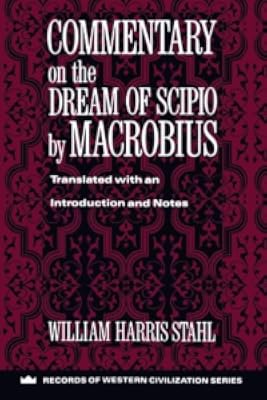
The Dream of Scipio (Latin, Somnium Scipionis), written by Cicero, is the sixth book of De re publica, and describes a fictional dream vision of the Roman general Scipio Aemilianus, set two years before he commanded at the destruction of Carthage in 146 BC.Upon his arrival in Africa, a guest at the court of Massinissa, Scipio Aemilianus is visited by his dead grandfather (by adoption), Scipio Africanus, hero of the Second Punic War. He finds himself looking down upon Carthage "from a high show more place full of stars, shining and splendid". His future is foretold by his grandfather, and great stress is placed upon the loyal duty of the Roman soldier, who will as a reward after death "inhabit... that circle that shines forth among the stars which you have learned from the Greeks to call the Milky Way". Nevertheless, Scipio Aemilianus sees that Rome is an insignificant part of the earth, which is itself dwarfed by the stars. The planetary spheres are enumerated with references to Pythagorean thought and the idea of the Music of the Spheres. Then the climatic belts of the earth are observed, from the snow fields to the deserts, and there is discussion of the nature of the Divine, the soul and virtue, from the Stoic point of view.The literary and philosophical influence of the Somnium was great. Macrobius commented on it in his Commentarii in Somnium Scipionis, which in turn was an important source for medieval dream theory. show lessTags
Recommendations
















Member Reviews
Beautiful Clinker Press edition. Fascinating fragment.
Edition: // Descr: 26 p. 17.5 cm. // Series: Call No. { 875 C48 57 copy #2 } Edited with Notes by Samuel Hart. // //
Edition: // Descr: 26 p. 17.5 cm. // Series: Call No. { 875 C48 57 } Edited with Notes by Samuel Hart. // //
Ci sono molte cose che mi sono piaciute in questo testo: l'eleganza dello stile e l'esposizione ben strutturata, l'atmosfera serena e fiduciosa, il fervore con cui l'Africano descrive spiega ed esorta, l'immagine di un universo ordinato e armonioso: un cosmo, per l'appunto, fatto di sfere concentriche, sensato e prevedibile, finito e comprensibile, ma che ha anche un pizzico di magico e di fantastico, e dotato di una dimensione morale: le anime sono immortali e dopo la morte del corpo andranno in cielo, nella via lattea e nella felicità, ma quelle dei virtuosi ci arriveranno prima, e sarà questo il vero premio della virtù. Tutto questo ho trovato in questo "Sogno di Scipione": è bello, ma, appunto, è solo un sogno, nient'altro che show more un sogno. show less
Aug 13, 2023Italian
172 CIC
Apr 20, 2020Italian
Ratings
Members
- Recently Added By
Author Information

2,150+ Works 26,785 Members
Born in Arpinum on January 3, 106 B.C., Marcus Tullius Cicero was a Roman orator, writer, and politician. In Rome, Cicero studied law, oratory, philosophy, and literature, before embarking on a political career. Banished from Rome in 59 B.C. for the execution of some members of the Catiline group, Cicero devoted himself to literature. Cicero was show more pardoned by Julius Caesar in 47 B.C., and returned to Rome to deliver his famous speeches, known as the "Philippics," urging the senate to declare war on Marc Antony. Cicero's chief works, written between 46 and 44 B.C., can be classified in the categories of philosophical works, letters, and speeches. The letters, edited by his secretary Tiro, showcase a unique writing style and charm. The most popular work of the period was De Officiis, a manual of ethics, in which Cicero espoused fundamental Christian values half a century before Christ. Cicero was murdered in Formiae, Italy, on December 4, 43 B.C., by Antony's soldiers after the triumvirate of Antony, Lepidus, and Octavius was formed. (Bowker Author Biography) show less
Some Editions
Series
Belongs to Publisher Series
Work Relationships
Is contained in
Common Knowledge
- Canonical title*
- Somnium Scipionis
- Original title
- Somnium Scipionis
- People/Characters*
- Publio Cornelio Scipione Emiliano Africano Minore; Publio Cornelio Scipione Africano
- First words*
- Quando arrivai in Africa (come saprete ero stato assegnato al console Manio Manilio, quale tribuno militare della quarta legione), la prima cosa che feci fu quella di andare a trovare Massinissa, un re che per giusti motivi e... (show all)ra in stretti legami d'amicizia con la mia famiglia.
- Quotations*
- «Ma affinché tu, o Africano, possa servire la repubblica con un impegno ancora maggiore, sappi questo: per tutti coloro che avranno contribuito alla conservazione, alla salvezza e all'accrescimento della patria, c'è una se... (show all)de sicura loro assegnata nel cielo, della quale potranno godere, felici, per l'eternità.»
- Last words*
- (Click to show. Warning: May contain spoilers.)Egli scomparve, e io mi risvegliai.
*Some information comes from Common Knowledge in other languages. Click "Edit" for more information.
Classifications
- Genres
- Nonfiction, History
- DDC/MDS
- 133 — Philosophy & psychology Parapsychology & occultism Specific topics in parapsychology and occultism
- LCC
- PA6304 .S7 — Language and Literature Greek language and literature. Latin language and literature Roman literature Individual authors Cicero, Marcus Tullius
- BISAC
Statistics
- Members
- 152
- Popularity
- 216,373
- Reviews
- 5
- Rating
- (3.69)
- Languages
- 6 — English, Esperanto, Finnish, Italian, Latin, Spanish
- Media
- Paper, Ebook
- ISBNs
- 13
- UPCs
- 1
- ASINs
- 2