On This Page
Description
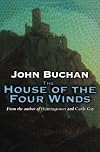
Set in the fictional Central European country of Evallonia the novel follows Scottish visitors in the overthrow of a corrupt republic and the restoration of the monarchy. It is a sequel to Castle Gay, in which some Evallonians visited Scotland on a secret mission two years before the start of this novel.Tags
Recommendations













Member Reviews
The final adventure of Dickson McCunn and the Gorbal Die-Hards.....an easy fun read....especially since i just completed the previous book in this series prior to reading this......something i would highly recommend, since there are steady references to the 2 prior books with little context that would have left me somewhat lost had i not had those fresh in my mind. Buchan's books are full of very unrealistic coincidences from start to finish, but i got over it pretty quickly and still enjoyed the ride. This book chronicles the methodology of a bloodless patriotic coup that might be helpful today around the world!
Aristocratic Brits perform feats of derring-do in a small Continental kingdom! And all for the fun and sport of it! Well, that's not quite all of it. Regardless, a good read to take one's mind briefly off a global pandemic.
I did not enjoy this novel for I found it much too convoluted. In the story, the Republican Government of Evallonia is facing challenges from the old monarchists and a youth movement called the Juventus. Our hero, John Gault and his mentor, Dickson McCunn, characters with which the reader of earlier Buchan novels will be familiar, reluctantly become involved in this political nightmare.
Eventually they help all decide the monarchy under King John is the best form of government. Remember that the novel was written by a Brit shortly after WW I.
An interesting side note is Buchan mentions Hitler and his ideas on government. Later he has characters expand on how youth will not allow the old guard to mess up the world and especially Europe again.
Eventually they help all decide the monarchy under King John is the best form of government. Remember that the novel was written by a Brit shortly after WW I.
An interesting side note is Buchan mentions Hitler and his ideas on government. Later he has characters expand on how youth will not allow the old guard to mess up the world and especially Europe again.
Ratings
Members
- Recently Added By
Author Information

280+ Works 17,557 Members
John Buchan was born in Perth on 26th August, 1875. Educated at Glasgow University and Brasenose College, Oxford, in 1898 Buchan won the Newdigate Prize for poetry. Although trained as a lawyer, Buchan became private secretary to Lord Alfred Milner, high commissioner for South Africa. In 1903 he returned to England where he became a director of show more the publishing company, Thomas Nelson & Sons. In 1910 Buchan had his first novel, Prester John, published. In July 1914, Blackwood's Magazine began serializing Buchan's The Thirty-Nine Steps. With Britain on the verge of war, the nation was obsessed with German spy fever and its subject matter made it an immediate success. When it was published in book form, it sold over 25,000 copies in three months. Charles Masterman, the journalist, was appointed head of the government's War Propaganda Bureau. Masterman recruited Buchan and asked him to organise the publication of a history of the war in the form of a monthly magazine. Published by his own company, the first installment of the Nelson's History of the War appeared in February, 1915. A further twenty-three appeared at regular intervals throughout the war. In the spring of 1915, Buchan agreed to become one of the five journalists attached to the British Army. He was given responsibility for providing articles for The Times and the Daily News. In June 1916, Buchan was recruited by the British Army to draft communiqués for Sir Douglas Haig and other members of the General Headquarters Staff. Given the rank of Second Lieutenant in the Intelligence Corps, Buchan was also provided with the documents needed to write the Nelson's History of the War. Buchan's History of the War provided the public with a completely false impression of what was going on the Western Front. Buchan also wrote a series of propoganda pamphlets published by Oxford University Press. In February, 1917, the government established a Department of Information. Given the rank Lieutenant Colonel, Buchan was put in charge on the department on an annual salary of £1,000 a year. After the war Buchan continued to write adventures stories such as Huntingtower, The Three Hostages, and Witch Wood (1927). He also became involved in politics and in 1927 was elected Conservative MP for the Scottish Universities. Buchan held the seat until granted the title Baron Tweedsmuir in 1935. Buchan was president of the Scottish History Society from 1929 to 1932, and wrote biographies of Montrose and Sir Walter Scott. Buchan also served as governor-general of Canada from 1935 to 1937 and chancellor of Edinburgh University from 1937 to 1940. John Buchan died on 12th February, 1940. (Bowker Author Biography) show less
Some Editions
Series

Belongs to Publisher Series
Peacock Books (57)
Penguin Books (1137)
Work Relationships
Common Knowledge
- Original publication date
- 1925
- People/Characters
- Dickson McCunn; Jaikie Galt; Archie Roylance; Janet Roylance; Charles Lamancha; Robert Despencer (show all 9); Dougal Crombie; Alison Westwater; Countess Araminta Troyos
- Important places
- Evallonia, Central Europe
Classifications
Statistics
- Members
- 231
- Popularity
- 140,266
- Reviews
- 3
- Rating
- (3.63)
- Languages
- English
- Media
- Paper, Ebook
- ISBNs
- 13
- ASINs
- 31