Farthest North
by Fridtjof Nansen
On This Page
Description
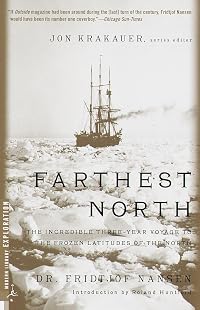
Originally published in 1897, this two-volume work chronicles the polar expedition of Norwegian scientist Fridtjof Nansen (1861-1930), who came closer than any previous explorer to the North Pole. Beginning on board his boat, the Fram, which was deliberately driven into pack-ice off Siberia in order to drift north, Nansen and his companions later resorted to sleds and kayaks. Running to over six hundred pages, Volume 1 includes descriptions of the expedition's preparation and equipment, the show more farewell to Norway and voyage through the Kara Sea, ending with the party's second autumn on the ice. The Fram served as an oceanographic-meteorological-biological laboratory during its time in the Arctic and Nansen eventually published six volumes of scientific observations. He later became Norwegian delegate to the League of Nations, directing humanitarian projects, and is famous for receiving the Nobel Peace Prize in 1922 as well as for his polar achievements. show lessTags
Recommendations





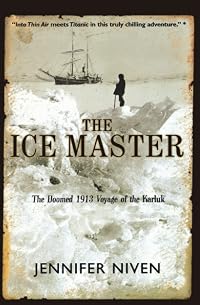

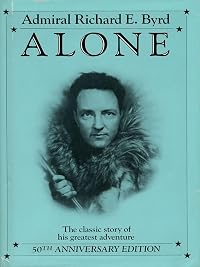
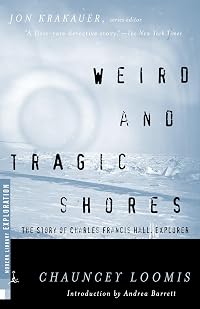



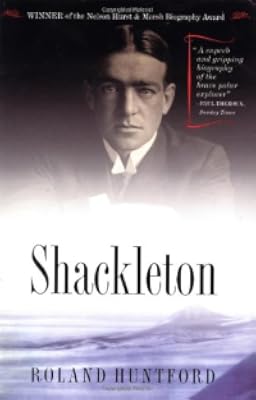












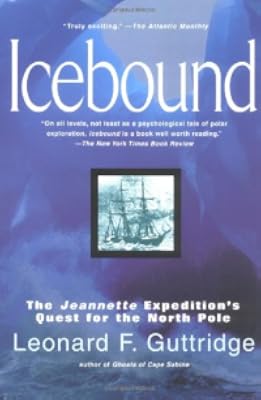
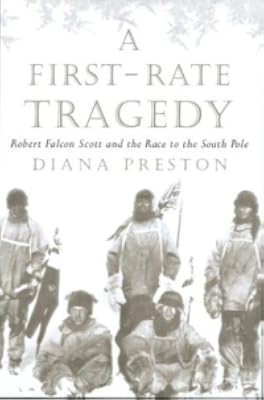
Member Recommendations


juniperSun another Arctic trip, written by a Black explorer
Member Reviews
In 1889, three Englishmen and a dog drifted down the Thames from Oxford to London in a small boat. Four years later, thirteen Norwegians and a rather larger number of dogs set out to do something similar in the Arctic...
Nansen's inspiration didn't really come from Jerome K. Jerome, lovely as it would be to think so, but from a geographer called Mohn, who calculated that there must be a current in the Arctic that pushes the ice right across the polar region from Siberia to the North Atlantic. This was a rather controversial idea at a time when many experts still believed that there was a significant land mass at the North Pole. Nansen was convinced, however, and decided that the way to get closest to the Pole would be to take a boat show more specially designed for the purpose and deliberately let it be trapped in the ice off the New Siberian Islands, so that it would automatically be carried north with the ice, to pop out a year or two later somewhere in the region of Spitsbergen.
This book is the record of Nansen's expedition in the Fram to test that theory. They entered the polar ice in late summer 1893, and found that the ship's ice-resistant design worked well, but the rate of drift was a lot less than had been predicted. The Fram didn't free herself for another three years. When she did, she was more or less where Nansen expected her to be. Once he was sure that everything was working properly and it was just a question of waiting, Nansen and one companion left the ship in March 1895 to make an attempt to get to the Pole by sledge.
Obviously, this book is a piece of PR, designed to raise money, reflect credit on Nansen and his sponsors (mostly the Norwegian government), and generally make readers feel positive about polar exploration. So we can assume that Nansen may be making things sound a lot rosier than they really were. All the same, it was clearly a remarkable achievement. To bring back an expedition that has been in difficult and unknown regions, away from all contact with its base for three years, without any serious accident to any of the team, without any important equipment failures, and with everyone apparently in pretty good physical and psychological shape, must indicate pretty impressive planning and organisation. And an amazing degree of resilience in the team members. Nansen and Johannsen's sledge and kayak journey away from the Fram got into more difficulties, and they had what were evidently a couple of very near misses, but they too managed to return safely and in reasonably good shape, despite having had to spend a winter in an improvised shelter on the coast of Franz-Joseph Land.
Nansen's account is lively and very enthusiastic by the standards of scientific writing, but maybe a bit rushed sometimes. There are certainly sections that would have been better if he had had time to take a few steps back from his journal and summarise his experiences a bit. The English translation is occasionally a bit stilted: one oddity is that the word "ski" obviously hadn't established itself in English by the 1890s, so the translator uses "snow-shoes" to mean "nordic skis" and "Canadian snow-shoes" to mean "snow-shoes". All the same, this undigested quality is part of the charm of the book. Its accounts of day-to-day life in the Fram, cookery, minor technical mishaps, weather, and the constant changes in the ice-world around them are all very enjoyable.
Less pleasant — but quite understandable in the circumstances — is the constant stress on hunting. A polar bear is primarily a potential food-item, incidentally a possible danger. Only as a rather minor consideration does Nansen ever allow himself to reflect on the beauty of the animals they encounter. The only animals they ever feel bad about killing are the dogs, slaughtered one by one on the sledge tour to feed their companions.
On reflection, probably not a very good choice of reading for a vegetarian(!), but a good way to cool off during the only hot days we've had this summer. An impressive adventure story, and one that makes you want to experience the polar ice cap for yourself — if it's still there... show less
Nansen's inspiration didn't really come from Jerome K. Jerome, lovely as it would be to think so, but from a geographer called Mohn, who calculated that there must be a current in the Arctic that pushes the ice right across the polar region from Siberia to the North Atlantic. This was a rather controversial idea at a time when many experts still believed that there was a significant land mass at the North Pole. Nansen was convinced, however, and decided that the way to get closest to the Pole would be to take a boat show more specially designed for the purpose and deliberately let it be trapped in the ice off the New Siberian Islands, so that it would automatically be carried north with the ice, to pop out a year or two later somewhere in the region of Spitsbergen.
This book is the record of Nansen's expedition in the Fram to test that theory. They entered the polar ice in late summer 1893, and found that the ship's ice-resistant design worked well, but the rate of drift was a lot less than had been predicted. The Fram didn't free herself for another three years. When she did, she was more or less where Nansen expected her to be. Once he was sure that everything was working properly and it was just a question of waiting, Nansen and one companion left the ship in March 1895 to make an attempt to get to the Pole by sledge.
Obviously, this book is a piece of PR, designed to raise money, reflect credit on Nansen and his sponsors (mostly the Norwegian government), and generally make readers feel positive about polar exploration. So we can assume that Nansen may be making things sound a lot rosier than they really were. All the same, it was clearly a remarkable achievement. To bring back an expedition that has been in difficult and unknown regions, away from all contact with its base for three years, without any serious accident to any of the team, without any important equipment failures, and with everyone apparently in pretty good physical and psychological shape, must indicate pretty impressive planning and organisation. And an amazing degree of resilience in the team members. Nansen and Johannsen's sledge and kayak journey away from the Fram got into more difficulties, and they had what were evidently a couple of very near misses, but they too managed to return safely and in reasonably good shape, despite having had to spend a winter in an improvised shelter on the coast of Franz-Joseph Land.
Nansen's account is lively and very enthusiastic by the standards of scientific writing, but maybe a bit rushed sometimes. There are certainly sections that would have been better if he had had time to take a few steps back from his journal and summarise his experiences a bit. The English translation is occasionally a bit stilted: one oddity is that the word "ski" obviously hadn't established itself in English by the 1890s, so the translator uses "snow-shoes" to mean "nordic skis" and "Canadian snow-shoes" to mean "snow-shoes". All the same, this undigested quality is part of the charm of the book. Its accounts of day-to-day life in the Fram, cookery, minor technical mishaps, weather, and the constant changes in the ice-world around them are all very enjoyable.
Less pleasant — but quite understandable in the circumstances — is the constant stress on hunting. A polar bear is primarily a potential food-item, incidentally a possible danger. Only as a rather minor consideration does Nansen ever allow himself to reflect on the beauty of the animals they encounter. The only animals they ever feel bad about killing are the dogs, slaughtered one by one on the sledge tour to feed their companions.
On reflection, probably not a very good choice of reading for a vegetarian(!), but a good way to cool off during the only hot days we've had this summer. An impressive adventure story, and one that makes you want to experience the polar ice cap for yourself — if it's still there... show less
Farthest North is considered a classic, being on National Geographic's list at #11. Nevertheless I do not rate it very highly, it is a long frustrating slog. Not much happens until about 70% of the way through, they ride comfortably in the Fram borne along by the ice actually gaining weight from eating too much food. The crew do not come alive as personalities, only the dogs hold much interest. As noted in the review by thorold (Aug 21 2012) the book is a PR piece meant to smooth over the rough spots and show how right Nansen was, to silence the critics.
Finally Nansen leaves the ship and travels over the ice on a dog sled the narrative picks up pace. There are some interesting scenes of tribulation and survival but offset by Nansen who show more does not see an animal he can't stop to kill or injure in graphic heart-breaking detail. There is nothing wrong with killing for food but I've never read such detailed animal cruelty.
Nansen's writing is based on diaries and he tends to rely on cliche. In the translation, he often speaks with the impersonal pronoun "one", ie. "One often sees oneself etc.." an overly formal style that grates. The book itself contains many incredible pictures and maps. Nansen's return to Norway is satisfying if not melodramatic (the pipe drops from his mouth, "Is that you, Nansen?")
This is still an important book, for anyone serious about polar literature it's near the top of the list. Perhaps a new translation, abridgement and annotations could make it a little more appealing. show less
Finally Nansen leaves the ship and travels over the ice on a dog sled the narrative picks up pace. There are some interesting scenes of tribulation and survival but offset by Nansen who show more does not see an animal he can't stop to kill or injure in graphic heart-breaking detail. There is nothing wrong with killing for food but I've never read such detailed animal cruelty.
Nansen's writing is based on diaries and he tends to rely on cliche. In the translation, he often speaks with the impersonal pronoun "one", ie. "One often sees oneself etc.." an overly formal style that grates. The book itself contains many incredible pictures and maps. Nansen's return to Norway is satisfying if not melodramatic (the pipe drops from his mouth, "Is that you, Nansen?")
This is still an important book, for anyone serious about polar literature it's near the top of the list. Perhaps a new translation, abridgement and annotations could make it a little more appealing. show less
Nansen's journey, from June 24th, 1893 to April 7th, 1895, took him to the farthest reaches of the North Pole. Blessed with the support of the Norwegian government and the King of Norway, Nansen set sail with ample provisions, able men and strong sled dogs. Farthest North is Nansen's first person account of the adventure, complete with journal entries and fantastic photography and drawings. A word of warning to the animal lovers: Nansen's no-nonsense approach to killing various animals is harsh. I had a hard time with how he described shooting a curious seal.
Aside from his expedition, Nansen was a fascinating character. He invented a new type of sled for traversing the Arctic terrain. He was a biologist who worked with nature. His show more theory for success was to allow his ship, the Fram, to become trapped in the ice. The Fram was built to withstand the pressures of the ice floes and move with the fluctuations so as not to be torn apart. However, while Nansen was smart about the construction of the Fram, he was not so clever concerning the rising tides that ended up swamping his boats at one point of the expedition.
To keep busy during the ice entrapment, Nansen established a music factory, repairing much loved instruments. By default, Nansen's love of forward progress transferred to his crew. To keep busy for the sake of industry, when the ship's doctor didn't have patients to see he set up a book binding business to care for the well used library.
Even though he failed to reach the true North Pole Nansen was the first one to cross Greenland successfully. show less
Aside from his expedition, Nansen was a fascinating character. He invented a new type of sled for traversing the Arctic terrain. He was a biologist who worked with nature. His show more theory for success was to allow his ship, the Fram, to become trapped in the ice. The Fram was built to withstand the pressures of the ice floes and move with the fluctuations so as not to be torn apart. However, while Nansen was smart about the construction of the Fram, he was not so clever concerning the rising tides that ended up swamping his boats at one point of the expedition.
To keep busy during the ice entrapment, Nansen established a music factory, repairing much loved instruments. By default, Nansen's love of forward progress transferred to his crew. To keep busy for the sake of industry, when the ship's doctor didn't have patients to see he set up a book binding business to care for the well used library.
Even though he failed to reach the true North Pole Nansen was the first one to cross Greenland successfully. show less
Nansen's account of his polar journey was originally published in two volumes. The first is principally an account of the preparations for and journey of the Fram, and its iced-in drift through the Arctic Circle. The second is chiefly concerned with Nansen's two-man sledge journey farther north. The first volume is unusually positive for a polar memoir, as life on board the Fram was comparatively comfortable; the reader is regularly impressed by Nansen's preparedness and forward thinking before setting out. The second volume is more bleak, detailing the sledge party's bare bones survival in the Arctic winter. It is, to use Nansen's own description, somewhat monotonous. Over all, the book is well written, illuminating and not without show more humour. However, the account is lengthy, and would benefit from some judicious editing. show less
This is a wonderful book, both in terms of content and in terms of the quality of this particular edition - a two-volume work with magnificant illustrations including early tinted photographs, and large maps contained in special map pockets in the rear of the volumes. Nansen was a decent writer with an interesting story to tell of Polar exploration and some dire adventures somewhat reminiscent of Shackleton. One of the best things about the book is that I paid 50 cents for it - 25 cents per volume. I don't think any era has produced scholarly publications of a quality any better than those published during the late 1800s and early 1900s. Like the 1913 "Scott's Last Expedition," this is a great classic of polar exploration.
Superb, exciting and fascinating account.
Excellent. Not exactly underrated but definitely not known enough.
Members
- Recently Added By
Lists

Polar exploration
54 works; 4 members

Book Titles Mentioned In Newberry Medal And Honor Books
884 works; 3 members
Author Information

Some Editions
Awards and Honors
Series
Belongs to Publisher Series
Világjárók (Klasszikus Útleírások - XII.)
Common Knowledge
- Canonical title
- Farthest North
- Original title
- Fram over Polhavet : Den norske polarfærd 1893–1896
- Original publication date
- 1897
- People/Characters
- Sir John Franklin; Fridtjof Nansen
- Important places
- Canadian Arctic; Norway; Arctic; Northwest Passage; Franz Josef Land
- Epigraph
- A time will come in later years when the Ocean will unloose the bands of things, when the immeasurable earth will lie open, when seafarers will discover new countries, and Thule will no longer be the extreme point among the l... (show all)ands.
--Seneca - First words
- Unseen and untrodden under their spotless mantle of ice the rigid polar regions slept the profound sleep of death from the earliest dawn of time.
Introduction (by Jon Krakauer): Why should we be interested in the jottings of explorers and adventurers?
Introduction (by Roland Huntford): By the end of the nineteenth century, most of the world had been explored. - Last words
- (Click to show. Warning: May contain spoilers.)Even if explorers have to live in Eskimo fashion and content themselves with the barest necessaries, they may, provided they are suitably equipped, make good headway and cover considerable distances in regions which have hitherto been regarded as almost inaccessible.
Classifications
- Genres
- Nonfiction, Travel, General Nonfiction, Biography & Memoir, History
- DDC/MDS
- 919.804 — History & geography Geography & travel Geography of and travel in Australasia, Pacific Ocean islands, Atlantic Ocean islands, Arctic islands, Antarctica and on extraterrestrial worlds Polar regions
- LCC
- G670 — Geography, Anthropology and Recreation Geography (General) Arctic and Antarctic regions
- BISAC
Statistics
- Members
- 463
- Popularity
- 65,804
- Reviews
- 12
- Rating
- (3.80)
- Languages
- 8 — English, Finnish, German, Hungarian, Italian, Norwegian (Bokmål), Spanish, Swedish
- Media
- Paper, Audiobook, Ebook
- ISBNs
- 58
- ASINs
- 25