
Beau Riffenburgh
Author of Shackleton's Forgotten Expedition: The Voyage of the Nimrod
About the Author
Beau Riffenburgh is a historian specializing in exploration, particularly that of the Antarctic, the Arctic, and Africa. He earned his doctorate at the Scott Polar Research Institute, University of Cambridge, where he is currently the editor of Polar Record
Works by Beau Riffenburgh
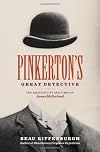
Pinkerton's Great Detective: The Amazing Life and Times of James Mcparland (2013) 111 copies, 6 reviews
National Geographic Society Exploration Experience: The Heroic Exploits of the World's Greatest Explorers (2007) 68 copies
Polar Exploration: The Heroic Exploits of the World's Greatest Polar Explorers (2009) 21 copies, 1 review
The Exploration Treasury: Amazing Journeys Around the World in Rare Artworks and Prints, Maps and Personal Narratives (Make It) (2017) 16 copies
Associated Works
Tagged
Common Knowledge
- Legal name
- Riffenburgh, Beau
- Other names
- Beaufort, Simon (Pseudonyme)
- Birthdate
- 1955-01-12
- Gender
- male
- Education
- Université de Cambridge, Scott Polar Research Institute, UK (Ph.D., Thesis 'The Anglo-American press and the sensationalization of the Arctic, 18 55 - 19 10', 19 91)
M.A. en journalisme - Occupations
- Journaliste
- Organizations
- National Football League (Collaborateur marketing, licensing, and publishing branch, 8 ans)
Los Angeles Lakers, USA (Chargé de relations publiques) - Relationships
- Holland, Clive (Thesis supervisor)
Cruwys, Elizabeth (Epouse) - Nationality
- USA
- Birthplace
- Pasadena, California, USA
- Places of residence
- Pays-de-Galle, Royaume-Uni
- Associated Place (for map)
- California, USA
Members
Reviews
Some of the great parts of the film Butch Cassidy and the Sundance Kid come when Paul Newman turns to Robert Redford and asks, "Who are those guys?"
That question eventually led Beau Riffenburgh to this biography of Pinkerton agent James McParland, who tracked the Hole in the Wall Gang and went undercover in tough mining towns across the country. A poor Irish immigrant who raised himself from nothing and lived by his wits for years, McParland drew both praise and scorn during his lifetime as show more an undercover agent who infiltrated the Molly Maguires in an era of deadly Pennsylvania coal mine violence before heading out west.
Riffenburgh is a conscience researcher and writer who uncovers the records of McParland's actions and writings. This is essential in a biography such as this, as one's view of the subject may well depend on one's political viewpoint. Was McParland a turncoat to his people or someone who served justice?
Well, it depends a great deal on one's point of view. Riffenburgh does a great job of placing McParland within his own times. Those were far different from today's in that criminal cases were brought by those who could afford to prosecute. But there also are parallels to today with company owners who want to pay workers the least amount possible, have them indebted to the company store and still be able to fire them at will.
For McParland to drop into such a situation, and possibly with the ultimate goal of making sure he followed the tenents of his church, Riffenburgh makes it easy to see that his subject's role was not easy. The author also uses the array of historical record available to not sway the reader, but instead to place the reader squarely within the context of what can be shown of those turbulent times.
The author also does a thorough job of describing the times in which McParland operated from more than one viewpoint. Mine owners and workers who were either indebted to the company store or faced being fired did not view the world in the same way, and Riffenburgh does well to describe both viewpoints. The even-handed approach may not change anyone's mind, but it does bring into focus what the stakes were for everyone involved, including McParland.
For anyone who wondered the same thing that Paul Newman did in that classic film, and for those wonder about those times, Pinkerton's Great Detective is an excellent way to find some answers. show less
That question eventually led Beau Riffenburgh to this biography of Pinkerton agent James McParland, who tracked the Hole in the Wall Gang and went undercover in tough mining towns across the country. A poor Irish immigrant who raised himself from nothing and lived by his wits for years, McParland drew both praise and scorn during his lifetime as show more an undercover agent who infiltrated the Molly Maguires in an era of deadly Pennsylvania coal mine violence before heading out west.
Riffenburgh is a conscience researcher and writer who uncovers the records of McParland's actions and writings. This is essential in a biography such as this, as one's view of the subject may well depend on one's political viewpoint. Was McParland a turncoat to his people or someone who served justice?
Well, it depends a great deal on one's point of view. Riffenburgh does a great job of placing McParland within his own times. Those were far different from today's in that criminal cases were brought by those who could afford to prosecute. But there also are parallels to today with company owners who want to pay workers the least amount possible, have them indebted to the company store and still be able to fire them at will.
For McParland to drop into such a situation, and possibly with the ultimate goal of making sure he followed the tenents of his church, Riffenburgh makes it easy to see that his subject's role was not easy. The author also uses the array of historical record available to not sway the reader, but instead to place the reader squarely within the context of what can be shown of those turbulent times.
The author also does a thorough job of describing the times in which McParland operated from more than one viewpoint. Mine owners and workers who were either indebted to the company store or faced being fired did not view the world in the same way, and Riffenburgh does well to describe both viewpoints. The even-handed approach may not change anyone's mind, but it does bring into focus what the stakes were for everyone involved, including McParland.
For anyone who wondered the same thing that Paul Newman did in that classic film, and for those wonder about those times, Pinkerton's Great Detective is an excellent way to find some answers. show less
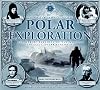
This book is almost like a souvenir publication of Polar exploration . It appeals to the senses as a handsome interesting publication, that fits somewhere between memorabilia and book. It is unusual because it contains ten envelopes and like a puzzle you need to open the envelopes to extract the surprises – these are facsimile documents and memorabilia of polar exploration. The book is produced by Carlton Books of the UK, in association with The Royal Geographical society ( 2010). It is a show more generous sized hard cover book and measures 10 x 12 inches and about 1 inch thick. It is written in English and where necessary translation from Norwegian to English is given (an extract from the An extract from Amundsen’s diary). The author is Beau Riffenburgh, described as an historian and author specializing in polar exploration. It is clearly the author’s intention to give armchair readers an “exploration experience” and a taste of the heroism of north and south pole expeditions. The book is filled with photographs of key characters and adventurers in exploration, there are useful maps in every section and reproductions of contemporary photographs, many framed. It covers 27 expeditions in its 60 odd pages with large type chapter headings. The main focus is on the period 1869 to 1935 and the coverage is of every form of transport from ships to balloons, and sledges to aircraft. The information is given to you in snippets and the style and thrust of writing is descriptive and narrative; there is no space for critical analysis. Why did men risk their lives and almost certain death on hazardous expeditions? Why was polar exploration of political and economic importance? It is all a bit of a boys’ own grand adventure. I like the choice of enclosures and attachments – such as the extract from William Hooper’s diary of the voyage of the Fury in 1821 to 1823, pages of the sketch book of Charles Gerrans Phillips on an Antarctic expedition of 1839 to 1843, an autographed menu of a dinner for Captain George Strong Nares and the men of the British Arctic expedition of 1874 plus a generous number of pages from the diary of H W Feilden, a naturalist on that expedition, a letter from Nansen (1892) seeking help obtaining a balloon for his arctic expedition together with a plan of Nansen’s ship, The Fram (1898). Perhaps most poignant is the Robert Scott diary entry for 12 March 1912 telling of much quoted last hours of Captain Oates and giving an insight into the tragedy of the band of men who became posthumous heroes of their failure. The Roald Amundsen success is commemorated in the extracts from his diary. The Mawson Antarctic expedition of1912 is less well known but the inclusion of an extract of Mawson’s diary whet my appetite to read more. Shackleton’s Endurance (1914 – 1917) is represented in significant letters. Finally the age of flight takes us into the 1930s with the Byrd expeditions. There is a brief (not comprehensive) bibliography of other books on polar exploration. The text may be at the level of introductory reader but the coverage is wide, the photographs are unusual and the angle of facsimile memorabilia make this a desirable book and it fits with collections on polar exploration and cartography. Rating five stars for the book as collectable object, but as history perhaps only three stars. Let’s settle on four stars. show less
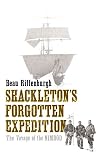
Excellent, readable, written by a historian, gave me much more insight into Shakleton and the 1908 expedition. I was very impressed by the way Mr Riffenburgh sets the scene and gives the reader the cultural background that shaped the thinking and attitudes of the men and the expedition. Too many modern writers damn Anarctic explorers for not knowing things that hadn't been discovered and for not having attitudes that coincide with the author's. This book is not one of those - here we get a show more good look at what it was like then and at the remarkable achievements of the expedition. Not only did they pioneer travel on the Antarctic plateau, they achieved remarkable scientific work and, as noted in the epilogue, laid the groundwork for the future of Antarctic science especially through the work of such people as David, Mawson and Priestly. Highly recommended. show less
Before we had an FBI, the United States had the Pinkerton's Detective Agency, a private security agency that worked on behalf of members of the government (providing private security for President Abraham Lincoln), of various law enforcement efforts (particularly in hunting outlaws in the Wild West), and as union busters by various industries (particularly mining and railroad concerns. In my head, Pinkerton's detectives are synonymous with defeating outlaws and bashing the heads of workers show more trying to get better safety regulations and pay from their corporate overlords.
Pinkerton's Great Detective tells the story of James McParland - the agencies most famous operative. This is a man who went undercover to infiltrate the Molly Maguires, met Sherlock Holmes in The Valley of Fear, and foiled an attempt to assassinate Idaho Governor Frank Steunenberg. He was a ruthless, tireless, inventive man whose constant presence on behalf of business' attempting to destroy the rights of their workers also makes him very unsympathetic to me, despite my admiration of his sheer courage. He was an interesting man in an interesting time and Mr. Riffenburgh places him firmly within the context of the laws and mores of his time.
This book is very detailed and provides a great deal of information about people and events surrounding McParland, especially important for fleshing out a story where facts are very thin on the ground. The pacing of this book is a bit slow, best devoured in chunks between other lighter reading, but it's an interesting story and, while it doesn't redeem McParland for me it did teach me lots of things about his time that I didn't know. show less
Pinkerton's Great Detective tells the story of James McParland - the agencies most famous operative. This is a man who went undercover to infiltrate the Molly Maguires, met Sherlock Holmes in The Valley of Fear, and foiled an attempt to assassinate Idaho Governor Frank Steunenberg. He was a ruthless, tireless, inventive man whose constant presence on behalf of business' attempting to destroy the rights of their workers also makes him very unsympathetic to me, despite my admiration of his sheer courage. He was an interesting man in an interesting time and Mr. Riffenburgh places him firmly within the context of the laws and mores of his time.
This book is very detailed and provides a great deal of information about people and events surrounding McParland, especially important for fleshing out a story where facts are very thin on the ground. The pacing of this book is a bit slow, best devoured in chunks between other lighter reading, but it's an interesting story and, while it doesn't redeem McParland for me it did teach me lots of things about his time that I didn't know. show less
Lists
You May Also Like


Associated Authors
Statistics
- Works
- 41
- Also by
- 2
- Members
- 782
- Popularity
- #32,554
- Rating
- 4.0
- Reviews
- 13
- ISBNs
- 85
- Languages
- 5

