
Walter Lord (1917–2002)
Author of A Night to Remember
About the Author
Walter Lord is the author of several best-selling works of history, including "A Night to Remember", the recreation of the sinking of the Titanic. He lives in New York City. (Publisher Provided) John Walter Lord, Jr. (October 8, 1917- May 19, 2002), was an American author, best known for his show more documentary-style non-fiction account A Night to Remember, about the sinking of the RMS Titanic. He was born in Baltimore, Maryland; he attended Princeton University and alo earned a law degree from Yale Law School. Lord wrote 11 bestselling books on such subjects as Pearl Harbor (Day of Infamy, 1957), the Battle of Midway (Incredible Victory, 1967), the Battle of the Alamo (A Time to Stand, 1961). He is perhaps best known for his classic work about the crash of the Titanic, A Night to Remember (1955). Lord died at age 84 after a long battle with Parkinson's disease. He resided in Manhattan, New York. (Bowker Author Biography) show less
Works by Walter Lord
The Night Lives On: The Untold Stories & Secrets Behind the Sinking of the Unsinkable Ship-Titanic (1986) 650 copies, 7 reviews
The World War II Collection: The Miracle of Dunkirk, Day of Infamy, and Incredible Victory (2016) 13 copies
Titanic latitudine 41° nord 1 copy
Associated Works
Secrets & Spies: Behind the Scenes Stories of World War II (1964) — Contributor — 207 copies, 2 reviews
Tagged
Common Knowledge
- Canonical name
- Lord, Walter
- Legal name
- Lord, John Walter , Jr.
- Birthdate
- 1917-10-08
- Date of death
- 2002-05-19
- Gender
- male
- Education
- Princeton University (1939)
Yale University - Occupations
- writer
historian - Organizations
- Office of Strategic Services (WWII)
- Awards and honors
- Francis Parkman Prize for Special Achievement (1994)
- Nationality
- USA
- Birthplace
- Baltimore, Maryland, USA
- Place of death
- Manhattan, New York, USA
- Burial location
- Green Mount Cemetery, Baltimore, Maryland, USA
- Associated Place (for map)
- Maryland, USA
Members
Reviews
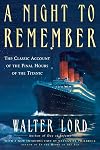
A classic account of the Titanic, that despite a skeptic bent keeps a lot of the orderly victorian airs in the narrative (though questions it towards the end). Structurally, it repeats itself multiple times, having told and re-told the narrative several times by the end, from an overall perspective, and then through various points of view, as well as the metanarrative story about the story, as covered by the news.
In some ways this worked for painting a detailed picture, in others it show more highlights how fragmented the memory of the whole event is; people swear they saw and interacted with people that could not have been where they were, conflicting accounts as to who did what, including if the captain went down with the ship or committed suicide, if he was helping people to the last or not. The classic question of what the band played is another feature where we get our choice of answers from different sources, from nothing, to ragtime, to Nearer My God to Thee and more. It's a great illustration of how unreliable witness testimony can be.
The question is what do we take away from accounts so piecemeal, that even as a whole, the book disputes toward the end (regarding the central women and children first issue, versus the statistics on those saved). Is the kaleidoscope of views the story, or just a shrug concluding we'll never know? show less
In some ways this worked for painting a detailed picture, in others it show more highlights how fragmented the memory of the whole event is; people swear they saw and interacted with people that could not have been where they were, conflicting accounts as to who did what, including if the captain went down with the ship or committed suicide, if he was helping people to the last or not. The classic question of what the band played is another feature where we get our choice of answers from different sources, from nothing, to ragtime, to Nearer My God to Thee and more. It's a great illustration of how unreliable witness testimony can be.
The question is what do we take away from accounts so piecemeal, that even as a whole, the book disputes toward the end (regarding the central women and children first issue, versus the statistics on those saved). Is the kaleidoscope of views the story, or just a shrug concluding we'll never know? show less
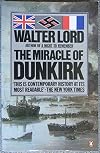
Another readable book from the consummate narrative historian Walter Lord. If it at first seems slightly odd to have an American writing at length about such an important piece of modern British national mythology, this is dispelled as Lord delivers an astute, organised and – importantly – unsentimental account. He recounts the accurate examples of that famous 'Dunkirk spirit' – the armada of little ships, the "collective refusal of men to be discouraged" by a relentless series of show more crises (pg. xi-xii) – but also the more unedifying moments, including mental breakdowns, the shooting of panic-stricken soldiers in order to maintain order, and the near-mutinies among those lauded little ships. Aside from underselling (in my view) the RAF's role in the evacuation, Lord brings order to the chaos of Operation Dynamo.
The haphazard and improvisational nature of the operation is brought out in full, sometimes to the book's narrative detriment. Whilst it may be more or less inevitable due to the chaotic and bottle-necked arena of the Channel port, with participants going many days without sleep, Lord's usual 'eye-witness' approach works less well than in some of his other books like A Night to Remember and Day of Infamy. Tellingly, those two books describe events that occur on a single day (as their titles suggest), whereas The Miracle of Dunkirk unspools over eleven days. Sequence and focus are sometimes lost, and the reader can be turned about.
Where Lord is always at his best is in providing texture to history. Included in the narrative are not only the regular, expected accounts of battered infantrymen and naval officers, but those remarkable little curios that only seem to emerge in times of stress and war. Lord has a nose for this sort of thing, and The Miracle of Dunkirk finds time to tell us about Jack Churchill, the eccentric British soldier who killed a German with a bow and arrow six hundred years after Crécy (pg. 72) and the improbable arrival among the 'little ships' of 66-year-old Charles Herbert Lightoller, formerly Second Officer on the Titanic (pg. 226). He points out the curious nature of the British "offering the French free use of a French facility in a French port" (pg. 181) and the enduring examples of British phlegm (noting the paucity of defensive weaponry among the little ships, one skipper observes that "even a record of the 1812 Overture would be better than nothing" (pg. 160)).
Such things are often sneered at nowadays, the Dunkirk spirit increasingly seen as a Little Englander myth that has encouraged the horridness of Brexit, but Lord shows that, as ever, the reality was much more nuanced. Dunkirk was the capstone of a disaster that had played out across Belgium and France (and arguably in the corridors of power since Versailles), but was in itself a success. It was not a victory (as Churchill was at pains to point out) but it was an achievement, rather than a German reprieve. From unit commanders all the way up to Hitler's OKW, the Germans were worried about losses and attrition among their all-important Panzers, and still had to mop up the French army to the south (pg. 29). Armchair generals might say the Germans made mistakes (or, worse, that they 'let the BEF go') and the British got lucky but, as Lord convincingly argues, it was for them "far better to risk a miracle at Dunkirk than risk a second Miracle of the Marne" (pg. 273), a reference to the First World War battle which rallied the French after a successful German invasion. Lord understands these dilemmas of history, and at Dunkirk shows it in all its texture and veracity. While pundits might debate the viability of Britain going it alone at a time of hostility from the Continent, books like this one show that success or collapse depends to a great extent upon that collective ability to face a relentless series of crises with a refusal to be discouraged. show less
The haphazard and improvisational nature of the operation is brought out in full, sometimes to the book's narrative detriment. Whilst it may be more or less inevitable due to the chaotic and bottle-necked arena of the Channel port, with participants going many days without sleep, Lord's usual 'eye-witness' approach works less well than in some of his other books like A Night to Remember and Day of Infamy. Tellingly, those two books describe events that occur on a single day (as their titles suggest), whereas The Miracle of Dunkirk unspools over eleven days. Sequence and focus are sometimes lost, and the reader can be turned about.
Where Lord is always at his best is in providing texture to history. Included in the narrative are not only the regular, expected accounts of battered infantrymen and naval officers, but those remarkable little curios that only seem to emerge in times of stress and war. Lord has a nose for this sort of thing, and The Miracle of Dunkirk finds time to tell us about Jack Churchill, the eccentric British soldier who killed a German with a bow and arrow six hundred years after Crécy (pg. 72) and the improbable arrival among the 'little ships' of 66-year-old Charles Herbert Lightoller, formerly Second Officer on the Titanic (pg. 226). He points out the curious nature of the British "offering the French free use of a French facility in a French port" (pg. 181) and the enduring examples of British phlegm (noting the paucity of defensive weaponry among the little ships, one skipper observes that "even a record of the 1812 Overture would be better than nothing" (pg. 160)).
Such things are often sneered at nowadays, the Dunkirk spirit increasingly seen as a Little Englander myth that has encouraged the horridness of Brexit, but Lord shows that, as ever, the reality was much more nuanced. Dunkirk was the capstone of a disaster that had played out across Belgium and France (and arguably in the corridors of power since Versailles), but was in itself a success. It was not a victory (as Churchill was at pains to point out) but it was an achievement, rather than a German reprieve. From unit commanders all the way up to Hitler's OKW, the Germans were worried about losses and attrition among their all-important Panzers, and still had to mop up the French army to the south (pg. 29). Armchair generals might say the Germans made mistakes (or, worse, that they 'let the BEF go') and the British got lucky but, as Lord convincingly argues, it was for them "far better to risk a miracle at Dunkirk than risk a second Miracle of the Marne" (pg. 273), a reference to the First World War battle which rallied the French after a successful German invasion. Lord understands these dilemmas of history, and at Dunkirk shows it in all its texture and veracity. While pundits might debate the viability of Britain going it alone at a time of hostility from the Continent, books like this one show that success or collapse depends to a great extent upon that collective ability to face a relentless series of crises with a refusal to be discouraged. show less
A Night to Remember: The Classic Account of the Final Hours of the Titanic (Holt Paperback) by Walter Lord
Me: “Guess what? I’m going to read a book about the Titanic!”
My 11 year old brother: “What’s it called?”
Me: “A Night to Remember”
Brother: “I love that one! It’s a classic from the 1950’s!”
Me: “You’ve read this?!”
Brother: “No, but I love it.”
My little brother is a walking compendium of knowledge about the RMS Titanic, so I figured I would step up my game and read a historical account of my own. This one is far above his reading level, but apparently he show more still knows everything *about* the book and it’s publication date. I love the little man and his weird passion for sunken ships.
This book is absolutely chilling to the core. It doesn’t beat around the bush with details of the ship mechanics and time period; right from the first page you are on board the Titanic on April 15, 1912. The amount of detail is almost agonizing. Not because of the writing style or any other trivial matters, but because the subject matter is simply so painful. I noticed myself listening to the audiobook paused with a mouth over my hand, horror-struck. It takes an excellent account of a tragedy to achieve such effect. The worst part was towards the end, when the author asks “what if?” and goes through every plausible scenario where the simplest change would have prevented this historical disaster entirely. 5/5 stars of heartache. show less
My 11 year old brother: “What’s it called?”
Me: “A Night to Remember”
Brother: “I love that one! It’s a classic from the 1950’s!”
Me: “You’ve read this?!”
Brother: “No, but I love it.”
My little brother is a walking compendium of knowledge about the RMS Titanic, so I figured I would step up my game and read a historical account of my own. This one is far above his reading level, but apparently he show more still knows everything *about* the book and it’s publication date. I love the little man and his weird passion for sunken ships.
This book is absolutely chilling to the core. It doesn’t beat around the bush with details of the ship mechanics and time period; right from the first page you are on board the Titanic on April 15, 1912. The amount of detail is almost agonizing. Not because of the writing style or any other trivial matters, but because the subject matter is simply so painful. I noticed myself listening to the audiobook paused with a mouth over my hand, horror-struck. It takes an excellent account of a tragedy to achieve such effect. The worst part was towards the end, when the author asks “what if?” and goes through every plausible scenario where the simplest change would have prevented this historical disaster entirely. 5/5 stars of heartache. show less

An excellent companion piece to Walter Lord's masterclass in narrative history, A Night to Remember. In this follow-up, Lord discusses in greater detail many things which fell between the cracks in his more bracing, earlier narrative, and also some things which only became apparent in the thirty years between the publications of his two Titanic books. The Night Lives On will not appeal as an introduction to the subject; Lord assumes an intermediate knowledge of the disaster on the part of show more the reader, and goes immediately into a deep delve. If you are looking for a gripping introductory narrative, his earlier A Night to Remember is impeccable.
As ever, the whole Titanic legend remains fascinating; I tentatively approached a book which looked, on the face of it, to be more for the anoraks than its predecessor, only to get swept up in it all once again. From whether the Titanic was ever called 'unsinkable', or whether this was a post-disaster media invention, to how the bridge officers dealt with warnings of ice, to questions of Captain Smith's competency in handling big ships, to who exactly determined how many lifeboats the ship should hold. Questions over the role played by the Californian, that would-be Good Samaritan which kept its distance (Lord says if he had a time machine that "could transport me back and let me spend an hour any place I wanted on the night of April 14-15, 1912, I would not spend that hour on the Titanic. I'd spend it on the bridge of the Californian." (pg. 190)). Sober discussion over whether shots were fired by the officers to maintain order, and – the big question – what song it was that the band played.
This book was published less than a year after the wreck was discovered by Robert Ballard in 1985, and there is an eerie sort of thrill in Lord recounting how Ballard's team watched the camera feed from their deep-sea robot, in the dead of night, and saw one of the great liner's distinctive boilers loom into view out of the pitch-black deep, just as seventy-three years before, men in the crow's nest of that ship had watched an iceberg loom into view in the dark. History is never that far away from us, and in the hands of a historian as lucid as Walter Lord, it is close enough to touch. show less
As ever, the whole Titanic legend remains fascinating; I tentatively approached a book which looked, on the face of it, to be more for the anoraks than its predecessor, only to get swept up in it all once again. From whether the Titanic was ever called 'unsinkable', or whether this was a post-disaster media invention, to how the bridge officers dealt with warnings of ice, to questions of Captain Smith's competency in handling big ships, to who exactly determined how many lifeboats the ship should hold. Questions over the role played by the Californian, that would-be Good Samaritan which kept its distance (Lord says if he had a time machine that "could transport me back and let me spend an hour any place I wanted on the night of April 14-15, 1912, I would not spend that hour on the Titanic. I'd spend it on the bridge of the Californian." (pg. 190)). Sober discussion over whether shots were fired by the officers to maintain order, and – the big question – what song it was that the band played.
This book was published less than a year after the wreck was discovered by Robert Ballard in 1985, and there is an eerie sort of thrill in Lord recounting how Ballard's team watched the camera feed from their deep-sea robot, in the dead of night, and saw one of the great liner's distinctive boilers loom into view out of the pitch-black deep, just as seventy-three years before, men in the crow's nest of that ship had watched an iceberg loom into view in the dark. History is never that far away from us, and in the hands of a historian as lucid as Walter Lord, it is close enough to touch. show less
Lists
Awards


You May Also Like


Associated Authors
Statistics
- Works
- 20
- Also by
- 11
- Members
- 7,923
- Popularity
- #3,060
- Rating
- 4.0
- Reviews
- 133
- ISBNs
- 237
- Languages
- 15
- Favorited
- 9
