
James D. Hornfischer (1965–2021)
Author of The Last Stand of the Tin Can Sailors: The Extraordinary World War II Story of the U.S. Navy's Finest Hour
About the Author
James D. Hornfischer, an American literary agent, naval historian and author, was born in Massachusetts in 1965. He attended Colgate University, where he was elected to the Phi Beta Kappa Society, and graduated in 1987. He received his law degree from the University of Texas at Austin in 2001, and show more is a non-practicing member of the State Bar of Texas. Hornfischer, a former editor at HarperCollins, is currently a literary agent, representing non-fiction authors in a myriad of subject areas. Hornfischer's lifelong interest in the Pacific Theater during World War II led to his writing numerous books on the subject. His titles include: Neptune's Inferno: The U.S. Navy at Guadalcanal, The Last Stand of the Tin Can Sailors and Ship of Ghosts. He also co-wrote Service: A Navy Seal at War with Marcus Luttrell, the author of Lone Survivor. Hornfischer's title The Fleet at Flood Tide: America at Total War in the Pacific, 1944-1945 made the New York Times bestseller list in 2016. (Bowker Author Biography) show less
Image credit: Historian James Hornfischer at the 2016 Texas Book Festival. By Larry D. Moore, CC BY-SA 4.0, https://commons.wikimedia.org/w/index.php?curid=53296731
Works by James D. Hornfischer
The Last Stand of the Tin Can Sailors: The Extraordinary World War II Story of the U.S. Navy's Finest Hour (2004) 1,210 copies, 29 reviews
Ship of Ghosts: The Story of the USS Houston, FDR's Legendary Lost Cruiser, and the Epic Saga of Her Survivors (2006) 598 copies, 14 reviews
The Fleet at Flood Tide: America at Total War in the Pacific, 1944-1945 (2016) 398 copies, 11 reviews
The Last Stand of the Tin Can Sailors: The Extraordinary World War II Story of the U.S. Navy's Finest Hour - A Graphic Novel Adaptation (2021) — Author — 11 copies, 1 review
Associated Works
Tagged
Common Knowledge
- Canonical name
- Hornfischer, James D.
- Birthdate
- 1965-11-18
- Date of death
- 2021-06-02
- Gender
- male
- Education
- Colgate University (BA|1987)
University of Texas (MBA|JD|2001) - Occupations
- editor
literary agent
naval historian - Organizations
- Hornfischer Literary Management
HarperCollins
McGraw Hill
Texas Institute of Letters
Naval Historical Foundation
Authors Guild (show all 7)
State Bar of Texas - Awards and honors
- Navy Distinguished Public Service Award (2021)
Samuel Eliot Morison Award for Naval Literature (2004)
United States Maritime Literature Award (2007)
Commodore John Barry Book Award (2017)
John Lehman Distinguished Naval History Award (2017) - Short biography
- A native of Massachusetts, and a graduate of Colgate University and the University of Texas School of Law, Hornfischer is a member of the Naval Order of the United States, the Navy League, and was appointed by Texas Governor Rick Perry as an “Admiral in the Texas Navy.” A former New York book editor, Hornfischer is president of the literary agency Hornfischer Literary Management, located in Austin, Texas, where he lives with his wife and their three children.
- Cause of death
- glioblastoma
- Nationality
- USA
- Birthplace
- Salem, Massachusetts, USA
- Places of residence
- Austin, Texas, USA
New York, New York, USA - Place of death
- Austin, Texas, USA
- Burial location
- Texas State Cemetery, Austin, Texas, USA
- Associated Place (for map)
- Texas, USA
Members
Reviews
The Last Stand of the Tin Can Sailors: The Extraordinary World War II Story of the U.S. Navy's Finest Hour by James D. Hornfischer
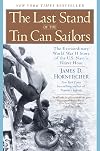
With their chances of winning WW2 quickly waning, Imperial Japan hurls one last Pacific offensive against the US at Leyte Gulf. Devising a three-prong attack with top and bottom feints designed to draw US ships away from the center, Japan nearly pulled off a dramatic victory. Against all odds and logic, the center held. This story draws the focus of WW2 down to that center offensive through the San Bernardino straight—where dramatically over-matched US forces stymied what should have been show more overwhelming forces. There is some well-handled big picture stuff, but the guts and glory of this book is the staggering amount of detail about the American “oil can sailors” and their fate. Once it gets rolling the narrative will take your breath away. Shifting perspective from ship to ship during the course of the battle could have made the book uneven but the tempo never slows.So much is going on, and clearly related, that I kept being stunned when given a time check reminding me almost everything was happening within a 6am to 8am window. Because of the often staggering amount of detail, kept having flashbacks of the first time I saw SAVING PRIVATE RYAN and their assault on Omaha Beach. Even a watered down filming of this could have the same effect. If you love the sea and history, how people and rise and fall confronted by hell, then grab a copy of this and pull up a deck chair. show less
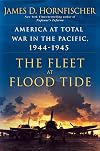
James Hornfischer was justly esteemed as a naval historian and his analysis of the Marianas Campaign is up to his best work. Where I think this book is somewhat less successful is when Hornfischer decides to address the end game in the Pacific War, which the campaign was fought to facilitate, and examine the American strategic bombing assault against Japan, culminating in the use of atomic weapons.
Hornfischer concludes that the psychological mindset of the Japanese leadership was the show more ultimate center of gravity in the war, justifying the use of the worst weapons we had available to break the deadlock that paralyzed the Japanese government's power of decision. In some ways I'm more convinced of this argument than I might have been, say, ten years ago, as I've become much more aware of weaknesses of the Meiji State that allowed the Japanese military to arrogate too much authority. Still, there are times when Hornfischer doesn't seem like he convinces himself with his own argument, as accepting the principles of Total War is an acceptance of the overthrow of all the restrains that aim to maintain proportionality; sometimes ugly is just ugly.
However, I also think those who argued that Hiroshima was really the opening shot of the Soviet-American Cold War, and that this foreclosed a better relationship with Stalin were/are kidding themselves; though that's an argument for another day. Still, to give those folks their due, I have to accept that there's an element of the U.S. government sleep-walking their own way through the decision making process which sticks with me from all that I've read about it. The American choice to use atomic weapons was as riddled with second guessing, sloppy thinking, and self-serving careerism as the Japanese process of avoiding national suicide. This is a long-winded way of saying that FDR was derelict in preparing Truman to preside over the final decision, and even if the right decision was ultimately made, it is not very satisfying. Overall, I still prefer Richard Frank's "Downfall" as an examination of the 1945 endgame, though Hornfischer takes into account Harold Bix's "Hirohito and the Making of Modern Japan," which ascribed much more political culpability to the Japanese sovereign than had been done previously. I suppose I'm arguing that another parallel examination of American and Japanese decision-making processes might be in order; hopefully Richard Frank completes his new trilogy about World War II viewed through the filter of the Sino-Japanese war. show less
Hornfischer concludes that the psychological mindset of the Japanese leadership was the show more ultimate center of gravity in the war, justifying the use of the worst weapons we had available to break the deadlock that paralyzed the Japanese government's power of decision. In some ways I'm more convinced of this argument than I might have been, say, ten years ago, as I've become much more aware of weaknesses of the Meiji State that allowed the Japanese military to arrogate too much authority. Still, there are times when Hornfischer doesn't seem like he convinces himself with his own argument, as accepting the principles of Total War is an acceptance of the overthrow of all the restrains that aim to maintain proportionality; sometimes ugly is just ugly.
However, I also think those who argued that Hiroshima was really the opening shot of the Soviet-American Cold War, and that this foreclosed a better relationship with Stalin were/are kidding themselves; though that's an argument for another day. Still, to give those folks their due, I have to accept that there's an element of the U.S. government sleep-walking their own way through the decision making process which sticks with me from all that I've read about it. The American choice to use atomic weapons was as riddled with second guessing, sloppy thinking, and self-serving careerism as the Japanese process of avoiding national suicide. This is a long-winded way of saying that FDR was derelict in preparing Truman to preside over the final decision, and even if the right decision was ultimately made, it is not very satisfying. Overall, I still prefer Richard Frank's "Downfall" as an examination of the 1945 endgame, though Hornfischer takes into account Harold Bix's "Hirohito and the Making of Modern Japan," which ascribed much more political culpability to the Japanese sovereign than had been done previously. I suppose I'm arguing that another parallel examination of American and Japanese decision-making processes might be in order; hopefully Richard Frank completes his new trilogy about World War II viewed through the filter of the Sino-Japanese war. show less
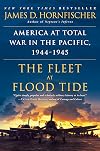
I've probably been somewhat slack in that it took the passing away of the author to elevate his books near the top of my TBR pile, in as much I wasn't sure that Hornfischer had that much to tell me. In that assumption I was very wrong, as this book is the modern narrative that this campaign needed, and though I practically had Samuel Elliot Morrison's the "Two Ocean War" memorized at one point, Hornfischer kept me turning pages, if only because he had come up with side stories of which I was show more not really aware of. Besides that though, in an age of rising naval competition, and the United States Navy facing its first real challenge in a generation, Hornfischer gives one an exemplary and bracing tale of what happens when your nation's fleet goes stale. About the only small point I'd knock this down for is that there are just a few moments when Hornfischer's prose gets a little too purple; your mileage may differ. show less
Hornfischer excels at smaller, more intimate history, Last Stand of the Tin Can Sailors being a shining example of what books can do. So how does his style translate to the massive undertaking that was the Allied victory in the Pacific?
Well, Hornfischer cheats. He focuses on three main characters, Admiral Spruance, who's Fifth Fleet was the decisive naval arm, Draper Kauffman, a naval officer who organized Underwater Demolition Teams to prepare the beach for invasion, and Paul W. Tibbetts, show more who dropped the first atomic bomb. Secondary characters, Marines, pilots, and Japanese soldiers and civilians, round out the history, providing a personal touch on great events.
The meat of the book focuses on the invasion of Saipan, a grinding campaign to force tenacious defenders out of a network of caves and bunkers. Saipan also served as the catalyst for the Great Marianas Turkey Shoot, where skilled American pilots in F6F Hellcats tore the guts out of the IJN's naval aviation wing. From then on, kamikaze attacks were the best that the IJN could mount, but these desperate measures could still exact a terribly high cost.
Saipan dominates the book, getting over 20 chapters to something like 2 pages on Iwo Jima, and a similar slighting of the invasion of Okinawa. The big show was the planned invasion of Japan, Operation Downfall. Causalities were expected to be immense, exceeding over 100,000 deaths on the Allied side, and millions on the Japanese side. Chemical weapons were expected to be used. It would have been horrific.
Here, Hornfischer launches into his second major theme of the book, justifying the use of the atomic bomb. This is a subject of unending historical debate, and Hornfischer hews close to conventional wisdom. While Hiroshima and Nagasaki may not have been strictly military targets, the object was the dysfunctional psychology around Emperor Hirohito. Despite a hopeless military position, including blockade and regular firebombing attacks, Japan was unwilling to surrender. The overwhelming force of the bombs provided an impetus to end the war. It was atrocious, yes, but a final atrocity in a decade of horrors.
So with the caveats that this book is really about Saipan, with a long digression on the ethics of the atom bomb, it is still really excellent. Hornfischer is top notch as a storyteller, humanizing a powerful military facing a determined opponent. Well worth the read! show less
Well, Hornfischer cheats. He focuses on three main characters, Admiral Spruance, who's Fifth Fleet was the decisive naval arm, Draper Kauffman, a naval officer who organized Underwater Demolition Teams to prepare the beach for invasion, and Paul W. Tibbetts, show more who dropped the first atomic bomb. Secondary characters, Marines, pilots, and Japanese soldiers and civilians, round out the history, providing a personal touch on great events.
The meat of the book focuses on the invasion of Saipan, a grinding campaign to force tenacious defenders out of a network of caves and bunkers. Saipan also served as the catalyst for the Great Marianas Turkey Shoot, where skilled American pilots in F6F Hellcats tore the guts out of the IJN's naval aviation wing. From then on, kamikaze attacks were the best that the IJN could mount, but these desperate measures could still exact a terribly high cost.
Saipan dominates the book, getting over 20 chapters to something like 2 pages on Iwo Jima, and a similar slighting of the invasion of Okinawa. The big show was the planned invasion of Japan, Operation Downfall. Causalities were expected to be immense, exceeding over 100,000 deaths on the Allied side, and millions on the Japanese side. Chemical weapons were expected to be used. It would have been horrific.
Here, Hornfischer launches into his second major theme of the book, justifying the use of the atomic bomb. This is a subject of unending historical debate, and Hornfischer hews close to conventional wisdom. While Hiroshima and Nagasaki may not have been strictly military targets, the object was the dysfunctional psychology around Emperor Hirohito. Despite a hopeless military position, including blockade and regular firebombing attacks, Japan was unwilling to surrender. The overwhelming force of the bombs provided an impetus to end the war. It was atrocious, yes, but a final atrocity in a decade of horrors.
So with the caveats that this book is really about Saipan, with a long digression on the ethics of the atom bomb, it is still really excellent. Hornfischer is top notch as a storyteller, humanizing a powerful military facing a determined opponent. Well worth the read! show less
Lists
Awards


You May Also Like


Associated Authors
Statistics
- Works
- 9
- Also by
- 1
- Members
- 3,165
- Popularity
- #8,069
- Rating
- 4.2
- Reviews
- 87
- ISBNs
- 47
- Languages
- 2
- Favorited
- 4
