
Craig L. Symonds
Author of The Battle of Midway
About the Author
Craig L. Symonds is Professor Emeritus at the United States Naval Academy, where he taught naval history and Civil War History for thirty years. He is the author of a host of award-winning titles, including most recently World War II at Sea (Oxford U. Press, 2018).
Image credit: Craig L. Symonds [credit: The Cleveland Civil War Roundtable]
Works by Craig L. Symonds
The New York Times: Complete Civil War, 1861-1865 (Book & CD) (2010) — Editor — 244 copies, 2 reviews
The Lincoln Assassination: Crime and Punishment, Myth and Memory A Lincoln Forum Book (The North's Civil War) (2010) 39 copies
Annapolis Goes to War: The Naval Academy Class of 1940 and its Trial by Fire in World War II (2025) 22 copies
Associated Works
Hearts Touched by Fire: The Best of Battles and Leaders of the Civil War (Modern Library) (2011) — Narrator — 111 copies, 2 reviews
MHQ: The Quarterly Journal of Military History — Autumn 2003 (2003) — Co-Author "Who Designed the CSS Virginia?" — 9 copies
MHQ: The Quarterly Journal of Military History — Winter 2002 (2001) — Author "Rank and Rancor in the Confederate Navy" — 8 copies
MHQ: The Quarterly Journal of Military History — Winter 2004 (2003) — Author "Johnston's Toughest Fight" — 8 copies
Tagged
Common Knowledge
- Legal name
- Symonds, Craig Lee
- Birthdate
- 1946-12-31
- Gender
- male
- Education
- University of California, Los Angeles (BA|history)
University of Florida (MA|history, PhD|history) - Occupations
- professor
historian
military historian
naval historian - Organizations
- United States Naval Academy (professor of history, 1976-2005)
- Awards and honors
- Commodore Dudley W. Knox Naval History Lifetime Achievement Award (2014)
Abraham Lincoln Book Award (2010)
Lincoln Prize (2009)
Barondess Prize (2009)
Daniel and Marilyn Laney Prize (2009)
Nevins-Freeman Prize (2009) (show all 12)
Theodore and Franklin D. Roosevelt Prize in Naval History (2006)
Anne Arundel County Award for Literary Arts (2006)
USNA Research Excellence Award (1998)
USNA Teaching Excellence Award (1988)
Navy Superior Civilian Service Award (1994|1998|2005)
Navy Meritorious Civilian Service Award (1989) - Nationality
- USA
- Birthplace
- Long Beach, California, USA
- Places of residence
- Florida, USA
Annapolis, Maryland, USA - Associated Place (for map)
- USA
Members
Discussions
Upcoming Book on Operation Neptune by Craig Symonds in Second World War History (March 2014)
Reviews
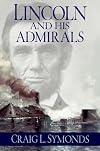
Craig Symonds, Professor Emeritus at the U.S. Naval Academy where he taught naval history and Civil War History for thirty years, and the author of ten previous books, examines Lincoln’s presidency through the lens of the naval side of the Civil War, a perspective often neglected in Civil War scholarship. He accomplishes several goals.
One is to show the importance of naval operations for the Civil War. Another is to provide evidence of Lincoln’s growth as a leader during his four years show more of presidency. A third is to enlighten readers about “Lincoln’s admirals,” since they are relatively unknown compared to “Lincoln’s generals.”
When Lincoln assumed the presidency, he had no knowledge of navies or navy matters, yet had to oversee the development and deployment of the largest naval force in American history to date. The very week Lincoln took office, he was beset by the crisis facing Fort Sumter - located in the middle of Charleston Harbor - which needed to be resupplied or surrendered. He had to borrow New York City tugboats to help supplement America’s tiny marine arsenal to resupply the fort. But by the midsummer of 1864, the U.S. Navy had more than six hundred warships in commission. Symonds observes that this scale of naval development would not be eclipsed until the world wars.
Symonds quotes Hannibal Hamlin, Lincoln’s first-term vice president, as saying that “eulogists make the mistake of constructing a Lincoln who was as great the day he left Springfield as when he made his earthly exit four years later.” This does Lincoln a disservice, Symonds claims, in understating the enormous strides he made while in office.
Lincoln was forced to become a student of naval warfare just as he had to become a student of land warfare. He effected a blockade of the South, wrestling not only with its legal technicalities, but also with the logistics of doing so without enough ships. He also had to deal with intermittent international crises involving foreign governments. Some of these governments, intent on the profits that would come from trading with the South, resisted interference at neutral ports. Others wanted contracts honored with the South for such goods as cotton and tobacco that had been executed prior to the outbreak of hostilities.
Lincoln had to cope with constant internecine conflicts not only among his admirals, and those aspiring to be admirals, but also between “Mars” and “Neptune” in his cabinet (as he referred to Secretary of War Edwin Stanton and Secretary of the Navy Gideon Welles). (Tellingly, Gustavus Fox, Assistant Secretary of the Navy, wrote in a letter, ”I feel that my duties are two fold: first, to beat our southern friends; second to beat the Army.”)
Gideon Welles, Lincoln’s Secretary of the Navy, was, as Symonds characterizes him, “by turns blunt, challenging, cantankerous, and tiresomely earnest. He was protective of his commander in chief and jealous of the influence exercised on him by others, especially Secretary of State William Henry Seward.” In fact, conflict between Welles and Seward eclipsed that between Neptune and Mars (i.e., Stanton). Seward was constantly “interfering” in naval matters because of his (and Lincoln’s) overriding interest both in keeping Britain and France out of the war, and in avoiding a new war with either of them. Lincoln often played the role of judge between his jousting secretaries, requiring written answers to his “interrogatories” to justify their positions.
One source of animosity between not only Welles and Stanton but which also involved Secretary of the Treasury Salmon Chase, was the scramble for captured or abandoned cotton, or “white gold.” Since fortunes could be made from the cotton, not only did Navy, War, and State fight over custody of the cotton, but the three services stole captured cotton from each other.
Another problem was that there was no protocol in the American military for a combined command of army and navy operations. Achieving cooperation was difficult, and fraught with resistance and counter accusations. Yet many big battles in the Civil War depended on joint land and river maneuvers. Lincoln often had to get involved, even directing the movement of ships and the dispatch of supplies. Not until Ulysses S. Grant took over as General-in-Chief of all the armies of the United States did Lincoln find a leader with both the ability and the respect to handle the competing branches of the services.
One interesting complication concerned “the contrabands,” as escaped black slaves were called. Union army leaders could not provision or protect all the escapees they were attracting. Many were quietly added to the navy’s ships. The Army thought that having armed ex-slaves about would be threatening to civilians. But blacks serving on ships were virtually invisible. Moreover, white sailors were happy to assign the drudgework of maintaining the vessels to former slaves. Welles insisted the blacks so employed earn pay. [In January 1, 1863, in the Final Emancipation Proclamation, Lincoln declared that "such persons of suitable condition, will be received into the armed service of the United States to garrison forts, positions, stations, and other places, and to man vessels of all sorts in said service."]
Most of the portraits that Symonds paints of the navy leaders are not flattering. Charles Wilkes, for example, “entered the war with a well-earned reputation for cupidity and obstinacy, and lived up to it during the war.” David Dixon Porter was “brash, self-promoting, and not always truthful.” Lincoln came to think of Samuel Francis DuPont as “a nautical George McClellan.” Lincoln’s favorite admiral, John A. Dahlgren, was judged to have gone insane. [In all fairness, it was also thought from time to time that General William T. Sherman had gone insane.] The reluctance of some of the naval officers to fight “compelled [Lincoln] to become involved in the planning and execution of particular campaigns, even directing an amphibious landing on the Virginia coast to capture Norfolk.”
Much of the book chronicles the unrelenting carping and complaining among admirals and aspiring admirals, bemoaning their equipment, expressing jealousy over appointments and assignments, and seeking retribution for various slights. Some even enlisted various political champions to plead their cases personally to Welles or the President.
But Lincoln was fond of the navy and its ships and technology, and on his last full day of life, he took Mary down to the Navy Yard to tour the ironclad Montauk. Afterwards, he told the officers he was going to Ford’s Theater that night, and they should feel free to join him as his guests. As Symonds remarks at the end of his book: “Many of them accepted at once. It promised to be a festive evening.”
This book is a welcome addition to the category of “niche” books on Lincoln. The navy’s role was greater than most people assume, and the way in which its growth parallels and illustrates Lincoln’s growth provides an interesting perspective on this great man, about whom we can never read too much.
Note: Co-Winner of Gettysburg College's 2009 Lincoln Prize show less
One is to show the importance of naval operations for the Civil War. Another is to provide evidence of Lincoln’s growth as a leader during his four years show more of presidency. A third is to enlighten readers about “Lincoln’s admirals,” since they are relatively unknown compared to “Lincoln’s generals.”
When Lincoln assumed the presidency, he had no knowledge of navies or navy matters, yet had to oversee the development and deployment of the largest naval force in American history to date. The very week Lincoln took office, he was beset by the crisis facing Fort Sumter - located in the middle of Charleston Harbor - which needed to be resupplied or surrendered. He had to borrow New York City tugboats to help supplement America’s tiny marine arsenal to resupply the fort. But by the midsummer of 1864, the U.S. Navy had more than six hundred warships in commission. Symonds observes that this scale of naval development would not be eclipsed until the world wars.
Symonds quotes Hannibal Hamlin, Lincoln’s first-term vice president, as saying that “eulogists make the mistake of constructing a Lincoln who was as great the day he left Springfield as when he made his earthly exit four years later.” This does Lincoln a disservice, Symonds claims, in understating the enormous strides he made while in office.
Lincoln was forced to become a student of naval warfare just as he had to become a student of land warfare. He effected a blockade of the South, wrestling not only with its legal technicalities, but also with the logistics of doing so without enough ships. He also had to deal with intermittent international crises involving foreign governments. Some of these governments, intent on the profits that would come from trading with the South, resisted interference at neutral ports. Others wanted contracts honored with the South for such goods as cotton and tobacco that had been executed prior to the outbreak of hostilities.
Lincoln had to cope with constant internecine conflicts not only among his admirals, and those aspiring to be admirals, but also between “Mars” and “Neptune” in his cabinet (as he referred to Secretary of War Edwin Stanton and Secretary of the Navy Gideon Welles). (Tellingly, Gustavus Fox, Assistant Secretary of the Navy, wrote in a letter, ”I feel that my duties are two fold: first, to beat our southern friends; second to beat the Army.”)
Gideon Welles, Lincoln’s Secretary of the Navy, was, as Symonds characterizes him, “by turns blunt, challenging, cantankerous, and tiresomely earnest. He was protective of his commander in chief and jealous of the influence exercised on him by others, especially Secretary of State William Henry Seward.” In fact, conflict between Welles and Seward eclipsed that between Neptune and Mars (i.e., Stanton). Seward was constantly “interfering” in naval matters because of his (and Lincoln’s) overriding interest both in keeping Britain and France out of the war, and in avoiding a new war with either of them. Lincoln often played the role of judge between his jousting secretaries, requiring written answers to his “interrogatories” to justify their positions.
One source of animosity between not only Welles and Stanton but which also involved Secretary of the Treasury Salmon Chase, was the scramble for captured or abandoned cotton, or “white gold.” Since fortunes could be made from the cotton, not only did Navy, War, and State fight over custody of the cotton, but the three services stole captured cotton from each other.
Another problem was that there was no protocol in the American military for a combined command of army and navy operations. Achieving cooperation was difficult, and fraught with resistance and counter accusations. Yet many big battles in the Civil War depended on joint land and river maneuvers. Lincoln often had to get involved, even directing the movement of ships and the dispatch of supplies. Not until Ulysses S. Grant took over as General-in-Chief of all the armies of the United States did Lincoln find a leader with both the ability and the respect to handle the competing branches of the services.
One interesting complication concerned “the contrabands,” as escaped black slaves were called. Union army leaders could not provision or protect all the escapees they were attracting. Many were quietly added to the navy’s ships. The Army thought that having armed ex-slaves about would be threatening to civilians. But blacks serving on ships were virtually invisible. Moreover, white sailors were happy to assign the drudgework of maintaining the vessels to former slaves. Welles insisted the blacks so employed earn pay. [In January 1, 1863, in the Final Emancipation Proclamation, Lincoln declared that "such persons of suitable condition, will be received into the armed service of the United States to garrison forts, positions, stations, and other places, and to man vessels of all sorts in said service."]
Most of the portraits that Symonds paints of the navy leaders are not flattering. Charles Wilkes, for example, “entered the war with a well-earned reputation for cupidity and obstinacy, and lived up to it during the war.” David Dixon Porter was “brash, self-promoting, and not always truthful.” Lincoln came to think of Samuel Francis DuPont as “a nautical George McClellan.” Lincoln’s favorite admiral, John A. Dahlgren, was judged to have gone insane. [In all fairness, it was also thought from time to time that General William T. Sherman had gone insane.] The reluctance of some of the naval officers to fight “compelled [Lincoln] to become involved in the planning and execution of particular campaigns, even directing an amphibious landing on the Virginia coast to capture Norfolk.”
Much of the book chronicles the unrelenting carping and complaining among admirals and aspiring admirals, bemoaning their equipment, expressing jealousy over appointments and assignments, and seeking retribution for various slights. Some even enlisted various political champions to plead their cases personally to Welles or the President.
But Lincoln was fond of the navy and its ships and technology, and on his last full day of life, he took Mary down to the Navy Yard to tour the ironclad Montauk. Afterwards, he told the officers he was going to Ford’s Theater that night, and they should feel free to join him as his guests. As Symonds remarks at the end of his book: “Many of them accepted at once. It promised to be a festive evening.”
This book is a welcome addition to the category of “niche” books on Lincoln. The navy’s role was greater than most people assume, and the way in which its growth parallels and illustrates Lincoln’s growth provides an interesting perspective on this great man, about whom we can never read too much.
Note: Co-Winner of Gettysburg College's 2009 Lincoln Prize show less
World War II at Sea from Craig Symonds is a comprehensive (not exhaustive) history of the naval war in its entirety told chronologically. In other words, a section about the North Atlantic will be followed by a section on the Pacific if there were events that occurred simultaneously or one right after the other. So told as the war unfolded, which means taking into account what is happening in other parts of the world.
The purpose of this book is to tell the story in a more realistic manner show more than the books that have focused on specific battles or theaters, not to break new ground with a new piece of information. Having one comprehensive narrative is breaking new ground and the failure to realize that is not the fault of either Symonds or the book. Those volumes are tremendously important because they are so focused but they also often lose sight of the big picture: the war as a whole. This volume places the war as a whole at the center and shows how the war at sea unfolded in all waters and for all navies. To criticize this book for not getting every bit of minutiae right is petty at best and empty chest-pounding at worst (and most likely). There are thousands of books with the minutiae, enjoy them, they are wonderful books. But this wasn't trying to be like them.
I would recommend this to anyone interested in World War II, from introductory to historian. As an introduction it allows a person to have a perspective on the battles and events they have or will learn more about. For a historian, professional or amateur, this serves as a reminder that the war was not a collection of separate battles in isolation but very much a series of events that were influenced by previous and concurrent events and thus affected future events. We often, when looking at specific moments, lose track of the whole. This book puts the whole back in focus. In doing so, it will allow the more focused books to be better understood beyond the simple-minded regurgitation of numbers and gun size.
Reviewed from a copy made available through Goodreads First Reads. show less
The purpose of this book is to tell the story in a more realistic manner show more than the books that have focused on specific battles or theaters, not to break new ground with a new piece of information. Having one comprehensive narrative is breaking new ground and the failure to realize that is not the fault of either Symonds or the book. Those volumes are tremendously important because they are so focused but they also often lose sight of the big picture: the war as a whole. This volume places the war as a whole at the center and shows how the war at sea unfolded in all waters and for all navies. To criticize this book for not getting every bit of minutiae right is petty at best and empty chest-pounding at worst (and most likely). There are thousands of books with the minutiae, enjoy them, they are wonderful books. But this wasn't trying to be like them.
I would recommend this to anyone interested in World War II, from introductory to historian. As an introduction it allows a person to have a perspective on the battles and events they have or will learn more about. For a historian, professional or amateur, this serves as a reminder that the war was not a collection of separate battles in isolation but very much a series of events that were influenced by previous and concurrent events and thus affected future events. We often, when looking at specific moments, lose track of the whole. This book puts the whole back in focus. In doing so, it will allow the more focused books to be better understood beyond the simple-minded regurgitation of numbers and gun size.
Reviewed from a copy made available through Goodreads First Reads. show less
Read this book on Audible for my GCMH project and for War at Sea in the Age of Sail fall/winter elective at the NWC. Sent the below review to the Mariner's Mirror:
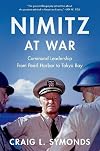
Craig L. Symonds, Craig L. Nimitz at War: Command Leadership from Pearl Harbor to Tokyo Bay. New York: Oxford University Press, 2022. ISBN 978-0-19-006236-1. List of Maps. Notes. Bibliography. Index. Pp. xvi, 474.
Aptly titled, Nimitz at War is a thorough account of the War in the Pacific from the perspective of the victorious show more commander, Fleet Admiral Chester W. Nimitz. Exhaustively researched and perspicuously written, this wartime portrait promptly places the reader in Nimitz’s black leather shoes, from taking command of the Pacific Fleet aboard the USS Grayling in December 1941 to signing the Instrument of Surrender on the USS Missouri in September 1945. Throughout the book, the reader engages with the array of challenges facing the fleet admiral, contrasting the nuances of his daily routine with the magnitude of his strategic decisions. Ignore the quote affixed somewhat ironically to the front cover; this book is not a biography of Nimitz, it is a case study of his leadership during war.
Symonds offers this leadership portrayal as a refreshing contrast to the other popular, and polarizing World War II commanders. Consistent with the author’s goals, this leadership textbook reconstructs Nimitz’s experiences in order to carefully assess his performance throughout the war. Symonds routinely showcases Nimitz’s ability to remain calm despite relentless pressures from Admiral King in Washington, a never-ending parade of distinguished visitors to Oahu, a prickly adjacent commander in General Douglas MacArthur, and the burden of commanding the “largest naval force ever assembled in the largest naval war ever fought” (xii). He successfully reveals Nimitz’s unique ability to consistently command commanders, many of whom proved to be exceptionally difficult. The descriptive writing enables the reader to picture and nearly feel the piercing gaze of Nimitz’s cool blue eyes, his gravest reprimand. Symonds carefully and consistently reinforces Nimitz’s distinct leadership traits of patience, humility, and decisiveness. Symonds achieves his goal and by the end, readers will likely be convinced of their importance and compelled to adopt these characteristics into their own leadership behavior repertoire.
Woven throughout this book are humorous anecdotes, dangerous encounters, and moments of intense sorrow that enable Symonds to capture a wide audience and captivate his readers. Often written on the same page as monumental decisions, these helpful interruptions remind the reader of Chester Nimitz the person in addition to his responsibility as fleet commander. Using personal letters from his wife and the mothers of slain marines, Symonds successfully recreates the human dimension and enables the reader to better understand the enormity of his own personal struggles as a wartime commander. Nimitz’s exhaustive routine, which included strenuous daily walks, ocean swims, and firing on a pistol range coupled with Hawaiian recreation, socializing, and the companionship of his dog Mak (named after Makalapa Hill in Hawaii – not MacArthur) enabled him to cope with his struggles and balance the enormous pressure he felt on a daily basis for four years.
The book is neatly broken up into four main sections, each comprised of multiple, easy to read chapters that effectively tell Nimitz’s World War II story in chronological order. The book begins with Nimitz taking command in Hawaii, detailing the leadership challenges he faced resurrecting the ships and the morale of the Pacific Fleet following the tragedy of Pearl Harbor. The second section recounts his trials during the Navy’s days of famine where his instincts for aggressive action were always tempered by the risks associated to their sparse resources in the South Pacific. Subsequently, the third section highlights his decisions geared towards Japan’s destruction during the years where American industrial might overwhelmed his adversaries on a drive through the Central Pacific to Japan’s doorstep. The final section, suitably titled Dénouement, brings the story to its successful conclusion with Nimitz at the helm. While the epilogue provides closure by summarizing his life after the war, the book remains true to its title and focuses entirely on his command of the Pacific Fleet during World War II.
A prominent naval historian, Symonds adds this account to his portfolio of 17 other books. The back cover highlights the praise this book deservedly receives from well-known naval historians and military professionals around the country. His inspiration to write this book originated from his first mentor and colleague at the Naval Academy, someone who knew Nimitz personally. Despite the challenges of the global pandemic in 2020-21, Symonds conducted exceptional research from personal and public papers, newspapers, official histories, oral histories, personal accounts, and memoirs. Symonds end notes, organized by chapter, connect the reader to his detailed research from 9 archives and over 100 secondary sources. The Nimitz Graybook served as the “principal primary source for this narrative” and is “referenced literally hundreds of times” (411). The detailed and well organized 14-page index further enhances this book’s standing as a textbook on command excellence.
One need not be a military professional or historian to enjoy Nimitz at War. Symonds’s writing enables current and aspiring leaders to respect and admire Nimitz’s leadership qualities during excruciating circumstances. By its end, one may cautiously wonder how the nation may have fared had FDR not insisted on Nimitz’s selection to command the Pacific Fleet or if he had been killed in one of his multiple near-death experiences during the war. On the other hand, some may feel obligated to take this account with a grain of salt as Symonds makes claims about Nimitz’s leadership that he himself never would have. Students of other prominent leaders from this time may take exception to Symonds’s portrayal as it leaves little room to credit anyone more than Nimitz for Allied victory in the Pacific. The contrast from Nimitz to polarizing leaders such as MacArthur enable Symonds to secure the moral high ground in any historiographical debate. However, Symonds does not intend this to be a comparison against other leaders, nor does he use this to attack them. Instead, he offers a thorough examination of influential leadership designed to challenge those willing to study and reflect upon it. show less
Craig L. Symonds, Craig L. Nimitz at War: Command Leadership from Pearl Harbor to Tokyo Bay. New York: Oxford University Press, 2022. ISBN 978-0-19-006236-1. List of Maps. Notes. Bibliography. Index. Pp. xvi, 474.
Aptly titled, Nimitz at War is a thorough account of the War in the Pacific from the perspective of the victorious show more commander, Fleet Admiral Chester W. Nimitz. Exhaustively researched and perspicuously written, this wartime portrait promptly places the reader in Nimitz’s black leather shoes, from taking command of the Pacific Fleet aboard the USS Grayling in December 1941 to signing the Instrument of Surrender on the USS Missouri in September 1945. Throughout the book, the reader engages with the array of challenges facing the fleet admiral, contrasting the nuances of his daily routine with the magnitude of his strategic decisions. Ignore the quote affixed somewhat ironically to the front cover; this book is not a biography of Nimitz, it is a case study of his leadership during war.
Symonds offers this leadership portrayal as a refreshing contrast to the other popular, and polarizing World War II commanders. Consistent with the author’s goals, this leadership textbook reconstructs Nimitz’s experiences in order to carefully assess his performance throughout the war. Symonds routinely showcases Nimitz’s ability to remain calm despite relentless pressures from Admiral King in Washington, a never-ending parade of distinguished visitors to Oahu, a prickly adjacent commander in General Douglas MacArthur, and the burden of commanding the “largest naval force ever assembled in the largest naval war ever fought” (xii). He successfully reveals Nimitz’s unique ability to consistently command commanders, many of whom proved to be exceptionally difficult. The descriptive writing enables the reader to picture and nearly feel the piercing gaze of Nimitz’s cool blue eyes, his gravest reprimand. Symonds carefully and consistently reinforces Nimitz’s distinct leadership traits of patience, humility, and decisiveness. Symonds achieves his goal and by the end, readers will likely be convinced of their importance and compelled to adopt these characteristics into their own leadership behavior repertoire.
Woven throughout this book are humorous anecdotes, dangerous encounters, and moments of intense sorrow that enable Symonds to capture a wide audience and captivate his readers. Often written on the same page as monumental decisions, these helpful interruptions remind the reader of Chester Nimitz the person in addition to his responsibility as fleet commander. Using personal letters from his wife and the mothers of slain marines, Symonds successfully recreates the human dimension and enables the reader to better understand the enormity of his own personal struggles as a wartime commander. Nimitz’s exhaustive routine, which included strenuous daily walks, ocean swims, and firing on a pistol range coupled with Hawaiian recreation, socializing, and the companionship of his dog Mak (named after Makalapa Hill in Hawaii – not MacArthur) enabled him to cope with his struggles and balance the enormous pressure he felt on a daily basis for four years.
The book is neatly broken up into four main sections, each comprised of multiple, easy to read chapters that effectively tell Nimitz’s World War II story in chronological order. The book begins with Nimitz taking command in Hawaii, detailing the leadership challenges he faced resurrecting the ships and the morale of the Pacific Fleet following the tragedy of Pearl Harbor. The second section recounts his trials during the Navy’s days of famine where his instincts for aggressive action were always tempered by the risks associated to their sparse resources in the South Pacific. Subsequently, the third section highlights his decisions geared towards Japan’s destruction during the years where American industrial might overwhelmed his adversaries on a drive through the Central Pacific to Japan’s doorstep. The final section, suitably titled Dénouement, brings the story to its successful conclusion with Nimitz at the helm. While the epilogue provides closure by summarizing his life after the war, the book remains true to its title and focuses entirely on his command of the Pacific Fleet during World War II.
A prominent naval historian, Symonds adds this account to his portfolio of 17 other books. The back cover highlights the praise this book deservedly receives from well-known naval historians and military professionals around the country. His inspiration to write this book originated from his first mentor and colleague at the Naval Academy, someone who knew Nimitz personally. Despite the challenges of the global pandemic in 2020-21, Symonds conducted exceptional research from personal and public papers, newspapers, official histories, oral histories, personal accounts, and memoirs. Symonds end notes, organized by chapter, connect the reader to his detailed research from 9 archives and over 100 secondary sources. The Nimitz Graybook served as the “principal primary source for this narrative” and is “referenced literally hundreds of times” (411). The detailed and well organized 14-page index further enhances this book’s standing as a textbook on command excellence.
One need not be a military professional or historian to enjoy Nimitz at War. Symonds’s writing enables current and aspiring leaders to respect and admire Nimitz’s leadership qualities during excruciating circumstances. By its end, one may cautiously wonder how the nation may have fared had FDR not insisted on Nimitz’s selection to command the Pacific Fleet or if he had been killed in one of his multiple near-death experiences during the war. On the other hand, some may feel obligated to take this account with a grain of salt as Symonds makes claims about Nimitz’s leadership that he himself never would have. Students of other prominent leaders from this time may take exception to Symonds’s portrayal as it leaves little room to credit anyone more than Nimitz for Allied victory in the Pacific. The contrast from Nimitz to polarizing leaders such as MacArthur enable Symonds to secure the moral high ground in any historiographical debate. However, Symonds does not intend this to be a comparison against other leaders, nor does he use this to attack them. Instead, he offers a thorough examination of influential leadership designed to challenge those willing to study and reflect upon it. show less
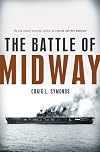
When considering the truly pivotal events in American history, it is difficult to find many that are as significant as the battle of Midway. As Craig Symonds notes in his introduction, “there are few moments in American history in which the course of events tipped so suddenly and so dramatically as it did on June 4, 1942.” For it was on that day that the United States Navy succeeded in smashing the heart of the Japanese carrier force that had so completely dominated the Pacific Ocean show more during the first six months of the war there, scoring a victory that changed the course of World War II. Symonds’s book provides an account of this dramatic battle, as well as an understanding of the chain of events that led up to the clash between the American and Japanese fleets.
One of the key factors he identifies early on is the growing presence of the “victory disease” infecting the thinking of Japanese naval officers. An increasing assumption of victory was perhaps understandable, though, given the successes Japanese forces enjoyed at the start of the war. Much of this success was the consequence of the quality of Japanese equipment, as well as the demanding levels of training and previous combat experience of Japanese forces. Yet these advantages would prove to be temporary the longer the war wore on, as they were products of a system ill capable of replacing losses at the pace necessary. In the short term, though, Japan went from triumph to triumph, conquering southeast Asia and dominating Allied forces in the naval battles waged.
Yet American commanders were determined to punch back. Symonds’ account of the war in the early months of 1942 is one of the great strengths of his book, as he shows how a seemingly minor series of carrier strikes against Japanese forces in the Pacific influenced subsequent events. Faced with a number of options, Admiral Yamamoto Isoroku ultimately resolved to attack Midway as a means of drawing out the American carrier forces and forcing the “decisive battle” called for by Japanese doctrine. The overly complicated plan was compromised almost from that start, though, as American codebreakers quickly uncovered some of its basic details. Armed with this information, the American commander of Pacific forces, Chester Nimitz, set a trap of his own, using all of his available carriers in a bid to cripple the Kido Butai, the carrier strike force that was the core of the Imperial Japanese Navy’s offensive power.
The outcome was devastating for the Japanese. Symonds relies upon a mixture of published accounts and interviews to reconstruct events, using them to address the myths and misconceptions that have emerged about the battle. Among the participants whose role he highlights is that of Frank Jack Fletcher, the commander of American forces in the battle. Long overshadowed by other figures, Symonds credits his cool and experienced judgment for much of the outcome. The pilots are also prominently featured in his account, and he makes clear just how devastating a toll the battle took among the ranks of American flyers as well as the Japanese forces. Yet he demonstrates how their sacrifice contributed to the American victory, which permanently shifted the balance of power of the Pacific and forced the Japanese to adopt a defensive strategy that could only delay their eventual defeat.
Clearly written and supplemented with a helpful collection of maps and photographs, Symonds’ book provides an excellent introduction to the battle. Though not as detailed as Gordon Prange’s classic [b:Miracle at Midway|700143|Miracle at Midway|Gordon W. Prange|https://images.gr-assets.com/books/1334770249s/700143.jpg|686454], it benefits from the insights of more recent studies such as Jonathan Parshall and Anthony Tully's [b:Shattered Sword|34658|Shattered Sword The Untold Story of the Battle of Midway|Jonathan Parshall|https://images.gr-assets.com/books/1328660958s/34658.jpg|34629], while the extensive coverage of the context of the battle offers a perspective lacking in most other accounts. With this book, Symonds has set the standard by which other histories of the battle are judged, one that is unlikely to be surpassed anytime soon. show less
One of the key factors he identifies early on is the growing presence of the “victory disease” infecting the thinking of Japanese naval officers. An increasing assumption of victory was perhaps understandable, though, given the successes Japanese forces enjoyed at the start of the war. Much of this success was the consequence of the quality of Japanese equipment, as well as the demanding levels of training and previous combat experience of Japanese forces. Yet these advantages would prove to be temporary the longer the war wore on, as they were products of a system ill capable of replacing losses at the pace necessary. In the short term, though, Japan went from triumph to triumph, conquering southeast Asia and dominating Allied forces in the naval battles waged.
Yet American commanders were determined to punch back. Symonds’ account of the war in the early months of 1942 is one of the great strengths of his book, as he shows how a seemingly minor series of carrier strikes against Japanese forces in the Pacific influenced subsequent events. Faced with a number of options, Admiral Yamamoto Isoroku ultimately resolved to attack Midway as a means of drawing out the American carrier forces and forcing the “decisive battle” called for by Japanese doctrine. The overly complicated plan was compromised almost from that start, though, as American codebreakers quickly uncovered some of its basic details. Armed with this information, the American commander of Pacific forces, Chester Nimitz, set a trap of his own, using all of his available carriers in a bid to cripple the Kido Butai, the carrier strike force that was the core of the Imperial Japanese Navy’s offensive power.
The outcome was devastating for the Japanese. Symonds relies upon a mixture of published accounts and interviews to reconstruct events, using them to address the myths and misconceptions that have emerged about the battle. Among the participants whose role he highlights is that of Frank Jack Fletcher, the commander of American forces in the battle. Long overshadowed by other figures, Symonds credits his cool and experienced judgment for much of the outcome. The pilots are also prominently featured in his account, and he makes clear just how devastating a toll the battle took among the ranks of American flyers as well as the Japanese forces. Yet he demonstrates how their sacrifice contributed to the American victory, which permanently shifted the balance of power of the Pacific and forced the Japanese to adopt a defensive strategy that could only delay their eventual defeat.
Clearly written and supplemented with a helpful collection of maps and photographs, Symonds’ book provides an excellent introduction to the battle. Though not as detailed as Gordon Prange’s classic [b:Miracle at Midway|700143|Miracle at Midway|Gordon W. Prange|https://images.gr-assets.com/books/1334770249s/700143.jpg|686454], it benefits from the insights of more recent studies such as Jonathan Parshall and Anthony Tully's [b:Shattered Sword|34658|Shattered Sword The Untold Story of the Battle of Midway|Jonathan Parshall|https://images.gr-assets.com/books/1328660958s/34658.jpg|34629], while the extensive coverage of the context of the battle offers a perspective lacking in most other accounts. With this book, Symonds has set the standard by which other histories of the battle are judged, one that is unlikely to be surpassed anytime soon. show less
Lists
Awards


You May Also Like


Associated Authors
Statistics
- Works
- 26
- Also by
- 6
- Members
- 2,818
- Popularity
- #9,100
- Rating
- 4.1
- Reviews
- 39
- ISBNs
- 96
- Languages
- 3
- Favorited
- 1


