
Steven E. Woodworth
Author of Nothing but Victory: The Army of the Tennessee, 1861-1865
About the Author
Steven E. Woodworth was born on January 28, 1961. He received a B.A. in history from Southern Illinois University in 1982 and a Ph.D. from Rice University in 1987. He is a professor of history at Texas Christian University and an expert on the Civil War. He has written a number of books on the show more topic including Jefferson Davis and His Generals: The Failure of Confederate Command in the West, While God Is Marching On: The Religious World of Civil War Soldiers, Nothing but Victory: The Army of the Tennessee 1861-1865, Manifest Destinies: Westward Expansion and the Civil War, and This Great Struggle: America's Civil War. (Bowker Author Biography) show less
Image credit: Knight Photography
Series
Works by Steven E. Woodworth
Jefferson Davis and His Generals: The Failure of Confederate Command in the West (1990) 223 copies, 2 reviews
Manifest Destinies: America's Westward Expansion and the Road to the Civil War (2010) 103 copies, 1 review
A Scythe of Fire: A Civil War Story of the Eighth Georgia Infantry Regiment (2002) 86 copies, 1 review
Beneath a Northern Sky: A Short History of the Gettysburg Campaign (The American Crisis Series: Books on the Civil War Era) (2003) 66 copies, 1 review
A Deep Steady Thunder: The Battle of Chickamauga (Civil War Campaigns and Commanders Series) (1998) 24 copies
Leadership And Command In The American Civil War (Leadership & Command in the American Civil War) (1996) 18 copies
The Vicksburg Campaign, March 29-May 18, 1863 (Civil War Campaigns in the Heartland) (2013) 17 copies
Essentials of United States History, 1841-1877: Westward Expansion and the Civil War (1990) 12 copies
Essentials of United States History, 1912-1941 : World War I, the Depression and the New Deal (Essentials) (1990) 10 copies
Cultures in Conflict--The American Civil War: (The Greenwood Cultures in Conflict Series) (2000) 9 copies
Shiloh: Confederate High Tide in the Heartland (Battles and Leaders of the American Civil War) (2013) 7 copies
The Forts Henry and Donelson Campaign: February 6–16, 1862 (Civil War Campaigns in the West) (2026) 2 copies
America's Civil War 1 copy
Associated Works
Southern Sons, Northern Soldiers: The Civil War Letters of the Remley Brothers, 22nd Iowa Infantry (2003) — Introduction, some editions — 21 copies
The Musick of the Mocking Birds, the Roar of the Cannon: The Civil War Diary and Letters of William Winters (1998) — Editor — 13 copies
MHQ: The Quarterly Journal of Military History — Autumn 2005 (2005) — Author "Bloody Field at Champion's Hill" — 12 copies
MHQ: The Quarterly Journal of Military History — Spring 2001 (2001) — Author "The Scapegoat of Arkansas Post" — 9 copies
MHQ: The Quarterly Journal of Military History — Spring 2002 (2002) — Co-Author "Calm Before the Storm" — 9 copies
MHQ: The Quarterly Journal of Military History — Autumn 2004 (2004) — Author "Grant's Scheming Subordinate" — 8 copies
Tagged
Common Knowledge
- Legal name
- Woodworth, Steven Edward
- Birthdate
- 1961-01-28
- Gender
- male
- Education
- Rice University (Ph.D ∙ 1987)
- Occupations
- historian
teacher (Baptist schools in Houston ∙ Texas ∙ 1984-86) - Organizations
- American Historical Association
Organization of American Historians
Southern Historical Association
Houston Community College (Adjunct Instructor, 1984-1987)
Bartlesville Wesleyan College (Associate Professor of History, 1987-1989)
Toccoa Falls College (1989-94 asst. prof.; 1994-97 assoc. prof.) (show all 7)
Texas Christian University (Associate Professor of History, 1997) - Nationality
- USA
- Associated Place (for map)
- USA
Members
Reviews
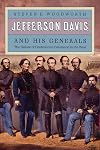
Jefferson Davis and his generals : the failure of Confederate command in the West by Steven E. Woodworth
History is not an either/or proposition.
The idea of this book is interesting: How Jefferson Davis made decisions and managed the generals who fought the American Civil War in the area between the Appalachians and the Mississippi River. Author Steven Woodworth's verdict is mixed: Davis made decisions good and bad, but on the whole his decisions grew worse as the war went along. Woodworth suggests that this is due to a lack of self-confidence on the part of Davis, but that's not essential to show more the content of the book.
What is essential is accurately assessing the abilities of those generals. It would seem obvious that supporting good generals is the right choice, and firing bad ones is a bad choice, right? But this depends on knowing which generals are good and bad.
And it is here that I simply don't agree with Woodworth. Part of the problem is his tendency to treat all generals as either good or bad, with nothing in between. As if anyone was either a perfect paragon or a perfect disaster! Two examples should suffice to prove this point. One is Patrick Cleburne. Cleburne was a brilliant division commander; I don't think anyone questions that. But Woodworth thinks, therefore, that Cleburne should have been promoted faster and eventually become commander of the Army of Tennessee. And yet, the man who eventually got that job, John Bell Hood, proved that being a brilliant division commander did not make one competent to command an army. Or even a corps. The move from division to corps command is one of the hardest there is -- ask Robert E. Lee, who never had much trouble finding division commanders for his army, but after Stonewall Jackson was killed, tried corps commander after corps commander without finding any who were really satisfactory. Cleburne, even as a divisional commander, had shown some political deafness. Could he really command a whole army full of narcissistic people who thought they should have his job?
And speaking of Lee's corps commanders, Woodworth is really down on James Longstreet -- almost as much as southerners after the War, when they hated him as a Republican. He regards Longstreet as insubordinate, which he sometimes was, but Woodworth ignores both Longstreet's record of being correct (about Pickett's charge, e.g.) and Longstreet's incredible tactical successes (at Second Bull Run, Chickamauga, and The Wilderness. No other corps commander in the war -- not even Jackson -- commanded more battle-winning attacks).
And it's this they're-either-good-or-bad attitude that affects Woodsworth's evaluation of the three most important generals involved in this work: Albert Sidney Johnston, Braxton Bragg, and Joseph E. Johnston. For Johnston #1, he ignores all his major errors (sending just the wrong number of men to Fort Donelson: More than he could afford to lose, but not enough to win the battle; also, fighting the battle of Shiloh with P. G. T. Beauregard's ridiculous dispositions). For Johnston #2, he correctly points out that Johnston was cautious, but ignores the fact that he didn't get his army destroyed by superior forces.
But it's Braxton Bragg who demonstrates what I see as the defect of Woodsworth's approach. He correctly assesses Bragg as a good administrator, and generally as a good strategist, although I think he soft-pedals the fact that Bragg had a certain tendency to chicken out at the last moment. And he correctly assesses that Bragg's biggest problem was that he couldn't get his subordinates to do what he needed them to do.
Why? Well, if you believe Woodworth, his subordinates were all a bunch of sneaky jerks who took out their problems on Bragg. But this makes no sense. If one subordinate dislikes a superior officer, it's on the subordinate. If every subordinate dislikes the superior officer, it's on the superior officer.
Take, as a non-Civil War example, Dwight D. Eisenhower. There is no real evidence that Eisenhower was a good strategist. The campaigns he commanded were often pretty disastrous at a tactical level, too. But he won World War II in western Europe -- and he did it despite subordinates, such as Bernard Law Montgomery, Mark W. Clark, and George Patton, who probably would have destroyed each other if you locked them in a room together. Eisenhower's greatness -- and it was greatness -- was that he managed to get these almost-unmanageable officers to function together well enough to win the war. This was one of Robert E. Lee's special gifts, too: Yes, he was a good strategic and tactical commander, but he also kept his fractious subordinates working together.
Bragg failed at this. Totally. Everybody hated him. That's on Bragg, and Woodworth should recognize it, as Jefferson Davis should have recognized it. You can't stick with a general who is hated by his subordinates.
And Woodworth, with his binary world view, just doesn't see it. This book has a lot of interesting information, and I learned some interesting things from it (e.g. about John Pemberton, another one of Davis's failures). But Woodworth's conclusions are simply not reliable, because he won't use the data he has gathered.
[Revised 4/9/2026 to correct two typos: "Johnson" for "Johnston" and a singular/plural mismatch] show less
The idea of this book is interesting: How Jefferson Davis made decisions and managed the generals who fought the American Civil War in the area between the Appalachians and the Mississippi River. Author Steven Woodworth's verdict is mixed: Davis made decisions good and bad, but on the whole his decisions grew worse as the war went along. Woodworth suggests that this is due to a lack of self-confidence on the part of Davis, but that's not essential to show more the content of the book.
What is essential is accurately assessing the abilities of those generals. It would seem obvious that supporting good generals is the right choice, and firing bad ones is a bad choice, right? But this depends on knowing which generals are good and bad.
And it is here that I simply don't agree with Woodworth. Part of the problem is his tendency to treat all generals as either good or bad, with nothing in between. As if anyone was either a perfect paragon or a perfect disaster! Two examples should suffice to prove this point. One is Patrick Cleburne. Cleburne was a brilliant division commander; I don't think anyone questions that. But Woodworth thinks, therefore, that Cleburne should have been promoted faster and eventually become commander of the Army of Tennessee. And yet, the man who eventually got that job, John Bell Hood, proved that being a brilliant division commander did not make one competent to command an army. Or even a corps. The move from division to corps command is one of the hardest there is -- ask Robert E. Lee, who never had much trouble finding division commanders for his army, but after Stonewall Jackson was killed, tried corps commander after corps commander without finding any who were really satisfactory. Cleburne, even as a divisional commander, had shown some political deafness. Could he really command a whole army full of narcissistic people who thought they should have his job?
And speaking of Lee's corps commanders, Woodworth is really down on James Longstreet -- almost as much as southerners after the War, when they hated him as a Republican. He regards Longstreet as insubordinate, which he sometimes was, but Woodworth ignores both Longstreet's record of being correct (about Pickett's charge, e.g.) and Longstreet's incredible tactical successes (at Second Bull Run, Chickamauga, and The Wilderness. No other corps commander in the war -- not even Jackson -- commanded more battle-winning attacks).
And it's this they're-either-good-or-bad attitude that affects Woodsworth's evaluation of the three most important generals involved in this work: Albert Sidney Johnston, Braxton Bragg, and Joseph E. Johnston. For Johnston #1, he ignores all his major errors (sending just the wrong number of men to Fort Donelson: More than he could afford to lose, but not enough to win the battle; also, fighting the battle of Shiloh with P. G. T. Beauregard's ridiculous dispositions). For Johnston #2, he correctly points out that Johnston was cautious, but ignores the fact that he didn't get his army destroyed by superior forces.
But it's Braxton Bragg who demonstrates what I see as the defect of Woodsworth's approach. He correctly assesses Bragg as a good administrator, and generally as a good strategist, although I think he soft-pedals the fact that Bragg had a certain tendency to chicken out at the last moment. And he correctly assesses that Bragg's biggest problem was that he couldn't get his subordinates to do what he needed them to do.
Why? Well, if you believe Woodworth, his subordinates were all a bunch of sneaky jerks who took out their problems on Bragg. But this makes no sense. If one subordinate dislikes a superior officer, it's on the subordinate. If every subordinate dislikes the superior officer, it's on the superior officer.
Take, as a non-Civil War example, Dwight D. Eisenhower. There is no real evidence that Eisenhower was a good strategist. The campaigns he commanded were often pretty disastrous at a tactical level, too. But he won World War II in western Europe -- and he did it despite subordinates, such as Bernard Law Montgomery, Mark W. Clark, and George Patton, who probably would have destroyed each other if you locked them in a room together. Eisenhower's greatness -- and it was greatness -- was that he managed to get these almost-unmanageable officers to function together well enough to win the war. This was one of Robert E. Lee's special gifts, too: Yes, he was a good strategic and tactical commander, but he also kept his fractious subordinates working together.
Bragg failed at this. Totally. Everybody hated him. That's on Bragg, and Woodworth should recognize it, as Jefferson Davis should have recognized it. You can't stick with a general who is hated by his subordinates.
And Woodworth, with his binary world view, just doesn't see it. This book has a lot of interesting information, and I learned some interesting things from it (e.g. about John Pemberton, another one of Davis's failures). But Woodworth's conclusions are simply not reliable, because he won't use the data he has gathered.
[Revised 4/9/2026 to correct two typos: "Johnson" for "Johnston" and a singular/plural mismatch] show less
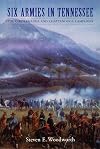
Six Armies in Tennessee: The Chickamauga and Chattanooga Campaigns (Great Campaigns of the Civil War) by Steven E. Woodworth
A careful coat of paint cannot hide a revisionist history. This is a great read, as long as you don't look into what it says. (And as long as you don't look for such important helps as a sufficiency of maps and orders of battle.)
This might as easily have been titled "The Decline and Fall of Braxton Bragg." Most histories of the Civil War in the west in 1863 concentrate on the Battle of Chickamauga, or possibly on Chickamauga and its sequel Chattanooga. This book starts earlier -- with the show more aftermath of the battle of Stones River at the end of 1862, including the long stalemate which followed, the Tullahoma campaign which ended the stalemate, and then Chickamauga and Chattanooga. To accomplish this in a fairly short book, it has to pull back a little -- the descriptions of Chickamauga and Chattanooga, especially the latter, are relatively brief.
There is nothing wrong with that. You can't understand Chickamauga unless you understand how the armies got there! It's good to have such a careful examination of the whole campaign. But I can't bring myself to entirely like the result. It seems clear that author Woodworth has his favorite generals, and he wraps the entire history around them. And, almost uniquely, his absolute favorite is Braxton Bragg.
This is noteworthy because nobody likes Bragg. His subordinates despised him (as Woodworth readily admits). The press of the time savaged him. Historians have generally given him low marks. Woodworth seems convinced that Bragg would have been great -- if only someone, anyone, had obeyed his orders.
If one of a general's subordinates disobeys his commander, it's proper to blame it on the subordinate. If they all are alleged to have disobeyed, then surely one must conclude that the fault lies with the general! To paint his picture, Woodworth must portray all of Bragg's juniors as basically unruly children: Leonidas Polk as a pompous fool (OK, that one's partly right), William J. Hardee as a better man who somehow swallowed Polk's opinions entire, D. H. Hill as a carping fumbler (the carping is true, but Hill had been a fine division commander at least), James Longstreet as an ambitious blockhead (the fact that Longstreet was not suited for independent command does not change the fact that Robert E. Lee trusted Longstreet implicitly and gave him tasks he gave no other man -- and that Longstreet was the one who won Bragg's battle at Chickamauga for him!).
Woodworth isn't as biased about the Federals, but the amount of shade he casts on George H. Thomas is ridiculous. The fact that Ulysses S. Grant never liked Thomas doesn't change the fact that no Federal general in the entire war had a better record than Thomas. The fact that Thomas was methodical when circumstances permitted it doesn't change the fact that he was brilliantly methodical -- and that he could act fast when he had to, as e.g. when he saved the Union army at Chickamauga.
So this book becomes the story of how Bragg, after two tactical victories that proved strategic defeats (Perryville and Stones River) entered into his final campaign that resulted in one battle won and one lost, the latter of which ended with Bragg out of a job. It's almost like a Greek tragedy -- except that a Greek tragedy requires a hero with a tragic flaw. Flaws Braxton Bragg had. I can't see much sign of heroism.
I ended up feeling as if this was a good history of the campaign but a terrible history of the personalities involved. You can trust what happened. But as for the personal interactions that led to those events, I'd feel a lot more confident if they fit better with what every other historian says -- or, at minimum, if Woodworth explained why he thinks everyone else wrong.
[Correction made Dec. 20, 1863: Corrected "Hardy" to "Hardee"; I don't know what came over my fingers!] show less
This might as easily have been titled "The Decline and Fall of Braxton Bragg." Most histories of the Civil War in the west in 1863 concentrate on the Battle of Chickamauga, or possibly on Chickamauga and its sequel Chattanooga. This book starts earlier -- with the show more aftermath of the battle of Stones River at the end of 1862, including the long stalemate which followed, the Tullahoma campaign which ended the stalemate, and then Chickamauga and Chattanooga. To accomplish this in a fairly short book, it has to pull back a little -- the descriptions of Chickamauga and Chattanooga, especially the latter, are relatively brief.
There is nothing wrong with that. You can't understand Chickamauga unless you understand how the armies got there! It's good to have such a careful examination of the whole campaign. But I can't bring myself to entirely like the result. It seems clear that author Woodworth has his favorite generals, and he wraps the entire history around them. And, almost uniquely, his absolute favorite is Braxton Bragg.
This is noteworthy because nobody likes Bragg. His subordinates despised him (as Woodworth readily admits). The press of the time savaged him. Historians have generally given him low marks. Woodworth seems convinced that Bragg would have been great -- if only someone, anyone, had obeyed his orders.
If one of a general's subordinates disobeys his commander, it's proper to blame it on the subordinate. If they all are alleged to have disobeyed, then surely one must conclude that the fault lies with the general! To paint his picture, Woodworth must portray all of Bragg's juniors as basically unruly children: Leonidas Polk as a pompous fool (OK, that one's partly right), William J. Hardee as a better man who somehow swallowed Polk's opinions entire, D. H. Hill as a carping fumbler (the carping is true, but Hill had been a fine division commander at least), James Longstreet as an ambitious blockhead (the fact that Longstreet was not suited for independent command does not change the fact that Robert E. Lee trusted Longstreet implicitly and gave him tasks he gave no other man -- and that Longstreet was the one who won Bragg's battle at Chickamauga for him!).
Woodworth isn't as biased about the Federals, but the amount of shade he casts on George H. Thomas is ridiculous. The fact that Ulysses S. Grant never liked Thomas doesn't change the fact that no Federal general in the entire war had a better record than Thomas. The fact that Thomas was methodical when circumstances permitted it doesn't change the fact that he was brilliantly methodical -- and that he could act fast when he had to, as e.g. when he saved the Union army at Chickamauga.
So this book becomes the story of how Bragg, after two tactical victories that proved strategic defeats (Perryville and Stones River) entered into his final campaign that resulted in one battle won and one lost, the latter of which ended with Bragg out of a job. It's almost like a Greek tragedy -- except that a Greek tragedy requires a hero with a tragic flaw. Flaws Braxton Bragg had. I can't see much sign of heroism.
I ended up feeling as if this was a good history of the campaign but a terrible history of the personalities involved. You can trust what happened. But as for the personal interactions that led to those events, I'd feel a lot more confident if they fit better with what every other historian says -- or, at minimum, if Woodworth explained why he thinks everyone else wrong.
[Correction made Dec. 20, 1863: Corrected "Hardy" to "Hardee"; I don't know what came over my fingers!] show less
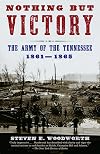
Steven Woodworth delivers a masterful Stephen Ambrose-like paean to the men and leaders of the Union Army of the Tennessee (named after the river not the state). While the Army of the Potomac was kept in check by Robert E. Lee, the men of the Army of the Tennessee criss-crossed the Confederate States from Fort Donelson to Pittsburgh Landing to Corinth to Vicksburg to Meridian to Chattanooga to Atlanta to Savannah to Columbia and finally to Washington DC. They defeated their opponents, show more because the Confederacy never reached a coherent decision about its defensive priorities. In defending everything, it defended nothing. The politcial priorities of the two contestants meant that the Union A team fought against the Confederate C team. The importance of the Army of the Tennessee shrank after its high tide at Vicksburg. Never a large force to begin with, its two to three corps were absorbed into Grant's and then Sherman's group of armies.
Woodworth's claim of "nothing but victory" is exaggerated as the Army of Tennessee witnessed a number of near disasters (Belmont, Ft Donelson, Shiloh) and setbacks (Chickasaw Bayou, Resaca, Kennesaw) distinguished from defeat only by the ineptitude of the Confederate leadership and Grant's unwillingness to quit.
Woodworth is soft on Grant and his boys and harsh about others (McClernand, Rosecrans, Thomas). Compare Woodworth's treatment of McPherson's hesitation in the Atlanta campaign and Rosecrans' caution at Corinth. Grant is a master strategist but a lousy tactician. If Grant had positioned himself at his weakest general's command post, he might have averted many mishaps and limited his casualties. Instead, he stayed with his favorites which further reduced the communication flow with the outsiders (McClernand, Rosecrans, Thomas) who then did not meet Grant's expectations, triggering the next round of alienation.
Overall, a magnificent book which gives voice both to the commanders and the common man. The book could be even better if it included more than a single map. A scarcity of maps seems to be a Woodworth trademark. show less
Woodworth's claim of "nothing but victory" is exaggerated as the Army of Tennessee witnessed a number of near disasters (Belmont, Ft Donelson, Shiloh) and setbacks (Chickasaw Bayou, Resaca, Kennesaw) distinguished from defeat only by the ineptitude of the Confederate leadership and Grant's unwillingness to quit.
Woodworth is soft on Grant and his boys and harsh about others (McClernand, Rosecrans, Thomas). Compare Woodworth's treatment of McPherson's hesitation in the Atlanta campaign and Rosecrans' caution at Corinth. Grant is a master strategist but a lousy tactician. If Grant had positioned himself at his weakest general's command post, he might have averted many mishaps and limited his casualties. Instead, he stayed with his favorites which further reduced the communication flow with the outsiders (McClernand, Rosecrans, Thomas) who then did not meet Grant's expectations, triggering the next round of alienation.
Overall, a magnificent book which gives voice both to the commanders and the common man. The book could be even better if it included more than a single map. A scarcity of maps seems to be a Woodworth trademark. show less
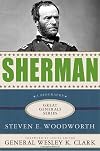
This book is supposed to be part of a series on "leadership" via generals, but what was there must be inferred...except for Sherman's use of maneuver warfare. That, was aptly demonstrated. In this audible book, Wesley Clark babbles through an introduction to little effect. I'll admit that this book was a good intro to his life and is fine work for those who want a quick and accessible entree, but it fell short of a leadership lessons. Instead of the usual writing about generals, i.e. details show more about their battles, I'd much rather read about the man, his motivations, background & integrity, which this book didn't really do. After reading about Sherman in other books, I conclude that his legacy was more than the pitiful conclusion stated in this one. For example, he also contributed to and influenced the US Army Air Corps and Naval strategy, to include 8th Air Force as well as MacArthur's and Nimitz' conduct of WWII. This was not even mentioned. Where are the lessons? show less
Awards


You May Also Like


Associated Authors
Statistics
- Works
- 42
- Also by
- 9
- Members
- 1,962
- Popularity
- #13,102
- Rating
- 3.9
- Reviews
- 18
- ISBNs
- 103
- Languages
- 1
- Favorited
- 1