
Walter R. Borneman
Author of 1812: The War That Forged a Nation
About the Author
Walter R. Borneman is the author of nine works of nonfiction, including MacArthur at War, American Spring, The Admirals, Iron Horses, Polk, and The French and Indian War. He holds both a master's degree in history and a law degree. He lives in Colorado.
Disambiguation Notice:
It may be difficult to believe, but the Walter R Borneman who has written about 1812, President Polk, and the French and Indian War is indeed the same as the author of two Colorado climbing guides, a book about Alaska, and other books about the western United States.
Image credit: www.walterborneman.net/
Works by Walter R. Borneman
The Admirals: Nimitz, Halsey, Leahy, and King--The Five-Star Admirals Who Won the War at Sea (2012) 607 copies, 18 reviews
Rival Rails: The Race to Build America's Greatest Transcontinental Railroad (2009) 169 copies, 1 review
Tagged
Common Knowledge
- Birthdate
- 1952-01-05
- Gender
- male
- Occupations
- historian
lawyer - Organizations
- Walter V. and Idun Y. Berry Foundation (President)
- Nationality
- USA
- Birthplace
- Colorado, USA
- Places of residence
- Colorado, USA
- Disambiguation notice
- It may be difficult to believe, but the Walter R Borneman who has written about 1812, President Polk, and the French and Indian War is indeed the same as the author of two Colorado climbing guides, a book about Alaska, and other books about the western United States.
- Associated Place (for map)
- Colorado, USA
Members
Reviews
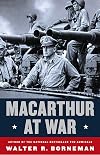
This book aptly demonstrates that warts rather than freckles should be used to characterize MacArthur during WW 2. He started badly; by creating a poorly trained and led Philippine Army and by neglecting to plan and stock for a siege at Corregidor and Bataan. Then, compounded these serious strategic errors by allowing virtually his entire air force to be destroyed on the ground in the days following Pearl Harbor. Giving him the Medal of Honor was a travesty made as a political decision to show more create a hero for the country to look up to.
His public pronouncements and private letters to public figures bemoaned his lack of resources from day 1 until the Japanese surrender. His military accomplishments were often competent and often well- executed but he could never get enough praise. He and his staff extolled his low casualty rate which frequently exceeded all other theaters of war. After his well-publicized wade ashore in the Philippines, he became addicted to same and repeated it frequently. Never available to meet with Marshall or Nimitz because of the press of his command presence; he managed to be on the scene of landings for these additional photo opportunities. Even more flagrantly, he caused many casualties by insisting that many Island sites, be invaded rather than bypassed.
Brazenly brave, intelligent, capable but deeply flawed was this "Macarthur at War" show less
His public pronouncements and private letters to public figures bemoaned his lack of resources from day 1 until the Japanese surrender. His military accomplishments were often competent and often well- executed but he could never get enough praise. He and his staff extolled his low casualty rate which frequently exceeded all other theaters of war. After his well-publicized wade ashore in the Philippines, he became addicted to same and repeated it frequently. Never available to meet with Marshall or Nimitz because of the press of his command presence; he managed to be on the scene of landings for these additional photo opportunities. Even more flagrantly, he caused many casualties by insisting that many Island sites, be invaded rather than bypassed.
Brazenly brave, intelligent, capable but deeply flawed was this "Macarthur at War" show less
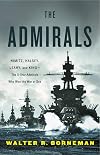
The Admirals: Nimitz, Halsey, Leahy, and King--The Five-Star Admirals Who Won the War at Sea by Walter R. Borneman
Reading about the lived experiences of great personalities arms us in two ways:
1.) It prevents us from committing the same mistakes.
2.) It empowers us to hone some fundamental principles of leadership and life to make our own existence worthwhile.
Borneman successfully brings out the above two factors in his The Admirals, a biographical retelling of the lives and leadership of the United State's four only five-star Admirals who while transforming the face of Naval Operations also transformed show more their country into the Marine juggernaut it is today. These four were the pugnacious Fleet Admiral William "Bull" Halsey who commanded the Third Fleet in the South Pacific region; the innovative Fleet Admiral Chester William Nimitz, the CNC for the entire Pacific Naval theatre of war; the bellicose Fleet Admiral Ernest King who was appointed CNC for the entire United States Navy and the laconic Fleet Admiral William Daniel Leahy who became the White House's de facto Chairman of the then embryonic Joint Chiefs of Staff.
Borneman lucidly underscores the origins of these four, the tragedies which shaped them and their perseverance in the face of seemingly insurmountable odds threatening to deaden their careers. For Halsey, Naval aviation and the ability envision a radical progression from battleships to Naval carriers proved his salvation; for Nimitz advances in submarine warfare heralded the ressurection of his career while King and Leahy found lifelines in the world of strategic policy making. The Admirals convincingly argues that these were not random cards dealt out by a careless twist of fate but rather reorientations which all four men tightly embraced having forecast that technological innovation would forever alter the role of the Navy in future conflicts.
The most groundbreaking facet of this book, besides its easy to understand language and avoidance of over-the-top maritime lingo and detail, is its exoneration of Leahy from baseless charges of political kowtowing and substantiation of the fact that all four Admirals harmonized their efforts to crush the Axis on both land and sea in WWII. King's strategic vision allowed him to preserve marine lifelines which allowed the unhampered movement of men and material to various battlefields across the Atlantic and within Europe. Nimitz worked hard and fast to upgrade submersible capabilities to render death blows to both German and Japanese marine combatants targeting these lifelines. Halsey pursued the Japanese Navy tirelessly with his hit hard, hit fast and hit often tactics to keep them away from Nimitz's plans while Leahy focused the White House's military-industrial policy without devolving into a yes man as many uninformed historians are wont to accuse him of.
Overall, The Admirals is a grand lesson in the craft of leadership. Leahy led by bluntness and voicing his opinions to the President of the United States; King focused on encouraging tactical initiative in his men; Halsey narrowed in on battlefield deficiencies while Nimitz merged technology and tradition to annihilate the foe. In their own way all four collectively reimagined American maritime dominance over the world's oceans and worked to generate the marine power required to make their homeland superior in both the Atlantic and the Pacific.
While the ending is anticlimactic given that the deaths of all four were rapid, one is left with a sense of awe at being allowed an ephemeral glimpse into the hearts and minds of four Admirals who found themselves pitted against two sanguinary foes on multiple fronts and effectively annihilated them. Well worth a read for all would-be leaders and professional soldiers. show less
1.) It prevents us from committing the same mistakes.
2.) It empowers us to hone some fundamental principles of leadership and life to make our own existence worthwhile.
Borneman successfully brings out the above two factors in his The Admirals, a biographical retelling of the lives and leadership of the United State's four only five-star Admirals who while transforming the face of Naval Operations also transformed show more their country into the Marine juggernaut it is today. These four were the pugnacious Fleet Admiral William "Bull" Halsey who commanded the Third Fleet in the South Pacific region; the innovative Fleet Admiral Chester William Nimitz, the CNC for the entire Pacific Naval theatre of war; the bellicose Fleet Admiral Ernest King who was appointed CNC for the entire United States Navy and the laconic Fleet Admiral William Daniel Leahy who became the White House's de facto Chairman of the then embryonic Joint Chiefs of Staff.
Borneman lucidly underscores the origins of these four, the tragedies which shaped them and their perseverance in the face of seemingly insurmountable odds threatening to deaden their careers. For Halsey, Naval aviation and the ability envision a radical progression from battleships to Naval carriers proved his salvation; for Nimitz advances in submarine warfare heralded the ressurection of his career while King and Leahy found lifelines in the world of strategic policy making. The Admirals convincingly argues that these were not random cards dealt out by a careless twist of fate but rather reorientations which all four men tightly embraced having forecast that technological innovation would forever alter the role of the Navy in future conflicts.
The most groundbreaking facet of this book, besides its easy to understand language and avoidance of over-the-top maritime lingo and detail, is its exoneration of Leahy from baseless charges of political kowtowing and substantiation of the fact that all four Admirals harmonized their efforts to crush the Axis on both land and sea in WWII. King's strategic vision allowed him to preserve marine lifelines which allowed the unhampered movement of men and material to various battlefields across the Atlantic and within Europe. Nimitz worked hard and fast to upgrade submersible capabilities to render death blows to both German and Japanese marine combatants targeting these lifelines. Halsey pursued the Japanese Navy tirelessly with his hit hard, hit fast and hit often tactics to keep them away from Nimitz's plans while Leahy focused the White House's military-industrial policy without devolving into a yes man as many uninformed historians are wont to accuse him of.
Overall, The Admirals is a grand lesson in the craft of leadership. Leahy led by bluntness and voicing his opinions to the President of the United States; King focused on encouraging tactical initiative in his men; Halsey narrowed in on battlefield deficiencies while Nimitz merged technology and tradition to annihilate the foe. In their own way all four collectively reimagined American maritime dominance over the world's oceans and worked to generate the marine power required to make their homeland superior in both the Atlantic and the Pacific.
While the ending is anticlimactic given that the deaths of all four were rapid, one is left with a sense of awe at being allowed an ephemeral glimpse into the hearts and minds of four Admirals who found themselves pitted against two sanguinary foes on multiple fronts and effectively annihilated them. Well worth a read for all would-be leaders and professional soldiers. show less
Well-written, engrossing read. Added a great deal to my knowledge of WWII in the southwestern pacific. I knew very little about Douglas MacArthur before reading this book, least of all what a petty, vindictive, and not altogether competent commander he was. Was shocked to learn in what low esteem he was held by peers outside his own orbit.

While not a definitive account of the French and Indian War, Walter Borneman has written a brief but excellent history of the conflict. After a concise survey of the five colonial wars that preceded the French and Indian War, the author summarizes the differences which defined the French and British efforts to colonize the New World. France opted for a small military force, consisting mostly of regulars who built and maintained stockades and forts that defined the heavily forested frontiers show more of New France. The essential purposes of these small bastions was to protect the highly profitable fur-trading industry as well as precarious supply lines that followed a vast network of rivers and lakes and provided a waterborne supply route that formed the life-line of New France. Because the French discouraged immigration into its colonies and the British promoted colonization efforts of its citizens, by the time of the census of 1754, the British colonies had a population of over one million people while New France (including New Orleans) had barely 80,000. A practical effect of this disparity was that French citizens of the New World enjoyed very little in the way of non-fur production and were almost wholly dependent upon overseas supply form France to maintain their colonies. Dependent as the soldiers and trappers of New France were upon the sea for their survival, it was just a matter of time before the the "valiant men and hardy tars" of Royal Navy shut them down. The limitations imposed upon the French by this dearth of supply was a major factor that led to British victory. Borneman also reveals that William Pitt the Elder, was the brilliant architect of the British victories in both the French and Indian War and its European counterpart, the Seven Years' War. The chapter on the battle of Quebec ( i.e., known to history as the Battle of the Plains of Abraham) is particularly interesting. If for no other reason, this battle enjoys the distinction of being one of the few battles in recorded history in which both army commanders were killed. Montcalm is rightly shown as impetuous and rash. At the time he was criticized for charging the British without awaiting the arrival of his nearby reinforcements that would have given him a large numerical superiority. Borneman believes the status that the young General James Wolfe enjoys as a great hero is overstated. Apparently Wolfe was haughty and had a difficult and unloved personality. The site he chose for the final assault on Quebec is criticized for subjecting his army to an unnecessary risk when more prudent points of attack were readily present and easily acquired. It was perhaps fortunate for his reputation that young General Wolfe died early during the final assault on the Plains of Abraham. William Pitt, the British Prime Minister, chose to cast him as a hero and popular history submitted to the theme. The author emphasizes that even after the British victory at Quebec, the French retained enough ground forces in Canada to push the conquerors out. The story unfolds easily with the use of a few (too few) good maps, which is always my litmus test as to whether a military history has much value. There are also interesting chapters on the British efforts against France in the Caribbean, resulting in the capture of its colonies there and the staggering financial losses of the sugar trade. "The French and Indian War: Deciding the Fate of North America," is a well-written, thoughtful work and highly recommended as a short introduction to the subject. show less
Lists
Awards


You May Also Like


Associated Authors
Statistics
- Works
- 18
- Members
- 3,529
- Popularity
- #7,197
- Rating
- 3.9
- Reviews
- 60
- ISBNs
- 76
- Languages
- 1
- Favorited
- 1