On This Page
Description
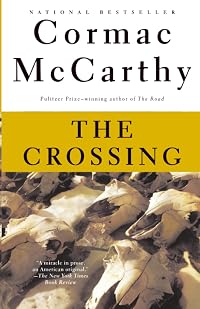
In The Crossing, Cormac McCarthy fulfills the promise of All the Pretty Horses and at the same time give us a work that is darker and more visionary, a novel with the unstoppable momentum of a classic western and the elegaic power of a lost American myth. In the late 1930s, sixteen-year-old Billy Parham captures a she-wolf that has been marauding his family's ranch. But instead of killing it, he decides to take it back to the mountains of Mexico. With that crossing, he begins an arduous and show more often dreamlike journey into a country where men meet ghosts and violence strikes as suddenly as heat-lightning--a world where there is no order "save that which death has put there." An essential novel by any measure, The Crossing is luminous and appalling, a book that touches, stops, and starts the heart and mind at once. show lessTags
Recommendations





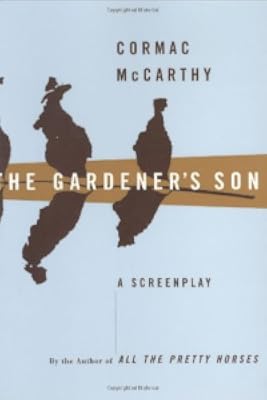
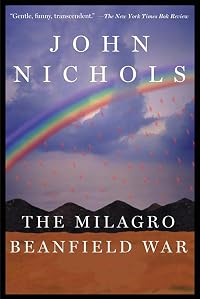
Member Recommendations
donhazelwood The next & final book in the border trilogy series.
20
Member Reviews
The Crossing reads more like a mean-spirited parody of a Cormac McCarthy book than a Cormac McCarthy book. It is long-winded (even by McCarthy standards), the use of polysyndeton is clumsy, and its pseudo-philosophising is wrapped up in a swamp of affected prosing. Consider, for example, the following (which are by no means the only examples):
"The night was falling down… As if the darkness had a soul itself that was the sun's assassin hurrying to the west as once men did believe, as they may believe again." (pp74-5)
"… her eyes came up in the dark water like some other self of wolf that did inhere in the earth or wait in every secret place even to such false waterholes as this that the wolf would be always corroborate to herself and show more never wholly abandoned in the world." (pg. 81)
"Carrying in his belly the gift of the meal he'd received which both sustained him and laid claim upon him. For the sharing of bread is not such a simple thing nor is its acknowledgement. Whatever thanks be given, however spoke or written down." (pg. 165)
McCarthy is, above all, a stylist, so when the style fails it is near-fatal. That said, even these problems can be smoothed out if the reader is prepared to work (and work hard). What can't be overcome is the complete lack of plot mechanic: no-one is ever given any real motivation. Billy helps the wolf for no reason, whether explicit or implicit. Boyd and the girl leave suddenly – why? Billy returns to America from Mexico to find the country at war and tries to join up – doesn't he want to know why the country is at war? Why any of the acts of violence in the book, which seem to be done solely for cruelty? The lack of motivation is not down to the taciturn nature of the characters – the dialogue, in fact, is pretty damn good – but seems a conscious if inscrutable decision from the author.
It is a shame, as the first hundred pages or so – essentially, the story with the wolf – is fairly good, despite its stylistic errors. But after this is resolved (somewhat unsatisfactorily) we have a further three hundred pages or so of meandering plotlessness, delivered in the long-winded, clunky, self-parodic format I mentioned earlier. McCarthy loves violence in his books, it is known – but the wounds he inflicts upon this book by his choices aggregate into a fatal self-slaughter. For a book that speaks so much about God in the world, The Crossing is surprisingly purposeless. show less
"The night was falling down… As if the darkness had a soul itself that was the sun's assassin hurrying to the west as once men did believe, as they may believe again." (pp74-5)
"… her eyes came up in the dark water like some other self of wolf that did inhere in the earth or wait in every secret place even to such false waterholes as this that the wolf would be always corroborate to herself and show more never wholly abandoned in the world." (pg. 81)
"Carrying in his belly the gift of the meal he'd received which both sustained him and laid claim upon him. For the sharing of bread is not such a simple thing nor is its acknowledgement. Whatever thanks be given, however spoke or written down." (pg. 165)
McCarthy is, above all, a stylist, so when the style fails it is near-fatal. That said, even these problems can be smoothed out if the reader is prepared to work (and work hard). What can't be overcome is the complete lack of plot mechanic: no-one is ever given any real motivation. Billy helps the wolf for no reason, whether explicit or implicit. Boyd and the girl leave suddenly – why? Billy returns to America from Mexico to find the country at war and tries to join up – doesn't he want to know why the country is at war? Why any of the acts of violence in the book, which seem to be done solely for cruelty? The lack of motivation is not down to the taciturn nature of the characters – the dialogue, in fact, is pretty damn good – but seems a conscious if inscrutable decision from the author.
It is a shame, as the first hundred pages or so – essentially, the story with the wolf – is fairly good, despite its stylistic errors. But after this is resolved (somewhat unsatisfactorily) we have a further three hundred pages or so of meandering plotlessness, delivered in the long-winded, clunky, self-parodic format I mentioned earlier. McCarthy loves violence in his books, it is known – but the wounds he inflicts upon this book by his choices aggregate into a fatal self-slaughter. For a book that speaks so much about God in the world, The Crossing is surprisingly purposeless. show less
In a good book the author’s voice becomes clear in the first few pages and readers get an immediate sense of the world in which the coming story takes place. The second paragraph of The Crossing by Cormac McCarthy opens with the main character, Billy, waking to the sound of wolves in the hills near his home. He figures they will come down to the plains in the snow “to run the antelope in the moonlight.”
So he goes into the winter night and crawls to the edge of a broad valley.
“They were running on the plain harrying the antelope and the antelope moved like phantoms in the snow and circled and wheeled and the dry powder blew about them in the cold moonlight and their breath smoked palely in the cold as if they burned with some show more inner fire and the wolves twisted and turned and leapt in a silence such that they seemed of another world entire. They moved down the valley and turned and moved far out on the plain until they were the smallest of figures in that dim whiteness and then they disappeared.”
Already the untamed and inexplicable are upon us. Already you can hear echoes of William Faulkner in the voice of a new master stylist. McCarthy’s use of language is the reason I started reading this book and the reason I stayed with it despite some serious disappointments in the story he tells.
McCarthy’s writing style swings from unadorned sentences into dense tangles of abstract thought. You find whole paragraphs describing in plain language and in great detail simple actions of no apparent importance such as a man lighting a cigarette or a horse drinking water.
At one point he takes 11 pages to describe a doctor cleaning and dressing a bullet wound in Billy’s brother Boyd. In this example, the long description adds to the suspense of not knowing if Boyd will survive, but I suspect McCarthy’s usual purpose is to rivet our attention on detail, to make each scene intensely visual.
The entire novel is intensely visual. There’s no interior; no description of what a person is thinking at any given moment. We can only guess at what they’re thinking from watching what they do or listening to their stories.
McCarthy takes chances with his writing. Some of it goes too far and verges on silly. Instead of saying the boy looked into the wolf’s ear, McCarthy writes: “He studied the veined and velvet grotto into which the audible world poured.”
Some of it, though, gives me a rush of pleasure. It’s over the top writing. Here’s his description of Boyd staring into a campfire shortly after the brothers ride into Mexico to recover horses stolen from their murdered parents.
“He looked up. His pale hair looked white. He looked fourteen going on some age that never was. He looked as if he’d been sitting there and God had made the trees and rocks around him.”
One moment you’re reading simple descriptions and the next you’re swept into long sentences of cosmic truth beyond reckoning:
“He took up her stiff head out of the leaves and held it or he reached to hold what cannot be held, what already ran among the mountains at once terrible and of a great beauty, like flowers that feed on flesh. What blood and bone are made of but can themselves not make on any altar nor by any wound of war. What we may well believe has power to cut and shape and hollow out the dark form of the world surely if wind can, if rain can. But which cannot be held never to be held and is no flower but is swift and a huntress and the wind itself is in terror of it and the world cannot lose it.”
To me, though, the story doesn’t quite live up to the writing. The book is rich in memorable encounters, suspenseful and funny in places, punctuated with bursts of action, but it’s also maddeningly aimless. Billy rides into Mexico. He rides into a town. He rides on. He meets an old man. He rides on. He crosses the border back into America. He returns to Mexico. He meets a woman. He meets some gypsies. He leaves Mexico.
I almost gave up at the point where Billy wakes up one morning and discovers Boyd has left with a girl they had rescued. He left without saying good-bye, without leaving a note, without saying where he was going or for how long. He just left, exactly as Billy did when he rode into Mexico without telling his family.
Is Billy angry? Hurt? Perturbed? We don’t know. The boys talk very little and rarely about how they feel. They are laconic to the point of caricature. Billy and Boyd have many admirable qualities, but to a fanciful degree. They are stoic, taciturn, courteous, honorable, brave and self-reliant, little John Waynes 14 and 17 years old who ride into a foreign country expecting somehow to find and retrieve six horses that someone committed murder to steal.
I missed a lot of meaning in The Crossing, in part because of my limitations as a reader, but also because of all the Mexican terminology and Spanish dialogue McCarthy insists on using without translation. The meaning can usually be guessed, but it’s distracting.
The Crossing appears to be a novel that must be read a second time to be fully appreciated. Not this reader, though, because the endless, impossible quests wearied me. I discovered while dipping into the book to write this essay that I get more enjoyment out of reading episodes in isolation. I come to the scenes fresh, unconcerned about meaning or what comes next. I am able to let the writing envelop me. I see what McCarthy saw so vividly when he wrote the scenes and they are usually fascinating. show less
So he goes into the winter night and crawls to the edge of a broad valley.
“They were running on the plain harrying the antelope and the antelope moved like phantoms in the snow and circled and wheeled and the dry powder blew about them in the cold moonlight and their breath smoked palely in the cold as if they burned with some show more inner fire and the wolves twisted and turned and leapt in a silence such that they seemed of another world entire. They moved down the valley and turned and moved far out on the plain until they were the smallest of figures in that dim whiteness and then they disappeared.”
Already the untamed and inexplicable are upon us. Already you can hear echoes of William Faulkner in the voice of a new master stylist. McCarthy’s use of language is the reason I started reading this book and the reason I stayed with it despite some serious disappointments in the story he tells.
McCarthy’s writing style swings from unadorned sentences into dense tangles of abstract thought. You find whole paragraphs describing in plain language and in great detail simple actions of no apparent importance such as a man lighting a cigarette or a horse drinking water.
At one point he takes 11 pages to describe a doctor cleaning and dressing a bullet wound in Billy’s brother Boyd. In this example, the long description adds to the suspense of not knowing if Boyd will survive, but I suspect McCarthy’s usual purpose is to rivet our attention on detail, to make each scene intensely visual.
The entire novel is intensely visual. There’s no interior; no description of what a person is thinking at any given moment. We can only guess at what they’re thinking from watching what they do or listening to their stories.
McCarthy takes chances with his writing. Some of it goes too far and verges on silly. Instead of saying the boy looked into the wolf’s ear, McCarthy writes: “He studied the veined and velvet grotto into which the audible world poured.”
Some of it, though, gives me a rush of pleasure. It’s over the top writing. Here’s his description of Boyd staring into a campfire shortly after the brothers ride into Mexico to recover horses stolen from their murdered parents.
“He looked up. His pale hair looked white. He looked fourteen going on some age that never was. He looked as if he’d been sitting there and God had made the trees and rocks around him.”
One moment you’re reading simple descriptions and the next you’re swept into long sentences of cosmic truth beyond reckoning:
“He took up her stiff head out of the leaves and held it or he reached to hold what cannot be held, what already ran among the mountains at once terrible and of a great beauty, like flowers that feed on flesh. What blood and bone are made of but can themselves not make on any altar nor by any wound of war. What we may well believe has power to cut and shape and hollow out the dark form of the world surely if wind can, if rain can. But which cannot be held never to be held and is no flower but is swift and a huntress and the wind itself is in terror of it and the world cannot lose it.”
To me, though, the story doesn’t quite live up to the writing. The book is rich in memorable encounters, suspenseful and funny in places, punctuated with bursts of action, but it’s also maddeningly aimless. Billy rides into Mexico. He rides into a town. He rides on. He meets an old man. He rides on. He crosses the border back into America. He returns to Mexico. He meets a woman. He meets some gypsies. He leaves Mexico.
I almost gave up at the point where Billy wakes up one morning and discovers Boyd has left with a girl they had rescued. He left without saying good-bye, without leaving a note, without saying where he was going or for how long. He just left, exactly as Billy did when he rode into Mexico without telling his family.
Is Billy angry? Hurt? Perturbed? We don’t know. The boys talk very little and rarely about how they feel. They are laconic to the point of caricature. Billy and Boyd have many admirable qualities, but to a fanciful degree. They are stoic, taciturn, courteous, honorable, brave and self-reliant, little John Waynes 14 and 17 years old who ride into a foreign country expecting somehow to find and retrieve six horses that someone committed murder to steal.
I missed a lot of meaning in The Crossing, in part because of my limitations as a reader, but also because of all the Mexican terminology and Spanish dialogue McCarthy insists on using without translation. The meaning can usually be guessed, but it’s distracting.
The Crossing appears to be a novel that must be read a second time to be fully appreciated. Not this reader, though, because the endless, impossible quests wearied me. I discovered while dipping into the book to write this essay that I get more enjoyment out of reading episodes in isolation. I come to the scenes fresh, unconcerned about meaning or what comes next. I am able to let the writing envelop me. I see what McCarthy saw so vividly when he wrote the scenes and they are usually fascinating. show less
In contention with "Blood Meridian" for the best of McCarthy and the Western genre. A journey of profound loneliness on a search for answers. The world is revealed to be mostly false, yet there is something true humming beneath the illusion. Certain actions and circumstances allow you to hear the true. The protagonist Billy's breakdown hardens his heart, and he refuses to listen to the works of God. When he realizes his mistake, it is devastatingly too late.
The book is a phantom of the themes of "All The Pretty Horses". ATPH is about making a way for oneself in the world, "The Crossing" is about making one's way through the metaphysical. John Grady is more mature, while Billy is emotionally stunted. Billy internally fights resentment, show more cynicism, and sexual unfulfillment. Again Mexico is used as the place with the answers, yet America is the place of our home. The Spanish language is juxtaposed to the almost-crude English to an even greater extent. I read this in the span of three days while the Los Angeles fires were raging, and it left me profoundly sad. A must read, and stands with the best of the McCarthy oeuvre. show less
The book is a phantom of the themes of "All The Pretty Horses". ATPH is about making a way for oneself in the world, "The Crossing" is about making one's way through the metaphysical. John Grady is more mature, while Billy is emotionally stunted. Billy internally fights resentment, show more cynicism, and sexual unfulfillment. Again Mexico is used as the place with the answers, yet America is the place of our home. The Spanish language is juxtaposed to the almost-crude English to an even greater extent. I read this in the span of three days while the Los Angeles fires were raging, and it left me profoundly sad. A must read, and stands with the best of the McCarthy oeuvre. show less
The follow-up to "All the Pretty Horses" has similar characters (laconic American men coming up from hard poverty who are semi-cosmopolitan in their interactions with Mexicans), takes place in the same milieu (Southwest America and northern Mexico, in the 1940s), and is written in a similar sparse style. The narrative in this book is much harder to follow, as Billy Parham's motives for traversing Mexico become more and more opaque, whereas John Grady Cole's journey was relatively more straight-forward. The amount of animal cruelty in the novel was hard to take, although that's not meant as a critique.
The Crossing (1994) is the follow-up to All the Pretty Horses (1992) and the second part of Cormac McCarthy’s acclaimed Border Trilogy, three novels focused on young American men coming of age in the early-to-mid-20th century on the border with Mexico.
Despite the singular title, it tells the story of young Billy Parham’s three crossings (or quests) into Mexico from New Mexico. So the book is somewhat three novellas in one. And while each story focuses on Billy, each story also focuses upon the beautiful, inconsolable landscapes of the New Mexico/Mexico border. The landscape is just as much a character as Billy is.
Like its predecessor, The Crossing concerns a young American rancher living near the Mexican border in the 1930s, a time show more when the old West is grudgingly entering the modern world while Mexico is being torn apart by revolution. And like volume one's memorable hero, John Cole Grady, 16-year-old Billy Pawson is drawn south in a nearly mythical journey to find himself. Billy initially crosses into Mexico to take a wolf he had trapped on his New Mexico ranch back to the animal's native mountains. When he returns, he finds that his home has been plundered, and he and his 14-year-old brother, Boyd, set off for Mexico to find their family's stolen horses. Traveling through the lawless ruins of the post-revolutionary Mexican countryside, they encounter Gypsy wanderers, carnival actors, horse-traders, horse thieves, revolutionary soldiers, and men of various religions.
The Crossing is a wandering tale. It is no tale of love or pure adventure. It is a novel about the harsh realities of the world. I will say I didn't find The Crossing to be as riveting as All The Pretty Horses was. The novel slumps in the middle, but the ending is quite superb and tragic as Billy's journey quickly turns into a quest for Boyd's remains as he was cut down in battle. In an interesting development, Boyd is remembered by ordinary Mexicans, somewhat erroneously, as a champion of the people.
For as beautifully written as The Crossing is, it is an obtuse book. All the Pretty Horses is a perfect novel of its kind - structurally and in terms of character development. The Crossing is a different beast of a book. More fatalistic, more violent, more bleak, with less character development. The Crossing is less Mark Twain and more Faulkner.
Perhaps The Crossing was meant to be the antithesis to All the Pretty Horses? And if that is the case, McCarthy succeeded. show less
Despite the singular title, it tells the story of young Billy Parham’s three crossings (or quests) into Mexico from New Mexico. So the book is somewhat three novellas in one. And while each story focuses on Billy, each story also focuses upon the beautiful, inconsolable landscapes of the New Mexico/Mexico border. The landscape is just as much a character as Billy is.
Like its predecessor, The Crossing concerns a young American rancher living near the Mexican border in the 1930s, a time show more when the old West is grudgingly entering the modern world while Mexico is being torn apart by revolution. And like volume one's memorable hero, John Cole Grady, 16-year-old Billy Pawson is drawn south in a nearly mythical journey to find himself. Billy initially crosses into Mexico to take a wolf he had trapped on his New Mexico ranch back to the animal's native mountains. When he returns, he finds that his home has been plundered, and he and his 14-year-old brother, Boyd, set off for Mexico to find their family's stolen horses. Traveling through the lawless ruins of the post-revolutionary Mexican countryside, they encounter Gypsy wanderers, carnival actors, horse-traders, horse thieves, revolutionary soldiers, and men of various religions.
The Crossing is a wandering tale. It is no tale of love or pure adventure. It is a novel about the harsh realities of the world. I will say I didn't find The Crossing to be as riveting as All The Pretty Horses was. The novel slumps in the middle, but the ending is quite superb and tragic as Billy's journey quickly turns into a quest for Boyd's remains as he was cut down in battle. In an interesting development, Boyd is remembered by ordinary Mexicans, somewhat erroneously, as a champion of the people.
For as beautifully written as The Crossing is, it is an obtuse book. All the Pretty Horses is a perfect novel of its kind - structurally and in terms of character development. The Crossing is a different beast of a book. More fatalistic, more violent, more bleak, with less character development. The Crossing is less Mark Twain and more Faulkner.
Perhaps The Crossing was meant to be the antithesis to All the Pretty Horses? And if that is the case, McCarthy succeeded. show less
Good lord I love this book!
...This book isn't so much about a story, it's about a character, and what he goes through. And...since this is Cormac McCarthy, he's going to go through a lot of crappy stuff. The writing in this book is so fucking smart and beautiful. The ending, the last two pages, are on the one hand so inconsequential and on the other hand bring the whole book together. I didn't expect it...but I've been telling all my friends about how meaningful it was.
...This book isn't so much about a story, it's about a character, and what he goes through. And...since this is Cormac McCarthy, he's going to go through a lot of crappy stuff. The writing in this book is so fucking smart and beautiful. The ending, the last two pages, are on the one hand so inconsequential and on the other hand bring the whole book together. I didn't expect it...but I've been telling all my friends about how meaningful it was.
Cormac McCarthy is a masterful writer who is adept at letting the style tell the story as much as the story itself.
Part of the Border Trilogy, The Crossing tells the story of Billy Parham, a teenager, and his adventures crossing between New Mexico and Mexico, first to save a wolf, then to find stolen horses and lastly to find his brother. Each crossing results in tragedy due to the brutality, corruption, and dismissiveness of the world.
McCarthy tells the story is a slow, detailed, deliberate way, describing every movement with poetic writings of the land. Crossing the border represents the crossings we make in life, from adolescent to adult, changing our long-held beliefs, innocence into jadedness. We see this slow change in Billy as show more he tries to navigate these crossings.
Not my favorite McCarthy book but I appreciate what the story represents. show less
Part of the Border Trilogy, The Crossing tells the story of Billy Parham, a teenager, and his adventures crossing between New Mexico and Mexico, first to save a wolf, then to find stolen horses and lastly to find his brother. Each crossing results in tragedy due to the brutality, corruption, and dismissiveness of the world.
McCarthy tells the story is a slow, detailed, deliberate way, describing every movement with poetic writings of the land. Crossing the border represents the crossings we make in life, from adolescent to adult, changing our long-held beliefs, innocence into jadedness. We see this slow change in Billy as show more he tries to navigate these crossings.
Not my favorite McCarthy book but I appreciate what the story represents. show less
Members
- Recently Added By
Published Reviews
ThingScore 100
Mr. McCarthy, because he is interested in the mythic shape of lives, has always been interested in the young and the old or, if not the old, then those who have already performed some act so deep in their natures (often horrific, though not always) that it forecloses the idea of possibility. "Doomed enterprises," Mr. McCarthy's narrator remarks, "divide lives forever into the then and the show more now." So "The Crossing" is full of encounters between the young boys, who look so much like the pure arc of possibility, and the old they meet on the road, all of whom seem impelled, as if innocence were one of the vacuums that nature abhors, to tell them their stories, or prophesy, or give them advice. show less
added by eereed
Lists

Recommend the 20 best books you've read in the last five years
2,168 works; 608 members

Adult Books for YA Readers
194 works; 6 members

Books Read in 2020
4,379 works; 123 members

Overdue Podcast
808 works; 9 members

Significant works of postmodern fiction
86 works; 25 members

AP Lit
363 works; 6 members
Stephen King's 'On Writing' reading list
95 works; 4 members

Top Five Books of 2024
795 works; 264 members

Cormac McCarthy books
13 works; 1 member

Llibres que he llegit el 2026
45 works; 2 members

NTS Book Channel
316 works; 1 member
Author Information

Awards and Honors
Awards
Distinctions
Notable Lists
Series

Belongs to Publisher Series
Seuil, Points (751)
ET Tascabili [Einaudi] (446)
Work Relationships
Common Knowledge
- Canonical title
- The Crossing
- Original title
- The Crossing
- Original publication date
- 1994 (1e édition originale américaine) (1e é | dition originale amé | ricaine); 1997-09-12 (1e traduction et édition française, Editions de l'Olivier) (1e traduction et é | dition franç | aise, Editions de l'Olivier); 2000-05-16 (Réédition française, Points, Seuil) (Ré | é | dition franç | aise, Points, Seuil); 2016-09-01 (Réédition française, Points, Seuil) (Ré | é | dition franç | aise, Points, Seuil)
- People/Characters
- Billy Parham; Boyd Parham; Niño (Horse)
- Important places
- Mexico; New Mexico, USA
- First words
- Kun he tulivat etelään Grantin piirikunnasta Boyd oli vielä melkein sylilapsi ja vastikään muodostettu ja Hidalgoksi nimetty piirikunta oli vain vähän lasta vanhempi.
When they came south out of Grant County Boyd was not much more than a baby and the newly formed county they'd named Hidalgo was itself little older than the child. - Quotations
- I aint goin nowheres.
- Last words
- (Click to show. Warning: May contain spoilers.)Hän istui siinä pitkään ja jonkin ajan kuluttua itä alkoi harmaantua ja jonkin ajan kuluttua jumalanluoma aurinko nousi jälleen kerran, kaikille ja erotuksetta.
(Click to show. Warning: May contain spoilers.)He sat there for a long time and after a while the east did gray and after a while the right and godmade sun did rise, once again, for all and without distinction. - Original language
- English
Classifications
Statistics
- Members
- 5,409
- Popularity
- 2,506
- Reviews
- 80
- Rating
- (4.01)
- Languages
- 15 — Czech, Danish, Dutch, English, Finnish, French, German, Hungarian, Italian, Norwegian (Bokmål), Polish, Portuguese, Russian, Spanish, Swedish
- Media
- Paper, Audiobook, Ebook
- ISBNs
- 77
- ASINs
- 22