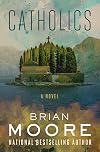
Catholics
by Brian Moore
On This Page
Description
A "near-masterpiece" about faith and doubt by the award-winning, international bestselling author (The New York Times). In Rome, surrendering to secular pressures, the Fourth Vatican Council is stirring a revolution with their official denial of the church's core doctrines. They've abolished clerical dress and private confession; the Eucharist is recognized only as an outdated symbol; and they're merging with the tenets of Buddhism. They're also unsettled by the blind faith of devout show more pilgrims from around the world congregating on a remote island monastery in Ireland--the last spot on earth where Catholic traditions are defiantly alive. At the behest of the Vatican, Father James Kinsella has been dispatched to Muck Abbey with an ultimatum: Adhere to the new church or suffer the consequences. But in Abbot Tomás O'Malley, Kinsella finds less an adversary than a man of bewildering contradictions--unyieldingly bound to his vows, yet long-questioning his devotion to God. Now, between Kinsella and O'Malley comes an unexpected challenge that will reveal their truths, their purpose, their faith, and their doubt. "Told with . . . superb grace and wit," Catholics was adapted by Brian Moore for the 1973 film starring Martin Sheen and Trevor Howard (The New Yorker). show lessTags
Recommendations

















Member Reviews
Catholics is a short little gem that in fewer than 100 pages lays out and dramatizes the most crucial issues facing the 2000 year old church in the 21st century. Written in 1972, the novel takes place at an unspecified future time in the late 20th century.
In the years since Vatican II (1962-5), the Church hierarchy has become significantly more secular. Not only are masses conducted in the local language, but priests no longer wear distinctive clothing, private one-on-one confessions have been abandoned in favor of general public confessions (in which the whole congregation stands before Mass and says an act of contrition), and the Church is negotiating to merge with Buddhism.
The surface issue confronted by the dramatis personae is show more whether the church should compel Vatican II’s dictum to say the mass in the local vernacular. But the more important issue underlying all the activity is the debate between modern secular Catholics, who see the mass as a merely symbolic exercise, and the old line Catholics who consider the mass a genuine daily miracle in which the bread of Communion is transformed into the actual body and blood of Jesus Christ, who is not just the son of God, but God himself, the creator and sustainer of the universe.
The action takes place on a remote locale, Muck Island, off the west coast of Ireland, where a small group of “Albanesian” monks from the centuries old monastery have defied the dictates of a new, fictional church council, Vatican IV, to conduct the mass in the local language. Instead, they have become quite prominent, even developing an international following, by continuing to say the mass in Latin.
Father James Kinsella, an American, has been given plenipotentiary power from the Father General of the Albanesians in Rome to bring the mutinous monks into conformance with “modern” Church practice. Kinsella receives a wake-up call when he tries to get a boat to take him to the monks’ island. The pilot of the boat sent to pick him up refuses to believe he is Kinsella because he has been told Kinsella is a priest, and the man standing before him is dressed as an ordinary layman.
Kinsella finally reaches the island by chartering a helicopter. There he meets the Abbot of Muck, Tomas O’Malley. The two conduct a very civilized discussion of the issues raised by the somewhat revolutionary new teachings of the Church. Rather than argue for the old ways himself, the abbot allows one of his monks, Father Manus, to confront the interloper with an impassioned defense of the Latin Mass:
“It was God’s house, where, every day, the daily miracle took place. God coming down among us. A mystery. Just as this new Mass isn’t a mystery; it’s a mockery, a singsong, it’s not talking to God, it’s talking to your neighbor, and that’s why it’s in…whatever language the people in the church happen to speak. It’s a symbol, they say, but a symbol of what? It’s some entertainment show, that’s what it is.”
Kinsella seems to passionately believe, but it is not clear in what he believes, other than in the authority of the pope and the Father General of the order. Abbot Tomas, on the other hand does not hold any strong beliefs. In the end, Kinsella delivers to Tomas the Father General’s ultimatum: say the mass in English (with a strong Irish brogue?), or be transferred to a different monastery without the powers of the abbot. Thomas obeys, but it is not clear that his fellow monks will follow his leadership.
Although the author seems to have been a nonbeliever, his characters, Kinsella, Tomas, and Father Manus are all portrayed sympathetically. Each represents a typical modern day Catholic. How dependent is the Church on its doctrine of miracles? The book nicely contrasts different positions within the Church. It also warns any potential tourists to Ireland’s West Coast to bring several good woolen sweaters and a water proof raincoat.
(JAB) show less
In the years since Vatican II (1962-5), the Church hierarchy has become significantly more secular. Not only are masses conducted in the local language, but priests no longer wear distinctive clothing, private one-on-one confessions have been abandoned in favor of general public confessions (in which the whole congregation stands before Mass and says an act of contrition), and the Church is negotiating to merge with Buddhism.
The surface issue confronted by the dramatis personae is show more whether the church should compel Vatican II’s dictum to say the mass in the local vernacular. But the more important issue underlying all the activity is the debate between modern secular Catholics, who see the mass as a merely symbolic exercise, and the old line Catholics who consider the mass a genuine daily miracle in which the bread of Communion is transformed into the actual body and blood of Jesus Christ, who is not just the son of God, but God himself, the creator and sustainer of the universe.
The action takes place on a remote locale, Muck Island, off the west coast of Ireland, where a small group of “Albanesian” monks from the centuries old monastery have defied the dictates of a new, fictional church council, Vatican IV, to conduct the mass in the local language. Instead, they have become quite prominent, even developing an international following, by continuing to say the mass in Latin.
Father James Kinsella, an American, has been given plenipotentiary power from the Father General of the Albanesians in Rome to bring the mutinous monks into conformance with “modern” Church practice. Kinsella receives a wake-up call when he tries to get a boat to take him to the monks’ island. The pilot of the boat sent to pick him up refuses to believe he is Kinsella because he has been told Kinsella is a priest, and the man standing before him is dressed as an ordinary layman.
Kinsella finally reaches the island by chartering a helicopter. There he meets the Abbot of Muck, Tomas O’Malley. The two conduct a very civilized discussion of the issues raised by the somewhat revolutionary new teachings of the Church. Rather than argue for the old ways himself, the abbot allows one of his monks, Father Manus, to confront the interloper with an impassioned defense of the Latin Mass:
“It was God’s house, where, every day, the daily miracle took place. God coming down among us. A mystery. Just as this new Mass isn’t a mystery; it’s a mockery, a singsong, it’s not talking to God, it’s talking to your neighbor, and that’s why it’s in…whatever language the people in the church happen to speak. It’s a symbol, they say, but a symbol of what? It’s some entertainment show, that’s what it is.”
Kinsella seems to passionately believe, but it is not clear in what he believes, other than in the authority of the pope and the Father General of the order. Abbot Tomas, on the other hand does not hold any strong beliefs. In the end, Kinsella delivers to Tomas the Father General’s ultimatum: say the mass in English (with a strong Irish brogue?), or be transferred to a different monastery without the powers of the abbot. Thomas obeys, but it is not clear that his fellow monks will follow his leadership.
Although the author seems to have been a nonbeliever, his characters, Kinsella, Tomas, and Father Manus are all portrayed sympathetically. Each represents a typical modern day Catholic. How dependent is the Church on its doctrine of miracles? The book nicely contrasts different positions within the Church. It also warns any potential tourists to Ireland’s West Coast to bring several good woolen sweaters and a water proof raincoat.
(JAB) show less
Catholics is a slim, smart book that turns on the dilemma posed by the mutually exclusive meanings of the word "catholic," mostly indicated by the capitalization (or lack thereof) of the "C." Nowadays, Catholic (capital C) denotes a specific form of Christianity; after the Reformation, Catholicism came to represent the traditional, orthodox ways of worship, such as the saying of the Latin Mass, and maintaining the doctrine of transubstantiation. Catholics (particularly Roman) rejected the Protestant Revolution and it's promise of a more universalizable (read: personal) Christianity.
From the Protestant point of view, Catholicism is unduly exclusive (therefore elitist) and retrograde. The great irony of this (or paradox, if you prefer) show more comes into view when we remember that the non-capitalized "catholic" derives from the Greek kath olou, literally "on the whole," which is used to denote the general, universality, commonness, entirety, etc. In other words the Catholic (Universal) church cannot really be said to be catholic at all anymore, at least not in the non-capital sense. Instead it has turned into its opposite, applicable to only a few, rather than the many.
The philosophical crux of Catholics can by summed up in one sentence uttered by the Abbot of Muck, the head of a small island monastery off the coast of Ireland, whose inhabitants are in violation of the new Papal (Catholic) law requiring ecumenical uniformity; they are in violation so long as they continue to say the Mass in Latin, and continue to hear private confessions. The unexpected popularity of their Masses (the last vestige of the old religion) is viewed as a threat to the Ecumenical Council in Rome, who are in negotiations with Bangkok to secure the apertura, i.e. "the interpenetration between Christian and Buddhist faiths." The Abbot of Muck muses: "Yesterday's orthodoxy is today's heresy." show less
From the Protestant point of view, Catholicism is unduly exclusive (therefore elitist) and retrograde. The great irony of this (or paradox, if you prefer) show more comes into view when we remember that the non-capitalized "catholic" derives from the Greek kath olou, literally "on the whole," which is used to denote the general, universality, commonness, entirety, etc. In other words the Catholic (Universal) church cannot really be said to be catholic at all anymore, at least not in the non-capital sense. Instead it has turned into its opposite, applicable to only a few, rather than the many.
The philosophical crux of Catholics can by summed up in one sentence uttered by the Abbot of Muck, the head of a small island monastery off the coast of Ireland, whose inhabitants are in violation of the new Papal (Catholic) law requiring ecumenical uniformity; they are in violation so long as they continue to say the Mass in Latin, and continue to hear private confessions. The unexpected popularity of their Masses (the last vestige of the old religion) is viewed as a threat to the Ecumenical Council in Rome, who are in negotiations with Bangkok to secure the apertura, i.e. "the interpenetration between Christian and Buddhist faiths." The Abbot of Muck muses: "Yesterday's orthodoxy is today's heresy." show less
A slim volume set in a mythical future after 'Vatican IV'. As such the book has dated rather badly with the resurgence of the tridentine mass and traditional forms of Roman Catholic worship. Still the volume deals with the conflict between change and tradition and nicely scuppers the idea that Roman Catholic doctrine is fixed and immutable. I enjoyed the book and it has a wider audience than just Church people.
The is a short novel/novella that I liked very much. This was written in 1972 and my initial impression was that it was a reaction to Vatican II and the end of the traditional Catholic Mass being said in Latin. It opens with a man, self-identified as Kinsella, James Kinsella, Catholic priest, travelling to an obscure island off the Irish coast where monks come to the mainland and continue to celebrate the mass in latin and pilgrims come from near and very far to hear the mass once more in a traditional way.
As it happens this story is set sometime in the future from 1972, as we are dealing with Vatican IV, and could be classed as speculative fiction in that case. This is a provocative read, especially with the reveals we get to see. I show more was more than a little melancholy by story's end. show less
As it happens this story is set sometime in the future from 1972, as we are dealing with Vatican IV, and could be classed as speculative fiction in that case. This is a provocative read, especially with the reveals we get to see. I show more was more than a little melancholy by story's end. show less
I have actually finished reading Sixteen Short Novels and now I just have the reviews to finish writing. The second to last novella in the book is "Catholics" by Brian Moore.
"Catholics" is a near future, sometime after the death of Pope John Paul II, at a time when the Vatican has radically altered the traditions of Catholicism to modernize the religion.
Father James Kinsella is sent by Rome to the island parish off the Kerry coast in Ireland. An abbey there has ignored the edicts from the Holy See and are sticking to the old traditions. Their old fashioned way of holding mass and hearing confessions has drawn huge crowds, whom the Vatican have labeled as pilgrims. Father Kinsella must confront this abbey and bring the monks in line with show more holy orders.
Kinsella's observations of the old traditions make "Catholics" a fascinating read. In order to gain access to the abbey he must dress and act like an old fashioned priest. He feels out of place in traditional trappings and has a hard time convincing the locals that he is who he says he is. He confronts feelings of pity for the monks, self doubt at his effectiveness on the assignment and relief at being able to return to the real world when he leaves the island.
Catholics ends with a devils advocate type coda, with the monks discussing their next move after Kinsella leaves. Effectively the book ends in a stand-off with both sides convinced of they are doing the right thing. show less
"Catholics" is a near future, sometime after the death of Pope John Paul II, at a time when the Vatican has radically altered the traditions of Catholicism to modernize the religion.
Father James Kinsella is sent by Rome to the island parish off the Kerry coast in Ireland. An abbey there has ignored the edicts from the Holy See and are sticking to the old traditions. Their old fashioned way of holding mass and hearing confessions has drawn huge crowds, whom the Vatican have labeled as pilgrims. Father Kinsella must confront this abbey and bring the monks in line with show more holy orders.
Kinsella's observations of the old traditions make "Catholics" a fascinating read. In order to gain access to the abbey he must dress and act like an old fashioned priest. He feels out of place in traditional trappings and has a hard time convincing the locals that he is who he says he is. He confronts feelings of pity for the monks, self doubt at his effectiveness on the assignment and relief at being able to return to the real world when he leaves the island.
Catholics ends with a devils advocate type coda, with the monks discussing their next move after Kinsella leaves. Effectively the book ends in a stand-off with both sides convinced of they are doing the right thing. show less
Short and easy to read. In fact I read it in one day. Written in 1972, this book could be put in under science fiction without any problem. In the future, after Vatican IV, the Church is working toward convergence with Buddhism, the Mass is symbolic, and there is no such thing as private confession. The only place on the planet practicing the Latin Mass, a small island off of Ireland, has been heretofore unknown but thanks to the hordes of pilgrims it attracts, not to mention, television specials, the Church is now sending out a priest to set things straight. His confrontation with the Irish priest is not quite what we'd expect. We discover that, contrary to expectations, it is not passion for the Mass that led this priest to defy the show more Vatican. Quite the opposite, it is a lack of faith, not wanting to rock the boat, that led him to hang onto the old ways.
I was riveted to see what the conclusion would be to the old priest's confrontation with the "Vatican's man" who believes in the new Catholic ways. I will not spoil it here for other readers. show less
I was riveted to see what the conclusion would be to the old priest's confrontation with the "Vatican's man" who believes in the new Catholic ways. I will not spoil it here for other readers. show less
Members
- Recently Added By
Author Information

31+ Works 5,937 Members
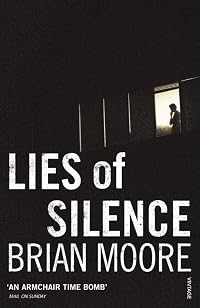
Brian Moore, 1921 - 1999 Brian Moore was born in Belfast on August 25, 1921 to Doctor James Bernard Moore and Eileen McFadden. He attended St. Malachy's College, a Catholic school, where the students where beaten on the hands daily. He left the college without a School Leaving Certificate because he failed Math. In 1941, a bomb damaged the family show more home, so they moved to a house on Camden Street. A year later, his father died. In 1942, he joined the National Fire Service, but knew that he wanted to be a writer. Moore knew some French, so he was hired by the British Ministry of War Transport to go as a port official to Algiers, North Africa. Afterwards, he traveled to Italy, France, and after the war, Warsaw (1945), Spain, Canada (1948), the United States and England, finally settling in California. Moore immigrated to Canada in 1948, where he worked as a proofreader and reporter for the Montreal Gazette. In 1951, he published his first story in the Northern Review and married Jacqueline Sirois, a fellow journalist. His only child, Michael, was born on November 24, 1953. He split with his wife in 1964 and then married Jean Denney, who he stayed married to until his death. Moore published "The Lonely Passion of Judith Hearne" (1955), "The Feast of Lupercal" (1957) and "The Emperor of Ice Cream" (1966), which is his most autobiographical novel. He recounts his school experiences, as well as what is was like during the bombing. In the 1990's, he wrote political fables and four novels. "Lies of Silence" is a thriller set in Belfast and was a more political statement than the previous novels. It was nominated for the Booker Prize and was his bestselling book. Several of his books were made into films such as "The Luck of Ginger Coffey," "Catholics," "The Lonely Passion of Judith Hearne" and "The Temptation of Eileen Hughes" was adapted for television. Moore received many awards, which included the Governor General's Award in 1961 for "The Luck of Ginger Coffey" and again in 1975 for "The Great Victorian Collection," which also won the James Tait Black Award in England. He was short listed for the Booker Prize in 1987 for "The Colour of Blood" and again in 1990 for "Lies of Silence." In July 1987, he conferred an honorary doctorate by Queen's University, Belfast. His film "Catholics" received the W.H. Smith Award in 1973 and the Peabody Award in 1974. In 1999, Brian Moore died at his home in Malibu, California. (Bowker Author Biography) show less
Some Editions
Awards and Honors
Awards
Distinctions
Series
Belongs to Publisher Series
detebe (20546)
Work Relationships
Is contained in
Common Knowledge
- Canonical title*
- Insel des Glaubens
- Original title
- Catholics
- Original publication date
- 1972
- Important places
- Ireland
- Related movies
- Catholics (2007 | 2004); The Conflict (2004)
- First words
- The fog lifted. The island was there. The visitor walked to the end of the disused pier and saw it across three miles of ocean, riding the sea like an overturned fishing boat. Morning sunlight moved along a keel of mountain, ... (show all)above valleys black as tarred boatsides.
He thought of Rome. Surprisingly, the Order itself had little descriptive information. In the Lungotevere Vaticano he had been handed an out-of-print book: Weir's Guide to Religious Monuments. - Last words*
- (Click to show. Warning: May contain spoilers.)"Geheiligt werde dein Name."
- Original language*
- Englisch
*Some information comes from Common Knowledge in other languages. Click "Edit" for more information.
Classifications
Statistics
- Members
- 293
- Popularity
- 109,837
- Reviews
- 7
- Rating
- (3.87)
- Languages
- Dutch, English, German, Italian
- Media
- Paper, Ebook
- ISBNs
- 18
- ASINs
- 4