
Hell is the Absence of God {novelette}
by Ted Chiang
On This Page
Tags
Recommendations

























Member Reviews
Wow. It's certainly a new literary experience for me. If all those religious magic-realism stuff in Garcia Marquez's 'Hundred Years...' were to be compiled into one story universe and its logic followed to their conclusion, it would be the setting of this story.
I liked the very personal tone. You feel the conflicts and motivations of the characters immediately. In the face of assured eternity, where there's no longer doubt that heaven and hell exists, all that matters is the attitude one has. This is what I got from the story. Camus. Myth of Sisyphus.
Overall a great read. Philosophical, sad, and a sincere meditation on the issue of faith.
I liked the very personal tone. You feel the conflicts and motivations of the characters immediately. In the face of assured eternity, where there's no longer doubt that heaven and hell exists, all that matters is the attitude one has. This is what I got from the story. Camus. Myth of Sisyphus.
Overall a great read. Philosophical, sad, and a sincere meditation on the issue of faith.
Well, this was an absolute banger!
I definitely need more time to digest this and really try to get where Chiang is coming from and trying to say with this, but I know how easily influenced I am, so I wanted to get my initial thoughts down, before anything else.
Hell is the Absence of God posits a world where some form of the monotheistic God of Christianity and other major religions, along with a whole bunch of named angels, heaven and Hell all explicitly exist. This manifests itself in angels and other holy events and visions, including a look into heaven and Hell, randomly occurring all over the place, seemingly on the regular. The sudden appearance of angels sews as much awfulness as it does aww, seeming to have no rhyme or reason show more for the most part, causing indiscriminate horror in the form of accidents, mutations, injury and deaths, as well as showing visions of loved ones in heaven or Hell. The holy episodes are not wholly catastrophic with others being healed, blessed, and witnessing miracles…that also have the potential to destroy lives and shaken faith.
This novelette asks what would living in this world do to a motherfucker, regardless of their original feelings about God? Nothing good, seems to be the answer.
Now, I totally get that this is one of those works of art that the New Atheists and various other big brained bois who think Dawkins and Gervais are the greatest minds of our generation and that Rick Sanchez is nothing, but cool and awesome, actually (this is something that Rick and Morty is also guilty of, despite their attempts to show how fucked a person he is), I get that. I don't think it's fair to judge something on the way the worst people react to something and interpret it. People with shitty perspectives like great things and people with decent perspectives like things that are awful (it's me, I'm bitches).
Is Death of the Audience a thing? Who knows, because this is the unfiltered and not looking shit up zone. Anyways, the point was just to acknowledge that there are various ways to interpret this story and the way it's told, including as being an outright mockery of religion, particularly Christianity, or conversely an argument for faith not needing proof, and it all being about love and pain and loving pain.
Spoilers and more initial reaction here: https://ko-fi.com/post/Hell-is-the-Absence-of-God-by-Ted-Chiang--Book-Re-B0B5R6W... show less
I definitely need more time to digest this and really try to get where Chiang is coming from and trying to say with this, but I know how easily influenced I am, so I wanted to get my initial thoughts down, before anything else.
Hell is the Absence of God posits a world where some form of the monotheistic God of Christianity and other major religions, along with a whole bunch of named angels, heaven and Hell all explicitly exist. This manifests itself in angels and other holy events and visions, including a look into heaven and Hell, randomly occurring all over the place, seemingly on the regular. The sudden appearance of angels sews as much awfulness as it does aww, seeming to have no rhyme or reason show more for the most part, causing indiscriminate horror in the form of accidents, mutations, injury and deaths, as well as showing visions of loved ones in heaven or Hell. The holy episodes are not wholly catastrophic with others being healed, blessed, and witnessing miracles…that also have the potential to destroy lives and shaken faith.
This novelette asks what would living in this world do to a motherfucker, regardless of their original feelings about God? Nothing good, seems to be the answer.
Now, I totally get that this is one of those works of art that the New Atheists and various other big brained bois who think Dawkins and Gervais are the greatest minds of our generation and that Rick Sanchez is nothing, but cool and awesome, actually (this is something that Rick and Morty is also guilty of, despite their attempts to show how fucked a person he is), I get that. I don't think it's fair to judge something on the way the worst people react to something and interpret it. People with shitty perspectives like great things and people with decent perspectives like things that are awful (it's me, I'm bitches).
Is Death of the Audience a thing? Who knows, because this is the unfiltered and not looking shit up zone. Anyways, the point was just to acknowledge that there are various ways to interpret this story and the way it's told, including as being an outright mockery of religion, particularly Christianity, or conversely an argument for faith not needing proof, and it all being about love and pain and loving pain.
Spoilers and more initial reaction here: https://ko-fi.com/post/Hell-is-the-Absence-of-God-by-Ted-Chiang--Book-Re-B0B5R6W... show less
This was... well... not very good. Or, well, it won a Hugo and a Nebula, so I guess on an objective level it's good, but I didn't enjoy it as much as I wanted to. It's got an extremely interesting premise: in a world where miracles, visitations by angels, and manifestations of hell are common, a man's wife is killed in a visitation. She's in heaven, but he's not religious. He needs to love God to get to heaven to be with his wife, but how can he love God now that He's taken everything? It sounds like the kind of story I should have loved, but I was really unclear on what the point and/or message of this story was, beyond "God's an arbitrary jerk, but it's important to love him unconditionally anyways." The story also switched between show more POVs frequently and I had a bit of a hard time keeping things straight. show less
Certainly well-written but rather depressing and odd. I didn't exactly enjoy it, but I did enjoy it, if you know what I mean.
I've enjoyed the setting but the ending is horrifying, not by it's quality, but in the message that "God is a jerk, but that's not the point". Depressing.
http://www.nicholaswhyte.info/sf/hell.htm
“Hell Is the Absence of God” is a story set in a world very like ours, but where there is no doubt about whether angels, Heaven and Hell are all real. This does raise an interesting question as to whether it can be counted as fantasy or science fiction; Chiang himself is clear that he sees the work as fantasy, but as Jeremy Smith and Niall Harrison [dead link] have argued, apart from the supernatural premise, the world he has created is a pretty mechanistic one, with angels behaving like natural forces (what an earlier age termed “acts of God”); there is no means of mediating with them. (There is, however, a possibility of interaction directly with God, which must surely undermine the show more classification of the story as science fiction rather than fantasy.)
But the story is not about God or angels. It is about what it is like to be human in this world, and in particular on the nature of devotion and religion when faith is no longer an issue. Only those who love God can go to Heaven; Hell, however, is not a place of torment, but simply somewhere “not physically worse than the mortal plane”, occasionally visible below our own world, characterised by (as we are told in the story’s title) the absence of God.
This is not a story about Christianity, not even about evangelical Christianity, though a lot of people have made that mistake (including me when I first read it, and the writer of the blurb for one of the collections it has been published in). Explicitly, Christ is not mentioned anywhere in the text. Implicitly, faith as such has been taken out of the equation by the empirical and undeniable proofs of God’s existence. There are no unbelievers in Chiang’s world. There are, however, people who are not religious.
Some readers didn’t get this crucial point, including John C. Wright on the Amazon site, who calls it “trite antichristian propaganda” and William December Starr on usenet [dead link], who described is as “just yet another “God’s a jerk” story, big deal”. (Elf Sternberg has repeatedly praised it for much the same reasons, suggesting that Chiang is telling exactly the same story here as C.S. Lewis in The Great Divorce, but from a different perspective.) I find it rather interesting that those readers who react to the story as thin anti-Christian propaganda tend to also describe themselves as non-believers. I haven’t yet found a Christian writer who had the same reaction, though it will be interesting to see what Mirtika Schulz’s group [dead link] makes of it when they get there. (Kathy Wang [dead link] actually thought it a pro-Christian, proselytising story at first, though realised her mistake on further reading.) My suspicion is that for most believers, and for some non-believers (and perhaps for anyone who is interested in exploring the spectrum of opinion between Richard Dawkins and Billy Graham, rather than pledging their allegiance to one side or the other), Chiang’s thought-experiment is in fact an interesting one.
It is made more interesting by the style of narrative – tight third-person, but with no direct speech at all. It gives the story some of the qualities of a documentary: it is as if the camera focusses on each person individually, and then moves on. There are three main characters: Neil Fisk, introduced in the first sentence, whose wife is killed by an angelic visitation and whose quest to become devoted to God in order to join her in heaven is the core of the plot; Janice Reilly, disabled and then cured, whose career as a motivational speaker is bound up with Neil’s quest; and Ethan Mead, whose quest for meaning in the world is perhaps meant to be closest to the experience of the reader. Through the characters, Chiang also explores grief [dead link] and disability [dead link], both of which are of course key elements in the eternal question of why a loving God allows bad things to happen in the world. Again, Chiang is not trying to answer this question himself, but he is exploring how people do answer it, in a world where “God doesn’t exist” is not an option. He is also by his own account, if to a very small extent, exploring the role of God.
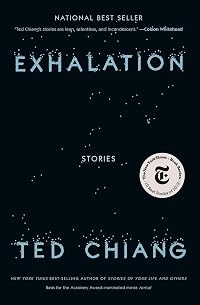
Chiang has in fact written up the roots of this story, in an afterword in his Stories of Your Life and Others collection. He mentions briefly Gregory Widen’s film, The Prophecy, and the work of modern mystic Annie Dillard, but then goes on to devote two paragraphs (out of four in the short piece) to the Book of Job.
"For me, one of the unsatisfying things about the Book of Job is that, in the end, God rewards Job. Leave aside the question of whether new children can compensate for the loss of his original ones. Why does God restore Job’s fortunes at all? Why the happy ending? One of the basic message of the book is that virtue isn’t always rewarded; bad things happen to good people. Job ultimately accepts this, demonstrating virtue, and is subsequently rewarded. Doesn’t this undercut the message?"
"It seems to me that the Book of Job lacks the courage of its convictions. If the author were really committed to the idea that virtue isn’t always rewarded, shouldn’t the book have ended with Job still bereft of everything?"
The Book of Job is one of the most interesting and puzzling parts of the Bible (and, according to one reference work I consulted, the one book whose text is most corrupt). Job, an upright and honest man, is inflicted with tremendous suffering by Satan as part of a wager with God (Satan betting that suffering will make Job turn against God). Much poetry ensues, Job’s friends attempting to persuade him that his suffering is just punishment for something, Job himself asserts his own righteousness, and then God Himself appears in a whirlwind; Job is overwhelmed by the divine presence, and the book ends as Chiang describes it.
Apologists for the Book of Job can of course mutter that the original text may well have concluded without this disappointing and inconsistent happy ending. The prose narrative of verses 7-17 of the last chapter has the feel of being by a different hand to most of the rest of the book (perhaps the two introductory chapters are from the same source or a similar one). But Chiang is right. The text we have is the one we have, not what one might wish it to be, and the ending is inconsistent. His choice of ending for his story – where Neil Fisk is, as we would see it, unfairly damned by God, is a direct response to the climax of the Biblical story, where Job is, as Chiang sees it, unfairly saved.
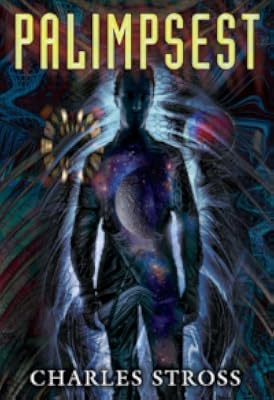
In a different year, one could imagine that the Hugo and/or Nebula might have gone either to a traditional hard sf story like Allen Steele’s tale of the one man who wakes up on a starship where everyone else is asleep in cold storage, or to Charles Stross’ vibrant vision of the the founder of a post-Singularity, post-human dynasty. I think it would have had a good chance of winning anyway – I tipped it for the Hugo myself, and scoffed at those who felt it was unworthy of the Nebula. But (I owe this point to Glenn Gillette [dead link]) in the months after September 2001, Chiang’s tale of humans trying to come to terms with tragedy and disaster happened to hit the Zeitgeist in a way that (I hope) he never anticipated, and this must have made a difference with the voters of both SFWA and Worldcon.
https://fromtheheartofeurope.eu/hell-is-the-absence-of-god-by-ted-chiang/
Nineteen years on, I agree with myself and I don’t have much to add. I think the story remains a really good thought experiment, emotionally charged yet sparsely written, with perhaps some understated rage at an irrationally cruel world and its creator.
One point I should have made is that the angels, who are impersonal forces of disruption and often destruction, are given names by the human onlookers to their passage, even though there is no hint that they actually have any personalities or intelligence, exactly as we give names to hurricanes. It raises the question, to what extent do we really know anything, let alone control it, by giving it a name? show less
“Hell Is the Absence of God” is a story set in a world very like ours, but where there is no doubt about whether angels, Heaven and Hell are all real. This does raise an interesting question as to whether it can be counted as fantasy or science fiction; Chiang himself is clear that he sees the work as fantasy, but as Jeremy Smith and Niall Harrison [dead link] have argued, apart from the supernatural premise, the world he has created is a pretty mechanistic one, with angels behaving like natural forces (what an earlier age termed “acts of God”); there is no means of mediating with them. (There is, however, a possibility of interaction directly with God, which must surely undermine the show more classification of the story as science fiction rather than fantasy.)
But the story is not about God or angels. It is about what it is like to be human in this world, and in particular on the nature of devotion and religion when faith is no longer an issue. Only those who love God can go to Heaven; Hell, however, is not a place of torment, but simply somewhere “not physically worse than the mortal plane”, occasionally visible below our own world, characterised by (as we are told in the story’s title) the absence of God.
This is not a story about Christianity, not even about evangelical Christianity, though a lot of people have made that mistake (including me when I first read it, and the writer of the blurb for one of the collections it has been published in). Explicitly, Christ is not mentioned anywhere in the text. Implicitly, faith as such has been taken out of the equation by the empirical and undeniable proofs of God’s existence. There are no unbelievers in Chiang’s world. There are, however, people who are not religious.
Some readers didn’t get this crucial point, including John C. Wright on the Amazon site, who calls it “trite antichristian propaganda” and William December Starr on usenet [dead link], who described is as “just yet another “God’s a jerk” story, big deal”. (Elf Sternberg has repeatedly praised it for much the same reasons, suggesting that Chiang is telling exactly the same story here as C.S. Lewis in The Great Divorce, but from a different perspective.) I find it rather interesting that those readers who react to the story as thin anti-Christian propaganda tend to also describe themselves as non-believers. I haven’t yet found a Christian writer who had the same reaction, though it will be interesting to see what Mirtika Schulz’s group [dead link] makes of it when they get there. (Kathy Wang [dead link] actually thought it a pro-Christian, proselytising story at first, though realised her mistake on further reading.) My suspicion is that for most believers, and for some non-believers (and perhaps for anyone who is interested in exploring the spectrum of opinion between Richard Dawkins and Billy Graham, rather than pledging their allegiance to one side or the other), Chiang’s thought-experiment is in fact an interesting one.
It is made more interesting by the style of narrative – tight third-person, but with no direct speech at all. It gives the story some of the qualities of a documentary: it is as if the camera focusses on each person individually, and then moves on. There are three main characters: Neil Fisk, introduced in the first sentence, whose wife is killed by an angelic visitation and whose quest to become devoted to God in order to join her in heaven is the core of the plot; Janice Reilly, disabled and then cured, whose career as a motivational speaker is bound up with Neil’s quest; and Ethan Mead, whose quest for meaning in the world is perhaps meant to be closest to the experience of the reader. Through the characters, Chiang also explores grief [dead link] and disability [dead link], both of which are of course key elements in the eternal question of why a loving God allows bad things to happen in the world. Again, Chiang is not trying to answer this question himself, but he is exploring how people do answer it, in a world where “God doesn’t exist” is not an option. He is also by his own account, if to a very small extent, exploring the role of God.
Chiang has in fact written up the roots of this story, in an afterword in his Stories of Your Life and Others collection. He mentions briefly Gregory Widen’s film, The Prophecy, and the work of modern mystic Annie Dillard, but then goes on to devote two paragraphs (out of four in the short piece) to the Book of Job.
"For me, one of the unsatisfying things about the Book of Job is that, in the end, God rewards Job. Leave aside the question of whether new children can compensate for the loss of his original ones. Why does God restore Job’s fortunes at all? Why the happy ending? One of the basic message of the book is that virtue isn’t always rewarded; bad things happen to good people. Job ultimately accepts this, demonstrating virtue, and is subsequently rewarded. Doesn’t this undercut the message?"
"It seems to me that the Book of Job lacks the courage of its convictions. If the author were really committed to the idea that virtue isn’t always rewarded, shouldn’t the book have ended with Job still bereft of everything?"
The Book of Job is one of the most interesting and puzzling parts of the Bible (and, according to one reference work I consulted, the one book whose text is most corrupt). Job, an upright and honest man, is inflicted with tremendous suffering by Satan as part of a wager with God (Satan betting that suffering will make Job turn against God). Much poetry ensues, Job’s friends attempting to persuade him that his suffering is just punishment for something, Job himself asserts his own righteousness, and then God Himself appears in a whirlwind; Job is overwhelmed by the divine presence, and the book ends as Chiang describes it.
Apologists for the Book of Job can of course mutter that the original text may well have concluded without this disappointing and inconsistent happy ending. The prose narrative of verses 7-17 of the last chapter has the feel of being by a different hand to most of the rest of the book (perhaps the two introductory chapters are from the same source or a similar one). But Chiang is right. The text we have is the one we have, not what one might wish it to be, and the ending is inconsistent. His choice of ending for his story – where Neil Fisk is, as we would see it, unfairly damned by God, is a direct response to the climax of the Biblical story, where Job is, as Chiang sees it, unfairly saved.
In a different year, one could imagine that the Hugo and/or Nebula might have gone either to a traditional hard sf story like Allen Steele’s tale of the one man who wakes up on a starship where everyone else is asleep in cold storage, or to Charles Stross’ vibrant vision of the the founder of a post-Singularity, post-human dynasty. I think it would have had a good chance of winning anyway – I tipped it for the Hugo myself, and scoffed at those who felt it was unworthy of the Nebula. But (I owe this point to Glenn Gillette [dead link]) in the months after September 2001, Chiang’s tale of humans trying to come to terms with tragedy and disaster happened to hit the Zeitgeist in a way that (I hope) he never anticipated, and this must have made a difference with the voters of both SFWA and Worldcon.
https://fromtheheartofeurope.eu/hell-is-the-absence-of-god-by-ted-chiang/
Nineteen years on, I agree with myself and I don’t have much to add. I think the story remains a really good thought experiment, emotionally charged yet sparsely written, with perhaps some understated rage at an irrationally cruel world and its creator.
One point I should have made is that the angels, who are impersonal forces of disruption and often destruction, are given names by the human onlookers to their passage, even though there is no hint that they actually have any personalities or intelligence, exactly as we give names to hurricanes. It raises the question, to what extent do we really know anything, let alone control it, by giving it a name? show less
Ratings
Members
- Recently Added By
Author Information

35+ Works 12,331 Members
Awards and Honors
Awards
Work Relationships
Is contained in
Common Knowledge
- Canonical title
- Hell is the Absence of God {novelette}
- Original title
- Hell Is the Absence of God (novelette) (novelette)
- Original publication date
- 2001-07
- Original language
- English
- Disambiguation notice
- This entry is for the novella only. Do not combine with collections containing additional stories.
Classifications
Statistics
- Members
- 69
- Popularity
- 454,012
- Reviews
- 6
- Rating
- (3.94)
- Languages
- English, German
- ASINs
- 1


