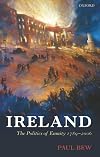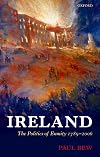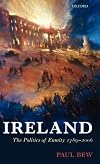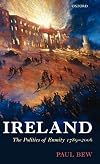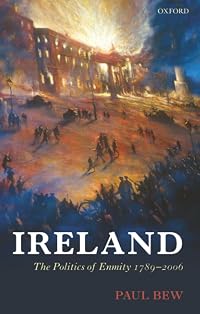
Ireland: The Politics of Enmity, 1789-2006
by Paul Bew
On This Page
Description
Paul Bew sheds new light on the changing ideological passions of the modern Irish question. Examining the influence and legacies of many key figures, from Tone to Parnell to Haughey and from Peel to Churchill to Blair, he takes the reader all the way from the society of the United Irishman to the crisis of the Good Friday Agreement.Tags
Recommendations



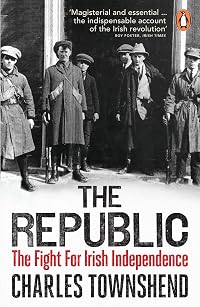
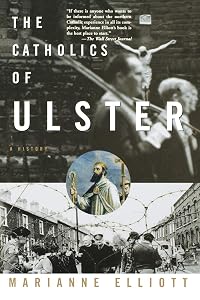
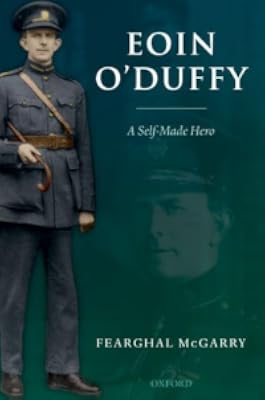
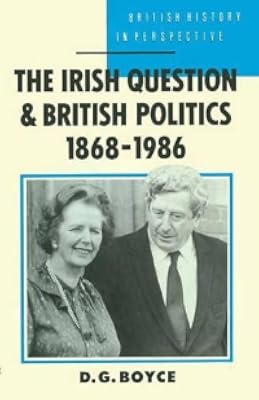

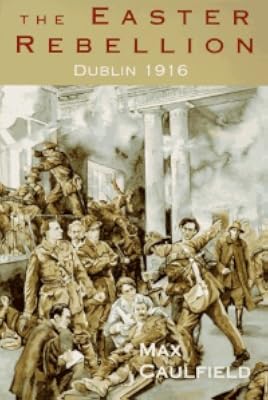
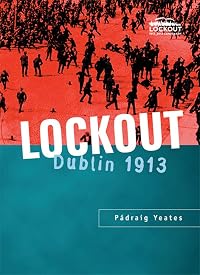
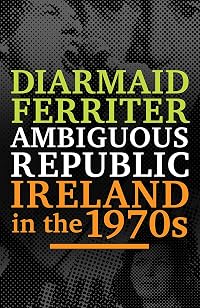
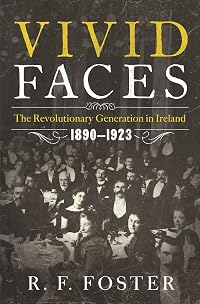




Member Reviews
Paul Bew's book covers a broad sweep of two centuries of Irish history, from the loss of autonomy under the Act of Union and the subsequent campaign to achieve the unfulfilled promise of Catholic Emancipation, through the growth of nationalism and the partition into the Ireland of today. While his focus is on the perspectives underpinning the conflict between the Protestant British and Irish Catholics, what stands out in his narrative is the prevalence of missed opportunities, moments when the political actors could have made different choices that might have tempered enmity and led to a more positive outcome for the Irish people.
Though thoughtfully argued and backed by an impressive command of the literature, the book suffers from two show more flaws. The first is the poor editing, which is rather surprising considering that the book comes from an publisher of Oxford's distinction. This is more than just a matter of a few typos, as the inaccuracies can distort the import of some of the events Bew describes. The other problem is its narrow focus; whereas most volumes in the Oxford History of Modern Europe series provide a broad coverage of the history of their subjects, Bew's focus is mainly on high politics, with the economic, social, and -- most glaringly, given its political importance -- cultural history of Ireland during this period addressed only in passing or not at all. These limitations diminish the overall value of the book, which in the end is best read as a specialized survey of Irish politics rather than an overall history of Ireland in the nineteenth and twentieth centuries. show less
Though thoughtfully argued and backed by an impressive command of the literature, the book suffers from two show more flaws. The first is the poor editing, which is rather surprising considering that the book comes from an publisher of Oxford's distinction. This is more than just a matter of a few typos, as the inaccuracies can distort the import of some of the events Bew describes. The other problem is its narrow focus; whereas most volumes in the Oxford History of Modern Europe series provide a broad coverage of the history of their subjects, Bew's focus is mainly on high politics, with the economic, social, and -- most glaringly, given its political importance -- cultural history of Ireland during this period addressed only in passing or not at all. These limitations diminish the overall value of the book, which in the end is best read as a specialized survey of Irish politics rather than an overall history of Ireland in the nineteenth and twentieth centuries. show less
Members
- Recently Added By
Author Information

20+ Works 278 Members
Paul Bew is Professor of Irish Politics at Queens University, Belfast.
Series
Belongs to Publisher Series
Common Knowledge
- Canonical title
- Ireland: The Politics of Enmity, 1789-2006
- Important places
- Ireland
- Original language
- English
Classifications
Statistics
- Members
- 45
- Popularity
- 661,017
- Reviews
- 1
- Rating
- (3.00)
- Languages
- English
- Media
- Paper, Ebook
- ISBNs
- 5
- ASINs
- 2