On This Page
Description
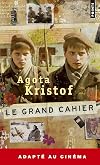
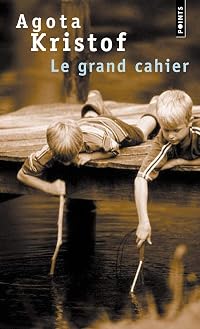
Under en krig bliver et par 10-årige tvillingedrenge anbragt på landet hos deres ondskabsfulde bedstemor. I et stilehefte noterer de, dag for dag, de fremskridt de gør i kunsten at overleve trods kulde, sult og brutalitet.Tags
Recommendations









Member Reviews
An unsettling novel that portrays the brutal realities of war through the eyes of the twin brothers. Set in an unnamed country during a time of conflict, the story is told in a cold, detached style, reflecting the boys' efforts to harden themselves against the horrors surrounding them. Kristof's writing is sparse and unflinching, stripping away sentimentality to reveal the rawness of human survival. The novel's disturbing events and moral ambiguity challenge the reader, making it a powerful exploration of innocence lost and the effects of war on the human psyche. This is not an easy read, but its impact lingers long after the final page!
A mother from an unnamed European country—probably Hungary, which is where the author comes from— brings her two small city boys, twin brothers, to their grandmother who lives in a small town. The old woman is mean, dirty and stinks because she never washes herself. She curses at and hits the boys constantly and refuses to feed them unless they do all the hard work required with the gardening and tending of the household. They sleep on a bench in the kitchen, without sheets or blankets, which their mother had provided, but which the old woman has sold at the market to make extra money along with their change of clothes. Not surprisingly, the old woman is known as "the witch" by the townsfolk because she is suspected of having show more poisoned her husband. We don't know the exact age of the boys, only that they should be in grade school and they still have their milk teeth. The boys are an inseparable pair, unusually clever. They never play. Instead they spend their time either doing chores or educating themselves, often at one and the same time. They train themselves to endure hunger with deliberate fasting exercises. They hit each other to learn to endure pain during another exercise and in yet another hurl verbal abuse at each other until it ceased to sting. They own a bible and a dictionary, and from this they teach themselves to write, with a daily exercise which consists of writing essays about their days. Once the essays are corrected, they are entered into a notebooks, which relates their life during the war, then once the country has been taken over by the "liberators", i.e. the USSR. The prose is deliberately spare and devoid of feeling or embellishments. The boys come off as very scary sociopaths, but also incredible survivors who will stop at nothing to endure and thrive. A fascinating read, and strangely, or maybe not so strangely, very emotional, because the reader can't help fill in those bits the boys are working so hard to cut out of their personalities: feelings of love and tenderness and empathy. Makes for compulsive reading and highly recommended. This is part of a trilogy; I've reserved the next book from the library. show less
A quite extraordinary book, which will stay with you for some time. The nameless, identical, twins who think and act as one, are sent to their grandmothers house to avoid war time bombings. At first they seem to be the embodiment of evil e.g. " Grandmother doesn't go up to the attic anymore, because we sawed through one of the rungs of the ladder and she fell and hurt herself". But in fact the twins are highly rational and moral. They create exercises and training for themselves to eliminate the need for love, to strip language of its emotion and endure any amount of pain. Thus preparing themselves for the unraveling of society around them as the Nazi's retreat and the Russians arrive. They help their disabled neighbour Harelip and her show more bedridden mother by blackmailing the local priest, who has been molesting Harelip, into providing assistance. Until such time as they decide he's paid enough. They put up with any amount of indignities from a local officer, billeted on their grandmother. The priest's housekeeper is at first their friend, but when they see her taunting convoys of transported Jews they extract revenge. And so rational are they, that anyone should think very carefully about uttering a phrase like "I wish I was dead" anywhere near them
Not for the faint hearted; we have scenes of atrocious perversion and violence described and its just as well the twins have hardened themselves to be immune to pain. But an extremely rewarding book with a very dark and ambiguous ending show less
Not for the faint hearted; we have scenes of atrocious perversion and violence described and its just as well the twins have hardened themselves to be immune to pain. But an extremely rewarding book with a very dark and ambiguous ending show less
It's the story of twins during what appears to be WW II (although it's never identified specifically). They are dropped off at their grandmother's house in the Little Town by their mother who lives in the Big Town. The novel is in the form of a journal written by the twins as an exercise. The twins perform "exercises" to numb their sensibilities and to create a capacity to suffer and make them totally unfeeling. They go begging not to obtain food but to test and observe the hypocritical reactions of the adults around them. They eliminate the word "love" from their vocabulary because it "is not a reliable word. It lacks precision and objectivity." They memorize the Bible. When the local priest, astonished, asks if they obey the Ten show more Commandments, they reply "Nobody obeys them. It is written, 'Thou shalt not kill,' and everybody kills."
Occasionally, they are touched by humanity. A cobbler gives them shoes because he sees they need them. The cobbler is later hauled away and shot ostensibly because he is Jewish. One is reminded of something Primo Levi said just before he committed suicide . Levi survived Auschwitz and has written extensively about the holocaust and its effects. He wrote about the survivors that they "were not the best, those predestined to do good, the bearers of a message.. .the worst survived, the selfish, the violent, the insensitive, the collaborators.. the spies." ([book:The Drowned and the Saved by Primo Levi])
This is not a book for the faint-hearted. It is graphic in its descriptions, depressing in its conclusions and reveals a world more depraved than [book:Lord of the Flies]. I will not reveal the ending which is horrifying in its implications. show less
Occasionally, they are touched by humanity. A cobbler gives them shoes because he sees they need them. The cobbler is later hauled away and shot ostensibly because he is Jewish. One is reminded of something Primo Levi said just before he committed suicide . Levi survived Auschwitz and has written extensively about the holocaust and its effects. He wrote about the survivors that they "were not the best, those predestined to do good, the bearers of a message.. .the worst survived, the selfish, the violent, the insensitive, the collaborators.. the spies." ([book:The Drowned and the Saved by Primo Levi])
This is not a book for the faint-hearted. It is graphic in its descriptions, depressing in its conclusions and reveals a world more depraved than [book:Lord of the Flies]. I will not reveal the ending which is horrifying in its implications. show less
A simple but very powerful tale of life in occupied Eastern Europe during the 1940s. Kristóf was Hungarian, but later lived in Switzerland, and she wrote this book in French.
None of the places or occupying forces are named, but it seems most likely that the book is set near the Austrian border of Hungary - at the start of the book the country is at war and occupied by one foreign power, at the end an opposing foreign power has won the war and the nearby border is now heavily fortified.
Kristóf employs an unusual first person plural pair of twin narrators. These are young boys who move from the "Big Town" to the "Small Town" when their mother can no longer feed them, and hands them over to her mother, their Grandmother, who is said to show more be a Witch. Each chapter represents a two page piece of the notebook in which they record their experiences, so none of the chapters is more than three pages long.
The boys adopt various exercises to toughen themselves up and enable them to survive, and they educate themselves using just a dictionary and a Bible. Although much of what they do would be seen as both illegal and immoral in normal times (stealing, killing and blackmail being just three), they are driven by a powerful sense of natural justice based on need rather than ownership. The wider events are clearly signposted, even though the narrators are largely unaware of what is happening outside the small border town. show less
None of the places or occupying forces are named, but it seems most likely that the book is set near the Austrian border of Hungary - at the start of the book the country is at war and occupied by one foreign power, at the end an opposing foreign power has won the war and the nearby border is now heavily fortified.
Kristóf employs an unusual first person plural pair of twin narrators. These are young boys who move from the "Big Town" to the "Small Town" when their mother can no longer feed them, and hands them over to her mother, their Grandmother, who is said to show more be a Witch. Each chapter represents a two page piece of the notebook in which they record their experiences, so none of the chapters is more than three pages long.
The boys adopt various exercises to toughen themselves up and enable them to survive, and they educate themselves using just a dictionary and a Bible. Although much of what they do would be seen as both illegal and immoral in normal times (stealing, killing and blackmail being just three), they are driven by a powerful sense of natural justice based on need rather than ownership. The wider events are clearly signposted, even though the narrators are largely unaware of what is happening outside the small border town. show less
Mortifying Honesty
When reading a book, I have this habit/obsession where I have to add any books mentioned in said book to my ‘To-Be-Read’ list. This started as an interesting way to build my list and expand my range, but has turned into a 2,000 book TBR list comprised mostly of books that I have absolutely no interest in reading. In light of the fact that there are thousands of awesome books out there that I would actually like to read, I think I will be stopping this compulsive practice. However, without having adhered to this exercise, I doubt I would ever have stumbled upon this remarkably moving book.
The Notebook made its way on to my list as per it being on the favourites list of Heather O’Neill, as mentioned in the back of show more her novel Lullabies for Little Criminals. Once I realized that this wasn’t the book that the movie with Ryan Gosling and Rachel McAdams was based upon, but was actually an epistolary novel written by a Hungarian woman and translated from the French language, I was intrigued and ordered it from the library.
I feel that I should start with a disclaimer when discussing the content of this book, since these are some of the creepiest and most distressing stories that I’ve read to date. So, there, consider yourself forewarned. Within its few pages we are met with barbaric scenes of bestiality, paedophilia, and gang rape, but to name a few of the atrocities. The abysmal misery that shrouds these pathetic characters is as inconceivable as it is indicative of wartime suffering.
The Notebook is the story of young twin brothers who after being abandoned by their mother, to live with their grandmother in a tiny house on the frontlines of battle, must learn to survive under the gravest of circumstances. With a boorish and insatiable old woman that the neighbours call ‘the witch’ as their slave-driving guardian, the boys quickly learn that they must protect each other or be defeated.
Through self-imposed exercises of fasting, self-mutilation and immobilization, this fearless pair conditions themselves to withstand any torture that befalls them. With their newly fashioned armour of apathy, these savages methodically collect food and earn money, while becoming the most feared of all the town folk. They even avenge the honour of their pathetic neighbour, ‘Harelip,’ and her deaf and dumb mother, this all before the loss of their milk teeth.
By the end of this short novel I was thankful for it to be over, as I was completely exhausted by its viciousness, and was in need of a break. It’s ghastly to think of the monstrous behaviour that shell-shock, starvation and hysteria can cause in the desperate.
Unfortunately, the ending doesn’t provide for much closure since this is book one of a trilogy. I dare say that I might have to search for the other two books because of my curiosity being piqued and what I can only refer to as my morbid fascination with train wrecks needing to be assuaged. As for recommending this book, I'd be apprehensive. Only those with a strong stomach and a hardened heart would make it through, and even they would not be unscathed. In conclusion, read at your own risk.
Check out more of my reviews at www.booksnakereviews.blogspot.com show less
When reading a book, I have this habit/obsession where I have to add any books mentioned in said book to my ‘To-Be-Read’ list. This started as an interesting way to build my list and expand my range, but has turned into a 2,000 book TBR list comprised mostly of books that I have absolutely no interest in reading. In light of the fact that there are thousands of awesome books out there that I would actually like to read, I think I will be stopping this compulsive practice. However, without having adhered to this exercise, I doubt I would ever have stumbled upon this remarkably moving book.
The Notebook made its way on to my list as per it being on the favourites list of Heather O’Neill, as mentioned in the back of show more her novel Lullabies for Little Criminals. Once I realized that this wasn’t the book that the movie with Ryan Gosling and Rachel McAdams was based upon, but was actually an epistolary novel written by a Hungarian woman and translated from the French language, I was intrigued and ordered it from the library.
I feel that I should start with a disclaimer when discussing the content of this book, since these are some of the creepiest and most distressing stories that I’ve read to date. So, there, consider yourself forewarned. Within its few pages we are met with barbaric scenes of bestiality, paedophilia, and gang rape, but to name a few of the atrocities. The abysmal misery that shrouds these pathetic characters is as inconceivable as it is indicative of wartime suffering.
The Notebook is the story of young twin brothers who after being abandoned by their mother, to live with their grandmother in a tiny house on the frontlines of battle, must learn to survive under the gravest of circumstances. With a boorish and insatiable old woman that the neighbours call ‘the witch’ as their slave-driving guardian, the boys quickly learn that they must protect each other or be defeated.
Through self-imposed exercises of fasting, self-mutilation and immobilization, this fearless pair conditions themselves to withstand any torture that befalls them. With their newly fashioned armour of apathy, these savages methodically collect food and earn money, while becoming the most feared of all the town folk. They even avenge the honour of their pathetic neighbour, ‘Harelip,’ and her deaf and dumb mother, this all before the loss of their milk teeth.
By the end of this short novel I was thankful for it to be over, as I was completely exhausted by its viciousness, and was in need of a break. It’s ghastly to think of the monstrous behaviour that shell-shock, starvation and hysteria can cause in the desperate.
Unfortunately, the ending doesn’t provide for much closure since this is book one of a trilogy. I dare say that I might have to search for the other two books because of my curiosity being piqued and what I can only refer to as my morbid fascination with train wrecks needing to be assuaged. As for recommending this book, I'd be apprehensive. Only those with a strong stomach and a hardened heart would make it through, and even they would not be unscathed. In conclusion, read at your own risk.
Check out more of my reviews at www.booksnakereviews.blogspot.com show less
Mortifying Honesty
When reading a book, I have this habit/obsession where I have to add any books mentioned in said book to my ‘To-Be-Read’ list. This started as an interesting way to build my list and expand my range, but has turned into a 2,000 book TBR list comprised mostly of books that I have absolutely no interest in reading. In light of the fact that there are thousands of awesome books out there that I would actually like to read, I think I will be stopping this compulsive practice. However, without having adhered to this exercise, I doubt I would ever have stumbled upon this remarkably moving book.
The Notebook made its way on to my list as per it being on the favourites list of Heather O’Neill, as mentioned in the back of show more her novel Lullabies for Little Criminals. Once I realized that this wasn’t the book that the movie with Ryan Gosling and Rachel McAdams was based upon, but was actually an epistolary novel written by a Hungarian woman and translated from the French language, I was intrigued and ordered it from the library.
I feel that I should start with a disclaimer when discussing the content of this book, since these are some of the creepiest and most distressing stories that I’ve read to date. So, there, consider yourself forewarned. Within its few pages we are met with barbaric scenes of bestiality, paedophilia, and gang rape, but to name a few of the atrocities. The abysmal misery that shrouds these pathetic characters is as inconceivable as it is indicative of wartime suffering.
The Notebook is the story of young twin brothers who after being abandoned by their mother, to live with their grandmother in a tiny house on the frontlines of battle, must learn to survive under the gravest of circumstances. With a boorish and insatiable old woman that the neighbours call ‘the witch’ as their slave-driving guardian, the boys quickly learn that they must protect each other or be defeated.
Through self-imposed exercises of fasting, self-mutilation and immobilization, this fearless pair conditions themselves to withstand any torture that befalls them. With their newly fashioned armour of apathy, these savages methodically collect food and earn money, while becoming the most feared of all the town folk. They even avenge the honour of their pathetic neighbour, ‘Harelip,’ and her deaf and dumb mother, this all before the loss of their milk teeth.
By the end of this short novel I was thankful for it to be over, as I was completely exhausted by its viciousness, and was in need of a break. It’s ghastly to think of the monstrous behaviour that shell-shock, starvation and hysteria can cause in the desperate.
Unfortunately, the ending doesn’t provide for much closure since this is book one of a trilogy. I dare say that I might have to search for the other two books because of my curiosity being piqued and what I can only refer to as my morbid fascination with train wrecks needing to be assuaged. As for recommending this book, I'd be apprehensive. Only those with a strong stomach and a hardened heart would make it through, and even they would not be unscathed. In conclusion, read at your own risk.
Check out more of my reviews at BookSnakeReviews show less
When reading a book, I have this habit/obsession where I have to add any books mentioned in said book to my ‘To-Be-Read’ list. This started as an interesting way to build my list and expand my range, but has turned into a 2,000 book TBR list comprised mostly of books that I have absolutely no interest in reading. In light of the fact that there are thousands of awesome books out there that I would actually like to read, I think I will be stopping this compulsive practice. However, without having adhered to this exercise, I doubt I would ever have stumbled upon this remarkably moving book.
The Notebook made its way on to my list as per it being on the favourites list of Heather O’Neill, as mentioned in the back of show more her novel Lullabies for Little Criminals. Once I realized that this wasn’t the book that the movie with Ryan Gosling and Rachel McAdams was based upon, but was actually an epistolary novel written by a Hungarian woman and translated from the French language, I was intrigued and ordered it from the library.
I feel that I should start with a disclaimer when discussing the content of this book, since these are some of the creepiest and most distressing stories that I’ve read to date. So, there, consider yourself forewarned. Within its few pages we are met with barbaric scenes of bestiality, paedophilia, and gang rape, but to name a few of the atrocities. The abysmal misery that shrouds these pathetic characters is as inconceivable as it is indicative of wartime suffering.
The Notebook is the story of young twin brothers who after being abandoned by their mother, to live with their grandmother in a tiny house on the frontlines of battle, must learn to survive under the gravest of circumstances. With a boorish and insatiable old woman that the neighbours call ‘the witch’ as their slave-driving guardian, the boys quickly learn that they must protect each other or be defeated.
Through self-imposed exercises of fasting, self-mutilation and immobilization, this fearless pair conditions themselves to withstand any torture that befalls them. With their newly fashioned armour of apathy, these savages methodically collect food and earn money, while becoming the most feared of all the town folk. They even avenge the honour of their pathetic neighbour, ‘Harelip,’ and her deaf and dumb mother, this all before the loss of their milk teeth.
By the end of this short novel I was thankful for it to be over, as I was completely exhausted by its viciousness, and was in need of a break. It’s ghastly to think of the monstrous behaviour that shell-shock, starvation and hysteria can cause in the desperate.
Unfortunately, the ending doesn’t provide for much closure since this is book one of a trilogy. I dare say that I might have to search for the other two books because of my curiosity being piqued and what I can only refer to as my morbid fascination with train wrecks needing to be assuaged. As for recommending this book, I'd be apprehensive. Only those with a strong stomach and a hardened heart would make it through, and even they would not be unscathed. In conclusion, read at your own risk.
Check out more of my reviews at BookSnakeReviews show less
Members
- Recently Added By
Lists

1001 Books You Must Read Before You Die
1,448 works; 1,131 members

Books with Twins
175 works; 12 members

Books featuring grandmothers
56 works; 12 members

Translingualism
191 works; 4 members
Canon de la narrativa universal del s. XX (cicutadry)
499 works; 3 members

Biblioteca esencial de mujeres (100 libros 100)
53 works; 1 member
Author Information

Some Editions
Awards and Honors
Awards
Notable Lists
Series

Belongs to Publisher Series
Work Relationships
Is contained in
Has the adaptation
Common Knowledge
- Canonical title
- The Notebook
- Original title
- Le grand cahier
- Original publication date
- 1986; 1987 (Germany) (Germany)
- Important places
- Hungary
- Related movies
- A nagy füzet (2013 | IMDb)
- First words*
- Wir kommen aus der Grossen Stadt.
- Last words*
- (Click to show. Warning: May contain spoilers.)Derjenige, der zurückbleibt, kehrt in Grossmutters Haus zurück.
- Original language*
- Französisch
*Some information comes from Common Knowledge in other languages. Click "Edit" for more information.
Classifications
Statistics
- Members
- 656
- Popularity
- 43,878
- Reviews
- 24
- Rating
- (4.23)
- Languages
- 16 — Basque, Catalan, Chinese, Danish, Dutch, English, Finnish, French, German, Galician, Hebrew, Hungarian, Italian, Portuguese, Spanish, Swedish
- Media
- Paper, Audiobook, Ebook
- ISBNs
- 55
- ASINs
- 6