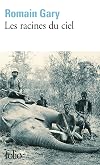
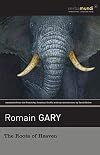
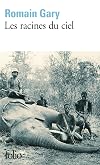
The Roots of Heaven
by Romain Gary
On This Page
Description
"The Roots of Heaven by Romain Gary follows Morel, a Frenchman who survives the Holocaust - a survival he credits to imagining elephants roaming the wilderness. Once free, he travels to French Equatorial Africa with the aim of saving his beloved elephants from being hunted and killed for meat and ivory. Realizing his more conventional tactics are not eliciting a response, however, he turns militant, and the story takes a dark turn. This novel examines the corrosive force of human show more desensitization, and it is one of the first classic ecological novels of our time." -- show lessTags
Recommendations

































Member Recommendations
Member Reviews
"Ever since dawn the track had followed the hillside across a tangle of bamboos and elephant grass in which the horse and rides sometimes disappeared entirely; then the Jesuit's head would reappear above the yellow sea, with his big bony nose set above virile and smiling lips, and with those piercing eyes that carried in them far more suggestion of limitless horizons than of the pages of a breviary."
Thus opens Romain Gary's brilliant novel of passion and freedom; the passion of a man, Morel, for the freedom of elephants in equatorial Africa, and the passion for freedom of the natives led by a charismatic leader, Waitari, but above all the land where their passions and dreams exist, a place of limitless horizons and a beauty that is show more captured in the supremely engaging prose of Romain Gary.
At the heart of the story we find Morel and his passion for saving the elephants who are being killed by ivory hunters and tourists and the natives. The demonstration of his value of life lies at the heart of Gary’s novel. Its major expression can be found in the shape of African elephants as “life’s most beautiful and noble manifestations". The apparent theme of The Roots of Heaven is the protection of the African elephants; "Men are dying to preserve a certain splendor of life. Call it freedom, or dignity . . . They are dying to preserve a certain natural splendor." (p 60)
Throughout the whole novel, the motive of the African elephant symbolizing freedom is perpetually instilled in the reader. For instance, Morel claims in his petition against elephant hunting, that it's "time to show that we are capable of preserving this gigantic, clumsy, natural splendour which still lives in our midst . . . that there is still room among us for such a freedom”. The idea is repeated in many variations. And it is supported by the wisdom of the old pathfinder Idriss who explains that “when elephants exist, there is freedom”. But it is also a kind of metaphor for the memory of the holocaust that less than a decade earlier had affected so many including Morel himself who had been interned in a Concentration Camp. He first dreams of an idea that has its roots in the utmost individual oppression while in solitary confinement: “Three and a half feet by five, so not a hope of lying down — there were moments when I felt like banging my head against the wall to try and get out into fresh air” This is central to Morel's being, yet the absolute materialism of the concrete cell disappears behind the image of elephants.
With enemies on every side the elephants have no one to fight for them, that is until Morel takes up their cause and makes it his own. Midway through the novel Morel comments that "it was essential to attack the root of the problem, the protection of nature." Peer Qvist, one of several supporting characters that add depth to the story, responds, "Islam calls that 'the roots of heaven' and to the Mexican Indians it is the 'tree of life'--the thing that makes both of them fall on their knees and raise their eyes and beat their tormented breasts. . . Our needs--for justice, for freedom and dignity--are roots of heaven that are deeply embedded in our hearts, but of heaven itself men know nothing but the gripping roots . . ." (p 176)
Morel was not alone, he attracted other outlaws like Korotoro, a famous robber, but he most impressed the leader of the Oules, called Waitari. At the same time Waitari was impressed he would disparage Morel calling him "a pathetic idealist". Waitari, like Kenyatta and other tribal leaders across Africa, was well-educated and full of passion to lead his people. He said, "I want our voice to be heard in Asia, in Soviet Russia, in America, even in France . . . I am not speaking to the Oules." (p 107)
There is also the theme of political manipulation and the impact of public opinion. An American journalist and opinion maker, Ornando, represents all that is worst in that regard and, for better or worse, is of concern to the French colonial authority because he may sway American public opinion in favor of Morel. Throughout the novel characters and events reflect human nature. An undertone of nihilism surrounds the African nationalist movement while others try to hide the struggles for decolonization. Morel seems to exist beyond the petty bickering, in a sense his idealism and charisma makes him a larger than life character.
Perhaps Morel's struggle and much of the meaning of the novel is summed up in this passage:
"The fight to the death between men frustrated by a more and more enslaved or acquiescent existence, and the last and greatest live in image of liberty that still existed on earth, was being played our continuously day by day in the African forest.
But whatever the difficulties he was facing, he refused to compromise: it was essential that man should shoulder on his difficult road a supplementary burden, encumber himself with the ancient giants."
The Roots of Heaven demonstrates both the passion of one man and the passion of humanity for freedom in life and beyond. Accomplishing this requires concern for self, family, culture, and nature --encompassing the world around us. show less
Thus opens Romain Gary's brilliant novel of passion and freedom; the passion of a man, Morel, for the freedom of elephants in equatorial Africa, and the passion for freedom of the natives led by a charismatic leader, Waitari, but above all the land where their passions and dreams exist, a place of limitless horizons and a beauty that is show more captured in the supremely engaging prose of Romain Gary.
At the heart of the story we find Morel and his passion for saving the elephants who are being killed by ivory hunters and tourists and the natives. The demonstration of his value of life lies at the heart of Gary’s novel. Its major expression can be found in the shape of African elephants as “life’s most beautiful and noble manifestations". The apparent theme of The Roots of Heaven is the protection of the African elephants; "Men are dying to preserve a certain splendor of life. Call it freedom, or dignity . . . They are dying to preserve a certain natural splendor." (p 60)
Throughout the whole novel, the motive of the African elephant symbolizing freedom is perpetually instilled in the reader. For instance, Morel claims in his petition against elephant hunting, that it's "time to show that we are capable of preserving this gigantic, clumsy, natural splendour which still lives in our midst . . . that there is still room among us for such a freedom”. The idea is repeated in many variations. And it is supported by the wisdom of the old pathfinder Idriss who explains that “when elephants exist, there is freedom”. But it is also a kind of metaphor for the memory of the holocaust that less than a decade earlier had affected so many including Morel himself who had been interned in a Concentration Camp. He first dreams of an idea that has its roots in the utmost individual oppression while in solitary confinement: “Three and a half feet by five, so not a hope of lying down — there were moments when I felt like banging my head against the wall to try and get out into fresh air” This is central to Morel's being, yet the absolute materialism of the concrete cell disappears behind the image of elephants.
With enemies on every side the elephants have no one to fight for them, that is until Morel takes up their cause and makes it his own. Midway through the novel Morel comments that "it was essential to attack the root of the problem, the protection of nature." Peer Qvist, one of several supporting characters that add depth to the story, responds, "Islam calls that 'the roots of heaven' and to the Mexican Indians it is the 'tree of life'--the thing that makes both of them fall on their knees and raise their eyes and beat their tormented breasts. . . Our needs--for justice, for freedom and dignity--are roots of heaven that are deeply embedded in our hearts, but of heaven itself men know nothing but the gripping roots . . ." (p 176)
Morel was not alone, he attracted other outlaws like Korotoro, a famous robber, but he most impressed the leader of the Oules, called Waitari. At the same time Waitari was impressed he would disparage Morel calling him "a pathetic idealist". Waitari, like Kenyatta and other tribal leaders across Africa, was well-educated and full of passion to lead his people. He said, "I want our voice to be heard in Asia, in Soviet Russia, in America, even in France . . . I am not speaking to the Oules." (p 107)
There is also the theme of political manipulation and the impact of public opinion. An American journalist and opinion maker, Ornando, represents all that is worst in that regard and, for better or worse, is of concern to the French colonial authority because he may sway American public opinion in favor of Morel. Throughout the novel characters and events reflect human nature. An undertone of nihilism surrounds the African nationalist movement while others try to hide the struggles for decolonization. Morel seems to exist beyond the petty bickering, in a sense his idealism and charisma makes him a larger than life character.
Perhaps Morel's struggle and much of the meaning of the novel is summed up in this passage:
"The fight to the death between men frustrated by a more and more enslaved or acquiescent existence, and the last and greatest live in image of liberty that still existed on earth, was being played our continuously day by day in the African forest.
But whatever the difficulties he was facing, he refused to compromise: it was essential that man should shoulder on his difficult road a supplementary burden, encumber himself with the ancient giants."
The Roots of Heaven demonstrates both the passion of one man and the passion of humanity for freedom in life and beyond. Accomplishing this requires concern for self, family, culture, and nature --encompassing the world around us. show less
This is my second book by Romain Gary and I really enjoy his writing. This book, written in 1956, is a post war book that examines what it takes to survive. This is a tale of Morel, a French dentist that has come to French Equatorial Africa to campaign for the elephants which are in danger of extinction. This is shortly after WWII, colonialism is reaching its end in Africa and the people of Africa are seeking independence. We have various characters; missionaries, anthropologists, prostitutes, gun runners, hunters, deserters. Morel is considered crazy by most but he also rises to legendary status. He is hero, traitor, and dangerous and a tool to be used by others. Many questions arose for me while reading this book. Such questions as, show more do we have to sacrifice nature for development? If we love nature do we hate man? Those Africans seeking freedom, are they really seeking freedom or have they already been tainted by westernization. Are they sacrificing their own culture for westernization without realizing.
I loved this book a lot. There are different voices that tell this story about Morel and his campaign for elephants.
Here are some quotes I wrote down.
"weight of memories which was oppressing him in his solitude"
"move a little away from the flames in order to regain the company of the stars."
"as for Morel...Everything has been said about him, 'a man who has gone even further into loneliness than othrs.
"It seems the elephants Morel was trying to save were purely imaginary and symbolic, a parable as they say, and that the poor bastard was really defending the old human rights, the rights of man.
"The years of isolation in the depths of the jungle have no power against the tenacious hope, and that a hundred acres of land at the height of the rainy season are easier to clear than are certain intimate nooks of our soul."
"...,patience was ceasing to be a virtue and was becoming a luxury he could less and less afford."
"Islam calls that 'the roots of heaven' and to the Mexican Indian it is the 'tree of life' -- the thing that makes both of them fall on their knees and raise their eyes and beat their tormented breasts. A need for protection and company, from which obstinate people like Morel try to escape by mean of petition, fight committees, by trying to take the protection of the species in their own hands."
"our needs for justice, for freedom and dignity are roots of heaven that are deeply embedded in our hearts, but of heaven itself, men know nothing but the gripping roots."
"when you live too long you end up knowing nobody" and "where there are elephants, there I go free"
The book references that a nation must give up something of its nature for its freedom; for America it was the bison, for Russia-the wolves and for Africa, the elephant. Is that so, why does that have to be? It also mentions that a good news story (there is a lot about journalism in this book) will sell magazines such as a story about killing helpless turtles for turtle soup boost sales of the magazine but did it really effect the sale of turtle soup?
So this story will appeal to each person on a personal basis. For some it is about animal rights, for others it is about dignity and for another it is colonialism. For me, it was about survival and I was most reminded of [book:Man's Search for Meaning|4069] [author:Viktor E. Frankl|2782].
Rating: 4.75. This rating is objective, my personal experience of this book after completing it and thinking about it is probably a 5. show less
I loved this book a lot. There are different voices that tell this story about Morel and his campaign for elephants.
Here are some quotes I wrote down.
"weight of memories which was oppressing him in his solitude"
"move a little away from the flames in order to regain the company of the stars."
"as for Morel...Everything has been said about him, 'a man who has gone even further into loneliness than othrs.
"It seems the elephants Morel was trying to save were purely imaginary and symbolic, a parable as they say, and that the poor bastard was really defending the old human rights, the rights of man.
"The years of isolation in the depths of the jungle have no power against the tenacious hope, and that a hundred acres of land at the height of the rainy season are easier to clear than are certain intimate nooks of our soul."
"...,patience was ceasing to be a virtue and was becoming a luxury he could less and less afford."
"Islam calls that 'the roots of heaven' and to the Mexican Indian it is the 'tree of life' -- the thing that makes both of them fall on their knees and raise their eyes and beat their tormented breasts. A need for protection and company, from which obstinate people like Morel try to escape by mean of petition, fight committees, by trying to take the protection of the species in their own hands."
"our needs for justice, for freedom and dignity are roots of heaven that are deeply embedded in our hearts, but of heaven itself, men know nothing but the gripping roots."
"when you live too long you end up knowing nobody" and "where there are elephants, there I go free"
The book references that a nation must give up something of its nature for its freedom; for America it was the bison, for Russia-the wolves and for Africa, the elephant. Is that so, why does that have to be? It also mentions that a good news story (there is a lot about journalism in this book) will sell magazines such as a story about killing helpless turtles for turtle soup boost sales of the magazine but did it really effect the sale of turtle soup?
So this story will appeal to each person on a personal basis. For some it is about animal rights, for others it is about dignity and for another it is colonialism. For me, it was about survival and I was most reminded of [book:Man's Search for Meaning|4069] [author:Viktor E. Frankl|2782].
Rating: 4.75. This rating is objective, my personal experience of this book after completing it and thinking about it is probably a 5. show less
Elephants, elephants, and more elephants. This is the story of Morel, a survivor of the German concentration camps in WWII, who goes to Africa after the war to bring attention to the killing of innocent elephants. During his time in the concentration camps, he survived by imagining himself with the elephants, roaming free over the African plains. When he takes up this cause, the different factions in French colonial Africa attribute all sort of secondary motives to him - mainly equating saving the elephants to freeing Africa from French rule. Morel insists that he takes no side in these human concerns, just wants elephants to be left alone to live their lives. He attracts a following of misfits and the book tells the story of their show more cause and reactions to them through a story-teller, retelling the events which gives the book the feel of a fable or tall tale.
This book was a bit outside my normal comfort zone, but I ended up being pretty intrigued by it. It gave me a lot to think about and I enjoyed it even though it was a little weird. show less
This book was a bit outside my normal comfort zone, but I ended up being pretty intrigued by it. It gave me a lot to think about and I enjoyed it even though it was a little weird. show less
This book is excellent--intense, strong, upsetting, infuriating, and frustrating.
First published in 1956, it looks at colonialism, nationalism, and traditional lifestyles in the context of French Equatorial Africa. This is all shaped around Morel, a Frenchman who has decided to defend the elephants and thinks hunting should be banned. (All hunting--traditional, for ivory, and big game for sport.) Waitari, a French-educated Oulé and nationalist, joins his cause to reach his own ends. The tribes, speaking only dialects, don't really know much about what's going on. England has already left Sudan, so the eastern frontier is open an undefended, with arms and nationalists going back and forth. The cast of characters here is long--French, show more Oulé, Arab, American, German, Sudanese, and more.
Not an easy read, and not necessarily enjoyable. But a very very good read. And 60 years later, while some things have changed, others have changed in just the way Gary's characters said they would. show less
First published in 1956, it looks at colonialism, nationalism, and traditional lifestyles in the context of French Equatorial Africa. This is all shaped around Morel, a Frenchman who has decided to defend the elephants and thinks hunting should be banned. (All hunting--traditional, for ivory, and big game for sport.) Waitari, a French-educated Oulé and nationalist, joins his cause to reach his own ends. The tribes, speaking only dialects, don't really know much about what's going on. England has already left Sudan, so the eastern frontier is open an undefended, with arms and nationalists going back and forth. The cast of characters here is long--French, show more Oulé, Arab, American, German, Sudanese, and more.
Not an easy read, and not necessarily enjoyable. But a very very good read. And 60 years later, while some things have changed, others have changed in just the way Gary's characters said they would. show less
I really liked Romain Gary's "The Roots of Heaven" even though I found the book to be a tough, slow read. (Possibly due to translation issues, but maybe that's just the way it was written.)
The story, set in French Equatorial Africa in the waning days of colonialism follows Morel whose self-proclaimed goal is to save the elephants from extinction. What that goal means to the numerous people around him varies -- is it a political statement, a push to fight French colonialism or something more?
While the book was a somewhat difficult read for me, I found it really got me thinking and it will likely resonate with me for a long time.
The story, set in French Equatorial Africa in the waning days of colonialism follows Morel whose self-proclaimed goal is to save the elephants from extinction. What that goal means to the numerous people around him varies -- is it a political statement, a push to fight French colonialism or something more?
While the book was a somewhat difficult read for me, I found it really got me thinking and it will likely resonate with me for a long time.
Not too much remains in my head about this book, it has been 58 years, after all. But, we are in French Africa, and a man is trying to stop people from shooting elephants. It's a metaphor for our private hopes for redemption. The "Naughty Bits" are not very interesting.
There are five books that I have read in my life that I would recommend to everyone if I could and here they are.
For its impactful and insightful view on society:
"Blindness" by Jose Saramago
For its beautiful story:
"Les Miserables" by Victor Hugo
For its look into another culture (not just what Murakami shows):
"Shirobamba" by Yasushi Inoue
For its critique on outside influences:
"In Praise of Shadows" by Junichiro Tanizaki
And for ALL of the above:
"Roots of Heaven" by Romain Gary
This book is truly not to be missed in your lifetime. It will touch you in so many ways, teach you so many things, enlighten you over so many issues and really show you how difficult it is to live free of outside influence. A marvelous novel that already stands the show more test of time and will continue to do so. I can only hope that the English translation does it justice. show less
For its impactful and insightful view on society:
"Blindness" by Jose Saramago
For its beautiful story:
"Les Miserables" by Victor Hugo
For its look into another culture (not just what Murakami shows):
"Shirobamba" by Yasushi Inoue
For its critique on outside influences:
"In Praise of Shadows" by Junichiro Tanizaki
And for ALL of the above:
"Roots of Heaven" by Romain Gary
This book is truly not to be missed in your lifetime. It will touch you in so many ways, teach you so many things, enlighten you over so many issues and really show you how difficult it is to live free of outside influence. A marvelous novel that already stands the show more test of time and will continue to do so. I can only hope that the English translation does it justice. show less
Members
- Recently Added By
Lists

1001 Books You Must Read Before You Die
1,448 works; 1,133 members

Top Five Books of 2013
1,562 works; 715 members

Recommend the 20 best books you've read in the last five years
2,168 works; 601 members

Top Five Books of 2015
811 works; 241 members

1,001 BYMRBYD Concensus
723 works; 27 members

My TBR
371 works; 3 members
Talk Discussions
Past Discussions
Group Read, December 2013: The Roots of Heaven in 1001 Books to read before you die (January 2014)
Author Information

Awards and Honors
Awards
Distinctions
Series
Belongs to Publisher Series
Work Relationships
Common Knowledge
- Canonical title
- The Roots of Heaven ; The Roots of Heaven
- Original title
- Les racines du ciel
- Alternate titles
- The Roots of Heaven
- Original publication date
- 1956 (original French) (original French); 1957 (English translation) (English translation)
- People/Characters
- Morel; Minna; Habib; Saint-Denis
- Important places
- Chad; French Equatorial Africa
- Related movies
- The Roots of Heaven (1958 | IMDb)
- Dedication
- With gratitude to
Henri Hoppenot
Jean De Lipkowski
Leigh Goodman and
Roger Saint-Aubyn
this book is dedicated - First words
- Ever since dawn the track had followed the hillside across a tangle of bamboos and elephant grass in which horse and rider sometimes disappeared entirely; then the Jesuit's head would reappear above the yellow sea, with his b... (show all)ig bony nose set above virile and smiling lips, and with those piercing eyes that carried in them far more suggestion of limitless horizons than of the pages of a breviary.
Nearly all the people in this novel are a little crazy. (Editors' Preface)
The Roots of Heaven was written between 1953 and 1954. (Introduction) - Last words
- (Click to show. Warning: May contain spoilers.)He was smiling.
(Click to show. Warning: May contain spoilers.)Unintentionally or not, Gary succeeds in troubling the reader about more than elephants. (Editors' Preface)
(Click to show. Warning: May contain spoilers.)Let's hope I've started a stampede. (Introduction) - Original language
- French
Classifications
Statistics
- Members
- 561
- Popularity
- 52,821
- Reviews
- 17
- Rating
- (3.97)
- Languages
- 12 — Danish, Dutch, English, French, German, Italian, Lithuanian, Polish, Portuguese, Russian, Spanish, Turkish
- Media
- Paper, Audiobook, Ebook
- ISBNs
- 27
- ASINs
- 25