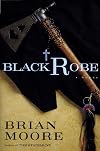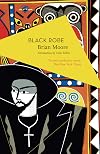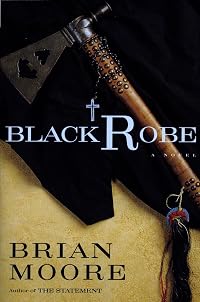
Black Robe
by Brian Moore
On This Page
Description
Jesuit Father Laforgue sets forth in the Canadian wilderness to convert the Algonkins. He travels deep into the wilderness with the Indians and is abandoned to his fate in 17th-century Canada.Tags
Recommendations




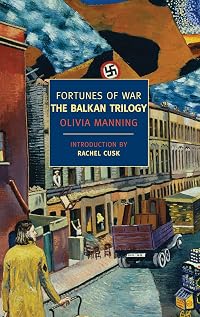
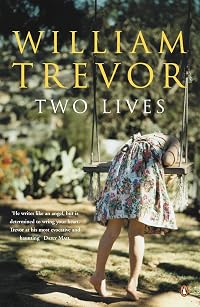


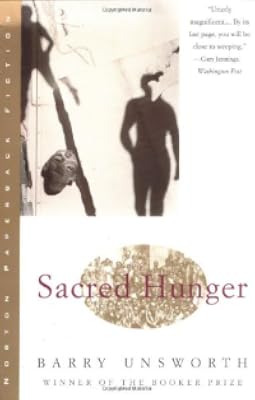
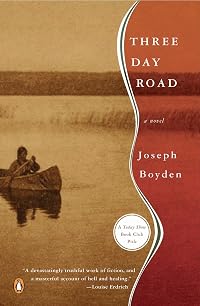


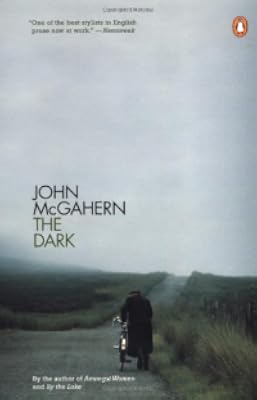
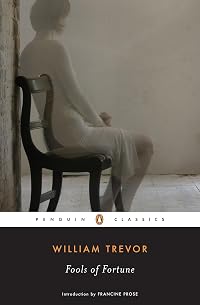
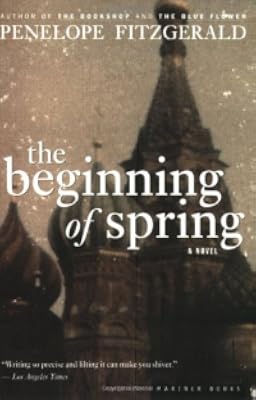
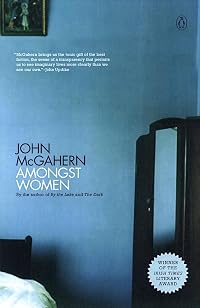










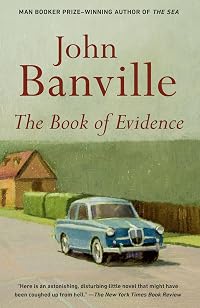

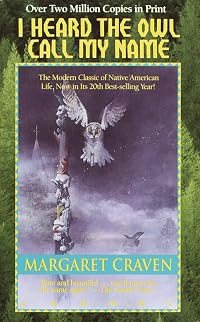
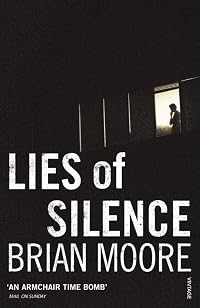
Member Recommendations

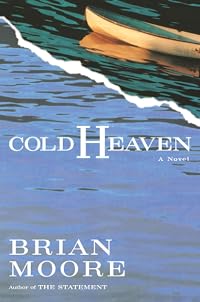
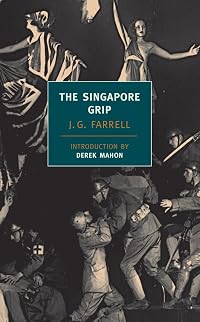
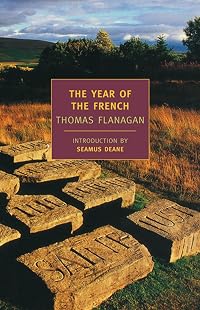
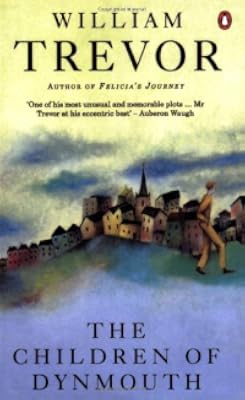
cbl_tn Similar settings and time period.
Member Reviews
An odd story that works more often than not. It tells the story of a 17th-century missionary priest and his companions as they journey into the unforgiving Canadian wilderness, encountering Algonquin, Iroquois and Huron 'savages' of various dispositions. This is right up my street, a cross between The Mission and The Last of the Mohicans. The story is well-told – a gripping adventure, even if the majesty (and brutality) of the landscape is not evoked as often as it perhaps should be, and some events are queasily gruesome. Author Brian Moore has good powers of ventriloquism, and his characters all ring true. Even the 'savages' are only called that as it is historically accurate to do so, and they act and react in believable ways. The show more culture clash between the natives and the missionaries – the natives call the priests sorcerers and 'black robes', hence the book's title – drives the reader's interest throughout.
Which makes it all the more disappointing that there are a few authorial decisions which, if not wounding the book, at least give it some hefty bruises. Moore's work on character is partially undermined by the odd decision to have the 'savages' speak crudely; I know it is an attempt to imitate the real natives' rough vernacular, but it is a valiant attempt at historical accuracy that fails. It's just too much to listen to a load of Indians calling each other stupid cunts and fuckpots and silly pricks. Similarly, there are some rather ribald sex scenes in the book, with erect members flying all over the place. In any book, this would require a reader to be onboard – if only to laugh it off. In a novel like this one, it's a heavy assault of tonal dissonance.
I did enjoy the adventure, and one line at the end of the book has given me pause when I think about my criticisms above. "Was this true baptism or a mockery?" a priest asks on page 223, agonising over the validity of the natives' mass conversion. It made me think that perhaps the book's tonal dissonance was intentional, something to compel the reader into a crisis of confidence comparable to the priest. I don't know if that was Moore's purpose, or if I'm just being an overly clever bastard, but regardless, it's not enough. If this theme had come out earlier, instead of on the second-to-last page, it might have been something. As it is, some of the book's flaws – including a rather convenient 'miracle' towards the end – mean that Black Robe is never an essential read, even if it is an interesting one. show less
Which makes it all the more disappointing that there are a few authorial decisions which, if not wounding the book, at least give it some hefty bruises. Moore's work on character is partially undermined by the odd decision to have the 'savages' speak crudely; I know it is an attempt to imitate the real natives' rough vernacular, but it is a valiant attempt at historical accuracy that fails. It's just too much to listen to a load of Indians calling each other stupid cunts and fuckpots and silly pricks. Similarly, there are some rather ribald sex scenes in the book, with erect members flying all over the place. In any book, this would require a reader to be onboard – if only to laugh it off. In a novel like this one, it's a heavy assault of tonal dissonance.
I did enjoy the adventure, and one line at the end of the book has given me pause when I think about my criticisms above. "Was this true baptism or a mockery?" a priest asks on page 223, agonising over the validity of the natives' mass conversion. It made me think that perhaps the book's tonal dissonance was intentional, something to compel the reader into a crisis of confidence comparable to the priest. I don't know if that was Moore's purpose, or if I'm just being an overly clever bastard, but regardless, it's not enough. If this theme had come out earlier, instead of on the second-to-last page, it might have been something. As it is, some of the book's flaws – including a rather convenient 'miracle' towards the end – mean that Black Robe is never an essential read, even if it is an interesting one. show less
The Jesuits really knew how to pursue suffering to the ends of the earth, in this case to isolated corners of Quebec when the first French adventurers and fur trapers were making incursions into the lands of the Algonkin, Huron and Iroquois. The clash of cultures is recounted with a sparing style. Father Laforgue is a tortured soul full of self-doubt, who comes to question the 'harvesting of souls' for God. The 'Savages' are earthy and laconic, but aware that their world is irrevocably changing as they come to covet muskets and other goods. In the author's vernacular, they also swear constantly!
Father Laforgue, a Jesuit priest, is a recent arrival to New France. After two years of language study, he is sent to join a remote mission. A group of Algonkins have been paid to guide Laforgue and a young lay assistant, Daniel, to the mission. Daniel has his own reason for making the trip. He is secretly in love with one of the young Algonkin women. Although the Algonkins have agreed to take the Normans (as they call the French) to the mission, there is a deep mistrust between the cultures, and neither side is fully aware of their failure to understand the other. Not everyone who set out on the journey will arrive at the destination.
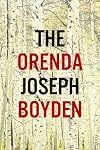
This novel is primarily a character study of Father Lafargue, although the perspective occasionally show more shifts to other characters. Lafargue experiences a crisis of faith during the journey. He isn't the same man at the end of the journey as he was at the beginning. His crisis of faith is similar to that of the Jesuit priest in Endo's Silence. This book covers the same themes as Joseph Boyden's The Orenda. Moore's preface cites the Jesuit Relations for source material, and Boyden seems to have drawn on the same source for his novel. Boyden's characters have much more depth. This is a good novel, but it suffers by comparison to both Endo and Boyden. Silence and The Orenda were both 5 star reads for me. show less
This novel is primarily a character study of Father Lafargue, although the perspective occasionally show more shifts to other characters. Lafargue experiences a crisis of faith during the journey. He isn't the same man at the end of the journey as he was at the beginning. His crisis of faith is similar to that of the Jesuit priest in Endo's Silence. This book covers the same themes as Joseph Boyden's The Orenda. Moore's preface cites the Jesuit Relations for source material, and Boyden seems to have drawn on the same source for his novel. Boyden's characters have much more depth. This is a good novel, but it suffers by comparison to both Endo and Boyden. Silence and The Orenda were both 5 star reads for me. show less
Brian Moore captures the emotional anguish of a priest in a crisis of faith surprisingly well for a journey narrative. It was well written, full of incredible metaphors and parallels that make you look past the culture clash and see, instead, the shared humanity of very different people. That being said, I read it for a class and really didn't anticipate how graphic some of the torture scenes were - it was pretty traumatizing. still a better way to spend my night than watching the grammy's, though.
Brian Moore captures the emotional anguish of a priest in a crisis of faith surprisingly well for a journey narrative. It was well written, full of incredible metaphors and parallels that make you look past the culture clash and see, instead, the shared humanity of very different people. That being said, I read it for a class and really didn't anticipate how graphic some of the torture scenes were - it was pretty traumatizing. still a better way to spend my night than watching the grammy's, though.
Black Robe is a fantastic novel. Father Lafourge is a French Jesuit in early 17th Century Canada who goes "up river" into the dark forests of Quebec. What he finds there tests his faith. According to Moore, what interested him is "the moment in which one's illusions are shattered and one has to live without the faith .. which originally sustained them." It has elements of Heart of Darkness or Werner Herzog's Aguirre, the Wrath of God. It is both realistic and historically accurate, but also dreamlike and transcendent.
Interesting book. I read this as part of my research for a book I am writing which includes some indigenous peoples of Canada. It seems to go out of it's way to portray native peoples as "savages" a term that is used throughout. I believe it is based on memoirs of a 17th Century French missionary and that might account for some of what seems to be a biased viewpoint. Having said that I'm sure much of what is in the book is accurate. I understand the biased veiwpoint a Jesuit would journal. After all these missionaries had been sent to win over heathen souls.
Members
- Recently Added By
Lists

TML 200 Best Books 1950-1999
202 works; 10 members

New Canadian Library
191 works; 7 members

Fiction about missionaries
34 works; 5 members

Canadian Historical Fiction 🇨🇦
157 works; 8 members

The Modern Library (The Two Hundred Best Novels....
202 works; 1 member
Author Information

31+ Works 5,937 Members
Brian Moore, 1921 - 1999 Brian Moore was born in Belfast on August 25, 1921 to Doctor James Bernard Moore and Eileen McFadden. He attended St. Malachy's College, a Catholic school, where the students where beaten on the hands daily. He left the college without a School Leaving Certificate because he failed Math. In 1941, a bomb damaged the family show more home, so they moved to a house on Camden Street. A year later, his father died. In 1942, he joined the National Fire Service, but knew that he wanted to be a writer. Moore knew some French, so he was hired by the British Ministry of War Transport to go as a port official to Algiers, North Africa. Afterwards, he traveled to Italy, France, and after the war, Warsaw (1945), Spain, Canada (1948), the United States and England, finally settling in California. Moore immigrated to Canada in 1948, where he worked as a proofreader and reporter for the Montreal Gazette. In 1951, he published his first story in the Northern Review and married Jacqueline Sirois, a fellow journalist. His only child, Michael, was born on November 24, 1953. He split with his wife in 1964 and then married Jean Denney, who he stayed married to until his death. Moore published "The Lonely Passion of Judith Hearne" (1955), "The Feast of Lupercal" (1957) and "The Emperor of Ice Cream" (1966), which is his most autobiographical novel. He recounts his school experiences, as well as what is was like during the bombing. In the 1990's, he wrote political fables and four novels. "Lies of Silence" is a thriller set in Belfast and was a more political statement than the previous novels. It was nominated for the Booker Prize and was his bestselling book. Several of his books were made into films such as "The Luck of Ginger Coffey," "Catholics," "The Lonely Passion of Judith Hearne" and "The Temptation of Eileen Hughes" was adapted for television. Moore received many awards, which included the Governor General's Award in 1961 for "The Luck of Ginger Coffey" and again in 1975 for "The Great Victorian Collection," which also won the James Tait Black Award in England. He was short listed for the Booker Prize in 1987 for "The Colour of Blood" and again in 1990 for "Lies of Silence." In July 1987, he conferred an honorary doctorate by Queen's University, Belfast. His film "Catholics" received the W.H. Smith Award in 1973 and the Peabody Award in 1974. In 1999, Brian Moore died at his home in Malibu, California. (Bowker Author Biography) show less
Awards and Honors
Series
Belongs to Publisher Series
Work Relationships
Has the adaptation
Is abridged in
Common Knowledge
- Canonical title
- Black Robe
- Original title
- Black Robe
- Original publication date
- 1985
- People/Characters
- Father Jean Laforge; Daniel Davost
- Important places
- Canada; Québec, Canada; Ontario, Canada
- Related movies
- Black Robe (1991 | IMDb)
- Original language
- English
Classifications
- Genres
- Fiction and Literature, General Fiction, Historical Fiction
- DDC/MDS
- 813.54 — Literature & rhetoric American literature in English American fiction in English 1900-1999 1945-1999
- LCC
- PR9199.3 .M617 .B5 — Language and Literature English English Literature English literature: Provincial, local, etc.
- BISAC
Statistics
- Members
- 624
- Popularity
- 46,674
- Reviews
- 12
- Rating
- (3.82)
- Languages
- 5 — Danish, Dutch, English, French, German
- Media
- Paper, Ebook
- ISBNs
- 22
- ASINs
- 7