Ending Up
by Kingsley Amis
On This Page
Description
"Ending Up is a grotesque and memorable dance of death, full of bickering, bitching, backstabbing, drinking (of course), and idiocy of all sorts. It is a book about dying people and about a dying England, clinging to its memories of greatness as it succumbs to terminal decay. Everyone wants a comfortable place to die, and Kingsley Amis's characters have found it in Happeny Tuppeny Cottage, out in the country, where assorted septuagenarians have come together to see one another out the door show more of life. There's grotesque Adela, whose sole passion is her cheapness; her cursing and scoffing brother Brigadier Bernard Bastable, always strategizing a new retreat to the bathroom before sallying forth to play some especially nasty practical joke; Shorty, the servant, who years ago had a fling with the brigadier in the barracks and now organizes his daily rounds from woodpile to wardrobe around a trail of hidden bottles; George Zeyer, the distinguished professor of history, bedridden and helpless to articulate his still- coherent thoughts; and Marigold, who slowly but surely is forgetting it all. And now it is Christmas. Children and grandchildren are coming to visit their ailing elders. They don't know what lies in store before the story ends. None of us do"-- show lessTags
Recommendations































Member Reviews
Many novelists take to writing about elderly characters when they become old themselves, but Amis was barely in his fifties when he produced this wonderfully grim little black comedy about an ill-assorted group of elderly people who find themselves sharing a house. Of course, he's completely in his element dealing with the stupendously trivial irritations of daily life (who gets to read the Telegraph first, and so on), and only Amis could get away with the grand guignol closing scene. Very funny, in a depressing sort of way, and completely English.
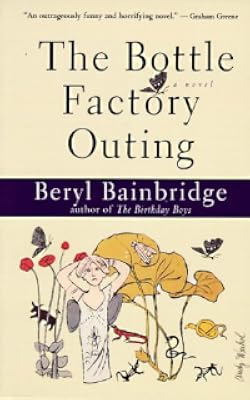
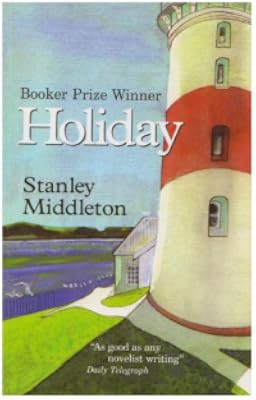
I'm not quite sure how this rather minor effort ended up on the 1974 Booker shortlist: it must have been a lean year for the judges, or a very indecisive panel. The prize that year was shared show more by Nadine Gordimer and Stanley Middleton (an odd couple, if ever there was one...). Beryl Bainbridge's Bottle factory outing was on the shortlist as well. show less
I'm not quite sure how this rather minor effort ended up on the 1974 Booker shortlist: it must have been a lean year for the judges, or a very indecisive panel. The prize that year was shared show more by Nadine Gordimer and Stanley Middleton (an odd couple, if ever there was one...). Beryl Bainbridge's Bottle factory outing was on the shortlist as well. show less
I’m astounded by how much I enjoyed this short little work.
Amis’ prose manages to steer the plot away from the obnoxiously mediocre trite found in those awful comedies good ol’ Bobby De Niro has decided to star in. You know the kind that bases its entire structure around old people acting badly, the kind where its presupposed that the audience will be shocked by the elderly acting puerile and all of the comedy is found by virtue of that alone. Of course this book is filled with such moments, but the emotional underbelly that is sustained throughout the work adds a wonderful balance that makes sure such antics do not become repetitive. The best thing is that this emotional underbelly isn’t the sickly sentimental variety, it only show more begins to rear its head as the book progresses and clarified some of the characters’ motivations. The book manages to achieve the heart and authenticity reminiscent of something like an episode of the Last of the Summer Wine, as well as possessing the dilapidated aesthetic of Withnail and I.
There are elements in the work that really separate it from other works that attempt to be comedic, there are some moments in the book that garner genuine and audible laughter (more than just a mere grin). I really think Amis was quite daring in some of the places he took the plot, but I won’t spoil that since the pure shock value really intensifies such moments. Such moments transcend the hijinks that these folks get up to, those that have read the work will know what I mean.
I could not recommend this work any higher, it achieves exactly what you would expect from such a work and manages to stretch out the limits of this seemingly innocuous and restrictive genre. I’m surprised it isn’t uttered in the same breath as Lucky Jim more often. In a similar fashion to that work, the book’s enjoyment certainly accelerates as it goes on and reaches its peak by the end. show less
Amis’ prose manages to steer the plot away from the obnoxiously mediocre trite found in those awful comedies good ol’ Bobby De Niro has decided to star in. You know the kind that bases its entire structure around old people acting badly, the kind where its presupposed that the audience will be shocked by the elderly acting puerile and all of the comedy is found by virtue of that alone. Of course this book is filled with such moments, but the emotional underbelly that is sustained throughout the work adds a wonderful balance that makes sure such antics do not become repetitive. The best thing is that this emotional underbelly isn’t the sickly sentimental variety, it only show more begins to rear its head as the book progresses and clarified some of the characters’ motivations. The book manages to achieve the heart and authenticity reminiscent of something like an episode of the Last of the Summer Wine, as well as possessing the dilapidated aesthetic of Withnail and I.
There are elements in the work that really separate it from other works that attempt to be comedic, there are some moments in the book that garner genuine and audible laughter (more than just a mere grin). I really think Amis was quite daring in some of the places he took the plot, but I won’t spoil that since the pure shock value really intensifies such moments. Such moments transcend the hijinks that these folks get up to, those that have read the work will know what I mean.
I could not recommend this work any higher, it achieves exactly what you would expect from such a work and manages to stretch out the limits of this seemingly innocuous and restrictive genre. I’m surprised it isn’t uttered in the same breath as Lucky Jim more often. In a similar fashion to that work, the book’s enjoyment certainly accelerates as it goes on and reaches its peak by the end. show less
British author Kingsley Amis’ 1973 novel of two old women and three old men living out their last days in Tuppenny-hapenny Cottage nestled among the trees and fields in a delightful English countryside. Sound quaint and perhaps charming? It is anything but quaint and charming – for the most part these five septuagenarians – Adela, the one squarely in charge, her brother, former army officer, Bernard, Bernard’s past sexual partner, a servant nicknamed Shorty, Marigold, an oldster becoming progressively more senile and finally George, an emeritus history professor who has suffered a serious stroke – are at each others' throats.
But being well-mannered modern day Brits, their hostility seethes beneath an ironic, sarcastic, show more understated and occasionally humorous surface, especially Bernard, who is both the most malicious and the most interesting of the five, a stark fact that speaks volumes about the nature of fiction. Wisdom, anyone? Hardly in evidence at Tuppenny-hapenny. In support of this observation, here are several quotes from Greco-Roman Stoic philosopher, the emperor Marcus Aurelius, coupled with incidents from the book:
“Dwell on the beauty of life. Watch the stars, and see yourself running with them.”
Over 200 pages with numerous references to listening to the wireless, taking time out to smoke, spending time planning one’s alcohol consumption and, of course, zeniths of zeniths, ultimate elixir to allay frustration and boredom, imbibing booze. However, must unfortunately, not one reference to the beauty of the natural world or the beauty of any of the arts or literature. Sure, somewhat begrudgingly, there’s singing a few songs together on Christmas day, but other than this thin musical gruel, plodding through life devoid of aesthetic experience.
“The best revenge is to be unlike him who performed the injury.”
Bernard gets his kicks and jollies from making life miserable for everyone else, not only Adela, Shorty, Marigold and George, but Marigold’s cat and George’s old dog. Damn those two for owning animals they actually have affection for and love tenderly! At one point Bernard soaks Marigold’s cat with his squirt-gun to frame Shorty and at another time sets off a stink bomb to frame George’s dog. Thus, in a way, we have a tale of caution. It is as if Kingsley Amis is asking readers of his novel to consider extracting a kind of Marcus Aurelius-style revenge by not turning out to be anything like Bernard.
“Accept the things to which fate binds you, and love the people with whom fate brings you together, but do so with all your heart.”
Turns out, the bedridden stroke-victim is the one who gracefully accepts his fate and expresses his gratitude for those gifts life does offer to him. We read George’s words of thanks for his newly restored ability to speak fluently, words he speaks whilst downstairs (he has to be carried from his bedroom) conversing with others in the parlor: “You’ve no idea how marvelous it feels. I don’t mind being half paralyzed now, except that it’s a nuisance to other people. The gift of language us a very precious thing.” And, almost predictably, George’s heartfelt sentiments are received with sarcasm by, you guessed it, our former military officer, ultimate black-bile stinker and enjoyer of others' misery - Bernard.
“You are a little soul carrying about a corpse, as Epictetus used to say.”
This is secular 1972 England. Religion plays little or no part in the lives of these old people. Unfortunately, along with religion, the spiritual dimension is conspicuously absent, one of the tragedies of our modern world – the experience of the inner light, the eternal aspect of our human nature linking us with the cosmos is either a very minor cord or an entirely forgotten cord. And the alternative? Habitually asking that most modern of questions: When can I have my next drink?
The humor in Ending Up arises naturally from the characters and the action; nothing struck me as forced to produce a laugh. Similar to B. S. Johnson’s House Mother Normal, I highly recommend this Kingsley Amis novel since odds are we will all live to see old age and a little bit of knowledge of this subject via literature isn’t a bad thing. show less
British author Kingsley Amis’ 1973 novel of two old women and three old men living out their last days in Tuppenny-hapenny Cottage nestled among the trees and fields in a delightful English countryside. Sound quaint and perhaps charming? It is anything but quaint and charming – for the most part these five septuagenarians – Adela, the one squarely in charge, her brother, former army officer, Bernard, Bernard’s past sexual partner, a servant nicknamed Shorty, Marigold, an oldster becoming progressively more senile and finally George, an emeritus history professor who has suffered a serious stroke – are at each others' throats.
But being well-mannered modern day Brits, their hostility seethes beneath an ironic, sarcastic, show more understated and occasionally humorous surface, especially Bernard, who is both the most malicious and the most interesting of the five, a stark fact that speaks volumes about the nature of fiction. Wisdom, anyone? Hardly in evidence at Tuppenny-hapenny. In support of this observation, here are several quotes from Greco-Roman Stoic philosopher, the emperor Marcus Aurelius, coupled with incidents from the book:
“Dwell on the beauty of life. Watch the stars, and see yourself running with them.”
Over 200 pages with numerous references to listening to the wireless, taking time out to smoke, spending time planning one’s alcohol consumption and, of course, zeniths of zeniths, ultimate elixir to allay frustration and boredom, imbibing booze. However, must unfortunately, not one reference to the beauty of the natural world or the beauty of any of the arts or literature. Sure, somewhat begrudgingly, there’s singing a few songs together on Christmas day, but other than this thin musical gruel, plodding through life devoid of aesthetic experience.
“The best revenge is to be unlike him who performed the injury.”
Bernard gets his kicks and jollies from making life miserable for everyone else, not only Adela, Shorty, Marigold and George, but Marigold’s cat and George’s old dog. Damn those two for owning animals they actually have affection for and love tenderly! At one point Bernard soaks Marigold’s cat with his squirt-gun to frame Shorty and at another time sets off a stink bomb to frame George’s dog. Thus, in a way, we have a tale of caution. It is as if Kingsley Amis is asking readers of his novel to consider extracting a kind of Marcus Aurelius-style revenge by not turning out to be anything like Bernard.
“Accept the things to which fate binds you, and love the people with whom fate brings you together, but do so with all your heart.”
Turns out, the bedridden stroke-victim is the one who gracefully accepts his fate and expresses his gratitude for those gifts life does offer to him. We read George’s words of thanks for his newly restored ability to speak fluently, words he speaks whilst downstairs (he has to be carried from his bedroom) conversing with others in the parlor: “You’ve no idea how marvelous it feels. I don’t mind being half paralyzed now, except that it’s a nuisance to other people. The gift of language us a very precious thing.” And, almost predictably, George’s heartfelt sentiments are received with sarcasm by, you guessed it, our former military officer, ultimate black-bile stinker and relisher of others' misery - Bernard.
“You are a little soul carrying about a corpse, as Epictetus used to say.”
This is secular 1972 England. Religion plays little or no part in the lives of these old people. Unfortunately, along with religion, the spiritual dimension is conspicuously absent, one of the tragedies of our modern world – the experience of the inner light, the eternal aspect of our human nature linking us with the cosmos is either a very minor cord or an entirely forgotten cord. And the alternative? Habitually asking that most modern of questions: When can I have my next drink?
Final note: this is my second Kingsley Amis novel. I read but did not enjoy his One Fat Englishman, finding any stabs at humor forced and artificial. In contradistinction, the humor in Ending Up arises naturally from the characters and the action; nothing struck me as forced to produce a laugh. Similar to B. S. Johnson’s House Mother Normal, I highly recommend this Kingsley Amis novel since odds are we will all live to see old age and a little bit of knowledge of this subject via literature isn’t a bad thing. show less
A group of penniless old codgers pass their sunset years in a small cottage at the edge of town. As to be expected of the ol' Kingsley A, nary a sympathetic character in sight, and an ignonimous fate awaits all. Entertaining enough.
Classic Kingsley Amis with ultimate grumpy old man
Did not finish, took too long to get going.
Members
- Recently Added By
Lists

Fiction Featuring Cranky, Eccentric Old Folks
80 works; 35 members

Booker Prize
491 works; 62 members

the old and the restless
62 works; 14 members

Man Booker Prize Longlist 1974
5 works; 1 member

Books Read in 2017
4,249 works; 129 members

Booker Prize Shortlist: Titles Not Yet Read
161 works; 4 members

Best books made into television
66 works; 4 members

Reading LIst
648 works; 1 member
Author Information

104+ Works 19,739 Members
Kingsley Amis is generally considered one of the "angry young men" of the 1950s. He was born in London in 1922 and educated at the City of London School. He received a degree in English language and literature from St. John's College, Oxford, in 1947. Until 1961 Amis lectured in English at University College, Swansea, and for the following two show more years at Cambridge. In 1947 Amis published his first collection of poems, Bright November. Frame of Mind followed in 1953 and Poems: Fantasy Portraits in 1954. His first novel, Lucky Jim (1954), established his reputation as a writer. He followed with That Uncertain Feeling (1956), and I Like It Here (1958). A longtime James Bond devotee, Amis wrote a James Bond adventure after the death of Ian Fleming in 1964. Amis's study of the famous spy was titled The James Bond Dossier (1965). Amis received the Booker Prize for the Old Devils (1986). Amis's later works include Memoirs (1990), and The King's English, a collection of essays on the craft of writing well. Amis was knighted in 1990. He died in 1995. (Bowker Author Biography) show less
Awards and Honors
Awards
Notable Lists
Series
Belongs to Publisher Series
Common Knowledge
- Canonical title
- Ending Up
- Original publication date
- 1974
- Important places
- England, UK; Tupenny-Hapenny Cottage
- Important events
- Christmas
- Related movies
- Ending Up (1989 | IMDb)
- Dedication
- To Betty and Paul Fussell.
- First words
- 'How's your leg this morning, Bernard?' asked Adela Bastable.
- Last words
- (Click to show. Warning: May contain spoilers.)Because it was a face he knew only from photographs and the dimmest of infantile memory, he did not at once recognize it.
- Original language
- English
Classifications
Statistics
- Members
- 332
- Popularity
- 96,134
- Reviews
- 7
- Rating
- (3.64)
- Languages
- Dutch, English, French
- Media
- Paper, Audiobook, Ebook
- ISBNs
- 19
- ASINs
- 6