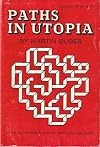
Paths in Utopia
by Martin Buber
On This Page
Description
One of the outstanding religious philosophers of the century here provides an account of the growth of the Utopian ideal from the perspective of a critical exposition of Marxist theory and the practice of Lenin.Tags
Recommendations




































Member Reviews
From Wikipedia:
"Martin Buber (8 February 1878 – 13 June 1965) was an Austrian-Jewish philosopher, translator, and educator, whose work centered on theistic ideals of religious consciousness, interpersonal relations, and community. Buber's evocative, sometimes poetic writing style has marked the major themes in his work: the retelling of Hasidic tales, Biblical commentary, and metaphysical dialogue. A cultural Zionist, Buber was active in the Jewish and educational communities of Germany and Israel. Until 1948 he was also a staunch supporter of a binational solution in Palestine, instead of a two-state solution. After 1948, with the establishment of the Jewish state of Israel, he reluctantly supported the two-state solution as a valid show more expression of Jewish self-determination. His influence extends across the humanities, particularly in the fields of social psychology, social philosophy, and religious existentialism." show less
"Martin Buber (8 February 1878 – 13 June 1965) was an Austrian-Jewish philosopher, translator, and educator, whose work centered on theistic ideals of religious consciousness, interpersonal relations, and community. Buber's evocative, sometimes poetic writing style has marked the major themes in his work: the retelling of Hasidic tales, Biblical commentary, and metaphysical dialogue. A cultural Zionist, Buber was active in the Jewish and educational communities of Germany and Israel. Until 1948 he was also a staunch supporter of a binational solution in Palestine, instead of a two-state solution. After 1948, with the establishment of the Jewish state of Israel, he reluctantly supported the two-state solution as a valid show more expression of Jewish self-determination. His influence extends across the humanities, particularly in the fields of social psychology, social philosophy, and religious existentialism." show less
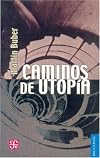
CAMINOS DE UTOPÍA
Caminos de utopía es una de las obras más importantes de Martin Buber. Su título original es Pfade in Utopia y se editó en alemán en 1950, por Verlag Lambert Schneider, en Heidelberg; su primera edición española fue en 1955, por el Fondo de Cultura Económica, en México (ISBN 950-557-105-4).
En él se hace una revalorización del socialismo utópico, se expone una modalidad de socialismo cooperativo y comunitario, y se explica el fracaso del movimiento socialista en conformar una sociedad nueva. Según sostiene Buber, el socialismo podrá ser edificado sobre la base de instituciones comunitarias preexistentes, cooperativas, comunas rurales, etc.
Para Buber un socialismo genuino no es posible sin libertad de show more asociación, descentralización, federalismo y autonomía de las organizaciones (socialismo libertario). Además, se hace un análisis del cooperativismo en la experiencia israelí. show less
Caminos de utopía es una de las obras más importantes de Martin Buber. Su título original es Pfade in Utopia y se editó en alemán en 1950, por Verlag Lambert Schneider, en Heidelberg; su primera edición española fue en 1955, por el Fondo de Cultura Económica, en México (ISBN 950-557-105-4).
En él se hace una revalorización del socialismo utópico, se expone una modalidad de socialismo cooperativo y comunitario, y se explica el fracaso del movimiento socialista en conformar una sociedad nueva. Según sostiene Buber, el socialismo podrá ser edificado sobre la base de instituciones comunitarias preexistentes, cooperativas, comunas rurales, etc.
Para Buber un socialismo genuino no es posible sin libertad de show more asociación, descentralización, federalismo y autonomía de las organizaciones (socialismo libertario). Además, se hace un análisis del cooperativismo en la experiencia israelí. show less
Jul 30, 2024Spanish
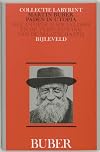
Overzicht van de klassieke utopische denkers. Uitermate boeiend
Oct 3, 2010Dutch
Ratings
Members
- Recently Added By
Lists

Bibliography of New World Utopias by Paul Kagan
53 works; 2 members
Author Information

246+ Works 12,974 Members
Martin Buber was born in Vienna, the son of Solomon Buber, a scholar of Midrashic and medieval literature. Martin Buber studied at the universities of Vienna, Leipzig, Zurich, and Berlin, under Wilhelm Dilthey and Georg Simmel. As a young student, he joined the Zionist movement, advocating the renewal of Jewish culture as opposed to Theodor show more Herzl's political Zionism. At age 26 he became interested in Hasidic thought and translated the tales of Nahman of Bratslav. Hasidism had a profound impact on Buber's thought. He credited it as being the inspiration for his theories of spirituality, community, and dialogue. Buber is responsible for bringing Hasidism to the attention of young German intellectuals who previously had scorned it as the product of ignorant eastern European Jewish peasants. Buber also wrote about utopian socialism, education, Zionism, and respect for the Palestinian Arabs, and, with Franz Rosenzweig, he translated the Bible. He was appointed to a professorship at the University of Frankfurt in 1925, but, when the Nazis came to power, he received an appointment at the Hebrew University of Jerusalem. Buber died in 1965. (Bowker Author Biography) show less
Some Editions
Series
Belongs to Publisher Series
Common Knowledge
- Original title
- Paths in Utopia
- Original publication date
- 1950
- Original language
- German
Classifications
- Genres
- Nonfiction, Philosophy, Religion & Spirituality, History, Politics and Government, General Nonfiction
- DDC/MDS
- 335.02 — Society, government, & culture Economics Socialism and related systems Utopian systems and schools
- LCC
- HX36 .B8413 — Social sciences Socialism. Communism. Anarchism Socialism. Communism. Anarchism
- BISAC
Statistics
- Members
- 203
- Popularity
- 161,050
- Reviews
- 3
- Rating
- (3.86)
- Languages
- 5 — Dutch, English, German, Italian, Spanish
- Media
- Paper
- ISBNs
- 8
- ASINs
- 8