On This Page
Tags
Recommendations









Member Recommendations
Member Reviews
I had no idea what to expect from this, and even a third of the way in I hadn't quite pegged it, primarily because it doesn't fit into our neat little genre boxes.
I thought it was quite Diana Wynne Jonesian to begin: a feisty heroine, saddle by elders with an impossible task, prone to grumbling, and a wonderful, light, contemporary way with dialogue (it's amazing to me to read various writings from the past, whether 50 years ago or hundreds, and see how leaden and unreadable some prose is, and how alive and contemporary other prose managed to be).
This quickly changed, as very unpleasant events occurred which DWJ would scarcely have hinted at in middle-grade fiction. My best box for this book would be it's a Fantasy version (and barely show more fantasy, more like alternate history--there aren't wizards casting spells and such) of the Sexy Historical Lady subgenre (e.g. Angelique, or Forever Amber). I don't know if that's an actual subgenre, but it may as well be.
Gaskell has imagined a world which presumably never existed--a South America not remotely like the one we have together, with extant dinosaurs and other strange beasts, a nearby Atlantis just offshore, and has given us a travelogue from the perspective of her heroine, who starts young and innocent, but grows up quickly due to trials and tribulations.
(If you're ever stuck for an idea for a fantasy novel, really, just grab some other genre and think of a fantasy equivalent: Harry Potter is the fantasy boarding school book, Thraxas is the fantasy detective story, etc. ) So this is fantasy sexy historical lady, and it's terrific.
Note: as some have pointed out, this book--the original book, published oh so long ago in 63, I think--was later split into two copies. If you have this one, you needn't get the second bit, the Dragon--I misunderstood and ordered it through Abe, and it was the second half of this one.
(Note: 5 stars = amazing, wonderful, 4 = very good book, 3 = decent read, 2 = disappointing, 1 = awful, just awful. I'm fairly good at picking for myself so end up with a lot of 4s). I feel a lot of readers automatically render any book they enjoy 5, but I grade on a curve! show less
I thought it was quite Diana Wynne Jonesian to begin: a feisty heroine, saddle by elders with an impossible task, prone to grumbling, and a wonderful, light, contemporary way with dialogue (it's amazing to me to read various writings from the past, whether 50 years ago or hundreds, and see how leaden and unreadable some prose is, and how alive and contemporary other prose managed to be).
This quickly changed, as very unpleasant events occurred which DWJ would scarcely have hinted at in middle-grade fiction. My best box for this book would be it's a Fantasy version (and barely show more fantasy, more like alternate history--there aren't wizards casting spells and such) of the Sexy Historical Lady subgenre (e.g. Angelique, or Forever Amber). I don't know if that's an actual subgenre, but it may as well be.
Gaskell has imagined a world which presumably never existed--a South America not remotely like the one we have together, with extant dinosaurs and other strange beasts, a nearby Atlantis just offshore, and has given us a travelogue from the perspective of her heroine, who starts young and innocent, but grows up quickly due to trials and tribulations.
(If you're ever stuck for an idea for a fantasy novel, really, just grab some other genre and think of a fantasy equivalent: Harry Potter is the fantasy boarding school book, Thraxas is the fantasy detective story, etc. ) So this is fantasy sexy historical lady, and it's terrific.
Note: as some have pointed out, this book--the original book, published oh so long ago in 63, I think--was later split into two copies. If you have this one, you needn't get the second bit, the Dragon--I misunderstood and ordered it through Abe, and it was the second half of this one.
(Note: 5 stars = amazing, wonderful, 4 = very good book, 3 = decent read, 2 = disappointing, 1 = awful, just awful. I'm fairly good at picking for myself so end up with a lot of 4s). I feel a lot of readers automatically render any book they enjoy 5, but I grade on a curve! show less
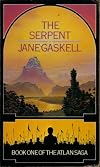
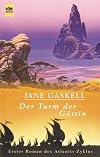
Given my subgeneric interests, it's surprising I took so long to discover Jane Gaskell's Atlan books. The Serpent is the first of them, and I just read it in its original US paperback edition (1968), a text which was later broken into two volumes: The Serpent and The Dragon. The novel takes the form of a personal journal kept by the protagonist Cija. She is the "Goddess" of the title for the book as it appeared in German translation: "The Tower of the Goddess." The tower is left behind in the first chapter, though, and Cija is rarely treated as the goddess that she had been raised to believe herself to be.
The story is set in an antediluvian civilization hostile to "Atlan" (the home of the "Atlanteans"). There are no clear-cut show more supernatural events in the course of the story, although Cija becomes haunted and eventually undergoes an exorcism of sorts, and there are some uncanny events involving animals. The general tech level is vaguely medieval, but there are large cities and instances of fantastic materials technology.
A notable feature removing Cija's world from ours is the use of phorusrhacidae (perhaps physornis?) as military mounts--these prehistoric flightless "terror birds" were apex predators, and their domestication for warfare is represented as being a difficult and dodgy business. The military setting is central to the book, as much of it concerns Cija's travels with the army of the Northern Kingdom, which is under the command of General Zerd, himself the "Serpent" of the title. He seems to be descended on one side from reptilian ancestry, giving him a dark, scaled complexion.
Cija is an evidently reliable if occasionally unlikable narrator. There are some strangely contemporary turns of phrase ("OK" e.g.), for which Gaskell apologies in her introduction. She deploys the documentary conceit and actually claims that the novel is a translation of an ancient document. Still, the voice of the diary manages to project the character writing it, and to ring her through some changes of perspective. Besides Cija's native culture, from which she had been sheltered by imprisonment in a tower for her entire childhood, she is introduced to at least four further realms over the course of the book, allowing Gaskell ample room for world-building. The filter of the diary format, however, keeps the protagonist's concerns dominant, with little in the way of heavy-handed exposition about the setting. The preservation of the material diary itself through Cija's numerous captivities, escapes, flights, and mishaps is maybe the unlikeliest feature of the story! show less
The story is set in an antediluvian civilization hostile to "Atlan" (the home of the "Atlanteans"). There are no clear-cut show more supernatural events in the course of the story, although Cija becomes haunted and eventually undergoes an exorcism of sorts, and there are some uncanny events involving animals. The general tech level is vaguely medieval, but there are large cities and instances of fantastic materials technology.
A notable feature removing Cija's world from ours is the use of phorusrhacidae (perhaps physornis?) as military mounts--these prehistoric flightless "terror birds" were apex predators, and their domestication for warfare is represented as being a difficult and dodgy business. The military setting is central to the book, as much of it concerns Cija's travels with the army of the Northern Kingdom, which is under the command of General Zerd, himself the "Serpent" of the title. He seems to be descended on one side from reptilian ancestry, giving him a dark, scaled complexion.
Cija is an evidently reliable if occasionally unlikable narrator. There are some strangely contemporary turns of phrase ("OK" e.g.), for which Gaskell apologies in her introduction. She deploys the documentary conceit and actually claims that the novel is a translation of an ancient document. Still, the voice of the diary manages to project the character writing it, and to ring her through some changes of perspective. Besides Cija's native culture, from which she had been sheltered by imprisonment in a tower for her entire childhood, she is introduced to at least four further realms over the course of the book, allowing Gaskell ample room for world-building. The filter of the diary format, however, keeps the protagonist's concerns dominant, with little in the way of heavy-handed exposition about the setting. The preservation of the material diary itself through Cija's numerous captivities, escapes, flights, and mishaps is maybe the unlikeliest feature of the story! show less
This is the first book in the Atlan Saga. If your book seems to end abruptly there's a reason for that not the fault of the author. First published in 1963, in later editions it was split in half with the second half published as The Dragon. I first read this--and loved this--in my teens. I'm rather afraid to reread them and find my memory of them doesn't hold. I do remember them as even then striking me as beyond weird yet irresistible. Just from what I remember, let alone what I've been reminded of by reviews makes me rather embarrassed to have loved them. They are utterly bizarre. This is framed as a diary of a princess who lived on an Earth before there was a moon, in a land of ape men and dinosaur men. One of those scaled men, show more Zerd, is the "serpent" of the title. Our diarist, Cija, is the clumsiest heroine you'd ever want to meet--a precursor of Bella in that way except she does overachieve on ego. She's a princess raised in a tower and told she was hatched from an egg and men are extinct--until she's told she'll have to seduce Zerd and assassinate him. Okay! The thing is the writing and the world Gaskell creates is so lush it's addictive. show less
Interesting. I was expecting something a whole lot trashier. But this is, in fact, an attempt at a serious novel, and even though most of the fantasy-romance elements are present, the protagonist Cija has more depth to her than expected. I can't say this was an excellent read, but it there is enough there for me to want to read the next in the series.
An unlikeable teenage with a serious ego thinks that she's the bees knees, an opinion that's changed by events and rape.
Readable but not impressive
Readable but not impressive
Book I of the Atlan saga. These stories are brilliantly imagined and told, vastly better than most fantasy writing. Sexy and humorous, too.
girl born to seduce half serpent lord
Members
- Recently Added By
Lists

The Seven-League Shelf
57 works; 3 members

Cawthorn and Moorcock's Fantasy: The 100 Best Books
110 works; 7 members

Fantasy by Women Who Broke Away from Europe
144 works; 12 members
Author Information

16+ Works 1,239 Members
Some Editions
Series

Belongs to Publisher Series
Common Knowledge
- Canonical title
- The Serpent
- Original title
- The serpent
- Alternate titles*
- Der Turm der Göttin. Der Drache
- Original publication date
- 1963
- People/Characters
- Cija; Zerd; Smahil; Ooldra; Dictatress; Lel (show all 35); Ijlelda; Lara; Beauty; Narra; Governor; Turg; Jode; Onosander; Iren; Wagoner; Clor; Blob; Glurbia; Noble Gagl; Alurg; Peat Merchant; Priest; Iro; General Harmgard; Snedde; Ious; Isad; Lisia; Yle; Lawman; Cook; Nasir; Terez; Kaselm
- Important places*
- Atlantis
- Epigraph
- And on Earth shall be monsters, a generation of dragons of men, and likewise of serpents. -Clement, 'Apocalyptic Fragment'
- First words
- Der Turm der Göttin: So genau, wie ich es vermochte, habe ich dies übersetzt, nicht allein in unsere Muttersprache, sondern auch in die Sprache unserer Zeit; denn die Chronistin bediente sich sehr stark damals gebräuchlich... (show all)er und umgangssprachlicher Wendungen, vor allem in den ersten Teilen ihres Buches, weshalb wir zu der Vermutung neigen, dass sie sich diese Ausdrucksweise entweder von den Dienerinnen ihrer Mutter aneignete, bei den seltenen Anlässen, da sie ihnen begegnete, oder ihre Betreuerinnen nicht ganz so abgrundtief streng waren, wie sie in ihrer jugendlichen Unschuld glauben musste.
Der Drache: Smahil hob mich in den Sattel und hüllte mich fürsorglich in seinen Umhang.
I can't see things so well from any other window. - Last words
- (Click to show. Warning: May contain spoilers.)Der Turm der Göttin: Seine Augen waren nicht starr, nicht tot und gläsern ins Leere gerichtet, wie es bei denen des Statthalters gewesen war; Smahils Augen suchten die meinen, und sein Blick spiegelte sprühendes Leben wider, Triumph, Zärtlichkeit und Spott.
(Click to show. Warning: May contain spoilers.)Der Drache: Und manchmal liebt er mich.
(Click to show. Warning: May contain spoilers.)His eyes were not fixed , staring glassily into space as the governor's had been; Smahil's eyes sought mine, and his were vidid with life, triumphant, tender, mocking. - Blurbers
- Turner, Alice
- Original language*
- Englisch
*Some information comes from Common Knowledge in other languages. Click "Edit" for more information.
Classifications
Statistics
- Members
- 322
- Popularity
- 98,365
- Reviews
- 8
- Rating
- (3.76)
- Languages
- Dutch, English, German
- Media
- Paper
- ISBNs
- 13
- ASINs
- 15