Seven Days in New Crete
by Robert Graves 
On This Page
Description
Edward Venn-Thomas lives in the twentieth century but has been mysteriously transported to the future, and the apparently idyllic society of New Create, where there is no hunger, no war and no dissatisfaction. However Venn-Thomas is starting to find life among the New Cretans rather dull. He comes to realize that their perfect existence, inspired by the poets and magicians of their strange occultic religion, lacks one fundamental thing - evil. So Venn-Thomas sees it as nothing less than his show more duty to introduce them to the darker side of life. First published in 1949 and also known as Watch the North Wind Rise, Graves's novel is a thrilling blend of utopian fantasy, science fiction and mythology. show lessTags
Recommendations













Member Reviews
A poet from our time (1949) is transported years into the future, which is now a peaceful, Goddess worshipping world culture where money, technology, and wars have been eliminated and people live in rural villages and in defined social groups. I love utopia/dystopia fiction, and part of what I love is being dropped into this alternate world and figuring out how things work. This one doesn’t have that because from when he arrives, everything is explained to him (and us.) I don’t believe for a second that this culture would work; I don’t have that much faith in humanity, but it’s interesting to speculate. What made it a page turner was the interactions between the protagonist and other characters including a troublesome woman from show more his past who has somehow appeared in the future with him. But that sort of fizzled out and it was ultimately kind of philosophical musing about Goddess culture and good and evil, which was okay (especially because of my acquaintance with the Goddess) but eh. show less
Not my favorite among the fictional works of Robert Graves.
I like him best for poetry, then for the fictionalized histories.
This work of speculative fiction (not sciency enough for SF, and no witches or dragons for fantasy) is an odd mix in which he lets his poetic muse run wild in prose.
I like him best for poetry, then for the fictionalized histories.
This work of speculative fiction (not sciency enough for SF, and no witches or dragons for fantasy) is an odd mix in which he lets his poetic muse run wild in prose.
I believe that this was the book that convinced Robert Graves that poetry and well researched historical fiction were the genres in which he should concentrate in any following efforts. There is too much explaining and not enough showing in this tale of a pet transported into a future society of peaceful agriculturalists and Goddess worshippers. Don't bother with it.
The plot, insofar as it matters: A 20th century poet is whisked into the future (which values poets) and learns about their society.
Apparently a rule of thumb is that one ought to read 50 pages before abandoning a book (and the equivalent of your age, I'm told, if you're older than 50). And I certainly read 50 pages before returning this to the library, even after being a bit put out at the rather casual condemnation of homosexuals (this society puts them to death) and the comparison with two-headed calves. I'm a big boy, I can handle these things, especially from a 1949 book where perhaps the protagonist doesn't agree with this this utopia's new norms and will launch a "save the homosexuals" campaign on page 110 (he probably won't, but show more I don't know, I gave up around page 80).
For almost all of the first third of this book it's a description (in dialogue) of the dullest exposition imaginable, about the workings of this future society. It's the sort of thing that even the most workmanlike of today's writers would realise should be kept in the background while more interesting matters like plot and characterization take the foreground--these days one does the world-building, but we make it subtext, not text. It really was painful (reminded me of an absurd class assignment I did in grade 9 where I imagined what might happen if the Vikings had persisted in North America, and then wrote up an elaborate alternate history of events--nobody needs to read that!)
The writing was not delectable enough to enjoy the book purely in terms of the felicity of word choice and phraseology, the society not interesting enough to want to read more about it (and yet more, much more, is given), and the characters, such as they are, not compelling (or even realistic) enough to warrant any empathy or identification. One might as well call them man, young woman, and woman--that's as exciting as they get.
This could be one of those works which was unusual or groundbreaking in some respects during its original publication (though I can't imagine what those would be), but it's definitely not a classic (like, say, The Hobbit, which has lost none of its charm, or Titus Groan, roughly contemporaneous, which has all its original power and then some--reading this book was a tiresome slog, and I dropped it and picked up a well-regarded Georgette Heyer instead, feeling fully satisfied with myself.
Picked it up originally because I'd mistakenly thought it was on the Pringle list of great Modern Fantasy and just couldn't imagine why he thought this was so good, only to realise I'd got my lists mixed up and it was really from my list of unusual GoodShowSir bad book covers. Sigh. show less
Apparently a rule of thumb is that one ought to read 50 pages before abandoning a book (and the equivalent of your age, I'm told, if you're older than 50). And I certainly read 50 pages before returning this to the library, even after being a bit put out at the rather casual condemnation of homosexuals (this society puts them to death) and the comparison with two-headed calves. I'm a big boy, I can handle these things, especially from a 1949 book where perhaps the protagonist doesn't agree with this this utopia's new norms and will launch a "save the homosexuals" campaign on page 110 (he probably won't, but show more I don't know, I gave up around page 80).
For almost all of the first third of this book it's a description (in dialogue) of the dullest exposition imaginable, about the workings of this future society. It's the sort of thing that even the most workmanlike of today's writers would realise should be kept in the background while more interesting matters like plot and characterization take the foreground--these days one does the world-building, but we make it subtext, not text. It really was painful (reminded me of an absurd class assignment I did in grade 9 where I imagined what might happen if the Vikings had persisted in North America, and then wrote up an elaborate alternate history of events--nobody needs to read that!)
The writing was not delectable enough to enjoy the book purely in terms of the felicity of word choice and phraseology, the society not interesting enough to want to read more about it (and yet more, much more, is given), and the characters, such as they are, not compelling (or even realistic) enough to warrant any empathy or identification. One might as well call them man, young woman, and woman--that's as exciting as they get.
This could be one of those works which was unusual or groundbreaking in some respects during its original publication (though I can't imagine what those would be), but it's definitely not a classic (like, say, The Hobbit, which has lost none of its charm, or Titus Groan, roughly contemporaneous, which has all its original power and then some--reading this book was a tiresome slog, and I dropped it and picked up a well-regarded Georgette Heyer instead, feeling fully satisfied with myself.
Picked it up originally because I'd mistakenly thought it was on the Pringle list of great Modern Fantasy and just couldn't imagine why he thought this was so good, only to realise I'd got my lists mixed up and it was really from my list of unusual GoodShowSir bad book covers. Sigh. show less
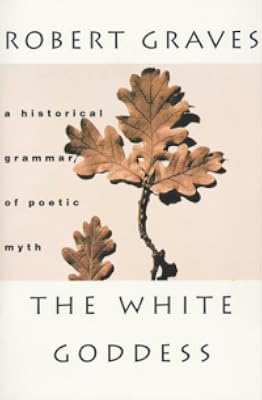
This is a utopian novel drawing from both Graves's life (characters derive. as Martin Seymour-Smith indicates in his useful introduction , both from his wife Beryl and from his long-time lover Laura Riding) and from the mythos he created for his monograph on "poetic myth" *The White Goddess*. The result is a flawed utopia into which his narrator, Edward Venn-Thomas,lands, drawn from the mid-twentieth century by magic. Graves gives us a thick description of the society, its values, its complexity, in a highly readable novel that stands up pretty well six decades after first publication.
Interesting, thoughtful, and fun.
See Watch the Northwind Rise at From Word to Word
Members
- Recently Added By
Lists

Best Science Fiction Novels
816 works; 430 members

David Pringle's Modern Fantasy: The 100 Best Novels
100 works; 5 members
Author Information

259+ Works 40,616 Members
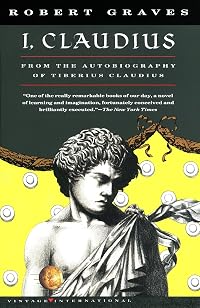
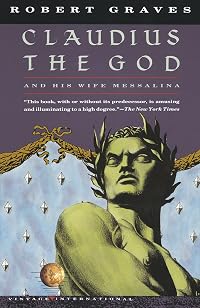
Robert Graves (also known as Robert Ranke Graves) was born in 1895 in London and served in World War I. Goodbye to All That: an Autobiography (1929), was published at age thirty three, and gave a gritty portrait of his experiences in the trenches. Graves edited out much of the stark reality of the book when he revised it in 1957. Although his most show more popular works, I, Claudius (1934) and its sequel, Claudius the God and His Wife Messalina (1935), were produced for television by the BBC in 1976 and seen in America on Masterpiece Theater, he was also famous as a poet, producing more than 50 volumes of poetry. Graves was awarded the 1934 James Tait Black Memorial Prize for both I, Claudius and Claudius the God. Also a distinguished academic, Graves was a professor of English in Cairo, Egypt, in 1926, a poetry professor at Oxford in the 1960s, and a visiting lecturer at universities in England and the U.S. He wrote translations of Greek and Latin works, literary criticism, and nonfiction works on many other topics, including mythology and poetry. He lived most of his life in Majorca, Spain, and died after a protracted illness in 1985. (Bowker Author Biography) show less
Robert Graves has a Legacy Library. Legacy libraries are the personal libraries of famous readers, entered by LibraryThing members from the Legacy Libraries group.
Some Editions
Awards and Honors
Notable Lists
Series
Belongs to Publisher Series
Work Relationships
Is contained in
Common Knowledge
- Canonical title
- Seven Days in New Crete
- Original title
- Seven Days in New Crete
- Alternate titles
- Watch the Northwind Rise
- Original publication date
- 1949
- People/Characters
- Edward Venn-Thomas
- Important places
- Crete
- First words
- 'I am an authority on English,' the man in the white suit said in a curiously colourless accent and with a good deal of hesitation, like an authority on Sanscrit trying to talk conversational Sanscrit.
- Last words
- (Click to show. Warning: May contain spoilers.)'Welcome, dear child,' I added in a whisper.
- Disambiguation notice
- This work was published as Seven Days in New Crete in the UK and Watch the North Wind Rise in the US.
Classifications
Statistics
- Members
- 336
- Popularity
- 94,861
- Reviews
- 7
- Rating
- (3.38)
- Languages
- 5 — Dutch, English, German, Italian, Spanish
- Media
- Paper, Audiobook, Ebook
- ISBNs
- 13
- ASINs
- 15