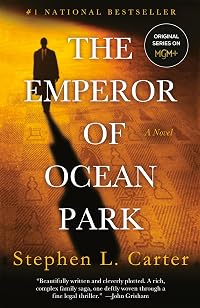
The Emperor of Ocean Park
by Stephen L. Carter
On This Page
Description
Fiction. African American Fiction. Mystery. Thriller. HTML:In his triumphant fictional debut, Stephen Carter combines a large-scale, riveting novel of suspense with the saga of a unique family. The Emperor of Ocean Park is set in two privileged worlds: the upper crust African American society of the Eastern seabord—families who summer at Martha’s Vineyard—and the inner circle of an Ivy League law school.Talcott Garland is a successful law professor, devoted father, and husband of a show more beautiful and ambitious woman, whose future desires may threaten the family he holds so dear. When Talcott’s father, Judge Oliver Garland, a disgraced former Supreme Court nominee, is found dead under suspicioius circumstances, Talcott wonders if he may have been murdered. Guided by the elements of a mysterious puzzle that his father left, Talcott must risk his marriage, his career and even his life in his quest for justice. Superbly written and filled with memorable characters, The Emperor of Ocean Park is both a stunning literary achievement and a grand literary entertainment. show less
Tags
Recommendations








Member Reviews
An 800-page novel that should have been a 400-page novel. More than 200 pages pass before the plot begins to rouse itself, and the first-person narration is so discursive, verbose and prissy that it presents a serious test of patience.
Talcott Garland's father Oliver Garland, a kind of Clarence Thomas figure but without the imputation of sexual misbehavior, has just died, leaving poor Talcott (as we find out on page 256) a puzzle that he must solve to find the mysterious "arrangements" that were left for him. Meanwhile, multiple teams of shady operatives of various levels of fearsomeness are after the same arrangements. Although these operatives are clearly capable of violence, Oliver's powerful underworld buddy Jack Ziegler has pledged show more to keep Talcott and his family safe, so there's rarely any real sense of physical danger. The plot consists mostly of Talcott evading and/or interacting with the operatives, trying to solve the puzzle, and (not least) trying to hold his marriage to his narcissistic, unfaithful wife Kimmer together while navigating the treacherous waters of academic politics.
If the lead character in a first-person book is a straight arrow (Talcott doesn't drink, curse or fight), there needs to be a more unpredictable friend, ally, or enemy — think of Easy Rawlins' friend Mouse in Walter Mosley's "Devil in a Blue Dress." Unfortunately, for most of the book Talcott has no one to depend on except his pastor/counselor Dr. Morris Young, a specialist in smug, fatuous relationship advice that's accepted by the narrator (and, I think, by the author) as sage counsel. Jack Ziegler is a snakily vivid character, but can't transcend the weight of his author's moral judgment. Kimmer is clearly toxic, but (being inside Talcott's head) the reader has to put up with countless paragraphs of mooning over her. Talcott and Kimmer's toddler son Bentley is a bundle of baby-speak cuteness without personality. One of the operatives, Maxine, springs suddently to life and gives the reader some hope that Talcott might actually find a path to a verve all his own, but she disappears. Almost all of Talcott's colleagues are far more interested in status games than in being rounded individuals, capable of kindness as well as spite. Talcott doesn't trust any of them, and they don't trust him, no doubt because he's never cracked a joke in his life.
The cover of my 2007 Vintage paperback edition includes several misleading blurbs, including one from the NYTBR calling it "high-spirited and fleet of foot," although it is low-spirited and plodding, and one from John Grisham calling it a "legal thriller," which it is not: there isn't a single courtroom scene in the book. show less
Talcott Garland's father Oliver Garland, a kind of Clarence Thomas figure but without the imputation of sexual misbehavior, has just died, leaving poor Talcott (as we find out on page 256) a puzzle that he must solve to find the mysterious "arrangements" that were left for him. Meanwhile, multiple teams of shady operatives of various levels of fearsomeness are after the same arrangements. Although these operatives are clearly capable of violence, Oliver's powerful underworld buddy Jack Ziegler has pledged show more to keep Talcott and his family safe, so there's rarely any real sense of physical danger. The plot consists mostly of Talcott evading and/or interacting with the operatives, trying to solve the puzzle, and (not least) trying to hold his marriage to his narcissistic, unfaithful wife Kimmer together while navigating the treacherous waters of academic politics.
If the lead character in a first-person book is a straight arrow (Talcott doesn't drink, curse or fight), there needs to be a more unpredictable friend, ally, or enemy — think of Easy Rawlins' friend Mouse in Walter Mosley's "Devil in a Blue Dress." Unfortunately, for most of the book Talcott has no one to depend on except his pastor/counselor Dr. Morris Young, a specialist in smug, fatuous relationship advice that's accepted by the narrator (and, I think, by the author) as sage counsel. Jack Ziegler is a snakily vivid character, but can't transcend the weight of his author's moral judgment. Kimmer is clearly toxic, but (being inside Talcott's head) the reader has to put up with countless paragraphs of mooning over her. Talcott and Kimmer's toddler son Bentley is a bundle of baby-speak cuteness without personality. One of the operatives, Maxine, springs suddently to life and gives the reader some hope that Talcott might actually find a path to a verve all his own, but she disappears. Almost all of Talcott's colleagues are far more interested in status games than in being rounded individuals, capable of kindness as well as spite. Talcott doesn't trust any of them, and they don't trust him, no doubt because he's never cracked a joke in his life.
The cover of my 2007 Vintage paperback edition includes several misleading blurbs, including one from the NYTBR calling it "high-spirited and fleet of foot," although it is low-spirited and plodding, and one from John Grisham calling it a "legal thriller," which it is not: there isn't a single courtroom scene in the book. show less
This is long and slow moving and occasionally repeats itself, but I loved the writing and the characterisation, especially of the narrator, Misha, who must uncover the 'arrangements' everyone (from hitmen to the FBI) believes his dead father has informed him about. It takes Christianity and racial politics seriously in a way I do not often encounter, without coming to trite conclusions. I sought this out on a recommendation from my local library for legal thrillers, but although most of the characters are lawyers, judges or law professors, none of the scenes take place in a court, so I was mis-sold there, but am nevertheless glad to have discovered this series.
Recommended.
Recommended.
This truly is well done. I like Mr Carter's tone and the relaxed and personable manner in which his story unfolds. His use of language is lyrically elevated, slightly pretentious but not unapproachable or condescending. He offers multiple views on society, racism, poverty, etc that we are not familiar with in relation to Black American literary characters and he handles this balance well. He needs a better editor but at the same time this is incredible for a first novel.
I'll read his other books but I'm probably going to need to a break. Too many words and I just am not sure I've ever had that complaint of a novel before.
I'll read his other books but I'm probably going to need to a break. Too many words and I just am not sure I've ever had that complaint of a novel before.
Well-written dark mystery centered on the (possibly suspicious) death of a former federal judge who is Black and conservative. His younger son, the narrator Talcott (called Misha), has to unravel a preposterously convoluted set of clues left by his father that will supposedly unlock a bombshell of a scandal. Extremely long, this could have been at least 200 pages shorter. We get an enormous cast of characters, many of whom were entirely unnecessary, and a lot of ploughing over the same ground. The mystery did keep me going, and some of the characterizations are interesting, but at this point in our history, the theme of corrupted federal judges who sit on the highest courts of the land is not too shocking, as it may have been in 2001. show more Talcott/Misha came across as somewhat depressed and kind of masochistic so unless the sequel is a a lot shorter, I doubt I will seek it out. show less
A friend recommended this book before he had finished it. I think he ended up feeling much the same as I did about Stephen Carter’s bloated novel:it’s much too long, and the plot is intrusively complicated. The main character, law professor Talcott Garland, is a needed, often whiny son of a judge who has died, apparently of a heart attack. But maybe not. And that is what makes up much of the mystery in the book. I found the plot twists more work than I wanted to put in, especially for nearly 700 pages. The book is bloated by about half. To his credit, however, Carter’s writing is top notch. That said, I could have done with less religion.
Only my deep respect for and friendship with Adam, who recommended the book got me through the first 120 pages. I didn't like any of the characters, including the protagonist, who made Hamlet seem like a man of action.
A sense that we were finally going to get started and it might be worth wading through a heck of a lot of interior monologue exposition got me to page 200. Still thought the author had a lot of nerve: even Umberto Eco only made his readers wade through 100 pages of "The Name of the Rose" before the going got good.
Pages 200 through 654 I mostly liked. I finally developed some empathy for Talcott. I quite liked the Rev. Morris Young. I like Christian characters in secular fiction. They're more compelling than the ones in show more Christian fiction for some reason. The action of determining "the arrangements" (what there was of it) was suspenseful.
Of course, the chess metaphors all went over my head since I've never learned to play. Really wanted to give 2.5 stars. Why isn't that possible on these sites? show less
A sense that we were finally going to get started and it might be worth wading through a heck of a lot of interior monologue exposition got me to page 200. Still thought the author had a lot of nerve: even Umberto Eco only made his readers wade through 100 pages of "The Name of the Rose" before the going got good.
Pages 200 through 654 I mostly liked. I finally developed some empathy for Talcott. I quite liked the Rev. Morris Young. I like Christian characters in secular fiction. They're more compelling than the ones in show more Christian fiction for some reason. The action of determining "the arrangements" (what there was of it) was suspenseful.
Of course, the chess metaphors all went over my head since I've never learned to play. Really wanted to give 2.5 stars. Why isn't that possible on these sites? show less
This is one of the best books I’ve read all year. The narrative’s flow matched the attitude of the protagonist. Talcott wanted to solve the mystery, but it was almost against his will that he did and the slow pace of the story brought that out even more than Talcott’s constant justification. Carter also draws us into the story by giving partial information and darkly hidden hints. It took me until almost ½ way through the book to decide that Kimmer was indeed a member of the darker nation. Through something Talcott said about people saying he’d gone over to the enemy, I thought this might mean he married a white woman, but actually I still don’t know what that means. He doesn’t seem particularly conservative in his views. show more As a matter of fact, he seems to have little conviction either way. But I suppose as an educated black man in the 21st century, he is obliged to be a liberal.
I also loved the world I was drawn into because it is one I’ll never know otherwise. Higher academia and Washington politics and the whole clubby, secret-handshake deal is fascinating. As is life in the upper echelon of black society and the obligations and pressures they feel. It seems like they have to constantly justify their existence not only to the rest of the darker nation who has not achieved any success, but also to the white community whose fringes they are now entering. Neither trusts them or accepts them – or so they feel, and they close ranks and form their own exclusive club. Awkward.
So we don’t know what happened exactly to destroy the Judge’s bid at a Supreme Court seat, but we know that we’ll get to it. We also don’t know why the Judge chose Talcott to uncover his buried secrets or why he gave him clues in such a cryptic manner, but we know we’ll get to it. It makes for a very long story arc, but a satisfying one. The whole puzzle is presented to Talcott as a chess problem; the Double Excelsior where by moving only pawns in a certain way and in a certain order white wins. The Judge wanted to find a solution where the black pawn would win.
It’s interesting that none of the Judge’s children ever called him dad, daddy or even father, but always the Judge. The children grew up to be successful on the surface, but each of them has major problems in their lives; Talcott is married to a truly awful woman whom he cannot fall out of love with no matter how much of a bitch she becomes; Addison is polished, famous, rich and highly sought after not only by other talk show hosts who want him on their shows, but also by the federal government for tax evasion; Mariah is married to a man who is very good at making money and remaining devoted to her, but she has no purpose what with every task performed by a hired human or a machine. This is why she throws herself so entirely into the conspiracy that surrounds the Judge’s death. She doesn’t think it was suicide, but murder and after a few inexplicable things happen to Talcott, he believes it too.
Amidst all of this overt drama, more covert drama takes place. Talcott’s wife Kimmer is cheating on him. Again. We only see Kimmer through his eyes, and he is supposed to love her beyond reason, but she still comes across as a cold, calculating and highly unreasonable bitch. In her opinion her unhappiness justifies her cheating. She feels no shame at betraying him or destroying their marriage. A marriage she didn’t want to enter into in the first place, but produced an unwanted son to keep afloat. Besides being a complete bitch she is also fairly stupid and irrational in a lot of her beliefs. Prejudicial, too. Narrow-minded jerk about sums her up and I’m very glad she did not get her Federal Bench appointment.
I was hesitant to read this for fear of it being a thinly veiled screed decrying the rampant racism and race related problems in the US, the blame for which would entirely be the fault of the white man. If it had, I would have given it up. As a person who has never done an evil, racially prejudicial act in her life, I don’t need this kind of haranguing. But other than some fairly accurate observations and finger-pointing to both sides, race was not a major factor. It came up, but only as part of the story and only where it would make sense. It was interesting though to see how much the darker nation blames the paler nation for its problems. Ditto for some of the deep-seated resentment and hatred the darker nation has for the paler. Exactly the same unfounded sentiments that in reverse, made this country tear itself apart. Irony doesn’t even begin to cover it.
But if every time a person brings this up about the darker nation it is construed as bigotry or an attack, no progress will be made. The undercurrent of hatred and distrust will continue to divide us. show less
I also loved the world I was drawn into because it is one I’ll never know otherwise. Higher academia and Washington politics and the whole clubby, secret-handshake deal is fascinating. As is life in the upper echelon of black society and the obligations and pressures they feel. It seems like they have to constantly justify their existence not only to the rest of the darker nation who has not achieved any success, but also to the white community whose fringes they are now entering. Neither trusts them or accepts them – or so they feel, and they close ranks and form their own exclusive club. Awkward.
So we don’t know what happened exactly to destroy the Judge’s bid at a Supreme Court seat, but we know that we’ll get to it. We also don’t know why the Judge chose Talcott to uncover his buried secrets or why he gave him clues in such a cryptic manner, but we know we’ll get to it. It makes for a very long story arc, but a satisfying one. The whole puzzle is presented to Talcott as a chess problem; the Double Excelsior where by moving only pawns in a certain way and in a certain order white wins. The Judge wanted to find a solution where the black pawn would win.
It’s interesting that none of the Judge’s children ever called him dad, daddy or even father, but always the Judge. The children grew up to be successful on the surface, but each of them has major problems in their lives; Talcott is married to a truly awful woman whom he cannot fall out of love with no matter how much of a bitch she becomes; Addison is polished, famous, rich and highly sought after not only by other talk show hosts who want him on their shows, but also by the federal government for tax evasion; Mariah is married to a man who is very good at making money and remaining devoted to her, but she has no purpose what with every task performed by a hired human or a machine. This is why she throws herself so entirely into the conspiracy that surrounds the Judge’s death. She doesn’t think it was suicide, but murder and after a few inexplicable things happen to Talcott, he believes it too.
Amidst all of this overt drama, more covert drama takes place. Talcott’s wife Kimmer is cheating on him. Again. We only see Kimmer through his eyes, and he is supposed to love her beyond reason, but she still comes across as a cold, calculating and highly unreasonable bitch. In her opinion her unhappiness justifies her cheating. She feels no shame at betraying him or destroying their marriage. A marriage she didn’t want to enter into in the first place, but produced an unwanted son to keep afloat. Besides being a complete bitch she is also fairly stupid and irrational in a lot of her beliefs. Prejudicial, too. Narrow-minded jerk about sums her up and I’m very glad she did not get her Federal Bench appointment.
I was hesitant to read this for fear of it being a thinly veiled screed decrying the rampant racism and race related problems in the US, the blame for which would entirely be the fault of the white man. If it had, I would have given it up. As a person who has never done an evil, racially prejudicial act in her life, I don’t need this kind of haranguing. But other than some fairly accurate observations and finger-pointing to both sides, race was not a major factor. It came up, but only as part of the story and only where it would make sense. It was interesting though to see how much the darker nation blames the paler nation for its problems. Ditto for some of the deep-seated resentment and hatred the darker nation has for the paler. Exactly the same unfounded sentiments that in reverse, made this country tear itself apart. Irony doesn’t even begin to cover it.
But if every time a person brings this up about the darker nation it is construed as bigotry or an attack, no progress will be made. The undercurrent of hatred and distrust will continue to divide us. show less
Members
- Recently Added By
Published Reviews
ThingScore 50
Yet this is not a novel exclusively about politics or even about blacks maneuvering in a white world. It is at its center a book about the pleasures and miseries of family life, and the scenes in Talcott's house, the pauses and silences and evasions and eruptions when one spouse is having an affair and the other isn't, are very well done; similarly, the tensions between brothers and sisters; show more and the comfort and coherence an intelligent preacher can bring to the disconsolate; and at the end, a realization that it's wise to draw a line between past and present, due diligence be damned. show less
added by SimoneA
Lists

Black Authors
384 works; 32 members

Summer Books
82 works; 9 members

Dark Academia Novels
59 works; 11 members

Scholar Novels
26 works; 4 members
Author Information

22+ Works 6,828 Members
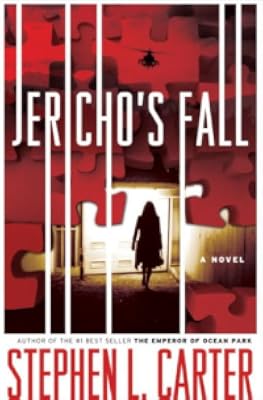
Stephen L. Carter was born in Washington, D.C. on October 26, 1954. He received a bachelor's degree in history from Stanford University in 1976 and a law degree from Yale University in 1979. After graduation, he served as a law clerk for Judge Spottswood W. Robinson, III, of the United States Court of Appeals for the District of Columbia Circuit, show more and for Supreme Court Justice Thurgood Marshall. In 1982, he joined the Yale University faculty and is currently the William Nelson Cromwell Professor of Law. He is the author of numerous non-fiction works including Reflections of an Affirmative Action Baby (1991); The Culture of Disbelief: How American Law and Politics Trivialize Religious Devotion (1993); The Confirmation Mess: Cleaning Up the Federal Appointments Process (1994); Integrity (1996); The Dissent of the Governed: A Meditation on Law, Religion, and Loyalty (1998); Civility: Manners, Morals, and the Etiquette of Democracy (1998); and God's Name in Vain: The Wrongs and Rights of Religion in Politics (2000). He has also written several fiction works including The Emperor of Ocean Park and Jericho's Fall. He was the first non-theologian to receive the prestigious Louisville-Grawemeyer Award in religion. (Bowker Author Biography) show less
Awards and Honors
Awards
Distinctions
Common Knowledge
- Canonical title
- The Emperor of Ocean Park
- Original title
- The Emperor of Ocean Park
- Original publication date
- 2002
- People/Characters
- Oliver Garland (judge); Talcott "Misha" Garland; Kimmer Garland
- Important places
- Dukes County, Massachusetts, USA; Martha's Vineyard, Massachusetts, USA; Massachusetts, USA
- Epigraph
- Deux fous gagnent toujours, mais trois fous, non!
(Loosely: Two fools always win, but three fools, never!
-Siegbert Tarrasch
(Note: The chess piece Americans call the bishop, the French call "le fou".) - Dedication
- For Mom, who loved a mystery, and for Dad, who is not in this one: I love you both, always.
- First words
- When my father finally died, he left the ******** tickets to my brother, the house on Shepard Street to my sister, and the house on the Vineyard to me.
- Last words
- (Click to show. Warning: May contain spoilers.)Seeing no kindling anywhere, I take the disk my father hid in Abigail's bear and, drawing a line and putting the past behind me, I feed it to the flames.
- Blurbers
- Grisham, John
Classifications
Statistics
- Members
- 2,440
- Popularity
- 7,989
- Reviews
- 52
- Rating
- (3.56)
- Languages
- 11 — Danish, Dutch, English, Finnish, French, German, Greek, Italian, Portuguese, Spanish, Swedish
- Media
- Paper, Audiobook, Ebook
- ISBNs
- 44
- ASINs
- 24