
On This Page
Description
As a student in college, David Kepesh styles himself "a rake among scholars, a scholar among rakes." Little does he realize how prophetic this motto will be—or how damning. For as Philip Roth follows Kepesh from the domesticity of childhood into the vast wilderness of erotic possibility, from a m#65533;nage #65533; trois in London to the throes of loneliness in New York, he creates a supremely intelligent, affecting, and often hilarious novel about the dilemma of pleasure: where we seek show more it; why we flee it; and how we struggle to make a truce between dignity and desire. show lessTags
Recommendations





















Member Reviews
Un piccolo libro semplicemente perfetto. A mio parere uno dei Roth più riusciti in cui l'autore dipinge a colori nitidi la duplicità che alberga in ognuno di noi, la nostra insoddisfazione, la nostra tristezza, la nostra perenne ricerca di qualcos'altro.
"sono pronto a pensare che la tristezza dipenda da qualcosa dentro di me, da come non sono mai riuscito a essere quello che lr persone volevano o si aspettavano, da come non ho mai soddisfatto nessuno, neppure me stesso, da come, per quanto mi sia sforzato, non sono mai riuscito ad essere né una cosa né l'altra, e probabilmente non ci riuscirò mai... "
"sono pronto a pensare che la tristezza dipenda da qualcosa dentro di me, da come non sono mai riuscito a essere quello che lr persone volevano o si aspettavano, da come non ho mai soddisfatto nessuno, neppure me stesso, da come, per quanto mi sia sforzato, non sono mai riuscito ad essere né una cosa né l'altra, e probabilmente non ci riuscirò mai... "
Ideale prosecuzione del Lamento di Portnoy, del quale condivide la genesi nella famiglia ebraica americana, Il professore di desiderio inizia la parabola introspettiva che ha allontanato definitivamente Roth dai suoi inizi pirotecnici.
E infatti se all'inizio del romanzo il protagonista è un buffone, a un certo punto svolta, e diventa sempre più introspettivo, e si lascia segnare dai suoi numerosi fallimenti, che hanno tutti a che fare con i rapporti con l'altro sesso, fino a quando troverà la donna apparentemente perfetta, così perfetta da portarlo inesorabilmente alla mancanza di desiderio, alla quale però non intende arrendersi.
E infatti se all'inizio del romanzo il protagonista è un buffone, a un certo punto svolta, e diventa sempre più introspettivo, e si lascia segnare dai suoi numerosi fallimenti, che hanno tutti a che fare con i rapporti con l'altro sesso, fino a quando troverà la donna apparentemente perfetta, così perfetta da portarlo inesorabilmente alla mancanza di desiderio, alla quale però non intende arrendersi.
I very much enjoyed "The Professor of Desire."
It seems to me that it is one of the more perceptive works to be found in Roth's early oeuvre. Perhaps it even marks a transition for him.
David Kepesh struggles with the way in which his desires and inclinations grate against his conscience and often prevent him from attending to his obligations.
He is at once both a lascivious pervert and a caring, dutiful lover and son. And, what makes the book and the character true to life is that this contrast of character is true of ever so many people.
Inclination pulls us one way, reason and duty pull us the other.
Most of the time, however, we don't fully capitulate to either of these forces and we don't privilege one over the other. We value show more desire fulfillment (obviously), but we realize that we cannot live wholly uninhibited lives. Further, most we're OK with making that concession.
What makes Roth's Kepesh an interesting character is that, although we relate to his struggle, he is different from most of us in that he DOES privilege desire (or some version of it) over duty, but at the same time, cannot truly follow through on his desires...and isn't even sure he wants to.
He sometimes *wants*, at the meta-level, to be uninhibited, but he's too smart and too reasonable to really ditch his inhibitions, so in the end he tends to drive himself crazy.
But Kepesh also vacillates, so it seems, even at the meta-level. He isn't always so sure he wants to have the kind of desires he has and often wonders about why he's so hung up, at his own peril, on being able to live without inhibition.
Roth, in other works, often seems to champion perversion and immediate gratification, but in "the Professor.." he isn't so decisively pulling for one side. I think that makes the character study more effective. There's some Kepesh in all of us, but few of us have much Portnoy. show less
It seems to me that it is one of the more perceptive works to be found in Roth's early oeuvre. Perhaps it even marks a transition for him.
David Kepesh struggles with the way in which his desires and inclinations grate against his conscience and often prevent him from attending to his obligations.
He is at once both a lascivious pervert and a caring, dutiful lover and son. And, what makes the book and the character true to life is that this contrast of character is true of ever so many people.
Inclination pulls us one way, reason and duty pull us the other.
Most of the time, however, we don't fully capitulate to either of these forces and we don't privilege one over the other. We value show more desire fulfillment (obviously), but we realize that we cannot live wholly uninhibited lives. Further, most we're OK with making that concession.
What makes Roth's Kepesh an interesting character is that, although we relate to his struggle, he is different from most of us in that he DOES privilege desire (or some version of it) over duty, but at the same time, cannot truly follow through on his desires...and isn't even sure he wants to.
He sometimes *wants*, at the meta-level, to be uninhibited, but he's too smart and too reasonable to really ditch his inhibitions, so in the end he tends to drive himself crazy.
But Kepesh also vacillates, so it seems, even at the meta-level. He isn't always so sure he wants to have the kind of desires he has and often wonders about why he's so hung up, at his own peril, on being able to live without inhibition.
Roth, in other works, often seems to champion perversion and immediate gratification, but in "the Professor.." he isn't so decisively pulling for one side. I think that makes the character study more effective. There's some Kepesh in all of us, but few of us have much Portnoy. show less
To read The Breast before reading this book and think that you understand David Kepesh is probably the least surprising thing that this novel has to offer.
What's most intriguing is that it is less concerned with a coherent and cohesive narrative -- if anything, it's constructed more as a series of extended character studies, many of which overlap as the tale progresses -- than it is with examining, in often exhaustive and explicit detail, the psychological underpinnings of what should be a very happy man, albeit one who finds himself consistently miserable at the expense of his deisres.
Roth again manages to build a book in which the human condition is carefully and adequately explored -- and in which the ultimate result of human life is show more misery -- but the writing is so lucid, the storytelling so enjoyable, that even when very little is going on in the plot, it's hard to stop reading. That Roth can mix these astute observations with a style that feels like it belongs somewhere between stream-of-consciousness and olde tyme storytelling is a revelation all its own.
It's a damn depressing tale, and not nearly as overtly sexual or graphic as the blurb may lead you to think it is, but it's unquestionably a beautifully written and engaging piece of work. show less
What's most intriguing is that it is less concerned with a coherent and cohesive narrative -- if anything, it's constructed more as a series of extended character studies, many of which overlap as the tale progresses -- than it is with examining, in often exhaustive and explicit detail, the psychological underpinnings of what should be a very happy man, albeit one who finds himself consistently miserable at the expense of his deisres.
Roth again manages to build a book in which the human condition is carefully and adequately explored -- and in which the ultimate result of human life is show more misery -- but the writing is so lucid, the storytelling so enjoyable, that even when very little is going on in the plot, it's hard to stop reading. That Roth can mix these astute observations with a style that feels like it belongs somewhere between stream-of-consciousness and olde tyme storytelling is a revelation all its own.
It's a damn depressing tale, and not nearly as overtly sexual or graphic as the blurb may lead you to think it is, but it's unquestionably a beautifully written and engaging piece of work. show less
“Whenever she takes her pictures of these palazzos and piazzas and churches and fountains I wander off aways, but always looking back to get a picture of her and her unadorned beauty.”
This book is somewhat difficult for me to rate. It is exceptionally well written, as expected as Philip Roth is considered one of the greatest American writers. However, I don’t think I liked as much as I expected and I wouldn’t recommend it to most of my friends.
The story is written in 4 chapters and follows the life of David Kepesh, in different stages of his life and feelings. It chapter is dominated by different emotions and the impact of his desires on them. I especially enjoyed the last 2 chapters as they created more layers to David show more personality.
David Kepesh exists in a state of constant discontent. He oscillates between feelings of guilt, shame, frustration, loneliness and between the desire to live freely all parts of his sexuality and of being loved and cared for.
“I am ready to think it is something about me that makes for the sadness; about how I have always failed to be what people want or expect; how I never quite pleased anyone, including myself; how, hard as I have tried, I have seemed never quite able to be one thing or the other, and probably never will be…”
I believe this book is of greater interest to anyone who has studied, or has more knowledge, of literature as it has many references to Chekov and Kafka which, unfortunately, I don't have enough knowledge to theorise their impact on the character.
“We are born innocent, we suffer terrible disillusionment before we can gain knowledge, and then we fear death - and we are granted only fragmentary happiness to offset the pain. show less
This book is somewhat difficult for me to rate. It is exceptionally well written, as expected as Philip Roth is considered one of the greatest American writers. However, I don’t think I liked as much as I expected and I wouldn’t recommend it to most of my friends.
The story is written in 4 chapters and follows the life of David Kepesh, in different stages of his life and feelings. It chapter is dominated by different emotions and the impact of his desires on them. I especially enjoyed the last 2 chapters as they created more layers to David show more personality.
David Kepesh exists in a state of constant discontent. He oscillates between feelings of guilt, shame, frustration, loneliness and between the desire to live freely all parts of his sexuality and of being loved and cared for.
“I am ready to think it is something about me that makes for the sadness; about how I have always failed to be what people want or expect; how I never quite pleased anyone, including myself; how, hard as I have tried, I have seemed never quite able to be one thing or the other, and probably never will be…”
I believe this book is of greater interest to anyone who has studied, or has more knowledge, of literature as it has many references to Chekov and Kafka which, unfortunately, I don't have enough knowledge to theorise their impact on the character.
“We are born innocent, we suffer terrible disillusionment before we can gain knowledge, and then we fear death - and we are granted only fragmentary happiness to offset the pain. show less
Years past since I last ventured into the world of Professor Kepesh - though I had watched Elegy, the adaptation of the novel The Dying Animal - before I picked up The Professor of Desire. I had my attempts in the past with reading the book, but nothing came out of it. I just returned into the shelf it lived for the past years. Just last week, however, I decided that the season was right and I was in the mood for a little desire of my own. I quickly got myself into it, losing myself in Roth's magic.
Philip Roth is a genius. How he manages on creating such "banal" characters who have more than banal lives is beyond me. In the novel, Kepesh returns to his childhood, mapping his sexual origins from a crude Herbie Bratasky to a wild and show more crazy gal in Europe to his estranged wife and finally landing on the possible love of his live, Claire. It's a semi-different Kepesh from Animal and Breast. Nevertheless, he still has the same fears, the same desires and the same thoughts streaming through his mind.
However, it makes sense that he seems more down to earth in the sexual world in his latter days in the novel, simply because these are possibly pre-The Breast memories and narration and obviously pre-The Dying Animal Kepesh. Nevertheless, it's still an enjoyable read, worth of more praise that I am giving it, but this laptop I'm on isn't letting me express myself further - it's a loaner. show less
Philip Roth is a genius. How he manages on creating such "banal" characters who have more than banal lives is beyond me. In the novel, Kepesh returns to his childhood, mapping his sexual origins from a crude Herbie Bratasky to a wild and show more crazy gal in Europe to his estranged wife and finally landing on the possible love of his live, Claire. It's a semi-different Kepesh from Animal and Breast. Nevertheless, he still has the same fears, the same desires and the same thoughts streaming through his mind.
However, it makes sense that he seems more down to earth in the sexual world in his latter days in the novel, simply because these are possibly pre-The Breast memories and narration and obviously pre-The Dying Animal Kepesh. Nevertheless, it's still an enjoyable read, worth of more praise that I am giving it, but this laptop I'm on isn't letting me express myself further - it's a loaner. show less
Sex and relationships. That's all this book is. I have never read any Roth, but I always run across references to his work, views on society, politics, religion, etc. I found this very slim book and thought it'd be a great introduction to Roth and his ideas. Well... none of that is here.
This story follows a your Jewish man as he navigates the globe, women and the academic world.
It was immediately apparent that Roth has great skill in identifying "truths" in life through the woes of relationships. The drama his characters suffer, though a little larger than life, is spot on for what happens in the real world in real relationships.
The book dragged in more than a few places. Roth has a tendancy to be long winded. I read an 85 word sentence show more followed by a 123 word sentence followed by a 67 word sentence. It wore me out!
I guess eventually I'll give Roth another go. No doubt, this one is a must read for Roth fan's. But I found it severly lacking in everything I was hoping for and hopped up on too much soap opera drama. show less
This story follows a your Jewish man as he navigates the globe, women and the academic world.
It was immediately apparent that Roth has great skill in identifying "truths" in life through the woes of relationships. The drama his characters suffer, though a little larger than life, is spot on for what happens in the real world in real relationships.
The book dragged in more than a few places. Roth has a tendancy to be long winded. I read an 85 word sentence show more followed by a 123 word sentence followed by a 67 word sentence. It wore me out!
I guess eventually I'll give Roth another go. No doubt, this one is a must read for Roth fan's. But I found it severly lacking in everything I was hoping for and hopped up on too much soap opera drama. show less
Members
- Recently Added By
Author Information

123+ Works 74,932 Members
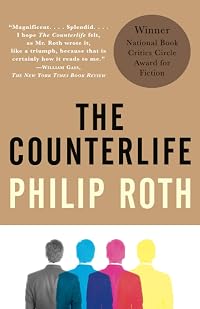
Philip Milton Roth was born in Newark, New Jersey on March 19, 1933. He attended Rutgers University for one year before transferring to Bucknell University where he completed a B.A. in English with highest honors in 1954. He received an M.A. from the University of Chicago in 1955. His first book, Goodbye, Columbus, received the National Book Award show more in 1960. His other books include Letting Go, When She Was Good, Portnoy's Complaint, My Life as a Man, The Ghostwriter, Zuckerman Unbound, I Married a Communist, The Plot Against America, The Facts, The Anatomy Lesson, Exit Ghost, Deception, Nemesis, Everyman, Indignation, and The Humbling. He won the National Book Critic Circle Awards in 1987 for his novel The Counterlife and in 1992 for his memoir Patrimony: A True Story. He won the PEN/Faulkner Award for Fiction in 1993 for Operation Shylock: A Confession and in 2001 for The Human Stain, the National Book Award in 1995 for Sabbath's Theater, and the Pulitzer Prize in 1998 for American Pastoral. He stopped writing in 2010. He died from congestive heart failure on May 22, 2018 at the age of 85. (Bowker Author Biography) show less
Some Editions
Awards and Honors
Awards
Distinctions
Series

Belongs to Publisher Series
Work Relationships
Is contained in
Is abridged in
Common Knowledge
- Canonical title
- The Professor of Desire
- Original title
- The Professor of Desire
- Alternate titles*
- Professor van de begeerte : roman
- Original publication date
- 1977
- People/Characters*
- David Kepesh
- Original language*
- Engels
*Some information comes from Common Knowledge in other languages. Click "Edit" for more information.
Classifications
Statistics
- Members
- 1,075
- Popularity
- 23,963
- Reviews
- 12
- Rating
- (3.45)
- Languages
- 14 — Danish, Dutch, English, Finnish, French, German, Italian, Norwegian (Bokmål), Polish, Portuguese, Serbian, Spanish, Swedish, Turkish
- Media
- Paper, Audiobook, Ebook
- ISBNs
- 54
- ASINs
- 14