On This Page
Description
In nineteenth-century London, sixteen-year-old Sally, a recent orphan, becomes involved in a deadly search for a mysterious ruby.Tags
Recommendations
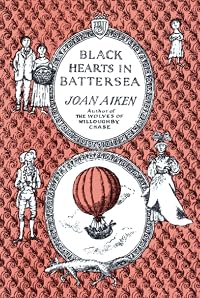
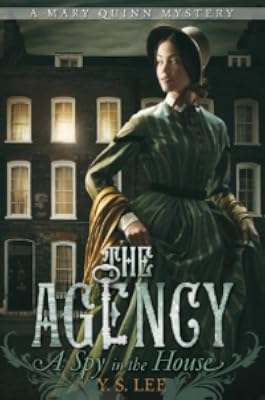

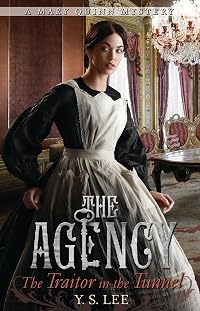
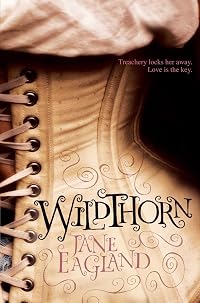
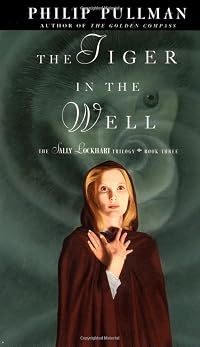
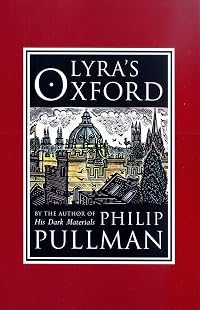
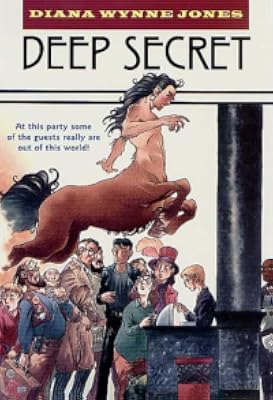
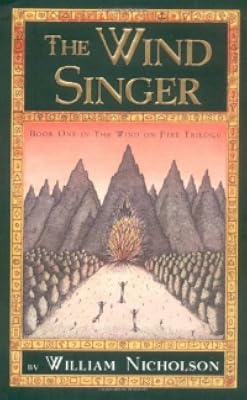



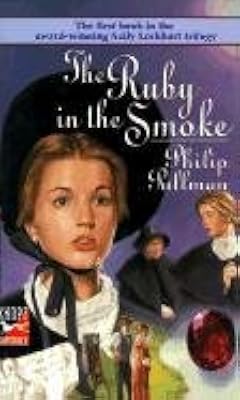
Member Recommendations
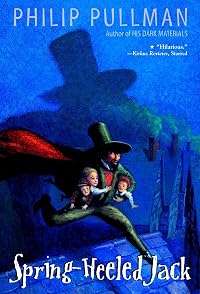
Caramellunacy Both stories are Victorian-era mysteries with smart and feisty female protagonists. Pullman's trilogy is definitely the darker of the two series, but Lee's complex and capable protagonist makes The Agency series well worth a read for cozy mystery lovers.
Also recommended by anonymous user
60
norabelle414 Excellent Victorian era historical fiction mysteries with strong female protagonists
32
HatsForMice Another Victorian London-set mystery, but with a fantasy element, more humour and a stronger sense of setting.

Member Reviews
Pullman's stories are regarded as young adult material because the main characters are teenagers, but they will appeal to anyone looking for a dark Victorian mystery. Sally's father died unexpectedly leaving her to fend for herself in grim surroundings. Like Dickens' stories, this one involves the seediest side of London and the smoke refers to opium. Although I enjoyed it I'm glad that Victorian life was not my experience.
Sally Lockhart's father has died. When she goes to his partner's office to ask what "the Seven Blessings" meant - referring to a statement in her father's last letter to her - the man keels over and dies. Undeterred, Sally continues to investigate what the Seven Blessings are and the exact nature of her father's death.
The first in a four book series set in Victorian London has a slightly creepy feel to it. Anton Lesser's narration of the audiobook adds to the atmosphere, and he does an incredibly convincing job of woman's voices for a male narrator. Details of laws of that time add to the realistic feel of the story, even while supernatural events are introduced. Personally, I enjoyed this series much more than His Dark Materials.
The first in a four book series set in Victorian London has a slightly creepy feel to it. Anton Lesser's narration of the audiobook adds to the atmosphere, and he does an incredibly convincing job of woman's voices for a male narrator. Details of laws of that time add to the realistic feel of the story, even while supernatural events are introduced. Personally, I enjoyed this series much more than His Dark Materials.
This was a fun, quick read. The story was kind of an adventure mystery story revolving around a teenaged girl named Sally Lockhart and her mysterious past. Unfortunately, I had already seen the very faithful Masterpiece Theatre version (with Billie Piper) before I read the book, which ruined the plot twists for me. The movie even featured one of the most memorable lines from the first page of the story: "Her name was Sally Lockhart; and within fifteen minutes, she was going to kill a man." It's such a great line that I think Pullman should have made this the first in the book (and if I remember correctly, it was the first line in the movie).
I wasn't a Philip Pullman fan before reading this book--I did not like His Dark Materials at show more all--but Sally Lockhart is so much more likable than Lyra that I have changed my mind about Pullman and am considering re-reading that other series to see if I might like it better the second time. Both main characters are kind of similar in their spunky, hard-edge personalities and in their daddy/mommy issues, but Sally seems so much more likable to me. And in this novel, Pullman's hands-off all-knowing narrator approach that was so difficult for me to read in his other series somehow feels fresh and different; it showcases the often ridiculous nature of Victorian society in an engagingly funny way. Even that line above is humorous and silly in an overly serious kind of way. Or take that other great line I previously blogged about. Hilarious.
This wasn't the best novel ever (for example, having Sally breathe in opium as part of the story line seemed a strange choice) but I thought it was definitely enjoyable. show less
I wasn't a Philip Pullman fan before reading this book--I did not like His Dark Materials at show more all--but Sally Lockhart is so much more likable than Lyra that I have changed my mind about Pullman and am considering re-reading that other series to see if I might like it better the second time. Both main characters are kind of similar in their spunky, hard-edge personalities and in their daddy/mommy issues, but Sally seems so much more likable to me. And in this novel, Pullman's hands-off all-knowing narrator approach that was so difficult for me to read in his other series somehow feels fresh and different; it showcases the often ridiculous nature of Victorian society in an engagingly funny way. Even that line above is humorous and silly in an overly serious kind of way. Or take that other great line I previously blogged about. Hilarious.
This wasn't the best novel ever (for example, having Sally breathe in opium as part of the story line seemed a strange choice) but I thought it was definitely enjoyable. show less
Well. Erm. Humm.
After meaning to read this book for years, I wanted to like this so much more than I did!!!!! Yes, I am using an excess of punctuation here because I feel like my disappointment is justified. So many readers I know say that this book was one of their favorites; that they wanted to be, or be friends with, Sally Lockhart; that rereading this beloved gem never failed them.
My biggest qualm with THE RUBY IN THE SMOKE is that Sally Lockhart feels like the quintessential "un-protagonist." For a character with an eponymous series name and lots written up about her in the back cover synopsis, Sally spends a lot of time off the page. The narration divides its time between Sally, the villains, Jim the plucky errand boy, Frederick show more the photographer, and who knows who else. While it was not bad that we spent some time following Jim's, Frederick's, the villains' footsteps around, I felt like the synopsis misled me to believe that I'd learn more about Sally, that I'd come to understand how she thinks, how she operates.
Alas, not only does Sally not have much narration time, rendering her still unfamiliar to me, but she also doesn't DO much of anything in this book. The synopsis makes her out to be this female wunderkind detective force to be reckoned it, when actually I feel like she does a lot of sitting at home, waiting for others (read: the male characters) to get back from their excursions and fill her in on what they've done. For a character that's supposed to be the protagonist, Sally really feels two steps behind everyone else on this case. Cementing my view that the series was named incorrectly was the fact that Sally basically gets gypped out of having her crowning moment! Through putting herself in an opium-induced trance, she figures out the secret behind the ruby, but it turns out that JIM already figured it out chapters ago, but just didn't tell her for fear of disappointing her or whatnot. Then the climactic scenes occur in which the guys get to do a lot of fighting and Sally is merely hormonal. Puh-lease. I don't care whichever way you spin it, Sally is not "intrepid" for tearfully enduring the consequences of her unknown history and for figuring out something that another character already figured out before her.
For a book with a female protagonist, THE RUBY IN THE SMOKE spends a disappointingly disproportionate time showing us that actually it's the boys who still get to do the exciting and essential parts of crime-solving. Feminist I find this book is not. Try Y. S. Lee's impressive The Agency Victorian mystery series if you truly want to see a smart and resourceful teen female detective in action. show less
After meaning to read this book for years, I wanted to like this so much more than I did!!!!! Yes, I am using an excess of punctuation here because I feel like my disappointment is justified. So many readers I know say that this book was one of their favorites; that they wanted to be, or be friends with, Sally Lockhart; that rereading this beloved gem never failed them.
My biggest qualm with THE RUBY IN THE SMOKE is that Sally Lockhart feels like the quintessential "un-protagonist." For a character with an eponymous series name and lots written up about her in the back cover synopsis, Sally spends a lot of time off the page. The narration divides its time between Sally, the villains, Jim the plucky errand boy, Frederick show more the photographer, and who knows who else. While it was not bad that we spent some time following Jim's, Frederick's, the villains' footsteps around, I felt like the synopsis misled me to believe that I'd learn more about Sally, that I'd come to understand how she thinks, how she operates.
Alas, not only does Sally not have much narration time, rendering her still unfamiliar to me, but she also doesn't DO much of anything in this book. The synopsis makes her out to be this female wunderkind detective force to be reckoned it, when actually I feel like she does a lot of sitting at home, waiting for others (read: the male characters) to get back from their excursions and fill her in on what they've done. For a character that's supposed to be the protagonist, Sally really feels two steps behind everyone else on this case. Cementing my view that the series was named incorrectly was the fact that Sally basically gets gypped out of having her crowning moment! Through putting herself in an opium-induced trance, she figures out the secret behind the ruby, but it turns out that JIM already figured it out chapters ago, but just didn't tell her for fear of disappointing her or whatnot. Then the climactic scenes occur in which the guys get to do a lot of fighting and Sally is merely hormonal. Puh-lease. I don't care whichever way you spin it, Sally is not "intrepid" for tearfully enduring the consequences of her unknown history and for figuring out something that another character already figured out before her.
For a book with a female protagonist, THE RUBY IN THE SMOKE spends a disappointingly disproportionate time showing us that actually it's the boys who still get to do the exciting and essential parts of crime-solving. Feminist I find this book is not. Try Y. S. Lee's impressive The Agency Victorian mystery series if you truly want to see a smart and resourceful teen female detective in action. show less
The Ruby in the Smoke called out to me not because of any merit of its own, but because it was written by Philip Pullman, author of His Dark Materials. Usually, when I enjoy an author’s work as much as I enjoyed The Golden Compass, it only makes sense to try some of his other series, yeah?
I have some mixed feelings about The Ruby in the Smoke.
On the one hand, I really liked the characters as a general rule. Each had his or her own quirks. They were a little bit stereotyped to what would have been common to their class, but they were individual enough that they stood out to me more than characters in similar situations in other novels, like Dodger or The Reluctant Assassin. I liked Sally, Rosa, and Fred in particular… but honestly show more Jim, Trembler, and Adelaide also had their merits. Each character was strongly written enough that I cared about what happened to them.
Within the character arc, I want to talk a little about the villain, Mrs. Holland. Mrs. Holland is a picture perfect Disney villain. She’s single-minded and old and crotchety and selfish and arrogant and dangerous. Thing of a personality mix somewhere between Maleficent, Cruella, and Ursula… and you’ve got Mrs. Holland. She’s perfectly done.
I really liked the romance too, which is something I don’t often say. I like it for the same reason I like it in Pullman’s other novels… there’s a slow, sweet build to it. Romance tends to take over stories and doesn’t seem to develop naturally… that drives me crazy, and it’s not true of The Ruby in the Smoke. Sally falls in love slowly, and in such a way you know it’s going to develop naturally over the course of the series. I really liked it, and I liked the potential couple too… so… I’m here for it.
While this is an historical fiction mystery, it’s also very much a YA novel. These were rare enough in 1985, and it goes to show that Philip Pullman was one of the early runners for the YA genre. Because of this, there’s been some criticism to the novel that it is too simple and straightforward. Honestly, those were some of the things I liked about it. There’s not a lot of glitz and glam to the writing, but it’s not so overly simplified that I would consider it middle grade. Not too hot, not too cold… just right.
The tale of the ruby itself immediately brought The Maltese Falcon to mind. The central piece in the story – or what the reader is led to believe is the central piece – is this ruby that people are willing to kill to have. It’s an immense fortune, and it seems to change people, bringing out the worst of their greed. I enjoyed he twists and turns of the novel – I predicted some elements its ended because some cliches are just good… but not the dramatic shift in the story. I thought it was well-done.
So here’s my concern, and I guess, it’s my only concern. The Ruby in the Smoke is based on and around the Opium Wars. Here in the States, we don’t talk a lot about these, as they aren’t a part of our country’s history, but in the mid-1800s, Britain went to war twice with China over opium. Opium plays a large part in The Ruby in the Smoke, and is used by multiple characters. There’s some stigma around it, but it is nonetheless appropriated for its hallucinogenic properties. So on one hand, we have drug use. And on the other hand, I’m not crazy about the depiction of Chinese characters? All are shown in relation to opium dens. They make up so little of the book, but it stood out to me immediately and… I don’t know. I guess it was just worth mentioning.
Generally, though? I really liked The Ruby in the Smoke, more than I was expecting to. It was refreshing to read a YA mystery that wasn’t a secret YA romance. This is an older book, so there are definitely cliches and tropes that were perhaps less common 34 years ago. Nonetheless, I’d recommend it is you enjoy the genre and in particular, if you liked The Golden Compass and are interested in some of Pullman’s other work. For myself, I’ll be venturing forth with The Shadow in the North. show less
I have some mixed feelings about The Ruby in the Smoke.
On the one hand, I really liked the characters as a general rule. Each had his or her own quirks. They were a little bit stereotyped to what would have been common to their class, but they were individual enough that they stood out to me more than characters in similar situations in other novels, like Dodger or The Reluctant Assassin. I liked Sally, Rosa, and Fred in particular… but honestly show more Jim, Trembler, and Adelaide also had their merits. Each character was strongly written enough that I cared about what happened to them.
Within the character arc, I want to talk a little about the villain, Mrs. Holland. Mrs. Holland is a picture perfect Disney villain. She’s single-minded and old and crotchety and selfish and arrogant and dangerous. Thing of a personality mix somewhere between Maleficent, Cruella, and Ursula… and you’ve got Mrs. Holland. She’s perfectly done.
I really liked the romance too, which is something I don’t often say. I like it for the same reason I like it in Pullman’s other novels… there’s a slow, sweet build to it. Romance tends to take over stories and doesn’t seem to develop naturally… that drives me crazy, and it’s not true of The Ruby in the Smoke. Sally falls in love slowly, and in such a way you know it’s going to develop naturally over the course of the series. I really liked it, and I liked the potential couple too… so… I’m here for it.
While this is an historical fiction mystery, it’s also very much a YA novel. These were rare enough in 1985, and it goes to show that Philip Pullman was one of the early runners for the YA genre. Because of this, there’s been some criticism to the novel that it is too simple and straightforward. Honestly, those were some of the things I liked about it. There’s not a lot of glitz and glam to the writing, but it’s not so overly simplified that I would consider it middle grade. Not too hot, not too cold… just right.
The tale of the ruby itself immediately brought The Maltese Falcon to mind. The central piece in the story – or what the reader is led to believe is the central piece – is this ruby that people are willing to kill to have. It’s an immense fortune, and it seems to change people, bringing out the worst of their greed. I enjoyed he twists and turns of the novel – I predicted some elements its ended because some cliches are just good… but not the dramatic shift in the story. I thought it was well-done.
So here’s my concern, and I guess, it’s my only concern. The Ruby in the Smoke is based on and around the Opium Wars. Here in the States, we don’t talk a lot about these, as they aren’t a part of our country’s history, but in the mid-1800s, Britain went to war twice with China over opium. Opium plays a large part in The Ruby in the Smoke, and is used by multiple characters. There’s some stigma around it, but it is nonetheless appropriated for its hallucinogenic properties. So on one hand, we have drug use. And on the other hand, I’m not crazy about the depiction of Chinese characters? All are shown in relation to opium dens. They make up so little of the book, but it stood out to me immediately and… I don’t know. I guess it was just worth mentioning.
Generally, though? I really liked The Ruby in the Smoke, more than I was expecting to. It was refreshing to read a YA mystery that wasn’t a secret YA romance. This is an older book, so there are definitely cliches and tropes that were perhaps less common 34 years ago. Nonetheless, I’d recommend it is you enjoy the genre and in particular, if you liked The Golden Compass and are interested in some of Pullman’s other work. For myself, I’ll be venturing forth with The Shadow in the North. show less
This is the first of Philip Pullman’s Victorian mystery novels featuring Sally Lockhart. She is 16-years-old in this story, her father has just died in a shipwreck, and she finds herself in the middle of nefarious dealings involving a missing ruby, criminal gangs, fraud, piracy, and the opium trade.
Because the protagonist is young, this is often considered a Young Adult novel. Don’t let this mislead you. This is a well-crafted tale of mystery, murder, and intrigue. The characters are engaging. The prose is exceptional.
Victorian England is a great setting for stories because of the sharp contrasts it provides -- from the largely illiterate poor working in sweatshops or grubbing a living on the streets of London, to the cultured show more gentry living on returns from investments of inherited capital. The extraordinary portrayal of this time and the details scattered throughout the scenes in this book make it seem as if they were written by someone who lived there, or who is, at least, intimately familiar with it and can bring it to life for those of us who are not.
I often find myself uncomfortable putting novels in predefined genre cubbyholes because the best of them often don’t fit. This is one. I think the YA categorization of this particular book and the rest of the series is most inappropriate. Sally is not a typical teenager and she is not a typical Victorian young lady. Neither is she a role model many people would want their kids to emulate, although I, as and adult, found her admirable. She defies convention, questions authority, and does her best in a bad situation.
The story is dark, at times, darker than I normally prefer, and although a hopeful conclusion comes a bit unexpectedly, it is not a case of “and they all lived happily ever after.”
In my opinion, this ranks among the best Victorian mystery novels that I have read. The story is suspenseful, the characters are well portrayed and believable, and the protagonist is likeable. I highly recommend it -- for adults. (Some kids may like it, too.) show less
Because the protagonist is young, this is often considered a Young Adult novel. Don’t let this mislead you. This is a well-crafted tale of mystery, murder, and intrigue. The characters are engaging. The prose is exceptional.
Victorian England is a great setting for stories because of the sharp contrasts it provides -- from the largely illiterate poor working in sweatshops or grubbing a living on the streets of London, to the cultured show more gentry living on returns from investments of inherited capital. The extraordinary portrayal of this time and the details scattered throughout the scenes in this book make it seem as if they were written by someone who lived there, or who is, at least, intimately familiar with it and can bring it to life for those of us who are not.
I often find myself uncomfortable putting novels in predefined genre cubbyholes because the best of them often don’t fit. This is one. I think the YA categorization of this particular book and the rest of the series is most inappropriate. Sally is not a typical teenager and she is not a typical Victorian young lady. Neither is she a role model many people would want their kids to emulate, although I, as and adult, found her admirable. She defies convention, questions authority, and does her best in a bad situation.
The story is dark, at times, darker than I normally prefer, and although a hopeful conclusion comes a bit unexpectedly, it is not a case of “and they all lived happily ever after.”
In my opinion, this ranks among the best Victorian mystery novels that I have read. The story is suspenseful, the characters are well portrayed and believable, and the protagonist is likeable. I highly recommend it -- for adults. (Some kids may like it, too.) show less
1872, London. "Her name was Sally Lockhart; and within fifteen minutes, she was going to kill a man." Hard not to be immediately pulled into a story with a sentence like that! In the first of the four Sally Lockhart Mystery novels, having been recently orphaned with her father's ship sinking somewhere in the Orient, sixteen year old Sally finds herself drawn into a saga filled with suspense and mystery. When she asks her late father's associate to explain to her what "the seven blessings" means, he keels over and dies. Soon, an unsavoury woman by the name of Mrs Holland is hot on Sally's trail, though Sally doesn't yet have any idea why. We know of Mrs Holland that she wears too-big brown and grey dentures—having, just before her late show more husband's casket was closed, reached out to take said dentures out of his mouth, claiming "there's still plenty of wear in those!"—we also know that she's holding a sailor (who's recently nearly escaped sure drowning) prisoner by keeping him drugged with opium. There's a huge ruby in the stakes and the only way Sally can put all the pieces together before it's too late is by literally confronting her worst nightmare in a way no sane parent could ever approve of. With a smart and resourceful heroine and filled with a cast of wonderful, highly coloured characters and non-stop action, this is a very well written tale by the creator of His Dark Materials that keeps you on the edge of your seat from start to finish. I couldn't wait for the follow up, and immediately ordered it from the BookDepository as soon as I'd finished listening to this very well made audiobook. show less
Members
- Recently Added By
Lists

1001 Children's Books You Must Read Before You Grow Up
774 works; 101 members

Best Books Set in London
157 works; 42 members

Female Protagonist
1,056 works; 57 members

Top Five Books of 2014
1,064 works; 398 members

Readers Guide to Steampunk
65 works; 1 member

Books About Girls
219 works; 17 members

Historical Fiction
889 works; 91 members

Crime and Mysteries to Read
746 works; 31 members
Victorian Period
113 works; 10 members

Children's Literature, Briefly Historical Fiction Reading List
44 works; 4 members

Detective Stories
343 works; 5 members

Books About Murder
313 works; 7 members

Best Mysteries With a Historical Setting
292 works; 160 members
Favourite Books
1,819 works; 309 members
Author Information

90+ Works 150,985 Members
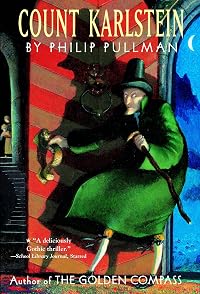
Philip Pullman was born in Norwich on October 19, 1946. He graduated from Oxford University with a degree in English. He taught at various Oxford middle schools and at Westminster College for eight years. He is the author of many acclaimed novels, plays, and picture books for readers of all ages. His first book, Count Karlstein, was published in show more 1982. His other books include: The Firework-Maker's Daughter; I Was a Rat!; Clockwork or All Wound Up; and The Good Man Jesus and the Scoundrel Christ. He is also the author of the Sally Lockhart series and the His Dark Materials Trilogy. He is the author of The Book of Dust, volume 1. He has received numerous awards including the Carnegie Medal and the Guardian Fiction Award for Northern Lights (The Golden Compass), the Whitbread Book of the Year Award for The Amber Spyglass, the Eleanor Farjeon Award for children's literature in 2002, and the Astrid Lindgren Award in 2005. (Bowker Author Biography) show less
Some Editions
Awards and Honors
Awards
Distinctions
Series

Work Relationships
Is contained in
Has the adaptation
Has as a student's study guide
Common Knowledge
- Canonical title
- The Ruby in the Smoke
- Original title
- The Ruby in the Smoke
- Alternate titles*
- De robijn in de rook.
- Original publication date
- 1985
- People/Characters
- Sally Lockhart; Frederick Garland; Rosa Garland; Matthew Bedwell; Nicholas Bedwell; Adelaide (show all 13); Jim Taylor; Mrs Holland; Major Marchbanks; Samuel Selby; Jonathan Berry; Henry Hopkins; Caroline Rees
- Important places
- London, England, UK; Swaleness, England, UK
- Related movies
- The Ruby in the Smoke (2006 | IMDb)
- Dedication
- For Marina and Sonia
For Jude - First words
- On a cold, fretful afternoon in early October, 1872, a hansom cab drew up outside the offices of Lockhart and Selby, Shipping Agents in the financial heart of London, and a young girl got out and paid the driver.
- Last words
- (Click to show. Warning: May contain spoilers.)She gathered up letter and box, and left for the train.
- Publisher's editor
- Foster, Frances
- Original language
- English
*Some information comes from Common Knowledge in other languages. Click "Edit" for more information.
Classifications
- Genres
- Fiction and Literature, Teen, Young Adult, Fantasy
- DDC/MDS
- 823.914 — Literature & rhetoric English & Old English literatures English fiction 1900- 1901-1999 1945-1999
- LCC
- PZ7 .P968 .R — Language and Literature Fiction and juvenile belles lettres Fiction and juvenile belles lettres Juvenile belles lettres
- BISAC
Statistics
- Members
- 4,433
- Popularity
- 3,344
- Reviews
- 102
- Rating
- (3.74)
- Languages
- 13 — Catalan, Czech, Dutch, English, French, German, Hungarian, Italian, Korean, Norwegian (Bokmål), Portuguese, Spanish, Swedish
- Media
- Paper, Audiobook, Ebook
- ISBNs
- 89
- ASINs
- 20