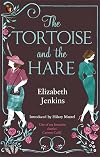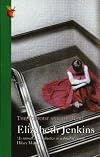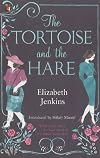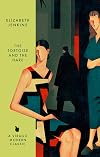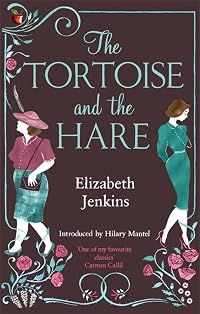
The Tortoise and the Hare
by Elizabeth Jenkins
On This Page
Description
The magnetic Evelyn Gresham, fifty-two, is a KC of considerable distinction. He has everything life could offer - a gracious riverside house in Berkshire, a beautiful grey-eyed wife Imogen, devoted to him and to their eleven-year-old son, a replica of his father. Their nearest neighbour is Blanche Silcox, a plain, tweed-wearing woman of fifty who rides, shoots, fishes, and drives a Rolls Royce - in every way the opposite of the domestic, loving Imogen. Their world is conventional country show more life at its most idyllic: how can its gentle surfaces be disturbed? show lessTags
Recommendations























Member Reviews
Ohhhh my, this book may be the most devastating portrait of the unraveling of a marriage that I've ever read. Written in 1954, it's a slow burning look at the ways a man can belittle and abandon his wife without her even being aware of it, or at least not at first. Evelyn Gresham is a handsome 52 year old lawyer who has everything he wants, including his doting wife Imogen and his 11 year old son. Their neighbor, near their large country estate, Blanche is everything Imogen isn't: unattractive and in her 50s, but athletic and interested in fishing, hunting, racing and other masculine things.
What I liked best was Jenkins way of slowly revealing the way this marriage was falling apart, and how Imogen seemed to operate with blinders on, show more continuing to cater to Evelyn's every wish and failing to realize what the reader can plainly see. The writing is both humorous and tragic in the way the plot is slowly developed. But this author can take down a character like nothing I've ever seen. Blanche's stepsister, Marcia for instance:
"Marcia Plender was short, plump and middle-aged. She was also excessively feminine, but so far from throwing her stepsister in the shade on this account whatever she might've done when both were girls, she now acted as a foil to her, though one would have been as far from suspecting it as the other. Marcia took great care of her person and appearance though she had allowed herself to get fat. As her constitution required her to rest in bed till half-past twelve and drink two double gins before lunch, it was difficult for her to avoid increasing weight....The assured, formidable appearance, combined with a sugary air, fluttering eyelids and die-away voice, made the beholder turn to Blanche with relief and even a sort of admiration. Blanche's abruptness and half-strangulated accents were not charming, but they were a great deal better than Marcia's efforts at charming" (Page75)
The minor characters are just as fully developed as the three protagonists and the ending knocked my socks off, but in a way, that made me think, "Oh, of course, all signs pointed to this. I should've known."
Just an absolutely brilliant book. show less
What I liked best was Jenkins way of slowly revealing the way this marriage was falling apart, and how Imogen seemed to operate with blinders on, show more continuing to cater to Evelyn's every wish and failing to realize what the reader can plainly see. The writing is both humorous and tragic in the way the plot is slowly developed. But this author can take down a character like nothing I've ever seen. Blanche's stepsister, Marcia for instance:
"Marcia Plender was short, plump and middle-aged. She was also excessively feminine, but so far from throwing her stepsister in the shade on this account whatever she might've done when both were girls, she now acted as a foil to her, though one would have been as far from suspecting it as the other. Marcia took great care of her person and appearance though she had allowed herself to get fat. As her constitution required her to rest in bed till half-past twelve and drink two double gins before lunch, it was difficult for her to avoid increasing weight....The assured, formidable appearance, combined with a sugary air, fluttering eyelids and die-away voice, made the beholder turn to Blanche with relief and even a sort of admiration. Blanche's abruptness and half-strangulated accents were not charming, but they were a great deal better than Marcia's efforts at charming" (Page75)
The minor characters are just as fully developed as the three protagonists and the ending knocked my socks off, but in a way, that made me think, "Oh, of course, all signs pointed to this. I should've known."
Just an absolutely brilliant book. show less
This was a phenomenal read, brilliant in the way it establishes its characters and then sat back and pressed play so that the characters may continue to meander along their courses to bounce and collide off of each other.
It's the book version of the line "Still waters run deep". We are taken along to tea time picnics, nursery visits, antique shops, house visits, day to day occurrences. The tension almost silently clicked over at every one of these events, and the discomfort and internal yelling crept up on me so gradually that it really felt true to life.
My own ignorance of the plot made me really immerse myself in the protagonist's own uncertainties. A truly insightful dissection of what drives us and our actions.
It's the book version of the line "Still waters run deep". We are taken along to tea time picnics, nursery visits, antique shops, house visits, day to day occurrences. The tension almost silently clicked over at every one of these events, and the discomfort and internal yelling crept up on me so gradually that it really felt true to life.
My own ignorance of the plot made me really immerse myself in the protagonist's own uncertainties. A truly insightful dissection of what drives us and our actions.
After a very slow start, when I picked this up again a couple of days ago I became riveted by the story, painful as it is, of a not-so-bad marriage unraveling when a more determined and lively woman comes along and steps into what she perceives as a 'void' waiting to be filled. I think the novel does start slowly and carefully but once it gets underway (about 1/3 in) events pick up and, given the character of each person involved, which the careful beginning has made very clear, the end is inevitable. And complex. At the time it was written, late forties, divorce was just beginning to be something that could be survived socially. In its own way the novel is subversive, as much of women's fiction is - the question Imogen must face is show more whether she will 'settle' for being the wife who won't give up her husband and consents to share him, or whether she will leave him. The dance of active/passive that couples play is perfectly laid out here - in this case the man sets up the situation so that in all regards the women are making 'the moves' - that he is passively orchestrating everything he carefully blanks out of his consciousness - I've certainly seen that before but I've never encountered it written up so well. As an aside - Imogen's relationship with her son Gavin is beautifully done, he is his father's son completely, and does not 'get' or even respect her and the Leeper family is priceless and the son Tim, with his devotion and appreciation of Imogen, a wonderful balancing piece of the story. I've read several of Jenkins biographies and can't recommend them more highly, and now, I'm happy to say I can recommend her novel as well. ****1/2 show less
This is a Virago edition. Love those. It's a slow starter, and I thought it might be a DNF for me because I was just not getting into the story - it really needs 50 or so pages and then it picks up. It's the unwinding of a marriage, and it is just so well done. I wanted to lecture the main character, Imogene, and explain that we teach people how to treat us. Don't put up with this. Speak up. Be brave. When push comes to shove, always shove! But alas, Imogene and I do not have the same temperaments or personalities. In frustration, I actually did something I never do - I turned to the final pages and read the ending before continuing. The ending saved it for me. Anyway, it's brilliant in how it shows us the marriage from different show more vantage points. This one is not about the plot; it's more of a character study, so you will need patience, but it is worthy. show less
Imogen Gresham is 37, her powerful lawyer husband, Evelyn Gresham is 52. He is everything she desires and admires, with his handsome chiseled features, at the height of his masculine powers in her eyes, successful, accomplished and virile. The reader, however, gets another view of him, seeing a domineering alpha male who is entirely self-serving and self-absorbed, although he can be charming if he chooses. Imogen, on the other hand, is emotional, sentimental, loving old things for the wear on them, history which shows in cracks on mugs or missing silver finishes on platters. She is afraid to stand up to him for fear of upsetting the tranquility of his home life, a life which has unfortunately come to include their eleven year old son show more treating her just as his father does. At the point where we intersect with her, she has become effete and useless, unable to drive or to engage in the usual rural pastimes of hunting and fishing, purposeless and inept. She is not, however, unintelligent. Rather the opposite. It is just not a kind of intelligence which her husband appreciates or understands.
Imogen has her admirers, some fervent, and loyal close friends, partly because she is beautiful, gentle and considerate but also because those people aren't particularly powerhouse types themselves. But we see early on in the book that she does not have her husband's deep love or admiration because she lacks certain qualities which their frumpier middle-aged neighbour, Blanche Silcox, has in spades. Enter the femme fatale in a most unlikely guise of tweeds, portly middle and bad hats.
This is the tale of the dissolution of a marriage and the start of an affair, held up to the light and put under the microscope by Elizabeth Jenkins somewhat in the manner of Barbara Pym (although without the same depth of wry wit). Quietly and inevitably, we watch everything unravel, knowing what the ending will be but unable to stop watching the impending train crash. Only it never really is a crash because everyone is too civilised and genteel for that. I was interested to read in the Afterword that the book was somewhat autobiographical, as Jenkins sought to write out a similar betrayal in her own life.
There are quirky neighbours in the form of the Leepers, whose siren sister Zenobia becomes the representation for the most extreme manifestation of female sensuality. Jenkins is looking at what makes relationships tick, playing with characters like Zenobia to help Imogen understand what has happened to her marriage, to herself. Woven throughout the story is Gavin Gresham's friend Tim Leeper. Tim is, as best as I can understand him, the thing with feathers which perches in the soul, an alter image of Imogen herself, her shadow which slides and bends along walls.
This is excellent writing, which drew me in and kept my interest to the end. I don't know if it would appeal to an alpha male like Evelyn Gresham, however. show less
Imogen has her admirers, some fervent, and loyal close friends, partly because she is beautiful, gentle and considerate but also because those people aren't particularly powerhouse types themselves. But we see early on in the book that she does not have her husband's deep love or admiration because she lacks certain qualities which their frumpier middle-aged neighbour, Blanche Silcox, has in spades. Enter the femme fatale in a most unlikely guise of tweeds, portly middle and bad hats.
This is the tale of the dissolution of a marriage and the start of an affair, held up to the light and put under the microscope by Elizabeth Jenkins somewhat in the manner of Barbara Pym (although without the same depth of wry wit). Quietly and inevitably, we watch everything unravel, knowing what the ending will be but unable to stop watching the impending train crash. Only it never really is a crash because everyone is too civilised and genteel for that. I was interested to read in the Afterword that the book was somewhat autobiographical, as Jenkins sought to write out a similar betrayal in her own life.
There are quirky neighbours in the form of the Leepers, whose siren sister Zenobia becomes the representation for the most extreme manifestation of female sensuality. Jenkins is looking at what makes relationships tick, playing with characters like Zenobia to help Imogen understand what has happened to her marriage, to herself. Woven throughout the story is Gavin Gresham's friend Tim Leeper. Tim is, as best as I can understand him, the thing with feathers which perches in the soul, an alter image of Imogen herself, her shadow which slides and bends along walls.
This is excellent writing, which drew me in and kept my interest to the end. I don't know if it would appeal to an alpha male like Evelyn Gresham, however. show less
(21 January 2012 – from Ali for my birthday)
This is a gorgeous Virago hardback edition. SO pretty. Imogen is married to Eveylyn Gresham, a barrister a good few years older than her who is Not Particularly Nice, but exerts a traditional patriarchal and also sexual hold over her. She keeps up her end of the marital bargain by being decorative (which she was obviously raised to be) and trying to run the house and family smoothly (not so successfully), buoyed up only by her flirtatious relationship with old friend, Paul, and her sustaining friendship with Cecil (who is a lady with a man’s name, contrasting nicely with Evelyn’s bi-gendered name). Enter Blanche Silcox, bluff and gruff in her ill-fitting tweeds, and elderly at 50, who show more is, it seems, determined to prise Evelyn away from Imogen. The women thus far mentioned are contrasted with a terrifying poetess who operates entirely through her physicality, a brittle wife and a neglectful mother: no one comes out of this particularly well.
The psychological suspense is almost unbearable – you want to probe the situation like you would a slightly sore tooth or a mild bruise. Redemption comes through the most unlikely of sources, and only once you’ve been put through the wringer. It is rather Elizabeth Taylorian (even being set near Reading) and, to put it mildly, exquisite. show less
This is a gorgeous Virago hardback edition. SO pretty. Imogen is married to Eveylyn Gresham, a barrister a good few years older than her who is Not Particularly Nice, but exerts a traditional patriarchal and also sexual hold over her. She keeps up her end of the marital bargain by being decorative (which she was obviously raised to be) and trying to run the house and family smoothly (not so successfully), buoyed up only by her flirtatious relationship with old friend, Paul, and her sustaining friendship with Cecil (who is a lady with a man’s name, contrasting nicely with Evelyn’s bi-gendered name). Enter Blanche Silcox, bluff and gruff in her ill-fitting tweeds, and elderly at 50, who show more is, it seems, determined to prise Evelyn away from Imogen. The women thus far mentioned are contrasted with a terrifying poetess who operates entirely through her physicality, a brittle wife and a neglectful mother: no one comes out of this particularly well.
The psychological suspense is almost unbearable – you want to probe the situation like you would a slightly sore tooth or a mild bruise. Redemption comes through the most unlikely of sources, and only once you’ve been put through the wringer. It is rather Elizabeth Taylorian (even being set near Reading) and, to put it mildly, exquisite. show less
Imogen is the young, attractive wife of Evelyn Gresham, a London barrister, and mother to their son Gavin. At 52, Evelyn is much older than Imogen, and his career success has made them comfortably well off. Imogen is devoted to Evelyn, keeping house and making sure his meals and other needs are attended to. But Evelyn has struck up a friendship with neighbor Blanche Silcox, who fills an emotional void in his life. Imogen is initially dismissive of Blanche; after all, she is older and plain in her appearance. But the reader sees what Imogen does not: Evelyn is finding reasons to spend time with Blanche, and to stay in London “for work” instead of coming home.
Reality dawns slowly, acceptance even more so. As her marriage unravels, show more Imogen must decide the shape of her future. Locked in the societal norms of the 1950s, she has options but saying and doing are two different things. Support from friends and an unlikely ally make for an unconventional outcome. Elizabeth Jenkins delivers a fairly balanced character study: Evelyn comes across as a fairly decent guy who cares about his family, even Blanche Silcox has her merits, and all three played a part in the ultimate fate of the marriage. show less
Reality dawns slowly, acceptance even more so. As her marriage unravels, show more Imogen must decide the shape of her future. Locked in the societal norms of the 1950s, she has options but saying and doing are two different things. Support from friends and an unlikely ally make for an unconventional outcome. Elizabeth Jenkins delivers a fairly balanced character study: Evelyn comes across as a fairly decent guy who cares about his family, even Blanche Silcox has her merits, and all three played a part in the ultimate fate of the marriage. show less
Members
- Recently Added By
Lists

The Guardian's 1000 Novels Everyone Must Read
1,005 works; 549 members

Favourite Virago Modern Classics
183 works; 38 members

Backlisted
109 works; 9 members

Top Five Books of 2019
387 works; 111 members

TML 200 Best Books 1950-1999
202 works; 10 members

Books Read in 2019
4,052 works; 110 members

The Modern Library (The Two Hundred Best Novels....
202 works; 1 member
Author Information

31+ Works 2,214 Members
Some Editions
Awards and Honors
Series
Belongs to Publisher Series
Common Knowledge
- Canonical title
- The Tortoise and the Hare
- Original title
- The Tortoise and the Hare
- Original publication date
- 1954
- Epigraph
- Emilia: O, who hath done this deed?
Desdemona: Nobody; I myself. Farewell.
Othello, ACT V, SC. II - First words
- The sunlight of late September filled the pale, formal streets between Portland Place and Manchester Square.
Women are strong; women are also humiliatingly weak. (Introduction) - Last words
- (Click to show. Warning: May contain spoilers.)We may recall that Imogen's last remark is "There is a very great deal to be done." (Introduction)
(Click to show. Warning: May contain spoilers.)"I must improve," she said half aloud. "There is a very great deal to be done."
Classifications
Statistics
- Members
- 477
- Popularity
- 64,015
- Reviews
- 13
- Rating
- (3.97)
- Languages
- English, Italian, Spanish
- Media
- Paper, Ebook
- ISBNs
- 9
- ASINs
- 7