
Idylls of the King
by Alfred Tennyson
On This Page
Description
With Idylls of the King, one of the giants of Victorian literature turned his considerable talents to the chivalric lore surrounding a larger-than-life British ruler, King Arthur. Alfred, Lord Tennyson, cast his interpretation of Arthurian myth into the form of an epic poem, and his tales of Camelot soar to remarkable imaginative heights to trace the birth of a king; the founding, fellowship, and decline of the Round Table; and the king's inevitable departure. Encompassing romance, heroism, show more duty, and conflict, Tennyson's poetry charts the rise and fall of a legendary society."The Coming of Arthur" chronicles the victorious battle with which the king also wins Guinevere's hand; "Gareth and Lynette," "The Marriage of Geraint," and "Geraint and Enid" likewise concern tests and triumphs of love, virtue, and valor. The tragic tale of two brothers, "Balin and Balan," is followed by "Merlin and Vivien," recounting the wizard's betrayal at the hands of a femme fatale. "Lancelot and Elaine," a classic story of unrequited love, leads up to the grand climax, "The Holy Grail," followed by "The Last Tournament" and "The Passing of Arthur."
Generations of readers — both poetry lovers and devotees of myth and legend — have exulted in these stories "About the founding of a Round Table / That was to be, for love of God and man / And noble deeds, the flower of all the world."
. show less
Tags
Recommendations

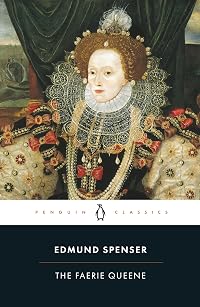
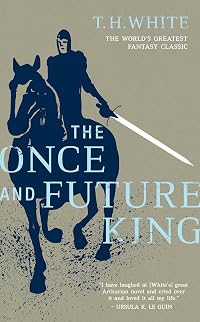
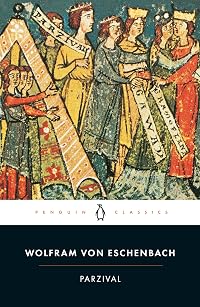
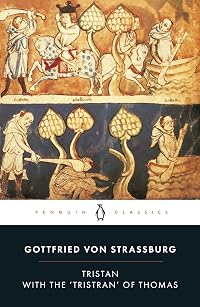













Member Recommendations
Member Reviews
Poetic version of the arthurian legends. I have to say i have zero interest in arthurian mythology but thats ok because this isn't about myths and legends this is about people.
These poems have a remarkable amount of humanity in them. There are so many surprises and characters act in very human but unexpected ways. Also the magical elements of the myths are mostly minimized or made ambiguous.
Other poetry epics like Orlando Furiouso or the Faerie Queene tend to be very good on the action this less so with most action taking place between the lines. However thats ok because it's again about people not events.
The only real flaw is that each section is a bit long for a comfortable read in one go at least for me.
One other small complaint is show more that it mixes in the Tristan and Isolde legend, so is your not familiar with that you may get confused as it assumes you already know it, i had to wiki it.
This is really like a modern film adaptation taking modern issues and viewpoints and clothing them in the arthurian lengendry, i like. show less
These poems have a remarkable amount of humanity in them. There are so many surprises and characters act in very human but unexpected ways. Also the magical elements of the myths are mostly minimized or made ambiguous.
Other poetry epics like Orlando Furiouso or the Faerie Queene tend to be very good on the action this less so with most action taking place between the lines. However thats ok because it's again about people not events.
The only real flaw is that each section is a bit long for a comfortable read in one go at least for me.
One other small complaint is show more that it mixes in the Tristan and Isolde legend, so is your not familiar with that you may get confused as it assumes you already know it, i had to wiki it.
This is really like a modern film adaptation taking modern issues and viewpoints and clothing them in the arthurian lengendry, i like. show less
Rest in peace Arthur 3
I was skeptical going into this at first since it’s a 19th century text and I was curious as to how much Tennyson would change from Malory and earlier works. I really enjoyed it, though. I think it’s beautifully written and I love all the imagery Tennyson uses. Malory’s Grail Quest is still my favorite version of it, but I do still *really* like Tennyson’s take on it. Writing it in past tense and hearing it through Percival instead of reading it as the quest was going on was a choice I really liked. The Grail Quest has always felt like the beginning of the end to me and I think Percival’s recollection really adds it that. I also loved the last line of ‘The Last Tournament’ - “And Mordred thought show more ‘the time is hard at hand’” hell yeah dude it’s your time to shine go kill your dad !!
Also the art in my edition is absolutely gorgeous. The only character that’s drawn different from my mental image of them is Geraint/Erec and the Bedivere and Galahad portraits are my favorite. Also Gawain looks extremely fruity in his but of course he does. show less
I was skeptical going into this at first since it’s a 19th century text and I was curious as to how much Tennyson would change from Malory and earlier works. I really enjoyed it, though. I think it’s beautifully written and I love all the imagery Tennyson uses. Malory’s Grail Quest is still my favorite version of it, but I do still *really* like Tennyson’s take on it. Writing it in past tense and hearing it through Percival instead of reading it as the quest was going on was a choice I really liked. The Grail Quest has always felt like the beginning of the end to me and I think Percival’s recollection really adds it that. I also loved the last line of ‘The Last Tournament’ - “And Mordred thought show more ‘the time is hard at hand’” hell yeah dude it’s your time to shine go kill your dad !!
Also the art in my edition is absolutely gorgeous. The only character that’s drawn different from my mental image of them is Geraint/Erec and the Bedivere and Galahad portraits are my favorite. Also Gawain looks extremely fruity in his but of course he does. show less
A major Victorian Poet tries to deal with some of the aspects of the Arthurian Corpus by poeticising them. There are good lines, but no great sympathy for the material as a whole. Arthur and his ideas are too totalitarian for the minds of Alfred's audience, and perhaps of Alfred himself. I think then of the legendary Arthur with his perfect personal leadership, and Alfred the king of Wessex, who was a systemizer. Tennyson should have turned his pen to Alfred, not Arthur, really.
A venture of epic poetry, this is Alfred Lord Tennyson's take on the Arthurian legends. An incredible read in its own right, when taken in relation to Malory, Tennyson's work highlights the passion, tragedy, and Romanticism that sometimes was left at a simmer in Malory's work. Tennyson's work is more 'fantastic' than Malory's, and his descriptions of Camelot are as awe inspiring for the reader as they are for the characters he follows. For those familiar with Malory, Tennyson does not parallel the tales Malory depicts but rather has his own interpretations to suit his goal in describing the tragic emotional arc of the fall of Camelot. Though I would not consider myself an expert in poetry, I have read quite a few epic pieces, and this show more is a monumental work with a humanisitic focus, anchoring its place among the timeless classics, such as Homer's 'Illiad'. Whether you are a fan of Malory, or Arthurian legend in general, this should be part of your collection. show less
As usual, I thought right up there the short story of Balin, who is to blame for his own tragedy ('My violences, my violences!').
Darker than I had expected and gutsier. I think I decided to read this at last after I saw a book on Tennyson's battle poetry. How he wrote 54 battle poems and had a genuine feel for the 'heroic ethos' of ancient fiction to which he was devoted. Fair enough, I thought. Tried a couple of short ones: his Boadicea is as bloody as she came, and I throbbed to 'The Revenge: a Ballad of the Fleet'. I even felt the tribute in his Ode on Wellington.
I think he's a gorgeous poet, on the whole, although I'd make cuts. The guy can write.
Arthur is his hero, and not Lancelot. This isn't the courtly love version, but the show more version where a self-indulgent love corrupts a heroic kingdom. Arthur's certainly a fighting king against pagans. Give him a pagan, he can let loose without qualms and soar with the sword.
The comedy can be faux-medieval -- I mean you think of those silly films in tights, but perhaps comedy wasn't his forte. I expect tragedy is, and melancholy.
Again, I'll have Balin, ten pages of him, gut-wrenchingly tragic and very darkly done. But I'd say that about Malory's Balin. Which proves to me Tennyson was awake to the old authentic stuff, though he's often condemned for Victorian. show less
Darker than I had expected and gutsier. I think I decided to read this at last after I saw a book on Tennyson's battle poetry. How he wrote 54 battle poems and had a genuine feel for the 'heroic ethos' of ancient fiction to which he was devoted. Fair enough, I thought. Tried a couple of short ones: his Boadicea is as bloody as she came, and I throbbed to 'The Revenge: a Ballad of the Fleet'. I even felt the tribute in his Ode on Wellington.
I think he's a gorgeous poet, on the whole, although I'd make cuts. The guy can write.
Arthur is his hero, and not Lancelot. This isn't the courtly love version, but the show more version where a self-indulgent love corrupts a heroic kingdom. Arthur's certainly a fighting king against pagans. Give him a pagan, he can let loose without qualms and soar with the sword.
The comedy can be faux-medieval -- I mean you think of those silly films in tights, but perhaps comedy wasn't his forte. I expect tragedy is, and melancholy.
Again, I'll have Balin, ten pages of him, gut-wrenchingly tragic and very darkly done. But I'd say that about Malory's Balin. Which proves to me Tennyson was awake to the old authentic stuff, though he's often condemned for Victorian. show less
Tennyson, unhappy in school, early recognized a beauty and significance in epic poetry, reciting Pope's Homer's 'Iliad' at the age of nine, improvising a la Walter Scott by ten, and composing his own epic by the age of twelve, largely in his father's excellent library.[8] The Arthurian romances made a deep impression. [33] By the age of 24, Tennyson began the work of poetrifying the drama of King Arthur, although it took many years --decades-- of preparation.
There are four character studies of women, comprising four "Idylls" of the King (!): Elaine, tender and innocent, in contrast with Vivien, crafty and wicked. Enid, the faithful wife, in contrast with Guinevere, who strays.
But the work goes far beyond character, into an epic show more surrounding the great figure of Arthur himself, warring in some way between sense and spirit, struggling with his own nature against his own ideals. Tennyson intended this allegory in the tale: "New-old, and shadowing Sense at war with Soul/...one touched by the adulterous finger of a time/ That hover'd between war and wantonness,/ And crownings and dethronements." [37]
With quite helpful Notes, and a Glossary which cites back to the text where the defined word is used. show less
There are four character studies of women, comprising four "Idylls" of the King (!): Elaine, tender and innocent, in contrast with Vivien, crafty and wicked. Enid, the faithful wife, in contrast with Guinevere, who strays.
But the work goes far beyond character, into an epic show more surrounding the great figure of Arthur himself, warring in some way between sense and spirit, struggling with his own nature against his own ideals. Tennyson intended this allegory in the tale: "New-old, and shadowing Sense at war with Soul/...one touched by the adulterous finger of a time/ That hover'd between war and wantonness,/ And crownings and dethronements." [37]
With quite helpful Notes, and a Glossary which cites back to the text where the defined word is used. show less
A Victorian era take on the Arthurian legends in poetic form. The language is archaic even for Victorian times, and it feels forced into the poetic structure. The effort required may put off many readers.
Members
- Recently Added By
Lists

Best Arthurian Fiction
104 works; 33 members

1970s
657 works; 23 members
Modern Arthurian Fiction
237 works; 16 members

Merrill's English Texts
59 works; 2 members

Literature of Honor for Boys
91 works; 3 members

Western World's Greatest Books - Project Gutenberg
295 works; 15 members

Books available on Open Library
171 works; 4 members

1964 College Preparatory Reading List
202 works; 8 members

Books Read in 2021
5,361 works; 114 members

Works in the game of Authors
44 works; 2 members

Recommended Reading : 600 Classics Reviewed, Editors of Salem Press, 2015
634 works; 6 members

Books talked about in Pamela Dean's Tam Lin
74 works; 1 member
Author Information

715+ Works 14,381 Members
Alfred Tennyson was born on August 6, 1809 in Somersby, England. He attended Trinity College in Cambridge. Tennyson is chiefly known for his poetry, an art form that had interested him since the age of six. His best known work is the Idylls of the King. Tennyson was appointed Poet Laureate of England in 1850 and became the Baron of Aldworth and show more Farrington in 1883. Tennyson was still writing his his 80s, and died on October 6, 1892 near Haslemere, England. (Bowker Author Biography) If there were a contest for the title "greatest Victorian poet," Tennyson would in death, as in life, obtain the prize. He had the finest ear of any English poet, admitting to know the metrical value of every word in the English language except "scissors." In addition, his ability to evoke a closely rendered scene was unsurpassed. Therefore, although those who sought to attack Tennyson called him "the stupidest of the English poets," he remains the only one ennobled for his poetry. Tennyson was born at Somersby rectory in Lincolnshire, the son of the rector there, and was educated at Louth Grammar School and Trinity College, Cambridge. His earliest published verse, Poems Chiefly Lyrical (1830) and Poems (1833), were considered too sentimental by many critics. Signs of future greatness could be detected in some of the poems in these collections, however. In 1842, a new volume entitled Poems was published. This work, consisting of heavily revised poems from the two earlier collections as well as many new poems, helped to establish Tennyson's fame. His masterpiece, In Memoriam (1850), crowned his fame. The work is a tribute to his close friend Arthur Henry Hallam, whose sudden death in 1833 was a crucial event in the poet's life. The year it was published he succeeded Wordsworth as poet laureate of England. Thereafter, he became tremendously popular and held the respect and admiration of the nation, including Queen Victoria and Prince Albert. From that point, Tennyson also became the poet of the establishment, and for the next 40 years he was the Parnassian idol whom younger poets would vainly seek to topple. In many of his poems, including "Ulysses," "The Princess," and "Idylls of the King" (1859--1885), Tennyson trumpeted the creed of the benevolent tyrant. It was this embrace of an authoritarian universe that, as much as his versecraft, had earned him the respect of the British monarchs. His lifelong fascination with King Arthur was the inspiration for Idylls of the King, a series of 12 narrative poems published over a period of 26 years. In 1888, Tennyson chronologically arranged these 12 poems, thus depicting the full story of Arthur and his vision of the perfect state. Tennyson's last poem, "Crossing the Bar," was a 16-line lyric written while crossing from Lymington to the Isle of Wight. It was included in a collection entitled Demeter and Other Poems published in 1889. Tennyson's most characteristic form of poetry was the idyl, a poem of country life. These poems frequently take the form of dramatic reveries that tell a story. Mood is often created through the power of richly described settings. All of Tennyson's work reflects his talent for achieving fine shades of poetic expression, and his lyrics express the emotions and experiences shared by all people. His work is also notable for its heroic quality. In 1883, Tennyson was awarded the title of Baron Tennyson by Queen Victoria; his full title was Baron of Aldworth and Farringford. When he died in 1892, he was buried in the Poet's Corner of Westminster Abbey. Tennyson's letters show almost nothing of the vividness and brilliance of his poetry, but Cecil Y. Lang and Edgar F. Shannon have been publishing them for their sidelights. More important for an understanding of Tennyson's poetry, the century-long ban on publishing the contents of Tennyson's notebooks, held by Trinity College in Cambridge, was lifted not long ago; an edition of In Memoriam, incorporating these variants, was brought out by Susan Shatto and Marion Shaw in 1982. (Bowker Author Biography) show less
Some Editions
Awards and Honors
Series
Belongs to Publisher Series
Work Relationships
Is contained in
Contains
Is abridged in
Was inspired by
Has as a study
Has as a student's study guide
Common Knowledge
- Original publication date
- 1885
- People/Characters
- King Arthur; Lancelot du Lac; Guinevere; Merlin; Sir Gareth; Lynette (show all 68); Enid; Sir Geraint; Vivian; King Leodegrance (Leodogran); Lyonors; King Mark; Sir Kay; Sir Bedivere; Prince Albert; Queen Victoria; King Lot (of Orkney); King Carádos; King Urien; King Cradlemont (of Wales); King Claudius; King Clariance (of Northumberland); King Brandagoras (of Latangor); King Anguisant (of Erin); King Morganore; Bleys; Sir Ulfias; Sir Brastias; Gorloïs; Ygerne; Queen Bellicent; Uther Pendragon; Sir Gawain; Sir Modred; Lady of the Lake; Saint Dubric; Earl Yniol; Sir Edyrn, son of Nudd (the Knight of the Sparrowhawk); Knight of the Morning Star; Knight of the Noonday Sun; Knight of the Evening Star; Knight of Death; Earl Limours; Earl Doorm; King Pellam; Sir Balin le Savage (The Knight with the Two Swords); Sir Balan le Savage; Sir Garlon; Sir Valence; Sir Sagramor le Desirous; Sir Perceval (Percivale); Elaine of Astolat; Sir Torre; Sir Lavaine; Lord of Astolat; Sir Perceval (Percivale); Sir Galahad; Ambrosius; Joseph of Arimathea; Arviragus; Sir Bors; Sir Pelleas; Ettarre; Nestling; Sir Tristram; Iseult of the White Hands (Isolt the White); Iseult the Fair (Queen Iseult); Red Knight
- Important places
- Camelot; Almesbury; Astolat; Cameliard; Orkney, Scotland, UK; Tintagel, Cornwall, England, UK (Tintagil) (show all 21); Castle Perilous; Caerleon upon Usk, Gwent, Wales, UK; River Usk, Wales, UK; Devon, England, UK; Brocéliande, Brittany, France; Lyonesse; Badon Hill, England, UK; Aromat; Moriah; Glastonbury, Somerset, England, UK; Siege Perilous; Carbonek; Forest of Dean, Gloucestershire, England, UK; Brittany, France; Cornwall, England, UK
- Important events
- Quest for the Holy Grail; Middle Ages
- First words
- Leodogran, the King of Cameliard,
Had one fair daughter, and none other child;
and she was fairest of all flesh on earth,
Guinevere, and her his one delight. - Last words
- (Click to show. Warning: May contain spoilers.)And the new sun rose bringing the new year.
- Original language
- English
- Canonical DDC/MDS
- 821.8
- Canonical LCC
- PR5558
Classifications
Statistics
- Members
- 2,926
- Popularity
- 6,167
- Reviews
- 18
- Rating
- (4.02)
- Languages
- English, French, Russian
- Media
- Paper, Audiobook, Ebook
- ISBNs
- 94
- ASINs
- 129