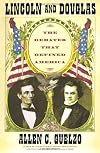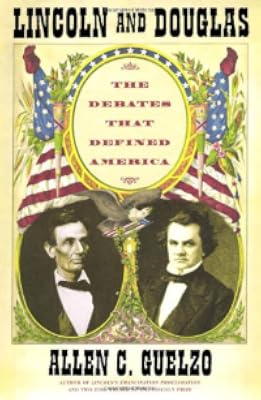
Lincoln and Douglas: The Debates that Defined America
by Allen C. Guelzo
On This Page
Description
What carried this one-term congressman from obscurity to fame was his Senate campaign against the country's most formidable politician, Stephen A. Douglas, in the summer and fall of 1858. Lincoln challenged Douglas directly in one of his greatest speeches--"A house divided against itself cannot stand"--and confronted Douglas on the questions of slavery and the inviolability of the Union in seven fierce debates. Of course, the great issue was slavery. Douglas was the champion of letting show more states and territories decide for themselves whether to legalize slavery. Lincoln drew a moral line, arguing that no majority could ever make slavery right. Lincoln lost that Senate race to Douglas, though he came close to toppling the "Little Giant," but he emerged a predominant national figure. Guelzo's book brings alive their debates and this whole year of campaigns, and underscores their centrality in the greatest conflict in American history.--From publisher description. show lessTags
Recommendations









Member Reviews
A very complete look at Lincoln & Douglas's debates. I very much appreciated getting the background stories, including the politics behind the debates. It made many things make more sense, including how Dred Scott fit into everything and also everyone's stances on the Civil War.
The only thing I didn't like was the very end of the epilogue; I felt it got a bit overblown. I was with Guelzo right up until about the last two pages when he tried to tie the Cold War and 9/11 into everything. I am ALL ABOUT how the past informs the present but it was ham-handed, the nuances are much more subtle. If you are doing your job right when writing a history book, your audience is already thinking these thoughts on their own.
The only thing I didn't like was the very end of the epilogue; I felt it got a bit overblown. I was with Guelzo right up until about the last two pages when he tried to tie the Cold War and 9/11 into everything. I am ALL ABOUT how the past informs the present but it was ham-handed, the nuances are much more subtle. If you are doing your job right when writing a history book, your audience is already thinking these thoughts on their own.
I have a sneaking suspicion that we're going to be seeing a sharp increase in the already-astronomical number of books about various aspects of Abraham Lincoln's life over the next year or so as we approach the bicentennial of his birth. Authors will almost certainly continue to leave no Lincoln stone unturned (rail unsplit?) as they work over old ground and/or attempt to tread new paths.
Allen C. Guelzo's Lincoln and Douglas: The Debates that Defined America (Simon & Schuster) takes a narrow look at the seven debates waged between Lincoln and incumbent Stephan A. Douglas during the senatorial contest of 1858. Guelzo argues, quite fairly, that the debates were largely responsible for Lincoln's elevation onto the national stage which show more resulted in the delivery of his famous Cooper Union speech in early 1860 and allowed him to be seen as a serious contender for the Republican presidential nomination that year.
The book is focused, providing just barely enough background information on the issues, the run-up to the campaign and even the non-debate portion of the contest. Guelzo hones in on each debate with an examination of the setting, the various arguments made and the perceptions left by Lincoln and Douglas. It's a well-written and well-researched book with fine footnotes and a good historiographical wrap-up.
http://philobiblos.blogspot.com/2008/04/book-review-lincoln-and-douglas.html show less
Allen C. Guelzo's Lincoln and Douglas: The Debates that Defined America (Simon & Schuster) takes a narrow look at the seven debates waged between Lincoln and incumbent Stephan A. Douglas during the senatorial contest of 1858. Guelzo argues, quite fairly, that the debates were largely responsible for Lincoln's elevation onto the national stage which show more resulted in the delivery of his famous Cooper Union speech in early 1860 and allowed him to be seen as a serious contender for the Republican presidential nomination that year.
The book is focused, providing just barely enough background information on the issues, the run-up to the campaign and even the non-debate portion of the contest. Guelzo hones in on each debate with an examination of the setting, the various arguments made and the perceptions left by Lincoln and Douglas. It's a well-written and well-researched book with fine footnotes and a good historiographical wrap-up.
http://philobiblos.blogspot.com/2008/04/book-review-lincoln-and-douglas.html show less
Although somewhat tedious at times, Mr Guelzo's book not only offers firsthand accounts of the two Senatorial candidates, this work also sheds light on both men as people. Sprinkled throughout the book are tidbits of history, not necessarily related to the series of debates which crisscrossed the state, but are illustrative of the era and pertinent to the great debaters.
Mr Guelzo does not "rewrite" history to meet today's social standards; he has crafted a book painting each man as they were seen, not as we would like to view them in hindsight. Interestingly, the author includes a side-by-side chart comparing each debate listing each accusation or claim made by one man and if applicable, a refutation or denial. Think sports box show more scores!
The epitome of "inside politics," this book may not be interesting to the average reader who tires of political infighting. One thing it does prove: politics never change. Just as today, over a century ago, candidates played fast-and-loose with the facts, resorted to personal attacks and plied the electorate by exaggerating fears.
Originally reviewed BN.com November 29, 2010 show less
Mr Guelzo does not "rewrite" history to meet today's social standards; he has crafted a book painting each man as they were seen, not as we would like to view them in hindsight. Interestingly, the author includes a side-by-side chart comparing each debate listing each accusation or claim made by one man and if applicable, a refutation or denial. Think sports box show more scores!
The epitome of "inside politics," this book may not be interesting to the average reader who tires of political infighting. One thing it does prove: politics never change. Just as today, over a century ago, candidates played fast-and-loose with the facts, resorted to personal attacks and plied the electorate by exaggerating fears.
Originally reviewed BN.com November 29, 2010 show less
Excellent book. I'm glad that the book didn't deal *exclusively* with the debates themselves. Instead, Guelzo brings in background information to help the reader understand some of the more esoteric references in the debates, as well as what was going on with Lincoln and Douglas before and after each debate. Ironically, I wish Guelzo had spent a bit more time examining each debate. However, I can't fault him too much for that: he certainly boiled each debate down to the essential basics.
I read the actual debates a few years ago. At the time, there were a number of things from the debates that I just didn't understand too well. I may have to go back and re-read them now that I have a better sense of the background for some of the show more topics.
In all, the book was well written. There were a few places where I found myself thinking it was a bit 'dry', but the latter chapters were quite interesting. If you want to know more about the debates (but don't want to actually wade through the transcripts of the debates), then this is the book for you. show less
I read the actual debates a few years ago. At the time, there were a number of things from the debates that I just didn't understand too well. I may have to go back and re-read them now that I have a better sense of the background for some of the show more topics.
In all, the book was well written. There were a few places where I found myself thinking it was a bit 'dry', but the latter chapters were quite interesting. If you want to know more about the debates (but don't want to actually wade through the transcripts of the debates), then this is the book for you. show less
Ratings
Members
- Recently Added By
Author Information

94+ Works 3,408 Members
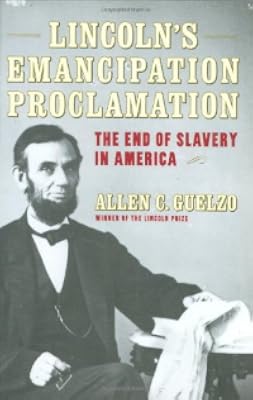
Allen C. Guelzo, the author of Lincoln and Douglas: The Debates That Defined America, is the Henry R. Luce Professor of the Civil War Era at Gettysburg College. He is a member of the National Council for the Humanities and a two-time winner of the Lincoln Prize, for Abraham Lincoln: Redeemer President and Lincoln's Emancipation Proclamation: The show more End of Slavery in America. show less
Awards and Honors
Series
Belongs to Publisher Series
Common Knowledge
- Canonical title
- Lincoln and Douglas: The Debates that Defined America
- People/Characters
- Stephen A. Douglas; William Henry Herndon; Norman Beal Judd; Owen Lovejoy [Abolitionist, lawyer, minister]; Charles Lanphier; Abraham Lincoln (show all 121); Joseph Medill; Charles H. Ray; Carl Schurz; Roger Brooke Taney; Lyman Trumbull; Henry Villard; John Wentworth; John Quincy Adams; Jane Addams; John H. Addams; Duff Armstrong; Isaac N. Arnold (as Isaac Arnold); James Arthur; Philip G. Auchampaugh; John C. Bagby; Edward L. Baker (as Edward Baker); Samuel Baker; Moses Bane; John T. Barrett; Newton Bateman; Pierre Bayle (1647-1706); George Beatty; Hiram Beckwith; John Bell; Judah P. Benjamin; James Gordon Bennett; Thomas Hart Benton; Paul Berman; John Bernard; Otto Bertschanger; Albert J. Beveridge (as Albert Beveridge); William Bigler; Henry W. Billings; Caleb Bingham; Kinsley Bingham; Henry Binmore; Morris Birkbeck; William Bissell; Francis Preston Blair (as Frank P. Blair); Hugh Blair; Montgomery Blair; Jonathan Blanchard; George Bond; John Minor Botts; Samuel Bowles; John Cabell Breckinridge; Sidney Breese; John K. Brewster; Hiram Bright; Jesse Bright; David Broderick; Henry Bromwell; Austin S. Brooks; William Bross ("Deacon"); Albert Gallatin Brown; Jacob Brown; James Brown; James N. Brown; John Brown (abolitionist); Orville Hickman Browning; William Cullen Bryant; James Buchanan; Samuel Buckmaster; Joseph Bartlett Burleigh; Nehemiah Bushnell; Alexander Campbell; Thompson Campbell; Thomas Carlin; William H. Carlin; Richard B. Carpenter; Clark Carr; Anna Ella Carroll; Lewis Cass; Robert Chambers; Augustus H. Chapman; Harriet Chapman; Salmon P. Chase; Frederick Edwin Church; Henry Clay; Schuyler Colfax; James C. Conkling (as James Cook Conkling); Roscoe Conkling; Philip Conley; Burton C. Cook; Isaac Cook; Increase Cooke; W. W. Corcoran; Norman Corwin; Thomas Corwin; William Craddock; John J. Crittenden; Leonard Crunelle; Shelby Moore Cullom (as Shelby Cullom); Joseph Cunningham; George William Curtis; James Davidson; David Davis; Jacob Davis; James Davis; Jefferson Davis; John A. Davis; William L. Dayton; Mark Delahay; Chester P. Dewey; Theophilus Lyle Dickey; David Donald; John Dougherty; Adele Cutts Douglas; Martha Martin Douglas; Robert D. Douglas; Frederick Douglass; Hezekiah Ford Douglass; Jesse Dubois; Ninian Wirt Edwards (as Ninian Edwards); John Emerson
- Important places
- Alton, Illinois, USA; Charleston, Illinois, USA; Freeport, Illinois, USA; Galesburg, Illinois, USA; Jonesboro, Illinois, USA; Ottawa, Illinois, USA (show all 7); Quincy, Illinois, USA
- Important events
- Lincoln-Douglas Debates (1858)
Classifications
- Genres
- Nonfiction, History, General Nonfiction, Biography & Memoir, Politics and Government
- DDC/MDS
- 973.68 — History & geography History of North America United States Antebellum Era (1845-1857) Franklin Pierce (1853-1857)
- LCC
- E457.4 .G84 — History of the United States United States Civil War period, 1861-1865 Lincoln's administrations, 1861-April 15, 1865
- BISAC
Statistics
- Members
- 318
- Popularity
- 100,864
- Reviews
- 4
- Rating
- (4.05)
- Languages
- English
- Media
- Paper, Ebook
- ISBNs
- 4
- ASINs
- 4