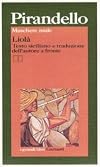
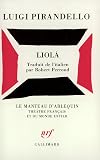
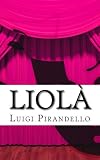
Liolà
by Luigi Pirandello
On This Page
Description
Liol#65533; #65533; una commedia di Luigi Pirandello scritta in lingua siciliana nel 1916 durante la prima guerra mondiale, in un momento molto doloroso per la vita dell'autore: il figlio era detenuto in un campo di prigionieri di guerra e la moglie cadeva in sempre pi#65533; frequenti crisi della sua malattia mentale. L'opera invece, nonostante questa angosciosa condizione della vita dell'autore, #65533; molto giocosa ed allegra, quasi spensierata, al punto che l'autore stesso dir#65533; show more #65533;#65533; cos#65533; gioconda che non pare opera mia#65533;.La commedia fu messa in scena per la prima volta il 4 novembre 1916 al Teatro Argentina di Roma con la Compagnia di Angelo Musco. Poich#65533; era scritta totalmente in lingua siciliana, all'inizio pubblico e critica avevano molte difficolt#65533; nel comprendere i dialoghi. Questo inconveniente convinse l'autore ad inserire nel testo nel 1927 una traduzione in italiano della commedia.La vicenda di Liol#65533; #65533; ispirata ad un episodio del capitolo IV del romanzo di Pirandello Il fu Mattia Pascal.Ha per protagonista Neli Schillaci, detto Liol#65533;. Nome e soprannome erano gi#65533; stati attribuiti ad un altro personaggio: Neli Tortorici, nella novella La mosca.Liol#65533; #65533; un personaggio spensierato e vagabondo, sempre in sintonia con il mondo e la natura. Pur non essendo una commedia musicale, la vocazione alla poesia e al canto di Liol#65533; #65533; espressa in canzoni che si inframmezzano nel corso della vicenda. show lessTags
Recommendations

















Member Reviews
Members
- Recently Added By
Author Information

737+ Works 13,694 Members
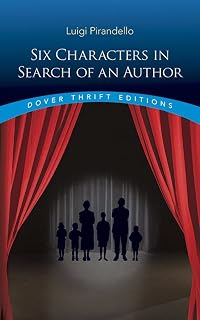
Born in Sicily, Pirandello attended the universities of Palermo, Rome, and Bonn. He obtained his doctorate in philology with a thesis on the dialect of his native town, Agrigento before settling in Rome to teach and write. In 1894, he married a Sicilian girl, Antonietta Portulano, who bore him three children before she went mad and afterwards show more provided the inspiration for many of his stories and plays. In all, Pirandello wrote 6 novels, some 250 short stories, and about 50 plays. It was a novel, Il fu Mattia Pascal (1904), that first brought him fame. Only in 1920, when he was past 50, did he turn seriously to playwriting. His first stage success had been a comedy, Liola (1917), written in the Agrigento dialect. It took its theme, if not its mood, from the Mandragola of Machiavelli (see Vols. 3 and 4). In 1921, Pirandello presented his most famous play Six Characters in Search of an Author. Here he seeks to confuse his spectators, who are forced into a paradox of reality and illusion when six "characters" search out the actors of a theatrical troupe to play out their inexorable story. The play exemplifies the Pirandellian conflict between art, which is unchanging and constant, and life, which is a continuous succession of mutations. Pirandello deliberately destroyed the traditional boundaries between audience and spectacle, reflecting the relativity and subjectivity of human existence. The play's unconventional format, which resulted in a riot, established Pirandello as Europe's leading avant-garde dramatist. The main body of Pirandello's plays falls into three overlapping categories, the first exploring the nature of the theater, the second the complexities of personality in the etymological or dramatic sense of the term, and the third rising to dramatic representation of the categorical imperatives of social, religious, and artistic community. Besides the world-famous Six Characters in Search of an Author (1918), his best plays in the three categories include Each in His Own Way (1924), It Is So (If You Think So) (1917), Henry IV (1922), The New Colony (1925), Lazarus, As You Desire Me (1930), and The Mountain Giants (1937), written after he had been awarded the Nobel Prize in 1934 and left incomplete. Pirandello is the forerunner of much modern theater and literature; among the figures who owe their roots to the innovations of Pirandello are Bertolt Brecht, Jean Genet, Jean-Paul Sartre, and Samuel Beckett (see Vol. 1). (Bowker Author Biography) show less
Series
Belongs to Publisher Series
Work Relationships
Is contained in
Has the adaptation
Common Knowledge
- Original title
- 7. : Liolà
- Original publication date
- 1916
Classifications
Statistics
- Members
- 43
- Popularity
- 688,109
- Reviews
- 1
- Rating
- (3.60)
- Languages
- French, Italian
- Media
- Paper
- ISBNs
- 5
- ASINs
- 2