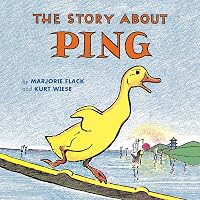
The Story About Ping
by Marjorie Flack
On This Page
Description
A little duck finds adventure on the Yangtze River when he is too late to board his master's houseboat one evening.Tags
Recommendations









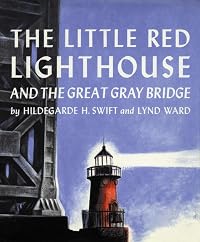
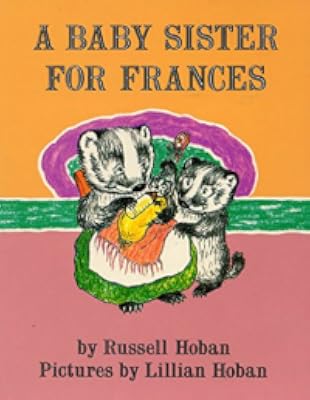
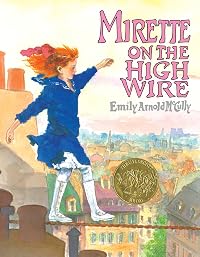

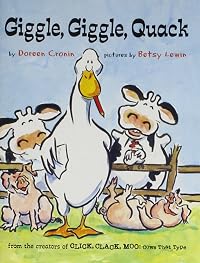









Member Recommendations

Member Reviews
This review is also available on my blog, Read Till Dawn.
I know, I know. Since when I do even read - let alone review - baby books? Well, I'll tell you when: since my AP English teacher assigned a book review of The Story About Ping. I've been struggling to find time to blog between my four AP classes and the (very time-consuming) process of applying to colleges. Thus, when I saw that I had to write a book review for school I jumped at the opportunity to kill two birds with one stone.
Anyway, on to the review. I originally read The Story About Ping when I was little. Going into my re-read, all I could remember was that it involved a baby duckling who gets lost when his family's boat leaves without him one morning. It turns out that I show more remembered correctly; what I'd forgotten was why Ping is left behind. You ready for this? The last duck on board their boat gets a spanking from the man who owns the boat. Ping sees that he'll be last, because he didn't hear the call to come back to the boat, and decides that he'll just sleep in the water that night instead so he doesn't get spanked.
Yeah. For real. I think it's supposed to be a lesson about the dangers of avoiding your rightful punishment, but I'm sitting here going "wait, why is the guy spanking his ducks? And why does Ping 'deserve' a spanking for making an honest mistake? And wouldn't this sort of arbitrary punishment make all of the ducks reluctant to come home at night, not just Ping?"
I'm just not so keen on the man's duck-keeping skills in general. For example, we see in multiple pictures that the ducks board the boat single-file with him standing right there (which is why he is able to spank the last duck on the boat). Does he just sit there, picking his nose and waiting to hit a duck, instead of actually counting the stream of birds passing in front of him? Surely a more responsible duck-keeper would keep track of his ducks, and count them before driving off to a new place altogether. Sure, Ping shouldn't have chosen not to board, but the man should have noticed that someone wasn't there. I mean, come on!
Maybe I'm reading too much into it. This is a kid's book, right? I can definitely see kids falling in love with The Story About Ping for the same reason they become obsessed with any story: they're kids, and they latch on to just about any random thing that catches their fancy. I personally don't fancy this story very much, both because of believability issues and because it seems a little creepy in parts - especially when Ping sees the birds who have choke collars around their necks that won't let them swallow the fish they catch.
But then, I'm really not one to talk: my childhood obsession was Shel Silverstein's The Giving Tree. show less
I know, I know. Since when I do even read - let alone review - baby books? Well, I'll tell you when: since my AP English teacher assigned a book review of The Story About Ping. I've been struggling to find time to blog between my four AP classes and the (very time-consuming) process of applying to colleges. Thus, when I saw that I had to write a book review for school I jumped at the opportunity to kill two birds with one stone.
Anyway, on to the review. I originally read The Story About Ping when I was little. Going into my re-read, all I could remember was that it involved a baby duckling who gets lost when his family's boat leaves without him one morning. It turns out that I show more remembered correctly; what I'd forgotten was why Ping is left behind. You ready for this? The last duck on board their boat gets a spanking from the man who owns the boat. Ping sees that he'll be last, because he didn't hear the call to come back to the boat, and decides that he'll just sleep in the water that night instead so he doesn't get spanked.
Yeah. For real. I think it's supposed to be a lesson about the dangers of avoiding your rightful punishment, but I'm sitting here going "wait, why is the guy spanking his ducks? And why does Ping 'deserve' a spanking for making an honest mistake? And wouldn't this sort of arbitrary punishment make all of the ducks reluctant to come home at night, not just Ping?"
I'm just not so keen on the man's duck-keeping skills in general. For example, we see in multiple pictures that the ducks board the boat single-file with him standing right there (which is why he is able to spank the last duck on the boat). Does he just sit there, picking his nose and waiting to hit a duck, instead of actually counting the stream of birds passing in front of him? Surely a more responsible duck-keeper would keep track of his ducks, and count them before driving off to a new place altogether. Sure, Ping shouldn't have chosen not to board, but the man should have noticed that someone wasn't there. I mean, come on!
Maybe I'm reading too much into it. This is a kid's book, right? I can definitely see kids falling in love with The Story About Ping for the same reason they become obsessed with any story: they're kids, and they latch on to just about any random thing that catches their fancy. I personally don't fancy this story very much, both because of believability issues and because it seems a little creepy in parts - especially when Ping sees the birds who have choke collars around their necks that won't let them swallow the fish they catch.
But then, I'm really not one to talk: my childhood obsession was Shel Silverstein's The Giving Tree. show less
Originally published in 1933, this classic picture-book by Marjorie Flack is one I have been meaning to read for some time, as part of my "ducklings in danger" project - does it strike anyone else that there is a superfluity of endangered ducks in children's literature? how did they become the scapegoat of the picture-book world? A recent discussion of The Story About Ping over in the "Popular Children's Books We Hate" thread of the children's books group I moderate, highlighted the divided opinions about it, and reminded me to pick up a copy from the library this past weekend, so I could decide for myself.
The tale of a little Pecking duckling who becomes separated from his family one day, because he is afraid to be the last to board show more the wise-eyed boat that is his home - the final duckling to board always get a little swat on the behind - The Story About Ping follows its eponymous anatine hero as he survives a night and day by himself on the Yangtze River. Sleeping in the rushes overnight, and then encountering fishing birds, and a swimming boy, while searching for his family and boat, Ping barely escapes being made into dinner by the boy's family. When he finally does find the wise-eyed boat again, he doesn't hesitate to get on board, even though he is last in line...
So... what did I think? Well, I honestly have trouble seeing what all the fuss is about, or how people can interpret the little swat that Ping receives as child abuse. Leaving aside the fact that corporal punishment is not always synonymous with abuse, the behavior in this story struck me less as punishment (of any kind) than as herding. I think Flack successfully communicates the idea that we frequently get ourselves deeper into trouble, when we seek to avoid what is unpleasant and uncomfortable, and she does it with little overt didacticism. The accompanying artwork by Kurt Wiese is charming, with a decided vintage feeling that is very appealing. I don't know that I was as enchanted with this as I would have been, had I encountered it for the first time as a child, but I did find it solidly engaging. show less
The tale of a little Pecking duckling who becomes separated from his family one day, because he is afraid to be the last to board show more the wise-eyed boat that is his home - the final duckling to board always get a little swat on the behind - The Story About Ping follows its eponymous anatine hero as he survives a night and day by himself on the Yangtze River. Sleeping in the rushes overnight, and then encountering fishing birds, and a swimming boy, while searching for his family and boat, Ping barely escapes being made into dinner by the boy's family. When he finally does find the wise-eyed boat again, he doesn't hesitate to get on board, even though he is last in line...
So... what did I think? Well, I honestly have trouble seeing what all the fuss is about, or how people can interpret the little swat that Ping receives as child abuse. Leaving aside the fact that corporal punishment is not always synonymous with abuse, the behavior in this story struck me less as punishment (of any kind) than as herding. I think Flack successfully communicates the idea that we frequently get ourselves deeper into trouble, when we seek to avoid what is unpleasant and uncomfortable, and she does it with little overt didacticism. The accompanying artwork by Kurt Wiese is charming, with a decided vintage feeling that is very appealing. I don't know that I was as enchanted with this as I would have been, had I encountered it for the first time as a child, but I did find it solidly engaging. show less
I first read about Ping and his 42 duckling cousins so long ago that I can’t remember how young I was at the time. No matter, as this wonderful picture book remains as charming as ever — although I don’t agree with thwacking little ducks, whether they are last or not. At a time when American children (or even little Cuban immigrants) saw little of China, The Story of Ping was a glimpse of an amazing land far, far away.
Thanks to my friend Manybooks for the suggestion for a re-read.
Thanks to my friend Manybooks for the suggestion for a re-read.
A traumatic tale of a young duck separated from his family, almost cooked for dinner, and finding his family again. Very cute. I like it because I raised two young runner ducks like those in the story, and they were every bit as personable and silly as these.
This realistic and engaging story of an independent little duckling living on China's Yangtze River is a book that I think should be part of every child's reading experience. I've read it to every child in my life and I've never known one who didn't enjoy it. This book was first published in 1933 but I probably fell in love with it somewhere around 1955 when Captain Kangaroo read it on television during his Story Time at the Treasure House.
The Story About Ping is one of several children's picture books written by author/illustrator Marjorie Flack (1897-1958). In this book Ms. Flack teams up with illustrator Kurt Weise and their joint efforts produce a lively, entertaining and suspenseful tale perfect for the 4-8 year old readership. show more
Set in the fishing culture of the Yangtze River which has remained similar to this day, this book tells about a large family of ducks who live on a houseboat painted with two wise eyes on its bow.
"Each morning as the sun rose from the east, Ping and his mother and father and sisters and brothers and aunts and uncles and his forty-two cousins all marched, one by one, down a little bridge to the shore of the Yangtze River."
They swim around and search for snails and little fish and "other pleasant things to eat" and generally enjoy a leisurely day. At sunset when the boat master calls out to them they must hurry back to the boat. The last duck to cross the little bridge always gets a spank on the back from the boat master's stick.
On the day that Ping finds himself to be in the unenviable position of being last duck home he decides to swim away and hide and as a result he gets left behind in the reeds that grow along the shores of the river. By morning he is already lonely and missing his large family and goes in search of the wise-eyed boat. He has many adventures on his journey and gets himself into some trouble. The readers get to learn more about the culture on the Yangtze while being treated to the suspense and excitement of this little yellow duck's trials.
Marjorie Flack's characteristic simplicity, even repetitiveness in her story telling that in 1947 would earn her a Caldecott Honor for her book The Boats On the River is very evident here as well. It is her honest, straight-forward style that makes the realistic treatment of the ducks and also some fishing cormorants seem interesting. I think her honesty makes for a healthy and broadening experience for very young readers. This is an engaging story without being a sugary, dumbed down story. That being said, however, Ms. Flack also lends a poetic quality to the story and we can easily see and smell and hear the ambiance of the Yangtze River throughout all the phases of the day. It is transporting and lovely.
"Ping hid behind the grasses, and as the dark came and the pale moon shone in the sky Ping watched the wise-eyed boat sail away down the Yangtze River."
I can clearly remember when as a small child I first heard about Ping wanting to avoid being spanked. When I saw his frightened little face and saw him paddling as fast as he could, trying to make it back to the boat in time, my heart was in my throat and I was there with him in spirit when he realized the futility and decided to "run away" instead. I knew even then that I had sometimes felt like running away, too. It gave me something to relate to and to think further about. When Ping encounters other dangers on the river it is just stressful enough to make it a page-turner without it being scary. Ping is, after all, a very plucky little guy and even though we see him getting into some tough scrapes we have the sense that he will pull through...and we can't wait to see how he does it. Three quarters of every page is taken up with an illustration and two or three sentences of text make up the balance of each page. Kurt Weise does such a great job with the crayon, watercolor and ink illustrations that young readers are easily transported to Ping's unique world. There is very good reason that this book is still in print after 73 years!
I think this is a great book for kids now for much the same reasons I loved it initially as a child. It takes children to a different world, takes them out of themselves to empathize with someone else and engages their emotions and their minds while entertaining them. The illustrations convey Ping's feelings so well that children will be on the edge of their seats following his every move. Oh, no, Ping! Watch out! Swim faster!
I can easily recommend this book because I know from lots of experience with many different children, boys and girls alike in the intended readership age group as well as my own childhood experience that kids do in fact consistently like this book. It is quite matter-of-fact about the purpose of these animals and that they are food animals or as in the case of the cormorants in the book they are being exploited as food gatherers but it is conveyed without judgment in such a way that this is only a backdrop. Children can still easily relate to the character of Ping as though he is a being with his own intrinsic worth. For this reason, who knows, it might even lead a child to vegetarianism somewhere down the line. There is lots here to talk about with a child and to me that really makes for a good book. show less
The Story About Ping is one of several children's picture books written by author/illustrator Marjorie Flack (1897-1958). In this book Ms. Flack teams up with illustrator Kurt Weise and their joint efforts produce a lively, entertaining and suspenseful tale perfect for the 4-8 year old readership. show more
Set in the fishing culture of the Yangtze River which has remained similar to this day, this book tells about a large family of ducks who live on a houseboat painted with two wise eyes on its bow.
"Each morning as the sun rose from the east, Ping and his mother and father and sisters and brothers and aunts and uncles and his forty-two cousins all marched, one by one, down a little bridge to the shore of the Yangtze River."
They swim around and search for snails and little fish and "other pleasant things to eat" and generally enjoy a leisurely day. At sunset when the boat master calls out to them they must hurry back to the boat. The last duck to cross the little bridge always gets a spank on the back from the boat master's stick.
On the day that Ping finds himself to be in the unenviable position of being last duck home he decides to swim away and hide and as a result he gets left behind in the reeds that grow along the shores of the river. By morning he is already lonely and missing his large family and goes in search of the wise-eyed boat. He has many adventures on his journey and gets himself into some trouble. The readers get to learn more about the culture on the Yangtze while being treated to the suspense and excitement of this little yellow duck's trials.
Marjorie Flack's characteristic simplicity, even repetitiveness in her story telling that in 1947 would earn her a Caldecott Honor for her book The Boats On the River is very evident here as well. It is her honest, straight-forward style that makes the realistic treatment of the ducks and also some fishing cormorants seem interesting. I think her honesty makes for a healthy and broadening experience for very young readers. This is an engaging story without being a sugary, dumbed down story. That being said, however, Ms. Flack also lends a poetic quality to the story and we can easily see and smell and hear the ambiance of the Yangtze River throughout all the phases of the day. It is transporting and lovely.
"Ping hid behind the grasses, and as the dark came and the pale moon shone in the sky Ping watched the wise-eyed boat sail away down the Yangtze River."
I can clearly remember when as a small child I first heard about Ping wanting to avoid being spanked. When I saw his frightened little face and saw him paddling as fast as he could, trying to make it back to the boat in time, my heart was in my throat and I was there with him in spirit when he realized the futility and decided to "run away" instead. I knew even then that I had sometimes felt like running away, too. It gave me something to relate to and to think further about. When Ping encounters other dangers on the river it is just stressful enough to make it a page-turner without it being scary. Ping is, after all, a very plucky little guy and even though we see him getting into some tough scrapes we have the sense that he will pull through...and we can't wait to see how he does it. Three quarters of every page is taken up with an illustration and two or three sentences of text make up the balance of each page. Kurt Weise does such a great job with the crayon, watercolor and ink illustrations that young readers are easily transported to Ping's unique world. There is very good reason that this book is still in print after 73 years!
I think this is a great book for kids now for much the same reasons I loved it initially as a child. It takes children to a different world, takes them out of themselves to empathize with someone else and engages their emotions and their minds while entertaining them. The illustrations convey Ping's feelings so well that children will be on the edge of their seats following his every move. Oh, no, Ping! Watch out! Swim faster!
I can easily recommend this book because I know from lots of experience with many different children, boys and girls alike in the intended readership age group as well as my own childhood experience that kids do in fact consistently like this book. It is quite matter-of-fact about the purpose of these animals and that they are food animals or as in the case of the cormorants in the book they are being exploited as food gatherers but it is conveyed without judgment in such a way that this is only a backdrop. Children can still easily relate to the character of Ping as though he is a being with his own intrinsic worth. For this reason, who knows, it might even lead a child to vegetarianism somewhere down the line. There is lots here to talk about with a child and to me that really makes for a good book. show less
Copyrighted in 1933, this book stands the test of time. Cute, charming, and endearing, this is a book that brings a smile throughout the reading. The classic story of a duck with many sisters and brothers, aunts and uncles, and a fascinating life on the Yangtze River.
Any child who is inquisitive would want to learn where the Yangtze River is located. The last in line always had a loud spank. When he thought he would be last in line, he set out on an adventure and explored life on the Yangtze River.
Ping became a hero for his fortitude, sense of adventure and ability to find his was back home. Though in doing so, he was the last duck up the plank, and he did receive a loud SPANK.
Any child who is inquisitive would want to learn where the Yangtze River is located. The last in line always had a loud spank. When he thought he would be last in line, he set out on an adventure and explored life on the Yangtze River.
Ping became a hero for his fortitude, sense of adventure and ability to find his was back home. Though in doing so, he was the last duck up the plank, and he did receive a loud SPANK.
I recently found a hardcover copy of this book to give to my granddaughter, so of course I had to reread it! And it holds up very well from my childhood recollections.
Ping is a little yellow duck who lives with his extended family on board a boat, with daily forays along the shore to forage for tasty bits. One day Ping "misses the boat" and finds himself alone for the first time.
The story is simple but not boring, about a topic that young children are familiar with: getting lost. And the illustrations reflect the simplicity of the story, richly colored by one of my favorite artists, Kurt Wiese. I'll keep my copy until I can share it with my granddaughter.
Ping is a little yellow duck who lives with his extended family on board a boat, with daily forays along the shore to forage for tasty bits. One day Ping "misses the boat" and finds himself alone for the first time.
The story is simple but not boring, about a topic that young children are familiar with: getting lost. And the illustrations reflect the simplicity of the story, richly colored by one of my favorite artists, Kurt Wiese. I'll keep my copy until I can share it with my granddaughter.
Members
- Recently Added By
Lists

Favorite Childhood Books
1,651 works; 515 members

Favorite Animal Fiction
359 works; 156 members

A Child's Book Tour of China
34 works; 5 members

Five in a Row
144 works; 8 members

Childhood Favorites
427 works; 24 members
Honey For a Child's Heart
1,152 works; 25 members

Brightly Beaming Curriculum Books
281 works; 8 members

Sonlight Books
1,487 works; 25 members
Ambleside Books
459 works; 18 members

CCE 1000 Good Books List
1,033 works; 12 members

Romalda Spalding's Writing Road To Reading
213 works; 3 members

Reading Rainbow
193 works; 10 members

1930s
262 works; 5 members

The Story of the World: History for the Classical Child: Activity Book One
291 works; 3 members

al.vick-wishlist-Children's
462 works; 3 members

Favorite Picture Books
479 works; 160 members

EGBERTINA'S List of childhood books worthy of merit or unspeakable delight
155 works; 7 members

Precious People
119 works; 1 member

Recommended Reading List
219 works; 1 member

Early Picture Books
467 works; 9 members

Five in a Row
174 works; 2 members

In or About the 1930s
198 works; 27 members

Beautiful Feet Books
304 works; 7 members

Books Read in 2022
5,226 works; 115 members

Before Austen Comes Aesop
318 works; 9 members

Books Read in 2015
3,299 works; 129 members

Books Read in 2013
1,630 works; 51 members
The Peaceful Preschool Curriculum
58 works; 1 member
Author Information

All Editions
Awards and Honors
Series
Belongs to Publisher Series
Work Relationships
Common Knowledge
- Canonical title
- The Story About Ping
- Alternate titles
- The Story of Ping (erroneous) (erroneous)
- Original publication date
- 1933
- People/Characters
- Ping the duck
- Important places
- Yangtze River, China; China
- First words
- Once upon a time there was a beautiful young duck named Ping.
- Last words
- (Click to show. Warning: May contain spoilers.)Home again on the wise-eyed boat on the Yangtze river.
- Original language
- English
Classifications
Statistics
- Members
- 6,200
- Popularity
- 2,019
- Reviews
- 64
- Rating
- (4.09)
- Languages
- 6 — Chinese, English, French, Japanese, Spanish, Welsh
- Media
- Paper, Audiobook, Ebook
- ISBNs
- 61
- UPCs
- 1
- ASINs
- 30