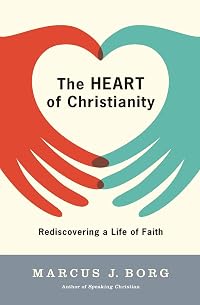
The Heart of Christianity: Rediscovering a Life of Faith
by Marcus J. Borg
On This Page
Description
World-renowned Jesus scholar Marcus J. Borg shows how we can live passionately as Christians in today's world by practicing the vital elements of Christian faith. For the millions of people who have turned away from many traditional beliefs about God, Jesus, and the Bible, but still long for a relevant, nourishing faith, Borg shows why the Christian life can remain a transforming relationship with God. Emphasizing the critical role of daily practice in living the Christian life, he explores show more how prayer, worship, Sabbath, pilgrimage, and more can be experienced as authentically life-giving practices. Borg reclaims terms and ideas once thought to be the sole province of evangelicals and fundamentalists: he shows that terms such as "born again" have real meaning for all Christians; that the "Kingdom of God" is not a bulwark against secularism but is a means of transforming society into a world that values justice and love; and that the Christian life is essentially about opening one's heart to God and to others. show lessTags
Recommendations
















Member Reviews
I wish I could give this book to all of my friends and tell them "Read this, and you will understand the way I see Christianity." Borg so eloquently describes a way of relating to God that does not ask for the abandonment of logic and religious pluralism. I know that it will take me many more readings of this book to be able to take it all in, but Borg comes the closest I've seen to describing the hugeness of a personal relationship to God. When seen outside of a literal-factual interpretation, the scope of Christianity becomes accordingly enormous, and Borg breaks it down with relentless clarity and precision (and examples, even).
Most of all, reading this made me realize that I do "fit," and that belief is not mutually exclusive with show more partaking in a modern, rational, scientifically expanding, pluralistic world. show less
Most of all, reading this made me realize that I do "fit," and that belief is not mutually exclusive with show more partaking in a modern, rational, scientifically expanding, pluralistic world. show less
Let me give a shout out to Clint Gill for recommending this book. I actually gave up on Borg several years back because of his dualistic fundamentalism within the Historical Jesus Movement. This is not nearly as dualistic nor dogmatic and shows both a rich scriptural response within scripture on atonement theology and approaches to Christ before moving on to the heart of the matter in Christianity, which is a collective transformation with the encounter of Jesus. I've actually simplified his responses far too much but I recommend this book for those that have been exposed to only one theology of atonement as well as those that have been disillusioned with the church's overemphasis on belief without the next step of transformation.
The Heart of Christianity: Rediscovering a Life of Faith by Marcus Borg. Epiphany library section 3 B: General Christianity. Borg compares the more traditional way of looking at God “somewhere out there,” as opposed to seeing God in, around, and under us. Borg says that rather than God being “interventional” God is “intentional” and “interactive.” This distinction was new to me and went a long way toward explaining why pain and suffering exist.
He introduces the concept of a Christian “heart.” To Borg, the word “heart” means more than feelings. It is a metaphor for the inner self as a whole. With a closed heart comes limited inner vision, self-deception, lack of gratitude, and insensitivity to wonder or awe. show more Open hearts lead to the opposite: a deeper, inner awareness of God with us.
Borg says that humans have two dimensions of reality – the visible world of our ordinary experience, and God, the sacred, Spirit. Thin places are where our two realities meet and intersect – where God shines through. Thin places open our hearts. Nature, music, poetry, literature, and the visual arts can be thin places. People can become thin places, Jesus being one. Geographic locations can be thin places: Iona, Jerusalem, a street corner, a church, an operating room. I think of thin places as where we glimpse the divine, the sublime.
Christian practices open our hearts, and that is why Christians worship as we do. This was an “A-ha!” moment for me. Singing hymns, saying the creeds and Lord’s Prayer, hearing the Bible read, communing as one – all these are thin places where God surfaces and reaches all around us.
Another little tidbit: Borg tells a story about a 3 year-old girl who asked to be alone with her newborn brother in his nursery, with the door closed. The parents, having a baby monitor, gave the little girl permission, knowing they could listen and intervene if needed. They heard the little girl walk up to her brother’s crib, and say, “Could you tell me about God? I’ve almost forgotten.” To me this story means that we DO come from God, and that there is another plane – a second reality which is God, that even small children can sense.
There are so many riches in this book. Read it! It will change the way you think about faith. It will open your heart. You will be better able to sense that God IS with us. show less
He introduces the concept of a Christian “heart.” To Borg, the word “heart” means more than feelings. It is a metaphor for the inner self as a whole. With a closed heart comes limited inner vision, self-deception, lack of gratitude, and insensitivity to wonder or awe. show more Open hearts lead to the opposite: a deeper, inner awareness of God with us.
Borg says that humans have two dimensions of reality – the visible world of our ordinary experience, and God, the sacred, Spirit. Thin places are where our two realities meet and intersect – where God shines through. Thin places open our hearts. Nature, music, poetry, literature, and the visual arts can be thin places. People can become thin places, Jesus being one. Geographic locations can be thin places: Iona, Jerusalem, a street corner, a church, an operating room. I think of thin places as where we glimpse the divine, the sublime.
Christian practices open our hearts, and that is why Christians worship as we do. This was an “A-ha!” moment for me. Singing hymns, saying the creeds and Lord’s Prayer, hearing the Bible read, communing as one – all these are thin places where God surfaces and reaches all around us.
Another little tidbit: Borg tells a story about a 3 year-old girl who asked to be alone with her newborn brother in his nursery, with the door closed. The parents, having a baby monitor, gave the little girl permission, knowing they could listen and intervene if needed. They heard the little girl walk up to her brother’s crib, and say, “Could you tell me about God? I’ve almost forgotten.” To me this story means that we DO come from God, and that there is another plane – a second reality which is God, that even small children can sense.
There are so many riches in this book. Read it! It will change the way you think about faith. It will open your heart. You will be better able to sense that God IS with us. show less
Marcus Borg finally 'caught' me in the last chapter. Using Diana Eck's work on American pluralism, he draws his thoughts together and also shares his own reasons for being Christian. At the same time, he acknowledges that had he been born in a Muslim, Jewish or other religious culture he could also remain within it. I am glad I finally read this book.
Excellent book. Borg offers an emerging view of Christian faith and Christian life for today. In getting to the heart of matters, Borg says, "Salvation is about peace and justice within community and beyond community."
Marcus Borg articulates so well what I suspect is felt by most participative Christians who don't identify themselves with the fundamentalist religious right. I see why this book was given to each of the new member participants at St. Andrew. Borg thoughtfully conveys the "emerging" paradigm for Christianity (and supports that definition by comparing it, diplomatically, against the "earlier" paradigm). A lot of his concepts resonated with me.
I enjoyed Borg's thoughts on religious pluralism and his discussion about metaphorical truths in Biblical stories. I got a little tired of Borg constantly pushing the ideas of emerging Christian thought. It was interesting to compare and contrast emerging Christian and traditional Christian beliefs, to be sure, but Borg tended to repeat himself on the subject and that got a little old. While I can appreciate the fact that some can get hung up on taking certain Biblical texts literally, he belabored his point. The question I had after reading the book was 'whether you take some of these stories literally or not, does it really matter'? This book fell short of answering that question.
Members
- Recently Added By
Lists

Books read 2017
29 works; 1 member
Author Information

65+ Works 14,211 Members
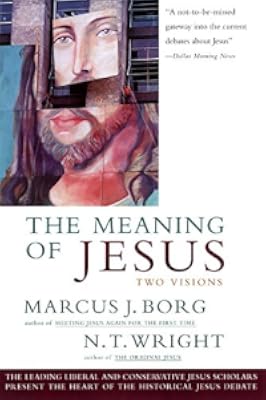
Marcus J. Borg was born on March 11, 1942 in Minnesota. He majored in philosophy and political science at Concordia College. He did graduate work at Union Theological Seminary in New York City and at Oxford University. He taught at various Midwest universities before joining the faculty at Oregon State University in 1979. He taught religion there show more until his retirement in 2007. During his lifetime, he wrote or co-wrote 21 books including Jesus: A New Vision, The Meaning of Jesus: Two Visions with N. T. Wright, and Convictions: How I Learned What Matters Most. He died after a prolonged illness on January 21, 2015 at the age of 72. (Bowker Author Biography) show less
Common Knowledge
- Canonical title*
- Kristinuskon sydän : Uudelleen löydetty usko
- Original title
- The heart of Christianity : rediscovering a life of faith
- Alternate titles*
- 基督徒人生的再發現
- Original publication date
- 2003
*Some information comes from Common Knowledge in other languages. Click "Edit" for more information.
Classifications
Statistics
- Members
- 1,592
- Popularity
- 14,320
- Reviews
- 16
- Rating
- (4.06)
- Languages
- English, Finnish, French, Swedish
- Media
- Paper, Audiobook, Ebook
- ISBNs
- 12
- UPCs
- 2
- ASINs
- 7