

On This Page
Description
An early classic of espionage fiction. Through the cafes, trains and nighttime cities of Europe, Charles Latimer follows a twisting trail of drug-smugglers, thieves and assassins that will lead him to Dimitrios.Tags
Recommendations


















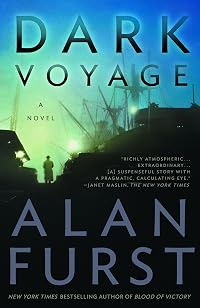




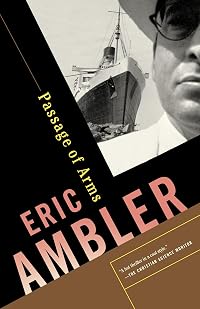


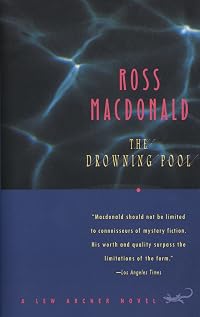

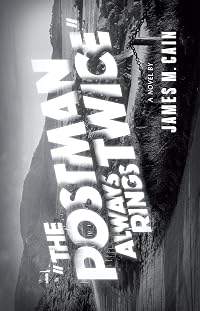
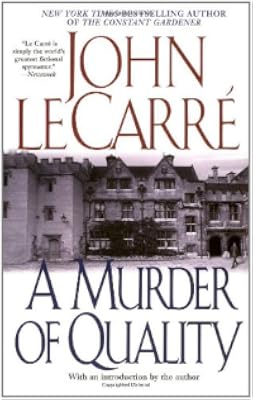





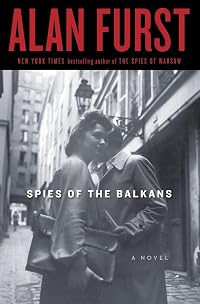
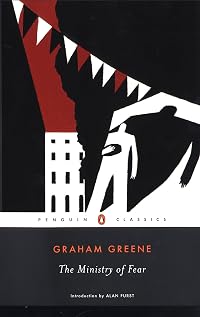
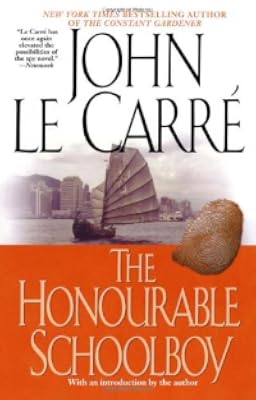


Member Recommendations

Member Reviews
I didn't quite know what I expected when I picked up Eric Ambler's "A Coffin for Dimitrios", but I certainly didn't expect a work in which identities are shucked off as easily as raincoats and documents — even perfectly authentic documents — can be purchased for a few thousand French francs. the book's characters move around Europe easily, even though German tanks will start rolling through Poland in just a few years, and we meet a number of characters whose nationality is — and remains — rather uncertain. Dimitrius himself is a Greek. Or perhaps a Muslim who was adopted by Greek parents who were living in Turkey before Smyrna went up in flames in 1922. But he speaks French — still the language of diplomacy in this book — as show more do most of the people he interacts with. Eric Ambler was, if I've got this right, mostly a writer of detective fiction, but, in this novel, seems to have foreshadowed postmodern ideas about the fluidity of identity by several decades. Not a bad trick, especially since this one is a joy to read in the best old-fashioned, almost unbearably correct British tradition. Who could have known?
It's clear from early on that the joke here — and there is one — is on the book's main character, Charles Latimore, a successful author of British detective stories who, on a lark, decides to find out how good he is at actual detective work. To his surprise and, occasionally, to his alarm, he is bested at almost every turn by almost every character he comes into contact with, all of whom seem eager to point out the many differences between the English detective fiction he writes and the way that the world actually works. Latimer's unwavering politeness and relative innocence stands in stark contrast to the world he finds himself moving through, which is full of ruthless operators whose motives are profoundly unromantic. "A Coffin for Dimitrios" functions, much of the time, as a sort of critique of the genre it belongs to, and how's that for forward-looking?
Before I finish up this review, though, I don't want to give anyone the idea that this is some sort of Don DeLillo production, full of bland "white writing" and pseudo-ironic observations. Literary fans of the seedy, swinging Paris that existed during the interwar period will find a lot to like here, although Ambler, to his credit, doesn't shy away from the fact that the horrors and disruptions caused by the First World War fueled a lot of these parties and paid for a lot of the cheap glamour that was about during that period. This book is a good reminder that displaced persons camps existed in Europe from the end of the First World War right through to the beginning of the Second. Lastly, I have to mention that I found the ending to this one to be supremely satisfying. "A Coffin for Dimitrius" is still a detective story, after all. show less
It's clear from early on that the joke here — and there is one — is on the book's main character, Charles Latimore, a successful author of British detective stories who, on a lark, decides to find out how good he is at actual detective work. To his surprise and, occasionally, to his alarm, he is bested at almost every turn by almost every character he comes into contact with, all of whom seem eager to point out the many differences between the English detective fiction he writes and the way that the world actually works. Latimer's unwavering politeness and relative innocence stands in stark contrast to the world he finds himself moving through, which is full of ruthless operators whose motives are profoundly unromantic. "A Coffin for Dimitrios" functions, much of the time, as a sort of critique of the genre it belongs to, and how's that for forward-looking?
Before I finish up this review, though, I don't want to give anyone the idea that this is some sort of Don DeLillo production, full of bland "white writing" and pseudo-ironic observations. Literary fans of the seedy, swinging Paris that existed during the interwar period will find a lot to like here, although Ambler, to his credit, doesn't shy away from the fact that the horrors and disruptions caused by the First World War fueled a lot of these parties and paid for a lot of the cheap glamour that was about during that period. This book is a good reminder that displaced persons camps existed in Europe from the end of the First World War right through to the beginning of the Second. Lastly, I have to mention that I found the ending to this one to be supremely satisfying. "A Coffin for Dimitrius" is still a detective story, after all. show less
While visiting Turkey during the 1930s, author Charles Latimer is introduced to a Turkish police chief, and accompanies him to a mortuary to view a body fished out of the Bosphorus. Here, the policeman tells him about the body - it has been identified as that of a criminal of Greek extraction. Latimer is intrigued by the dossier, and sets out to find out more, retracing Dimitrios' footsteps from Smyrna in 1922 (where Dimitrios starts his criminal career with the robbery and murder of a money-lender and the framing of his accomplice for the murder) to Paris in 1939 where the explosive denouement takes place in an extraordinary flat of one of Dimitrios' former gang members.
Throughout the journey, Latimer comes to understand his own show more motives for tracing Dimitrios' journey. Initially thinking it would form a plot for his next detective novel, he develops an obsession with Dimitrios. From encounters in seedy bars and train carriages, from luxury villas to shabby hotels, the pre-war Balkans are skilfully drawn.
Recommended. show less
Throughout the journey, Latimer comes to understand his own show more motives for tracing Dimitrios' journey. Initially thinking it would form a plot for his next detective novel, he develops an obsession with Dimitrios. From encounters in seedy bars and train carriages, from luxury villas to shabby hotels, the pre-war Balkans are skilfully drawn.
Recommended. show less
Excellent between-the-wars spy story that sets the bar for later entries into the genre. The tale has also given numerous parts of itself to other writers. A solid bit of Charade, that delightful 1963 Cary Grant-Audrey Hepburn spies-in-Paris story, came from this 1939 tale.
But the main thing about reading the book, the primary pleasure unavailable to viewers of the 1944 film The Mask of Dimitrios, is that the movie timeframe makes the story more or less a highlight reel. It also seemed a bit off to me to make this interwar story in the midst of WWII...not a great time for the Balkan/Parisian/Greek dealings or the staunchly anti-bankster tone of the book to be filmed. So, quite naturally, they were left out.
The book unfolds, if not show more slowly, then at a steady pace and one that simply could not be filmed in that time. Now it would be a 4-hour miniseries, and that would work well. The story's action takes place by reports and in flashbacks, yet such is Ambler's gift with the gab that it doesn't...didn't to me, anyway...feel draggy or reported.
Skip the three-star film, read the five-star book, and never look back. show less
But the main thing about reading the book, the primary pleasure unavailable to viewers of the 1944 film The Mask of Dimitrios, is that the movie timeframe makes the story more or less a highlight reel. It also seemed a bit off to me to make this interwar story in the midst of WWII...not a great time for the Balkan/Parisian/Greek dealings or the staunchly anti-bankster tone of the book to be filmed. So, quite naturally, they were left out.
The book unfolds, if not show more slowly, then at a steady pace and one that simply could not be filmed in that time. Now it would be a 4-hour miniseries, and that would work well. The story's action takes place by reports and in flashbacks, yet such is Ambler's gift with the gab that it doesn't...didn't to me, anyway...feel draggy or reported.
Skip the three-star film, read the five-star book, and never look back. show less
Despite my going through an intense espionage thriller phase many years ago, I never even heard of Eric Ambler until the last few years. His books are often held up as some of the founding works of the genre. Before LeCarre, Fleming and Follett there was Ambler cooking up the memes that would become so familiar. So I finally read one and it was good. Not entirely surprising since I’ve read a lot of what came after, but it held my attention quite well.
One thing that stood out was the novel’s construction. We do not follow a spy directly, nor do we interact with his handlers or agency. The man in question isn’t really a spy at all, but more of a mercenary for hire who isn’t too picky about the job. Need an assassin? Call show more Dimitrios. Smuggler? Ah, Dimitrios is your man. A spy? No problem, Dimitrios can get it done. It is the ever-changing nature of his activities that have kept him out of harm’s way for so long and part of the reason our protagonist, Charles Latimer, is fascinated by him. Often he says to himself that he really should give up the chase and go back to his detective stories, but he can't; he's obsessed.
Latimer isn’t a cop or a spy-chaser, he’s a novelist. At first I thought he was being deliberately hooked into Dimitrios’s story in order to ferret him out, but that wasn’t the case. He was just interested and wanted to see how much he could really do as opposed to just writing about detectives and how they get their men. From each bit of information, he discovers more and meets people connected with Dimitrios. He’s a bit bumbling and innocent, but he has flashes of cunning and capitalizes on lucky breaks very well.
Mixed in with the intrigue is a lot of interesting history that gets overshadowed by the two world wars on either side of the decade. The villainous politicians and the violence they wrought added a lot of flavor to the story and firmly cemented its time and place.
As I said, Ambler has created memes of the genre that are no longer surprising, so I wasn’t as shocked by the actions and outcomes as a reader in the 1930s would have been. Despite that, I liked Latimer and his obsession and stuck with him until the end. show less
One thing that stood out was the novel’s construction. We do not follow a spy directly, nor do we interact with his handlers or agency. The man in question isn’t really a spy at all, but more of a mercenary for hire who isn’t too picky about the job. Need an assassin? Call show more Dimitrios. Smuggler? Ah, Dimitrios is your man. A spy? No problem, Dimitrios can get it done. It is the ever-changing nature of his activities that have kept him out of harm’s way for so long and part of the reason our protagonist, Charles Latimer, is fascinated by him. Often he says to himself that he really should give up the chase and go back to his detective stories, but he can't; he's obsessed.
Latimer isn’t a cop or a spy-chaser, he’s a novelist. At first I thought he was being deliberately hooked into Dimitrios’s story in order to ferret him out, but that wasn’t the case. He was just interested and wanted to see how much he could really do as opposed to just writing about detectives and how they get their men. From each bit of information, he discovers more and meets people connected with Dimitrios. He’s a bit bumbling and innocent, but he has flashes of cunning and capitalizes on lucky breaks very well.
Mixed in with the intrigue is a lot of interesting history that gets overshadowed by the two world wars on either side of the decade. The villainous politicians and the violence they wrought added a lot of flavor to the story and firmly cemented its time and place.
As I said, Ambler has created memes of the genre that are no longer surprising, so I wasn’t as shocked by the actions and outcomes as a reader in the 1930s would have been. Despite that, I liked Latimer and his obsession and stuck with him until the end. show less
A disappointment. Often cited by Alan Furst and many others as the best novel to that covers the pre-war atmosphere of continental Europe. It starts off that way, but I never connected with the protagonist and found his motivation weak. The end of the novel is much more a dialogues between him and Mr. Peters, with little action or intrigue. Ambler's other pre-war novels are better.
An excellent and intelligent thriller depicting the crumbling mask of civilisation in the immediate pre-war era in continental Europe. Eric Ambler’s extremely atmospheric tale sees the English crime writer Charles Latimer travelling abroad in between novels. Witness to the corpse of a wanted criminal recovered from The Bosphorus, Latimer’s writerly curiosity gets the better of him as he sets out to discover the story that led the victim to his grisly end. Full of richly evocative period detail, international political intrigue, and a page-turning sequence of criminal revelations, Ambler succeeded in writing a belter of a novel that paved the way for many of the 20th century’s best regarded thriller and espionage authors.
Strong atmosphere, in Ambler's depiction of Europe in the late 1930s, combines with a political and almost anthropological subtext to elevate this adventure/spy novel into a serious evaluation of the world on the brink of hitherto unimagined violence. That, at least, is what I get from this story about the arch-criminal Dimitrios, a one-time fig-packer who works his way up the scale of sociopathology, going from theft, to robbery, to murder, to political assassination, and drug running. Yet he begins as what Marx would describe as a lumpen element, a fringe being who through force of will, cleverness, and ability to manipulate his fellows becomes a "respectable" crook on an international level.
The means to understanding Dimitrios and show more his associates is the trail Ambler's protagonist, Charles Latimer, follows through Turkey, Greece, the Balkans, and on to Paris. For him, Dimitrios becomes an obsession. Eventually, he is brought near to ruin because of it. In making Latimer a writer of mystery novels who becomes involved in a plot far more encompassing than anything he could have imagined in one of his stories, Ambler also turns his own work into a self-reflexive exercise. The process and results of writing come under scrutiny. And only at the end is Latimer and his reader allowed to escape down the tunnel and back to "reality."
Clever work, on the part of Ambler. You can also see how many of his later themes and tropes come about. Like many of his later settings, Ambler relies upon an exotic displacement to shock his reader. In this case, initially, it's one he will return to often, Turkey and Greece. And Latimer grows into something beyond his fearful origins into someone himself capable of a cold-blooded attitude, susceptible to criminal acts--isn't everyone, Ambler seems to be saying, especially if we become addicted to satisfying our wants. Like the drug addicts, which are also featured in this novel, Latimer slowly becomes hooked on the "pleasantness" of following his mystery to the end. And what he never would have been capable of, or thought allowable, at the beginning, becomes accepted and ordinary at the end. Because, like the addicts, Latimer now has a "habit" of his own. show less
The means to understanding Dimitrios and show more his associates is the trail Ambler's protagonist, Charles Latimer, follows through Turkey, Greece, the Balkans, and on to Paris. For him, Dimitrios becomes an obsession. Eventually, he is brought near to ruin because of it. In making Latimer a writer of mystery novels who becomes involved in a plot far more encompassing than anything he could have imagined in one of his stories, Ambler also turns his own work into a self-reflexive exercise. The process and results of writing come under scrutiny. And only at the end is Latimer and his reader allowed to escape down the tunnel and back to "reality."
Clever work, on the part of Ambler. You can also see how many of his later themes and tropes come about. Like many of his later settings, Ambler relies upon an exotic displacement to shock his reader. In this case, initially, it's one he will return to often, Turkey and Greece. And Latimer grows into something beyond his fearful origins into someone himself capable of a cold-blooded attitude, susceptible to criminal acts--isn't everyone, Ambler seems to be saying, especially if we become addicted to satisfying our wants. Like the drug addicts, which are also featured in this novel, Latimer slowly becomes hooked on the "pleasantness" of following his mystery to the end. And what he never would have been capable of, or thought allowable, at the beginning, becomes accepted and ordinary at the end. Because, like the addicts, Latimer now has a "habit" of his own. show less
Members
- Recently Added By
Lists

The Guardian's 1000 Novels Everyone Must Read
1,005 works; 547 members

Noirvember: The Best Noir
113 works; 56 members

The Top 100 Crime Novels of All Time
100 works; 15 members

Best Spy Fiction
153 works; 102 members

Read the book and saw the movie
1,170 works; 195 members
Best Espionage (Fiction)
55 works; 20 members

100 Mysteries and Thrillers to Read in a Lifetime
99 works; 22 members

Top 100 Mystery Novels of All Time
98 works; 9 members

Top Five Books of 2020
982 works; 350 members

Haycraft Queen Cornerstones
181 works; 3 members

Books mentioned in Julian Symons’ Bloody Murder
438 works; 6 members

Reading LIst
648 works; 1 member

Books Read in 2025
4,091 works; 97 members
Art Bourgeau's Favorites [Mystery Lovers Companion, 1986]
124 works; 2 members
Canon de la narrativa universal del s. XX (cicutadry)
499 works; 3 members

Top Five Books of 2025
954 works; 303 members

Las 10 mejores novelas policiacas clásicas (cicutadry)
10 works; 1 member

Books That Inspired American Film Noir
7 works; 1 member

Fiction with Men's Given Names in the Title
302 works; 11 members

Unread books
1,063 works; 87 members
Tozai Mystery Best 100 | The Top 100 Mystery Novels
111 works; 3 members

1930s
262 works; 5 members

Best Mysteries With a Historical Setting
292 works; 160 members

Mustich's 1000 Books to Read Before You Die: A Life Changing List
1,001 works; 19 members
Folio Society
831 works; 53 members
20th Century Literature
1,161 works; 54 members

Books Read in 2019
4,052 works; 108 members

Recommend the 20 best books you've read in the last five years
2,168 works; 606 members

Top Five Books of 2017
757 works; 231 members

Books Read in 2017
4,249 works; 129 members

Library Books/Loans
37 works; 1 member
My list of 100 books to read next
100 works; 4 members

Books Read in 2026
1,851 works; 65 members
Author Information

68+ Works 10,343 Members
Eric Ambler was born in London on June 28, 1909. Ambler toured in the late 1920s as a music-hall comedian and wrote plays, following in the footsteps of his parents, who were entertainers. After studying engineering at London University from 1924 to 1927, he took an apprenticeship in engineering at the Edison Swan Electric Company. When the show more company became part of Associated Electrical Industries, he worked in its advertising department and wrote avant-garde plays in his spare time. By 1937 he was the director of a London ad agency. He later resigned and moved to Paris where he dedicated himself to writing. In 1936, his first novel, The Dark Frontier, appeared and followed by another five by 1940, as well as working as script consultant for Alexander Korda. During World War II he joined first the artillery and was then later posted to a combat photographic unit. He served in Italy as assistant director of army cinematography and during this period, wrote and produced nearly one hundred training and propaganda films. After the war Ambler was screenwriter for the Rank organization and starting from 1951 he published a number of novels with Charles Rodda under the pseudonym Eliot Reed. Several of his novels were made into films, including A Coffin for Dimitrios in 1944, Journey into Fear in 1942, and Topkapi in 1964. Ambler also wrote screenplays, including those for The Cruel Sea in 1953 and The Guns of Navarone in 1961. In the 1960s he moved to Hollywood and was responsible for the TV shows Checkmate and The Most Deadly Game. Ambler received the Gold Dagger in 1959 for Passage of Arms, in 1967 for Dirty Story and in 1972 for The Levanter. He also received the Diamond Dagger in 1986 plus an Edgar in 1964 for The Light of Day and was nominated Grand Master in 1975. Ambler was named an Officer of the Order of the British Empire in 1981, and received other literary awards in France and Sweden. He died in London in October 1998. Ambler published 23 novels total, 19 under his own name and four in collaboration Eric Amber died in London on October 22, 1998, at the age of 89. (Bowker Author Biography) show less
Some Editions
Awards and Honors
Distinctions
Notable Lists
Series

Belongs to Publisher Series
Work Relationships
Is contained in
Contains
Has the adaptation
Common Knowledge
- Canonical title*
- Het masker van Dimitrios
- Original title
- The Mask of Dimitrios
- Alternate titles
- A Coffin For Dimitrios (USA) (USA)
- Original publication date
- 1939-08; 1939
- People/Characters
- Charles Latimer; Dimitrios Makropoulous; Colonel Zia Haki; Dhris Mohammed; Fedor Muishkin; Mr. Peters (show all 15); Siantos; N. Marukakis; Aleksandar Stamboliyski; Irana Preveza; Anton Vazoff; Wladyslaw Grodek; Bulić; Manus Visser; Giraud
- Important places
- Istanbul, Turkey; Izmir, Turkey; Smyrna, Turkey; Athens, Greece; Sofia, Bulgaria; Geneva, Geneva, Switzerland (show all 9); Chambésy, Geneva, Switzerland; Belgrade, Serbia; Paris, France
- Important events
- Greco-Turkish War; Great Fire of Smyrna; Bulgarian 9 June 1923 coup d'etat
- Related movies
- The Mask of Dimitrios (1944 | IMDb)
- Epigraph
- 'But the iniquity of oblivion blindely scattereth her poppy, and deals with the memory of men without distinction to merit of perpetuity ... Without the favour of the everlasting register, the first man had been as unknown as... (show all) the last, and Methusalah's long life had been his only Chronicle.'
Sir Thomas Browne Hydriotaphia - Dedication
- To Alan and Felice Harvey
- First words
- A Frenchman named Chamfort, who should have known better, once said that chance was a nickname for Providence.
- Last words
- (Click to show. Warning: May contain spoilers.)The train ran into a tunnel.
- Blurbers
- Greene, Graham; Furst, Alan; Hitchcock, Alfred
- Original language
- English
*Some information comes from Common Knowledge in other languages. Click "Edit" for more information.
Classifications
Statistics
- Members
- 2,148
- Popularity
- 9,478
- Reviews
- 62
- Rating
- (3.84)
- Languages
- 23 — Catalan, Danish, Dutch, English, Finnish, French, German, Greek, Indonesian, Italian, Korean, Norwegian (Bokmål), Farsi/Persian, Polish, Romanian, Serbian, Croatian, Spanish, Swedish, Turkish, Portuguese (Portugal), Portuguese (Brazil), Chinese, simplified
- Media
- Paper, Audiobook, Ebook
- ISBNs
- 75
- UPCs
- 1
- ASINs
- 52