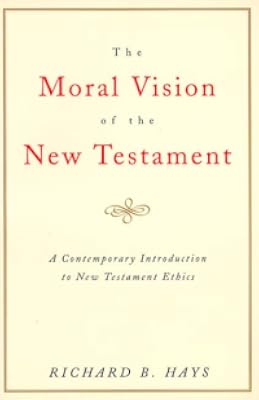
The Moral Vision of the New Testament: Community, Cross, New Creation, A Contemporary Introduction to New Testament Ethics
by Richard B. Hays
On This Page
Description
A leading expert in New Testament ethics discovers in the biblical witness a unified ethical vision -- centered in the themes of community, cross and new creation -- that has profound relevance in today?s world. Richard Hays shows how the New Testament provides moral guidance on the most troubling ethical issues of our time, including violence, divorce, homosexuality and abortion.Tags
Recommendations


Member Reviews
Hays convinced me if his model. In that regard, it’s a great book because if it’s solid treatment of the subject. The only aspect I will change is that of my treatment of scripture. Hays is skeptical of authorship and redaction methods for the gospels. That being said, he finds scripture authoritative while keeping an eye on speeches from Jesus that could have been influenced by the authors.
For me, it was my first in-depth read on Christian ethics and I appreciate his attention to rules, principles, paradigms, and symbolism in scripture. While he gives precedence to principles, I find all four to be authoritative (maybe giving more weight to paradigms). His interaction with Hauerwas, Barth, Yoder, and others is very helpful in show more comparing ethical systems. show less
For me, it was my first in-depth read on Christian ethics and I appreciate his attention to rules, principles, paradigms, and symbolism in scripture. While he gives precedence to principles, I find all four to be authoritative (maybe giving more weight to paradigms). His interaction with Hauerwas, Barth, Yoder, and others is very helpful in show more comparing ethical systems. show less
A massive amazing look at the New Testament and how it relates to created a set of morals or ethics. In the first main section Hays tackles different books/authors to try and get some sort of consensus in the approach from them. In approaching in this manner there are some illuminating discoveries made from the different books which help us see similarities and differences in their respective approaches to handling ethics. After giving a thorough response to each he spends a chapter each on several hot issues among Christians. I really appreciated these chapters because it finally brought together all the work from the main portion of the book and should how they can directly apply to modern ethics. Also because of all the work he did show more to try and really understand what the authors said the handling of the different issues was done with grace rather than just emotions. Really an excellent book that I'll definitely be coming back to in the future. show less
What a disappointment! Do not waste your time on this book.
As I am finishing this fairly well written book published in the late 90's, I discover that the author has now, in 2024, changed his mind on homosexuality. Here is the summary.
Nearly 30 years ago, a revered New Testament professor at Duke Divinity School named Richard B. Hays published “The Moral Vision of the New Testament,” a sweeping 508-page meditation of Christian ethics in which Hays concluded that the Christian Bible condemns homosexual acts. Hays called homosexuality “one among many tragic signs that we are a broken people” and said that churches should not sanction or bless homosexual unions.
Now we learn that Hays has changed in position. “In a book scheduled show more to be released in September 2024, ‘The Widening of God’s Mercy: Sexuality Within the Biblical Story,’ written with his son, Christopher B. Hays, the elder Hays makes an about face.” Hays has changed his mind because a “dynamic and gracious God … is willing to change his mind.” Robert Gagnon, a professor of New Testament at Houston Baptist University, who used Hays’ book The Moral Vision of the New Testament in his book The Bible and Homosexual Practice: Texts and Hermeneutics, had this to say: “God hasn’t changed his mind. Hays and son have changed their minds.
I imagine he is probably changing his mind about anti-Semitism too. This is all the rage today on college campuses and I imagine Hays thinks God has changed his mind om this topic also. show less
As I am finishing this fairly well written book published in the late 90's, I discover that the author has now, in 2024, changed his mind on homosexuality. Here is the summary.
Nearly 30 years ago, a revered New Testament professor at Duke Divinity School named Richard B. Hays published “The Moral Vision of the New Testament,” a sweeping 508-page meditation of Christian ethics in which Hays concluded that the Christian Bible condemns homosexual acts. Hays called homosexuality “one among many tragic signs that we are a broken people” and said that churches should not sanction or bless homosexual unions.
Now we learn that Hays has changed in position. “In a book scheduled show more to be released in September 2024, ‘The Widening of God’s Mercy: Sexuality Within the Biblical Story,’ written with his son, Christopher B. Hays, the elder Hays makes an about face.” Hays has changed his mind because a “dynamic and gracious God … is willing to change his mind.” Robert Gagnon, a professor of New Testament at Houston Baptist University, who used Hays’ book The Moral Vision of the New Testament in his book The Bible and Homosexual Practice: Texts and Hermeneutics, had this to say: “God hasn’t changed his mind. Hays and son have changed their minds.
I imagine he is probably changing his mind about anti-Semitism too. This is all the rage today on college campuses and I imagine Hays thinks God has changed his mind om this topic also. show less
Best book on New Testament ethics which also includes some interaction with 20th century moral theologians and chapters applying his method to contentious issues today.
hfdst 14: 'Violence in Defense of Justice'
(22 juli, 2011, voorbereiding preek Matth 5,38-48)
Episcopale kerk in Washington, raam met tekst: 'Getuigenis voor de jongens van de parochie die dienden in de Grote Oorlog'. De kerk beweent en viert z'n doden?
Vraag: is het passend voor hen die de Goede Herder volgen, dodelijke wapens opnemen? Of breder: is het ooit Gods wil om geweld te gebruiken om gerechtigheid te doen geschieden? Het NT zegt nee, christelijk getuigenis meent 'ja'. Kun je Bonnhoeffer aanvoeren omdat hij meewerkte aan een plot om Hitler te vermoorden? Augustinus, Stad van God: geweld is toegestaan voor de bewaring van de orde.
Wat te denken van een christelijk protest tegen een concert van Ozzy Osbourne vanwege show more anti-christelijke waarden? Hoort dit ook niet bij de trek van de mens om de wil aan een ander op te leggen door geweld?
Andere voorbeelden hoe christenen geweld gesanctioneerd hebben:
-ethnische zuivering van Bosnische moslims bij christelijke Bosniers;
-Servische priesters die militairen zegenden toen die terugkwamen van moord-en=plunder acties;
-katholieke priester die voor de piloot de mis opdraagt die op punt stond naar Nagasaki te vliegen (blz 318-319).
Matth 5,38-48:
Uitleggers hebben vaak geprobeerd om de kracht van Jezus' woorden weg uit te leggen:
-het gaat hier om een ideale, eschatologische wereld;
-het gaat om een interim-ethiek omdat de wederkomst snel zou komen;
-deze woorden verbieden zelfverdediging, maar gaan niet in tegen het verdedigen van een onschuldige derde;
-deze woorden gaan alleen over ver-gevorderde christenen;
-deze woorden tonen ons hoe onmogelijk het is om Gods geboden te gehoorzamen.
Bergrede, hoe moeten we die begrijpen?
-dDit is Jezus' ontvouwing van het programma van het KvG - is dit een soort Follow-up van Mozes die vanaf de Berg Gods wet geeft?;
-het onderwijs is voor Jezus' discipelen, zij worden opgeroepen om
te leven volgens de standaard van Gods K in een zondige wereld;
-maar je ziet steeds dat tegenover het gezonde verstand wordt gezet hoe Gods zegen rust op hen die treuren, op hen die vrede stichten. De Bergrede toont de werkelijkheid op zo'n manier dat in Gods ogen de gewone orde van zaken op z'n kop staat;
-hoe verhoudt zich dit tot Jezus' wet?, de gerechtigheid waar Jezus toe oproept intensifeert en gaat uit boven de meest rigoreuze standaard van de Wetgeleerden;
-het gaat niet om een nieuwe morele code, maar om het karakter van een gemeenschap waarin boosheid overwonnen wordt door verzoening, waarin lust door discipline z'n gezonde plek houdt, het huwelijk wordt ge-eerd door trouw, en liefde voor de vijand haat vervangt.
Matth toont hier een countercultural community vrij van boosheid, en geweld. Het overstijgen van geweld door je vijand lief te hebben vormen de kern en het hoogtepunt van het onderwijs.
Het onderwijs van Jezus past in het geheel van Mattheus' evangelie: in 4,1-11 is het Jezus die geen macht wil over de koninkrijken van de aarde, in 16,21-23 / 17,22-23 / 20,17-19 zie je hoe Jezus vertelt dat hij zal leiden als iemand die vervolgd wordt om gerechtigheid, in Gethsemane zie je Jezus worstelen met zijn Vader, maar onderwerpt Hij zich. Yoder: de verleiding om de beker niet te drinken is hetzelfde als kiezen voor weerstand bieden met wapens. Een authentieke interpretatiev van Matth 5,39 is de arrestatie van Jezus. Daarna sterft Jezus, machteloos en bespot.
Als Jezus naar de hemel gaat, zijn zijn laatste woorden: 'Alle macht in hemel en op aarde is aan Mij gegeven, ga daarom heen, maak alle volken tot mijn discipelen...' Doel is: mensen trainen in de disciplines van Jezus.
Daarom is de Bergrede geen onmogelijk ideaal, het is een manier van leven bevolen door Jezus, Die alle macht in hemel en op aarde heeft. Hij woont in de gemeenschap.
Jezus wil niet de belangen verdedigen van de armen en ondedrukten in Palestina, door een opstand tegen de Romeinen te organiseren Hij preekt liefde en laat zich gevangen nemen.
In alle 6 anti-theses van Jezus intensifeert Hij de wet. De wet verbiedt moord, Jezus verbiedt zelfs boosheid, de wet verbiedt overspel, Jezus verbiedt lust.
In Deut 19,15-21 lees je over de straf voor valse getuige. Geen enkele barmhartigheid, de valse getuige moest de straf krijgen die de vals beschuldigde zou krijgen. Toon geen barmhartigheid is de boodschap. Jezus zegt: verzet je niet tegen iemand die je kwaad wil doen. De wwet zocht stabiliteit en recht, Jezus wil tot geweldloosheid aanmoedigen.
Het gaat er niet om dat de gemeenschap passief is, het gaat om daden van dienst. Door meer te doen dan wat de geweldenaar wil, getuigt de discipel van een andere werkelijkheid, waarin vrede, dienst, gulheid, boven zelfverdediging en persoonlijke rechten uitgaan. Het gaat dus niet om regels om acties te voorkomen, het gaat om het karakter van een vredevolle gemeenschap.
Door je vijand lief te hebben toon je het karakter van God/
De antitheses: 'Jullie hebben gehoord dat gezegd is...', vs 21, vs 27, vs 31, vs 33, vs 38 gaan terug op een OT-ische bron. Maar de laatste antothese, vs 43, heeft geen bron, alsof dat moest zijn: 'haat je vijanden'. Waar tegenover plaatst Matth vs 43? Wellicht op Psalm 139. Misschien eerder nog op de wijdverspreide formule: 'doe goed aan je vrienden, haat je vijanden'.
Volgende vraag: wat zijn de vijanden? Persoonlijke vijanden of naar militairen? Nee, het is niet nodig om vijanden te beperken tot een nader te identificeren groep vijanden.
Wat betekent: 'volmaakt', vs 48? Het refereert aan Lev 19,1-2: 'wees heilig want Ik ben heilig' en Deut 18,13: 'je zult volmaakt voor de Heer, je God zijn'. Het gaat erom dat de gemeenschap de heiligheid van God weerspiegelt door radicaal gehoorzaam te zijn.
Matth 5,38-48 onderwijst de norm van geweldloze liefde tot vijanden. De woorden: 'keer je andere wang toe' is meer dan een regel, het gaat om een houding van de discipel.
Wat te denken van Rom 13? Dat gaat over de regering/staat, dat hfdst is niet gericht op de gelovige.
Efez 6,10-20, de gemeente heeft niet te strijden tegen mensen maar tegen geestelijke krachten van de duisternis. De wapens zijn waarheid, gerechtigheid, vrede, geloof, verlossing en Gods Woord.
Hebr 10,32-34: plunderen verdragen met blijdschap i.p.v. met geweld te verzetten.
In Openb 12,11 wordt de gelovige opgeroepen de macht van het kwaad te overwinnen door het bloed van het Lam.
Heel het NT is consistent tegen geweld en een oproep aan de gemeente om het voorbeeld van Jezus te volgen en lijden te aanvaarden i.p.v. het te veroorzaken.
Wat te denken van Matth 10,34? Het zwaard in vs 34 staat voor de scheiding die er zal komen tussen hen die het goede nieuws verkondigen en hen die weigeren het te aanvaarden.
Mag een christen dienen in het leger als soldaat? Luc 3,14-15, soldaten vragen op Johannes de Dopers onderwijs' wat ze moeten doen. Het antwoord is niet dat ze uit het leger zouden moeten vertrekken.
Jezus verwondert zich over het geloof van een centurion, Matth 8,5-13. Een andere centurion is de eerste die Jezus als Heer erkent,Marc 15,39.
Cornelius is de eerste bekeerling in Handelingen, 10,1-11,18.
Dus?, participeren in het leger werd niet gezien als sowieso zondig. Het is ook zo dat de evangelie-en laten zien dat ook soldaten bereikt en geraakt worden door het evangelie. Ze dienen als voorbeelden van hoe het evangelie mensen kan raken, soms in tegenstelling tot hen die God al lang mogen kennen, Matth 21,31.
Er staat geen enkel verbod of afraden in het NT op een taak in het leger, staat dat niet itt de lijn die we zagen, van vrede-stichten?
Het Oude Testament, en heilige oorlog: er staan teksten in het OT die Israel oproepen om vijanden te vermoorden, Num 31. Deut 20,10-18, er mag niemand blijven leven. Zie ook 1 Sam 15,3, het feit dat Saul niet gehoorzaamt, wordt gezien als ongehoorzaamheid. Samuel moet dan Agag voor het altaar aan stukken hakken. In de traditie zijn dit soort teksten gebruikt om kruistochten tegen bijv. moslimgelovigen te houden. show less
(22 juli, 2011, voorbereiding preek Matth 5,38-48)
Episcopale kerk in Washington, raam met tekst: 'Getuigenis voor de jongens van de parochie die dienden in de Grote Oorlog'. De kerk beweent en viert z'n doden?
Vraag: is het passend voor hen die de Goede Herder volgen, dodelijke wapens opnemen? Of breder: is het ooit Gods wil om geweld te gebruiken om gerechtigheid te doen geschieden? Het NT zegt nee, christelijk getuigenis meent 'ja'. Kun je Bonnhoeffer aanvoeren omdat hij meewerkte aan een plot om Hitler te vermoorden? Augustinus, Stad van God: geweld is toegestaan voor de bewaring van de orde.
Wat te denken van een christelijk protest tegen een concert van Ozzy Osbourne vanwege show more anti-christelijke waarden? Hoort dit ook niet bij de trek van de mens om de wil aan een ander op te leggen door geweld?
Andere voorbeelden hoe christenen geweld gesanctioneerd hebben:
-ethnische zuivering van Bosnische moslims bij christelijke Bosniers;
-Servische priesters die militairen zegenden toen die terugkwamen van moord-en=plunder acties;
-katholieke priester die voor de piloot de mis opdraagt die op punt stond naar Nagasaki te vliegen (blz 318-319).
Matth 5,38-48:
Uitleggers hebben vaak geprobeerd om de kracht van Jezus' woorden weg uit te leggen:
-het gaat hier om een ideale, eschatologische wereld;
-het gaat om een interim-ethiek omdat de wederkomst snel zou komen;
-deze woorden verbieden zelfverdediging, maar gaan niet in tegen het verdedigen van een onschuldige derde;
-deze woorden gaan alleen over ver-gevorderde christenen;
-deze woorden tonen ons hoe onmogelijk het is om Gods geboden te gehoorzamen.
Bergrede, hoe moeten we die begrijpen?
-dDit is Jezus' ontvouwing van het programma van het KvG - is dit een soort Follow-up van Mozes die vanaf de Berg Gods wet geeft?;
-het onderwijs is voor Jezus' discipelen, zij worden opgeroepen om
te leven volgens de standaard van Gods K in een zondige wereld;
-maar je ziet steeds dat tegenover het gezonde verstand wordt gezet hoe Gods zegen rust op hen die treuren, op hen die vrede stichten. De Bergrede toont de werkelijkheid op zo'n manier dat in Gods ogen de gewone orde van zaken op z'n kop staat;
-hoe verhoudt zich dit tot Jezus' wet?, de gerechtigheid waar Jezus toe oproept intensifeert en gaat uit boven de meest rigoreuze standaard van de Wetgeleerden;
-het gaat niet om een nieuwe morele code, maar om het karakter van een gemeenschap waarin boosheid overwonnen wordt door verzoening, waarin lust door discipline z'n gezonde plek houdt, het huwelijk wordt ge-eerd door trouw, en liefde voor de vijand haat vervangt.
Matth toont hier een countercultural community vrij van boosheid, en geweld. Het overstijgen van geweld door je vijand lief te hebben vormen de kern en het hoogtepunt van het onderwijs.
Het onderwijs van Jezus past in het geheel van Mattheus' evangelie: in 4,1-11 is het Jezus die geen macht wil over de koninkrijken van de aarde, in 16,21-23 / 17,22-23 / 20,17-19 zie je hoe Jezus vertelt dat hij zal leiden als iemand die vervolgd wordt om gerechtigheid, in Gethsemane zie je Jezus worstelen met zijn Vader, maar onderwerpt Hij zich. Yoder: de verleiding om de beker niet te drinken is hetzelfde als kiezen voor weerstand bieden met wapens. Een authentieke interpretatiev van Matth 5,39 is de arrestatie van Jezus. Daarna sterft Jezus, machteloos en bespot.
Als Jezus naar de hemel gaat, zijn zijn laatste woorden: 'Alle macht in hemel en op aarde is aan Mij gegeven, ga daarom heen, maak alle volken tot mijn discipelen...' Doel is: mensen trainen in de disciplines van Jezus.
Daarom is de Bergrede geen onmogelijk ideaal, het is een manier van leven bevolen door Jezus, Die alle macht in hemel en op aarde heeft. Hij woont in de gemeenschap.
Jezus wil niet de belangen verdedigen van de armen en ondedrukten in Palestina, door een opstand tegen de Romeinen te organiseren Hij preekt liefde en laat zich gevangen nemen.
In alle 6 anti-theses van Jezus intensifeert Hij de wet. De wet verbiedt moord, Jezus verbiedt zelfs boosheid, de wet verbiedt overspel, Jezus verbiedt lust.
In Deut 19,15-21 lees je over de straf voor valse getuige. Geen enkele barmhartigheid, de valse getuige moest de straf krijgen die de vals beschuldigde zou krijgen. Toon geen barmhartigheid is de boodschap. Jezus zegt: verzet je niet tegen iemand die je kwaad wil doen. De wwet zocht stabiliteit en recht, Jezus wil tot geweldloosheid aanmoedigen.
Het gaat er niet om dat de gemeenschap passief is, het gaat om daden van dienst. Door meer te doen dan wat de geweldenaar wil, getuigt de discipel van een andere werkelijkheid, waarin vrede, dienst, gulheid, boven zelfverdediging en persoonlijke rechten uitgaan. Het gaat dus niet om regels om acties te voorkomen, het gaat om het karakter van een vredevolle gemeenschap.
Door je vijand lief te hebben toon je het karakter van God/
De antitheses: 'Jullie hebben gehoord dat gezegd is...', vs 21, vs 27, vs 31, vs 33, vs 38 gaan terug op een OT-ische bron. Maar de laatste antothese, vs 43, heeft geen bron, alsof dat moest zijn: 'haat je vijanden'. Waar tegenover plaatst Matth vs 43? Wellicht op Psalm 139. Misschien eerder nog op de wijdverspreide formule: 'doe goed aan je vrienden, haat je vijanden'.
Volgende vraag: wat zijn de vijanden? Persoonlijke vijanden of naar militairen? Nee, het is niet nodig om vijanden te beperken tot een nader te identificeren groep vijanden.
Wat betekent: 'volmaakt', vs 48? Het refereert aan Lev 19,1-2: 'wees heilig want Ik ben heilig' en Deut 18,13: 'je zult volmaakt voor de Heer, je God zijn'. Het gaat erom dat de gemeenschap de heiligheid van God weerspiegelt door radicaal gehoorzaam te zijn.
Matth 5,38-48 onderwijst de norm van geweldloze liefde tot vijanden. De woorden: 'keer je andere wang toe' is meer dan een regel, het gaat om een houding van de discipel.
Wat te denken van Rom 13? Dat gaat over de regering/staat, dat hfdst is niet gericht op de gelovige.
Efez 6,10-20, de gemeente heeft niet te strijden tegen mensen maar tegen geestelijke krachten van de duisternis. De wapens zijn waarheid, gerechtigheid, vrede, geloof, verlossing en Gods Woord.
Hebr 10,32-34: plunderen verdragen met blijdschap i.p.v. met geweld te verzetten.
In Openb 12,11 wordt de gelovige opgeroepen de macht van het kwaad te overwinnen door het bloed van het Lam.
Heel het NT is consistent tegen geweld en een oproep aan de gemeente om het voorbeeld van Jezus te volgen en lijden te aanvaarden i.p.v. het te veroorzaken.
Wat te denken van Matth 10,34? Het zwaard in vs 34 staat voor de scheiding die er zal komen tussen hen die het goede nieuws verkondigen en hen die weigeren het te aanvaarden.
Mag een christen dienen in het leger als soldaat? Luc 3,14-15, soldaten vragen op Johannes de Dopers onderwijs' wat ze moeten doen. Het antwoord is niet dat ze uit het leger zouden moeten vertrekken.
Jezus verwondert zich over het geloof van een centurion, Matth 8,5-13. Een andere centurion is de eerste die Jezus als Heer erkent,Marc 15,39.
Cornelius is de eerste bekeerling in Handelingen, 10,1-11,18.
Dus?, participeren in het leger werd niet gezien als sowieso zondig. Het is ook zo dat de evangelie-en laten zien dat ook soldaten bereikt en geraakt worden door het evangelie. Ze dienen als voorbeelden van hoe het evangelie mensen kan raken, soms in tegenstelling tot hen die God al lang mogen kennen, Matth 21,31.
Er staat geen enkel verbod of afraden in het NT op een taak in het leger, staat dat niet itt de lijn die we zagen, van vrede-stichten?
Het Oude Testament, en heilige oorlog: er staan teksten in het OT die Israel oproepen om vijanden te vermoorden, Num 31. Deut 20,10-18, er mag niemand blijven leven. Zie ook 1 Sam 15,3, het feit dat Saul niet gehoorzaamt, wordt gezien als ongehoorzaamheid. Samuel moet dan Agag voor het altaar aan stukken hakken. In de traditie zijn dit soort teksten gebruikt om kruistochten tegen bijv. moslimgelovigen te houden. show less
The best "New Testament" ethics book I am aware of. Simply great!
Summary: A methodology for New Testament ethics centered on community, the cross, and the new creation.
When I was in seminary in the 1980’s, I took a course on ethics that used a text titled Can Ethics Be Christian? by James M. Gustafson. While making the useful point that one did not need to be Christian to be ethical, it also cast doubt on whether there was such a thing as a Christian ethic and how one might arrive at that. We had no books from Richard B. Hays back then. Later, around the time of the publication of The Moral Vision of the New Testament in 1996, I acquired a copy. And perhaps because of its daunting size, it remained on a stack of unread books.
Recently, Eerdmans sent me a copy of New Testament Ethics for review, show more re-visiting Hays book thirty years later. I thought before I read that book, I ought read this one. I will be reviewing the new book in the near future.
What Hays does in this book is establish a methodology of moving from the texts of the New Testament to applications to contemporary issues. He follows a four step process. He begins with describing the moral witness of the New Testament texts. Then, he synthesizes that material into three focal images he argues are foundational to New Testament ethics. From here, he engages the hermeneutical or interpretive task, drawing upon text as the “norming norm” but also weighing church tradition, reason, and experience. Finally, he addresses the pragmatic task of using this framework to address five “test cases” which vary in terms of the amount of textual material available. I’ll elaborate each step in greater detail:
Part One: The Descriptive Task
Hays begins with Paul. He notes the theological grounding of Paul in the eschatology of new creation, the centrality of the cross as the basis of Christian faithfulness, and the life of the redeemed community as Christ’s body. Hays separately deals with the deutero-Pauline letters, focus on the cosmic ecclesiology of Ephesians and the idea of the household of God in 1 Timothy. Then Hays turns to the synoptic gospels, noting a distinctive ethical focus for each: Mark on taking up the cross, Matthew on training for the kingdom, and Luke on liberation through the Spirit’s power. John’s gospel and epistles focus on love for each other. Finally Revelation focuses on resisting the Beast in light of the victory of the lamb and the new creation.
It should be noted that Hays does not address the contribution of Hebrews and the non-Johannine general epistles. He also offers his own assessment of “historical Jesus research” notably asserting that the burden of proof lies with those claiming inauthenticity. He argues against dismissing John’s gospel, particularly in light of its claim to be eyewitness testimony. And he argues for the resurrection as a historical event–not a popular position in 1996.
Part Two: The Synthetic Task
Hays begins by establishing three procedural guidelines. First, any synthesis must confront the full range of canonical witnesses. Then, allow tensions to stand. Finally, give attention to literary genre. With these in mind, Hayes argues for three focal images arising from his descriptive work.
The first of these is community. “The church is a countercultural community of discipleship, and this community is the primary addressee of God’s imperatives.” When asking questions of God’s will, we ought ask, not “what should I do” but “what shoud we do?”
The second is the cross. “Jesus death on the cross is the paradigm for faithfulness to God in this world.” Walking in the way of the cross is not just for some individuals but for the whole community.
And lastly, the third is new creation. “The church embodies the power of the resurrection in the midst of a not-yet-redeemed world.
Hayes addresses why he does not include love as a focal image. He argues that the full range of canonical material does not incorporate it. Love can also mean a variety of things. Finally, for Hayes, love is subsumed in the theme of the cross.
Part Three: The Hermeneutical Task
Hays lays the groundwork for his proposals by asking how ethicists use scripture. In ethical discussion, ethicists will appeal to rules, principles, paradigms, and symbolic worlds, each of which is in scripture. He also notes the role tradition, reason, and experience play in interpretation. He then surveys five models of New Testament ethicists and how they apply (or fail to apply) these criteria: Reinhold Niebuhr, Karl Barth, John Howard Yoder, Stanley Hauerwas, and Elizabeth Schussler Fiorenza.
Hays then offers ten guidelines that build on his work to this point:
1. Serious exegesis is a basic requirement. Texts used in ethical arguments should be understood as fully as possible in their historical and literary context.
a. New Testament texts must be read with careful attention to their Old Testament subtexts.
2. We must seek to listen to the full range of canonical witnesses.
3. Substantive tensions within the canon should be openly acknowledged.
4. Our synthetic reading of the New Testament canon must be kept in balance by the sustained use of three focal images: community, cross, and new creation.
5. New Testament texts must be granted authority (or not) in the mode in which they speak (i.e., rule, principle, paradigm, symbolic world).
a. All four modes are valid and necessary.
b. We should not override the witness of the New Testament in one mode by appealing to another mode.
6. The New Testament is fundamentally the story of God’s redemptive action; thus, the paradigmatic mode has theological primacy, and narrative texts are fundamental resources for normative ethics.
7. Extra-biblical sources (i.e. tradition, reason and experience) stand in a hermeneutical relation to the New Testament; they are not independent, counterbalancing sources of authority.
8. It is impossible to distinguish “timeless truth” from “culturally conditioned elements” in the New Testament.
9. The use of the New Testament in normative ethics requires an integrative act of the imagination; thus, whenever we appeal to the authority of the New Testament, we are necessarily engaged in metaphor-making.
10. Right reading of the New Testament occurs only where the Word is embodied.
Part Four: The Pragmatic Task
In this last part of the book, Hays offers five “test cases” of reaching ethical conclusions on the basis of the methodology he has outlined. He states:
“As I take a stand on these five issues, some of which are bitterly controversial, it is impoirtant to emphasize that I do not presume to speak ex cathedra. Rather, I offer a series of discernments to the church in prayerful humility.”
The five issues he addresses are violence, divorce, homosexuality, anti-Judaism, and abortion. He notes at the outset the different ways the New Testament speaks to each. In the case of violence, the witness is both pervasive and univocal against it. On divorce, the passages share a common perspective, but differing casuistic developments that lead to diverse applications. The texts on homosexuality are univocal but few and not central to the gospel story. However, with anti-Judaism, the textual evidence is in tension, and the interpreter has to prioritize what will be the controlling texts. Finally, the New Testament does not directly address abortion.
While peoples discuss Hays on homosexuality the most (particularly in light of his changing views in a book he co-authored with his son Chris shortly before his death), the most challenging material in many ways is that on violence. He argues for pacifism as the only biblically defensible ethic, arguing Jesus epitomizes it in his own paradigmatic death.
On homosexuality, while arguing against same-sex intimacy for believers, he states that “insofar as the church fails to teach clearly about heterosexuality outside of marriage, its disapproval of homosexual coupling will appear arbitrary and biased.” He argues for inclusion of LGBTQ people in the church. I found the position both forthright and gracious and want to see how he has changed his view in The Widening of God’s Mercy. While not having read the book yet, I sense from other reviews that Hays has not changed his reading of the passages. Rather, he has changed in how he reads them in the light of the whole of scripture and in light of experience.
One striking observation is how Hayes approaches abortion through the lens of community. He observes how often the church puts the burden of decision and responsibility on young women. Rather, what would happen if the community shared the burden and responsibility of raising a child?
Conclusion and Appraisal
In his conclusion Hayes briefly but inadequately discusses the sharing of possessions in the church. I wish this had been one of the test cases, as it is especially an important issue among wealthy Western churches. I also wonder about his conclusions about love as a focal image. A stronger case could be made for this on a canonical basis.
Overall, I appreciated his careful elaboration of a methodology for arriving at ethical judgments on the basis of the New Testament. His three focal images offer a substantive foundation. The test cases model thorough application coupled with humility. While this work is the subject of much critique, that fact argues for its significance. Hayes offers a thoroughgoing methodology that takes scripture seriously as the “norming norm.” At the same time, he also recognizes the tensions in that material and avoids reductive judgments. No wonder this book continues to be the subject of scholarly discussion thirty years later. show less
When I was in seminary in the 1980’s, I took a course on ethics that used a text titled Can Ethics Be Christian? by James M. Gustafson. While making the useful point that one did not need to be Christian to be ethical, it also cast doubt on whether there was such a thing as a Christian ethic and how one might arrive at that. We had no books from Richard B. Hays back then. Later, around the time of the publication of The Moral Vision of the New Testament in 1996, I acquired a copy. And perhaps because of its daunting size, it remained on a stack of unread books.
Recently, Eerdmans sent me a copy of New Testament Ethics for review, show more re-visiting Hays book thirty years later. I thought before I read that book, I ought read this one. I will be reviewing the new book in the near future.
What Hays does in this book is establish a methodology of moving from the texts of the New Testament to applications to contemporary issues. He follows a four step process. He begins with describing the moral witness of the New Testament texts. Then, he synthesizes that material into three focal images he argues are foundational to New Testament ethics. From here, he engages the hermeneutical or interpretive task, drawing upon text as the “norming norm” but also weighing church tradition, reason, and experience. Finally, he addresses the pragmatic task of using this framework to address five “test cases” which vary in terms of the amount of textual material available. I’ll elaborate each step in greater detail:
Part One: The Descriptive Task
Hays begins with Paul. He notes the theological grounding of Paul in the eschatology of new creation, the centrality of the cross as the basis of Christian faithfulness, and the life of the redeemed community as Christ’s body. Hays separately deals with the deutero-Pauline letters, focus on the cosmic ecclesiology of Ephesians and the idea of the household of God in 1 Timothy. Then Hays turns to the synoptic gospels, noting a distinctive ethical focus for each: Mark on taking up the cross, Matthew on training for the kingdom, and Luke on liberation through the Spirit’s power. John’s gospel and epistles focus on love for each other. Finally Revelation focuses on resisting the Beast in light of the victory of the lamb and the new creation.
It should be noted that Hays does not address the contribution of Hebrews and the non-Johannine general epistles. He also offers his own assessment of “historical Jesus research” notably asserting that the burden of proof lies with those claiming inauthenticity. He argues against dismissing John’s gospel, particularly in light of its claim to be eyewitness testimony. And he argues for the resurrection as a historical event–not a popular position in 1996.
Part Two: The Synthetic Task
Hays begins by establishing three procedural guidelines. First, any synthesis must confront the full range of canonical witnesses. Then, allow tensions to stand. Finally, give attention to literary genre. With these in mind, Hayes argues for three focal images arising from his descriptive work.
The first of these is community. “The church is a countercultural community of discipleship, and this community is the primary addressee of God’s imperatives.” When asking questions of God’s will, we ought ask, not “what should I do” but “what shoud we do?”
The second is the cross. “Jesus death on the cross is the paradigm for faithfulness to God in this world.” Walking in the way of the cross is not just for some individuals but for the whole community.
And lastly, the third is new creation. “The church embodies the power of the resurrection in the midst of a not-yet-redeemed world.
Hayes addresses why he does not include love as a focal image. He argues that the full range of canonical material does not incorporate it. Love can also mean a variety of things. Finally, for Hayes, love is subsumed in the theme of the cross.
Part Three: The Hermeneutical Task
Hays lays the groundwork for his proposals by asking how ethicists use scripture. In ethical discussion, ethicists will appeal to rules, principles, paradigms, and symbolic worlds, each of which is in scripture. He also notes the role tradition, reason, and experience play in interpretation. He then surveys five models of New Testament ethicists and how they apply (or fail to apply) these criteria: Reinhold Niebuhr, Karl Barth, John Howard Yoder, Stanley Hauerwas, and Elizabeth Schussler Fiorenza.
Hays then offers ten guidelines that build on his work to this point:
1. Serious exegesis is a basic requirement. Texts used in ethical arguments should be understood as fully as possible in their historical and literary context.
a. New Testament texts must be read with careful attention to their Old Testament subtexts.
2. We must seek to listen to the full range of canonical witnesses.
3. Substantive tensions within the canon should be openly acknowledged.
4. Our synthetic reading of the New Testament canon must be kept in balance by the sustained use of three focal images: community, cross, and new creation.
5. New Testament texts must be granted authority (or not) in the mode in which they speak (i.e., rule, principle, paradigm, symbolic world).
a. All four modes are valid and necessary.
b. We should not override the witness of the New Testament in one mode by appealing to another mode.
6. The New Testament is fundamentally the story of God’s redemptive action; thus, the paradigmatic mode has theological primacy, and narrative texts are fundamental resources for normative ethics.
7. Extra-biblical sources (i.e. tradition, reason and experience) stand in a hermeneutical relation to the New Testament; they are not independent, counterbalancing sources of authority.
8. It is impossible to distinguish “timeless truth” from “culturally conditioned elements” in the New Testament.
9. The use of the New Testament in normative ethics requires an integrative act of the imagination; thus, whenever we appeal to the authority of the New Testament, we are necessarily engaged in metaphor-making.
10. Right reading of the New Testament occurs only where the Word is embodied.
Part Four: The Pragmatic Task
In this last part of the book, Hays offers five “test cases” of reaching ethical conclusions on the basis of the methodology he has outlined. He states:
“As I take a stand on these five issues, some of which are bitterly controversial, it is impoirtant to emphasize that I do not presume to speak ex cathedra. Rather, I offer a series of discernments to the church in prayerful humility.”
The five issues he addresses are violence, divorce, homosexuality, anti-Judaism, and abortion. He notes at the outset the different ways the New Testament speaks to each. In the case of violence, the witness is both pervasive and univocal against it. On divorce, the passages share a common perspective, but differing casuistic developments that lead to diverse applications. The texts on homosexuality are univocal but few and not central to the gospel story. However, with anti-Judaism, the textual evidence is in tension, and the interpreter has to prioritize what will be the controlling texts. Finally, the New Testament does not directly address abortion.
While peoples discuss Hays on homosexuality the most (particularly in light of his changing views in a book he co-authored with his son Chris shortly before his death), the most challenging material in many ways is that on violence. He argues for pacifism as the only biblically defensible ethic, arguing Jesus epitomizes it in his own paradigmatic death.
On homosexuality, while arguing against same-sex intimacy for believers, he states that “insofar as the church fails to teach clearly about heterosexuality outside of marriage, its disapproval of homosexual coupling will appear arbitrary and biased.” He argues for inclusion of LGBTQ people in the church. I found the position both forthright and gracious and want to see how he has changed his view in The Widening of God’s Mercy. While not having read the book yet, I sense from other reviews that Hays has not changed his reading of the passages. Rather, he has changed in how he reads them in the light of the whole of scripture and in light of experience.
One striking observation is how Hayes approaches abortion through the lens of community. He observes how often the church puts the burden of decision and responsibility on young women. Rather, what would happen if the community shared the burden and responsibility of raising a child?
Conclusion and Appraisal
In his conclusion Hayes briefly but inadequately discusses the sharing of possessions in the church. I wish this had been one of the test cases, as it is especially an important issue among wealthy Western churches. I also wonder about his conclusions about love as a focal image. A stronger case could be made for this on a canonical basis.
Overall, I appreciated his careful elaboration of a methodology for arriving at ethical judgments on the basis of the New Testament. His three focal images offer a substantive foundation. The test cases model thorough application coupled with humility. While this work is the subject of much critique, that fact argues for its significance. Hayes offers a thoroughgoing methodology that takes scripture seriously as the “norming norm.” At the same time, he also recognizes the tensions in that material and avoids reductive judgments. No wonder this book continues to be the subject of scholarly discussion thirty years later. show less
Members
- Recently Added By
Author Information

24+ Works 4,357 Members
Richard B. Hays is Dean and George Washington Ivey Professor of New Testament at Duke Divinity School in Durham, North Carolina. He is an internationally recognized scholar for his work on the letters of Paul and on New Testament ethics.
Awards and Honors
Awards
Christianity Today Book Awards (No. 2 – 1997)
Notable Lists
Common Knowledge
- Original publication date
- 1996
Classifications
Statistics
- Members
- 1,238
- Popularity
- 20,032
- Reviews
- 7
- Rating
- (4.24)
- Languages
- Chinese, English, Italian
- Media
- Paper, Ebook
- ISBNs
- 6
- ASINs
- 7