On This Page
Description
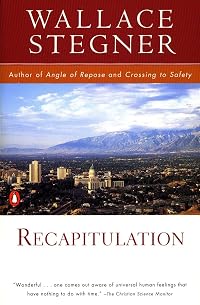
Bruce Mason returns to Salt Lake City, not for his aunt's funeral, but to encounter after forty-five years the place he fled in bitterness. A successful statesman and diplomat, Mason had buried his awkward and lonely childhood and sealed himself off from the thrills and torments of adolescence to become a figure who commanded international respect. But the realities of the present recede in the face of the ghosts of his past. As he makes the perfunctory arrangements for the funeral, we enter show more with him on an intensely personal and painful inner pilgrimage, meeting the father who darkened his childhood, the mother whose support was both redeeming and embarrassing, the friend who drew him into the respectable world of which he so craved to be a part, and the woman he nearly married. In this profoundly moving book, Stegner has drawn an intimate portrait of a man understanding how his life has been shaped by experiences seemingly remote and inconsequential. show lessTags
Recommendations



















Member Reviews
It's the ending of Stegner's books that always seems to have the biggest impact on me, and this one is no exception. I didn't entirely relate to the life that he was describing through most of the book, set as it was in the 1920s (I'm not that old!) in Salt Lake City (never been there, and I have no idea what Mormons are really like). However, the more contemporary man who is reflecting on this earlier life was definitely someone I could relate to. The book culminates in him burying his aunt (who he hardly knew) in a thunderstorm at the end of a hot day. He contemplates the fact that there will be no one to bury him. Looking back on life from near the end is becoming a bit of an obsession with me, and what better partner could I have show more than Wallace Stegner? show less
“What is an event? What constitutes an experience? Are we what we do, or do we do what we are?”
In this book, Wallace Stegner returns to one of his characters from The Big Rock Candy Mountain. Bruce is the sole survivor of the Mason family. It is 1977, and he is now a retired diplomat. He has returned to Salt Lake City, where he spent his teenage years, to arrange his aunt’s funeral. He looks back on his adolescence, coming to terms with his regrets and painful past. We meet his abusive father, loving mother, supportive friend, and ex-girlfriend he intended to marry.
“This territory contained and limited a history, personal and social, in which he had once made himself at home. This was his place—first his problem, then his show more oyster, and now the museum or diorama where early versions of him were preserved.”
It takes place over the course of two days, but the narrative floats back and forth between the present and the past (1920s to 1930s). The writing is exquisite. It is character-driven, quiet, and contemplative. It contains poignant scenes that are easy to bring to envision.
“He feels how the whole disorderly unchronological past hovers just beyond the curtain of the present, attaching itself to any scent, sound, touch, or random word that will let it get back in. As a stronger gust rattles through the tops of the cottonwoods below him, he stops dead still to listen. Memory is instantly tangible, a thrill of adrenalin in the blood, a prickle of gooseflesh on the arms.”
It is about memory. It is about the lucky breaks, choices, and decisions (or postponements) that determine a person’s path through life. While one can enjoy this book for the pure poetry of the writing, I think it is best to read it after The Big Rock Candy Mountain (one of my favorite books and highly recommended).
“He was beginning to discover that the memory had no calendar. Inside there, all was simultaneous. A sense of time had to be forcibly imposed on it.” show less
In this book, Wallace Stegner returns to one of his characters from The Big Rock Candy Mountain. Bruce is the sole survivor of the Mason family. It is 1977, and he is now a retired diplomat. He has returned to Salt Lake City, where he spent his teenage years, to arrange his aunt’s funeral. He looks back on his adolescence, coming to terms with his regrets and painful past. We meet his abusive father, loving mother, supportive friend, and ex-girlfriend he intended to marry.
“This territory contained and limited a history, personal and social, in which he had once made himself at home. This was his place—first his problem, then his show more oyster, and now the museum or diorama where early versions of him were preserved.”
It takes place over the course of two days, but the narrative floats back and forth between the present and the past (1920s to 1930s). The writing is exquisite. It is character-driven, quiet, and contemplative. It contains poignant scenes that are easy to bring to envision.
“He feels how the whole disorderly unchronological past hovers just beyond the curtain of the present, attaching itself to any scent, sound, touch, or random word that will let it get back in. As a stronger gust rattles through the tops of the cottonwoods below him, he stops dead still to listen. Memory is instantly tangible, a thrill of adrenalin in the blood, a prickle of gooseflesh on the arms.”
It is about memory. It is about the lucky breaks, choices, and decisions (or postponements) that determine a person’s path through life. While one can enjoy this book for the pure poetry of the writing, I think it is best to read it after The Big Rock Candy Mountain (one of my favorite books and highly recommended).
“He was beginning to discover that the memory had no calendar. Inside there, all was simultaneous. A sense of time had to be forcibly imposed on it.” show less
Mr. Stegner captures moments and places with such a deft hand - all the remembrances of Bruce Mason come alive in the pages of this novel. It is easy to get lost in the almost stream of consciousness that is the flashbacks of Bruce's past. Like the previous novel of Bruce's life, there is an uneasy depiction of Harry, his father. Though there is so much that Bruce despises and hates, there is yet a sliver of humanity and goodness that Bruce can't deny, try though he might. There is no real resolution in this book - no miraculous redemption or growth - and that is the tragedy of the story. Bruce might have made something of his life, but it has only ever been in response to what he didn't want, not a pursuit of what he did.
Summary: When former ambassador Bruce Mason returns to Salt Lake City for the funeral of an aunt, long-forgotten memories of his youth come back to challenge how he has remembered this formative part of his life.
Memory is a funny thing. What we remember and how we remember former events and people are far from static. They are written and re-written, deleted and restored throughout our lives.
Bruce Mason is a successful former ambassador, still on call for delicate negotiations. It is how he is known, and knows himself. His youth in Salt Lake City has faded to the far recesses of his memories and thoughts. That is, until an aunt for whom he is a guardian passes and he must return as the last living relative to bury her.
When he arrives, show more he is given a package saved by his aunt. In it are a letter sweater, letters and mementos from Nola, his one serious relationship with a girl. He spends much of his short stay remembering her–how they met, were drawn to each other, the times they were intimate, and the choice he made to delay marriage to pursue law school, sending her pretentious but unfeeling letters, led her to break off the relationship and take up with Bailey, his sexually seductive friend.
He also gets a call from Joe, the high school friend who drew him out of the isolation enforced by his bootlegger father. He worked for Joe’s dad, who wanted to bring him into the business. Joe brought him into a social network that drew him out of his shell. He keeps putting off calling him back, visiting the house late at night but never connecting.
Other memories flood back. The tragic life of his brother. His bootlegger father who he could never satisfy and who constrained his youth, both in not interfering with clients and keeping hush-hush his illegal activity. His long-suffering mother, dying of breast-cancer while his father makes another “business trip.”
He walks and drives the streets, so changed from his youth, bringing back other memories. The aunt’s funeral, concluding the book, ends with a thunderstorm, in some ways cleansing away all the memories as Mason prepares to depart. Or does it?
We are left wondering about the connection between the person he was and the pain he had known, and the person he has become. How is the man he is now related to the youth he remembers. We wonder why he doesn’t want to see his best friend, and why he had not been in touch with this friend after he left Salt Lake City.
And reading this makes one wonder how we have edited our own memories of the past. What have we stuffed in a closet? What self have we crafted and cultivated in our adult lives? Some, it seems, spend most of their lives wistfully looking back on the years of their youth as “the best years of our lives” while others try hard to forget them? It seems to me that Stegner’s novel, for the latter group, underscores the truth that “you can’t go home again” and if you do, you better be prepared for what you may find. show less
Memory is a funny thing. What we remember and how we remember former events and people are far from static. They are written and re-written, deleted and restored throughout our lives.
Bruce Mason is a successful former ambassador, still on call for delicate negotiations. It is how he is known, and knows himself. His youth in Salt Lake City has faded to the far recesses of his memories and thoughts. That is, until an aunt for whom he is a guardian passes and he must return as the last living relative to bury her.
When he arrives, show more he is given a package saved by his aunt. In it are a letter sweater, letters and mementos from Nola, his one serious relationship with a girl. He spends much of his short stay remembering her–how they met, were drawn to each other, the times they were intimate, and the choice he made to delay marriage to pursue law school, sending her pretentious but unfeeling letters, led her to break off the relationship and take up with Bailey, his sexually seductive friend.
He also gets a call from Joe, the high school friend who drew him out of the isolation enforced by his bootlegger father. He worked for Joe’s dad, who wanted to bring him into the business. Joe brought him into a social network that drew him out of his shell. He keeps putting off calling him back, visiting the house late at night but never connecting.
Other memories flood back. The tragic life of his brother. His bootlegger father who he could never satisfy and who constrained his youth, both in not interfering with clients and keeping hush-hush his illegal activity. His long-suffering mother, dying of breast-cancer while his father makes another “business trip.”
He walks and drives the streets, so changed from his youth, bringing back other memories. The aunt’s funeral, concluding the book, ends with a thunderstorm, in some ways cleansing away all the memories as Mason prepares to depart. Or does it?
We are left wondering about the connection between the person he was and the pain he had known, and the person he has become. How is the man he is now related to the youth he remembers. We wonder why he doesn’t want to see his best friend, and why he had not been in touch with this friend after he left Salt Lake City.
And reading this makes one wonder how we have edited our own memories of the past. What have we stuffed in a closet? What self have we crafted and cultivated in our adult lives? Some, it seems, spend most of their lives wistfully looking back on the years of their youth as “the best years of our lives” while others try hard to forget them? It seems to me that Stegner’s novel, for the latter group, underscores the truth that “you can’t go home again” and if you do, you better be prepared for what you may find. show less
Only an elite novelist could succeed in what Wallace Stegner accomplishes with “Recapitulation.” A sequel to “The Big Rock Candy Mountain,” this novel is more contemplative than it is event-based and episodic. The reader spends perhaps as much time dwelling in the mind of the protagonist Bruce Mason as he does witnessing the experiences of the teenage boy that Mason remembers himself being during his formative years. “Recapitulation” is about recollection of the past and coming to terms with repressed anger, humiliation, guilt, and loss. It is about closing the door to those destructive emotions caused by undesirable living circumstances and hostile parenting.
Bruce Mason returns to Salt Lake City forty-five years after the show more death of his father, Harry Mason, in 1932. It was in this important Mormon city that Bruce lived most of his teenage life. We learn that during his productive adult years he had worked for the State Department as a diplomat in the Middle East. He had once been an ambassador. The pretext for his return is to make arrangements for and attend the burial of his aunt -- Harry Mason’s aged, senile sister. He has no emotional attachment to her; he has hardly known her. He knows that his presence isn’t necessary. He could easily dictate the arrangements from afar. He has come back for other reasons not characteristic of his nature and not entirely understood.
His State Department colleagues viewed Mason as a man “indifferent to where he had been, interested only in where he was going.” He was famous for carrying with him a little black book “in which he jotted down appointments, reminders, obligations, shopping lists, which, as soon as each item was taken care of, he inked out so blackly that they could not be read.” Not until close to the end of the novel does the reader recognize that Mason has returned to Salt Lake City to ink out the hurtful recollections of his youth and the emotions that they had generated.
Walking the streets of the city, recognizing familiar sights, Mason imagines himself walking double. “Inside him … went a thin brown youth, volatile, impulsive, never at rest, not so much a person as a possibility, … subject to enthusiasm and elation and exuberance and occasional great black moods, stubborn, capable of scheming but often astonished by consequences, a boy vulnerable to wonder, awe, worship, devotion, hatred, guilt, vanity, shame, ambition, dreams, treachery; a boy avid for acceptance and distinction …” He would see himself later in the novel as having been “the quintessentially decultured American, born artless and without history into a world of opportunity” needing to “acquire in a single lifetime the intellectual sophistication and the cultural confidence that luckier ones absorb through their pores from earliest childhood, and unluckier ones never even miss.”
The root cause of his deprived childhood was his father. “The Big Rocky Candy Mountain” chronicles Harry Mason’s incessant quest to achieve self-gratification, within and outside the law. Ever restless, he has moved his family from various locations in the United States and Canada to pursue brighter opportunities when a normal family man would have settled for what he had modestly achieved. Harry is a hard man certain in his judgment, critical if not contemptuous of conflicting viewpoints. The family had come to Salt Lake City hoping to leave behind “the many failures, the self-deceptions, the schemes that never paid off, the jobs that never worked out, the hopeful starts that had always ended in excuses or flight.” Initially, Harry runs a speak-easy in his home. The family is forced to live isolated lives. “It was as if they lived not merely at the edge of the park but outside the boundaries of all human warmth, all love and companionship and neighborliness, all light and noise and activity, all law.” Later, Harry becomes a bootlegger. This requires that he take long trips to acquire his merchandise as well as trips within the city area to make deliveries to customers. The family continues to live outside the law and the community.
Bruce’s mother is Bruce’s lifeline during his early teenage years in Salt Lake City. “She had been brought up in a stiff Lutheran family, and without being at all religious, she had a yearning belief in honesty, law, fairness, respectability, and the need for self-respect. … She was a humble, decent woman … All it ever took to remind Bruce of how abused he was, was to catch sight of her face when she didn’t know anyone was looking.”
At school Bruce is a scrawny outcast. He seeks approval from his teachers by being excessively diligent. Fearful of the effects that his peers’ disapproval of him are having on Bruce, his mother forces him to join a tennis club, hoping that he might find some path toward social acceptance. Bruce is fortunate to meet at the club Joe Mulder, the star player of the high school tennis team. Joe takes Bruce under his wing, teaches him the game, and introduces him to his family. “Joe rescued his summer and perhaps his life. He taught Bruce not only tennis but confidence, and not only confidence but friendship.” Thereafter, Bruce spends most of his out-of-school time at the Mulder house. Joe’s father hires him to work at his nursery. Bruce discovers that his father is jealous. “Harry Mason resented the fact that his guarded laughterless, irritable house should be abandoned in favor on one rotten with respectability.”
Because of Joe Mulder, Bruce ventures into the hazardous realm of establishing relationships with girls. His great love becomes Nola Gordon, from whom he learns bittersweet lessons of life. She helps him feel, reflect, and grow. It is recollections of Nola and long-standing emotions about her that the adult Bruce additionally wishes to reconcile.
A master of subjective narration, Wallace Stegner is also a superb scene writer. He narrates characters’ tensions extremely well. One such scene has Bruce bringing Nola home to meet his mother, who is recovering from breast cancer surgery. Bruce and Nola had been at a high school prom party. Bruce had been feeling guilty that he had left his mother alone, his father having driven to California to restock his quantity of illicit liquor. The meeting between Nola and Bruce’s mother goes well, everybody is happy, but then they hear the sound of a car entering the garage. Harry Mason has returned.
Hoping to put his father on his best behavior, Bruce intercepts Harry outside the house. He tells him that they have a guest, his date. Harry criticizes Bruce for having left his mother alone. He enters the room pretending he does not know that Nola is present. “Bruce watches him go in and bend over and kiss the woman in the bed – and that is surely showing off … Except when he is showing off or clowning, he makes no such standard gesture of affection.” Bruce’s mother introduces him to Nola. “Bruce knows exactly how she is looking at his father, her eyes curious and interested … At once he feels compared and judged. Beside his father’s size and weight and shirt-sleeve dishevelment he feels like the overdressed figure on a wedding cake. … The old helpless feeling of inferiority oppresses him.” Harry gives a lengthy account of how his car had rolled over on a storm-damaged road. It evokes amazement and sympathy. Bruce announces that he and Nola need to go back to the party. “I have to be there to help close it up. I’m on the committee.” Harry answers with “an incredulous laugh. ‘If you’re on the committee.’” Nola interprets the response as kidding. Outside the house Bruce and Nola talk.
“… You and your father don’t get along.”
“Was it that obvious?”
“You won’t let him joke you.”
“His jokes aren’t jokes.”
Wallace Stegner reflects upon the subtleties of human existence. His insights resonate. Do we not look back upon our lives to reexamine the satisfactions and mistakes of our past? It is part of human nature to sum up, hopefully to cherish, not ink out, what we have experienced. show less
Bruce Mason returns to Salt Lake City forty-five years after the show more death of his father, Harry Mason, in 1932. It was in this important Mormon city that Bruce lived most of his teenage life. We learn that during his productive adult years he had worked for the State Department as a diplomat in the Middle East. He had once been an ambassador. The pretext for his return is to make arrangements for and attend the burial of his aunt -- Harry Mason’s aged, senile sister. He has no emotional attachment to her; he has hardly known her. He knows that his presence isn’t necessary. He could easily dictate the arrangements from afar. He has come back for other reasons not characteristic of his nature and not entirely understood.
His State Department colleagues viewed Mason as a man “indifferent to where he had been, interested only in where he was going.” He was famous for carrying with him a little black book “in which he jotted down appointments, reminders, obligations, shopping lists, which, as soon as each item was taken care of, he inked out so blackly that they could not be read.” Not until close to the end of the novel does the reader recognize that Mason has returned to Salt Lake City to ink out the hurtful recollections of his youth and the emotions that they had generated.
Walking the streets of the city, recognizing familiar sights, Mason imagines himself walking double. “Inside him … went a thin brown youth, volatile, impulsive, never at rest, not so much a person as a possibility, … subject to enthusiasm and elation and exuberance and occasional great black moods, stubborn, capable of scheming but often astonished by consequences, a boy vulnerable to wonder, awe, worship, devotion, hatred, guilt, vanity, shame, ambition, dreams, treachery; a boy avid for acceptance and distinction …” He would see himself later in the novel as having been “the quintessentially decultured American, born artless and without history into a world of opportunity” needing to “acquire in a single lifetime the intellectual sophistication and the cultural confidence that luckier ones absorb through their pores from earliest childhood, and unluckier ones never even miss.”
The root cause of his deprived childhood was his father. “The Big Rocky Candy Mountain” chronicles Harry Mason’s incessant quest to achieve self-gratification, within and outside the law. Ever restless, he has moved his family from various locations in the United States and Canada to pursue brighter opportunities when a normal family man would have settled for what he had modestly achieved. Harry is a hard man certain in his judgment, critical if not contemptuous of conflicting viewpoints. The family had come to Salt Lake City hoping to leave behind “the many failures, the self-deceptions, the schemes that never paid off, the jobs that never worked out, the hopeful starts that had always ended in excuses or flight.” Initially, Harry runs a speak-easy in his home. The family is forced to live isolated lives. “It was as if they lived not merely at the edge of the park but outside the boundaries of all human warmth, all love and companionship and neighborliness, all light and noise and activity, all law.” Later, Harry becomes a bootlegger. This requires that he take long trips to acquire his merchandise as well as trips within the city area to make deliveries to customers. The family continues to live outside the law and the community.
Bruce’s mother is Bruce’s lifeline during his early teenage years in Salt Lake City. “She had been brought up in a stiff Lutheran family, and without being at all religious, she had a yearning belief in honesty, law, fairness, respectability, and the need for self-respect. … She was a humble, decent woman … All it ever took to remind Bruce of how abused he was, was to catch sight of her face when she didn’t know anyone was looking.”
At school Bruce is a scrawny outcast. He seeks approval from his teachers by being excessively diligent. Fearful of the effects that his peers’ disapproval of him are having on Bruce, his mother forces him to join a tennis club, hoping that he might find some path toward social acceptance. Bruce is fortunate to meet at the club Joe Mulder, the star player of the high school tennis team. Joe takes Bruce under his wing, teaches him the game, and introduces him to his family. “Joe rescued his summer and perhaps his life. He taught Bruce not only tennis but confidence, and not only confidence but friendship.” Thereafter, Bruce spends most of his out-of-school time at the Mulder house. Joe’s father hires him to work at his nursery. Bruce discovers that his father is jealous. “Harry Mason resented the fact that his guarded laughterless, irritable house should be abandoned in favor on one rotten with respectability.”
Because of Joe Mulder, Bruce ventures into the hazardous realm of establishing relationships with girls. His great love becomes Nola Gordon, from whom he learns bittersweet lessons of life. She helps him feel, reflect, and grow. It is recollections of Nola and long-standing emotions about her that the adult Bruce additionally wishes to reconcile.
A master of subjective narration, Wallace Stegner is also a superb scene writer. He narrates characters’ tensions extremely well. One such scene has Bruce bringing Nola home to meet his mother, who is recovering from breast cancer surgery. Bruce and Nola had been at a high school prom party. Bruce had been feeling guilty that he had left his mother alone, his father having driven to California to restock his quantity of illicit liquor. The meeting between Nola and Bruce’s mother goes well, everybody is happy, but then they hear the sound of a car entering the garage. Harry Mason has returned.
Hoping to put his father on his best behavior, Bruce intercepts Harry outside the house. He tells him that they have a guest, his date. Harry criticizes Bruce for having left his mother alone. He enters the room pretending he does not know that Nola is present. “Bruce watches him go in and bend over and kiss the woman in the bed – and that is surely showing off … Except when he is showing off or clowning, he makes no such standard gesture of affection.” Bruce’s mother introduces him to Nola. “Bruce knows exactly how she is looking at his father, her eyes curious and interested … At once he feels compared and judged. Beside his father’s size and weight and shirt-sleeve dishevelment he feels like the overdressed figure on a wedding cake. … The old helpless feeling of inferiority oppresses him.” Harry gives a lengthy account of how his car had rolled over on a storm-damaged road. It evokes amazement and sympathy. Bruce announces that he and Nola need to go back to the party. “I have to be there to help close it up. I’m on the committee.” Harry answers with “an incredulous laugh. ‘If you’re on the committee.’” Nola interprets the response as kidding. Outside the house Bruce and Nola talk.
“… You and your father don’t get along.”
“Was it that obvious?”
“You won’t let him joke you.”
“His jokes aren’t jokes.”
Wallace Stegner reflects upon the subtleties of human existence. His insights resonate. Do we not look back upon our lives to reexamine the satisfactions and mistakes of our past? It is part of human nature to sum up, hopefully to cherish, not ink out, what we have experienced. show less
Nostalgia is a longing for once familiar circumstances or surroundings that are now remote or irrecoverable. It is this nostalgia that is the hallmark of Recapitulation, a novel by Wallace Stegner, that surrounds you while depicting events and details unfamiliar and raises the feeling of nostalgia for those once familiar circumstances of your own that are as remote as that small town in which you were raised and that you left long ago seldom to return. It is the return of Bruce Mason to his home town of Salt Lake City and the memories that the visit triggers that inhabit the pages of Stegner's fine novel with an aura of nostalgia that makes the reader feel that he is part of Mason's life as he grows and learns and experiences some of show more the common rites of every young man's journey through life. Except he is no longer a young man and his view is from a distant adulthood that gives the memories a melancholic tinge and, perhaps, a certain emphasis that shades the memories with the patina of time.
Stegner creates real believable characters in Mason's family, among which include a distant and imperious father and loving mother who is nearer in spirit to her studious son. Bruce is able to escape a life that is supported by a father whose profession is selling contraband (during prohibition) through hard work both in several jobs that provide financial independence and his studies that emancipate his mind. His trip to Salt Lake City, seemingly to perform the necessary rites surrounding his Aunt's funeral, becomes a traversal of a previous life. One filled with ghosts and none closer to his adult self, yet further in a sense, than himself as he ponders near the end of the book:
"He felt like the last remaining spectator at the last act of a play he had not understood." (p 274)
Through his beautiful prose and his ability to capture the essence of nostalgia and the characters that inhabited the play that was the life of Bruce Mason, Wallace Stegner creates a wonderful story and a great book. show less
Stegner creates real believable characters in Mason's family, among which include a distant and imperious father and loving mother who is nearer in spirit to her studious son. Bruce is able to escape a life that is supported by a father whose profession is selling contraband (during prohibition) through hard work both in several jobs that provide financial independence and his studies that emancipate his mind. His trip to Salt Lake City, seemingly to perform the necessary rites surrounding his Aunt's funeral, becomes a traversal of a previous life. One filled with ghosts and none closer to his adult self, yet further in a sense, than himself as he ponders near the end of the book:
"He felt like the last remaining spectator at the last act of a play he had not understood." (p 274)
Through his beautiful prose and his ability to capture the essence of nostalgia and the characters that inhabited the play that was the life of Bruce Mason, Wallace Stegner creates a wonderful story and a great book. show less
I don't expect Wallace Stegner novels to be plot heavy, but I thought this one suffered a little from its lack of direction. I didn't dislike it—parts of it were quite profound—but this is probably as close as a "meh" as Stegner gets for me.
Members
- Recently Added By
Author Information

93+ Works 20,861 Members
In 1972, Wallace Earle Stegner won a Pulitzer Prize for Angle of Repose (1971), a novel about a wheelchair-bound man's recreation of his New England grandmother's experience in a late nineteenth-century frontier town. Stegner was born on February 18, 1909 in Lake Mills, Iowa. He was an American novelist, short story writer, environmentalist, and show more historian; he has been called "The Dean of Western Writers". He also won the US National Book Award in 1977 for The Spectator Bird. Stegner grew up in Great Falls, Montana; Salt Lake City, Utah; and in the village of Eastend, Saskatchewan, which he wrote about in his autobiography Wolf Willow. Stegner taught at the University of Wisconsin and Harvard University. Eventually he settled at Stanford University, where he initiated the creative writing program. His students included Wendell Berry, and Sandra Day O'Connor. The Stegner Fellowship program at Stanford University is a two-year creative writing fellowship. The house Stegner lived in from age 7 to 12 in Eastend, Saskatchewan, Canada, was restored by the Eastend Arts Council in 1990 and established as a Residence for Artists; the Wallace Stegner Grant For The Arts offers a grant of $500 and free residency at the house for the month of October for published Canadian writers. Stegner died in Santa Fe, New Mexico, on April 13, 1993, from a car accident on March 28, 1993. (Bowker Author Biography) show less
Awards and Honors
Notable Lists
Series

Common Knowledge
- Original publication date
- 1979
Classifications
Statistics
- Members
- 341
- Popularity
- 92,771
- Reviews
- 11
- Rating
- (3.86)
- Languages
- English, French
- Media
- Paper, Audiobook, Ebook
- ISBNs
- 14
- ASINs
- 8