On This Page
Description
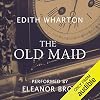
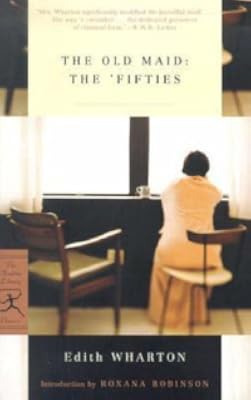
"Aunt" Charlotte gave up her daughter to allow the child an advantageous position in 19th-century New York society. Years later, on the eve of the girl's wedding, Charlotte's suppressed anguish surfaces.Tags
Recommendations
























Member Reviews
As I mentioned recently somewhere, the more I read Edith Wharton the more I love her, which is saying a lot since I was instantly smitten when I started reading my first book by her, The House of Mirth. I’ve read a couple of her novels and some of her shorter works since, but this is the first short story I've read of hers so far, and I can see why she was considered a master of the form. This story is included in the Old New York collection and I'm counting it as an individual work since I got it as an audiobook and am shamelessly making up the numbers to reach 150 books this year. Set in the 1850s, and I should specify in Edith Wharton's 50s, that is to say, the Old New York of the top of the upper crust of distinguished family show more names, splendour, old money and stifling social conventions, it tells the story of two cousins, one pretty and married, the other unwed and mother to an illegitimate little girl. Charlotte, who is about to be married into the same respectable family as her cousin Mrs. Delia Ralston, confides to her cousin and begs for her help, as she fears that her marriage will separate her from her secret love child Tina forever. Delia, whose first loyalty goes to her family by marriage, ensures that the wedding plans are cancelled to prevent the scandal from attaching itself to the too respectable Ralstons, though she promises to take care of Tina herself. Years go by, Delia is widowed, the cousins live together, and Tina is now a very attractive girl of marriageable age. Charlotte is known to the girl as 'Aunt Charlotte the old maid', and she affectionately considers Deliah to be her mother, and of course the secret of her real origins are unknown to her. The two older women have found this to be the best compromise, but there are unexpressed jealousies and resentments seething under the surface, which suddenly erupt when a young man starts making too frequent visits to the house. When Wharton wrote this story, it was already relegated to historical fiction, describing mores that had been long out of fashion, but the core of the tale is timeless, telling of love and passion and the mysteries of motherly love and the bonds that unify women. I couldn't help but shed a sentimental tear or two at the end, and perhaps it is a sentimental story, but they should all be so well told. show less
As her wedding day approaches, Charlotte Lowell reveals a long-hidden secret to her cousin, Delia Ralston: the foundling that she has been visiting as a charity project is actually her own daughter, born as the result of a brief affair with one of Delia's former beaux. (Don't worry--no spoilers; this is something you learn in the first few chapters, and I promise to give nothing else away.) The reactions, decisions, and solutions that follow will deeply affect the lives of the two women, as well as that of the little girl, Tina.
As so often, Wharton sets her story in upper crust New York society at the end of the nineteenth century, a world propelled by money, property, lineage, and rigid rules of etiquette. But the most interesting show more aspect of The Old Maid is the shifting relationship between the cousins, Delia and "Chatty" (Charlotte). Wharton delves deep into their psychology, exploring their fears, resentments, and motivations over the course of twenty years, all of them revolving around the often conflicting values of maternal love and family loyalties. This is, as another reviewer noted, a sentimental story--but not in a maudlin, melodramatic way. I consider it a fine addition to my Wharton shelf. show less
As so often, Wharton sets her story in upper crust New York society at the end of the nineteenth century, a world propelled by money, property, lineage, and rigid rules of etiquette. But the most interesting show more aspect of The Old Maid is the shifting relationship between the cousins, Delia and "Chatty" (Charlotte). Wharton delves deep into their psychology, exploring their fears, resentments, and motivations over the course of twenty years, all of them revolving around the often conflicting values of maternal love and family loyalties. This is, as another reviewer noted, a sentimental story--but not in a maudlin, melodramatic way. I consider it a fine addition to my Wharton shelf. show less
This novella studies two women, Delia Ralston and her cousin Charlotte Lovell, in the 19th century. Delia is content in her marriage, if not wildly in love, despite lingering regrets about a young man who did not have the money to marry her or the desire for a staid profession in New York City. Charlotte is about to be married, after an illness that took her away for awhile and left her somewhat changed. Then Charlotte comes to Delia and confesses that one of the poor children to whom she has been providing assistance is in fact her own daughter; she is doubting her ability to marry because her fiance wants her to give up the children. Delia's handling of the situation then and twenty years later reveals her character and the nature of show more her society, with some pointed commentary on how women enforced the double standard.
While it's not as good as Ethan Frome, The Old Maid is of a similar length, probably even shorter, and really EF is a hard act to follow. Edith Wharton tells the simple story beautifully. I didn't feel like the story was predictable, and I'm looking forward to reading more of Wharton's tetralogy. show less
While it's not as good as Ethan Frome, The Old Maid is of a similar length, probably even shorter, and really EF is a hard act to follow. Edith Wharton tells the simple story beautifully. I didn't feel like the story was predictable, and I'm looking forward to reading more of Wharton's tetralogy. show less
It was grueling to read this novella. Set in the upper crust of society in New York in the late 1800s, two cousins end up in a convoluted relationship. Secrets and sacrifices emotional suffering which is described exquisitely by the author. Once again Wharton's wonderful writing illuminates the status of women socially and psychologically. Poignant and moving, this is now a favorite of mine.
A rather daring subject for the time but it became a more predictable story than I expected. It seemed a contest of wills between two women I didn't much care about. Along with some very intricate descriptions of furniture and clothing that made me think that was important but I don't really know.
Beautifully written. Another age.
beautiful writing, sad story
Members
- Recently Added By
Lists

Historical Fiction
889 works; 91 members

Trinity College Booklist (1951): Class Ten, English Literature
358 works; 5 members

Books Read in 2015
3,299 works; 129 members

Unmarried women
66 works; 6 members

Las mejores obras literarias leídas en 2023 -- Magistrales (R. D.)
25 works; 1 member

Books Read in 2026
1,950 works; 66 members
Author Information

378+ Works 63,659 Members
Edith Wharton was a woman of extreme contrasts; brought up to be a leisured aristocrat, she was also dedicated to her career as a writer. She wrote novels of manners about the old New York society from which she came, but her attitude was consistently critical. Her irony and her satiric touches, as well as her insight into human character, show more continue to appeal to readers today. As a child, Wharton found refuge from the demands of her mother's social world in her father's library and in making up stories. Her marriage at age 23 to Edward ("Teddy") Wharton seemed to confirm her place in the conventional role of wealthy society woman, but she became increasingly dissatisfied with the "mundanities" of her marriage and turned to writing, which drew her into an intellectual community and strengthened her sense of self. After publishing two collections of short stories, The Greater Inclination (1899) and Crucial Instances (1901), she wrote her first novel, The Valley of Decision (1902), a long, historical romance set in eighteenth-century Italy. Her next work, the immensely popular The House of Mirth (1905), was a scathing criticism of her own "frivolous" New York society and its capacity to destroy her heroine, the beautiful Lily Bart. As Wharton became more established as a successful writer, Teddy's mental health declined and their marriage deteriorated. In 1907 she left America altogether and settled in Paris, where she wrote some of her most memorable stories of harsh New England rural life---Ethan Frome (1911) and Summer (1917)---as well as The Reef (1912), which is set in France. All describe characters forced to make moral choices in which the rights of individuals are pitted against their responsibilities to others. She also completed her most biting satire, The Custom of the Country (1913), the story of Undine Spragg's climb, marriage by marriage, from a midwestern town to New York to a French chateau. During World War I, Wharton dedicated herself to the war effort and was honored by the French government for her work with Belgian refugees. After the war, the world Wharton had known was gone. Even her Pulitzer Prize-winning novel, The Age of Innocence (1920), a story set in old New York, could not recapture the former time. Although the new age welcomed her---Wharton was both a critical and popular success, honored by Yale University and elected to The National Institute of Arts and Letters---her later novels show her struggling to come to terms with a new era. In The Writing of Fiction (1925), Wharton acknowledged her debt to her friend Henry James, whose writings share with hers the descriptions of fine distinctions within a social class and the individual's burdens of making proper moral decisions. R.W.B. Lewis's biography of Wharton, published in 1975, along with a wealth of new biographical material, inspired an extensive reevaluation of Wharton. Feminist readings and reactions to them have focused renewed attention on her as a woman and as an artist. Although many of her books have recently been reprinted, there is still no complete collected edition of her work. (Bowker Author Biography) show less
Series

Belongs to Publisher Series
Work Relationships
Is contained in
Has the adaptation
Common Knowledge
- Original title
- The old maid
- Original publication date
- 1924
- People/Characters*
- Delia Ralston; Charlotte Lovell
- Important places*
- New York, USA
- Related movies*
- The Old Maid (1939)
*Some information comes from Common Knowledge in other languages. Click "Edit" for more information.
Classifications
Statistics
- Members
- 176
- Popularity
- 186,088
- Reviews
- 8
- Rating
- (4.06)
- Languages
- English, Italian, Spanish
- Media
- Paper, Audiobook, Ebook
- ISBNs
- 22
- UPCs
- 1
- ASINs
- 18