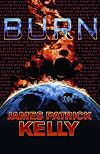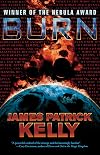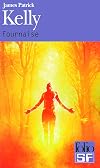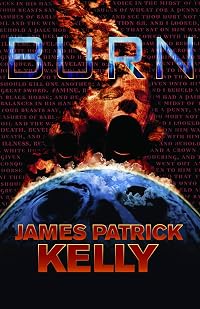
Burn
by James Patrick Kelly
On This Page
Description
The tiny planet of Morobe Pea has a new owner and he is trying to make the planet a paradise named Walden, after the famous Thoreau community. But, the previous residents have other ideas about how to run the place and are willing to set fire to themselves in order to obtain their goals.Tags
Recommendations














Member Reviews
Listened to an audio version of this. What a great piece of work, a nuanced, thoughtful tale in conversation with Thoreau about his ideas and attitudes in a setting where they seem utterly out of place if not superfluous, and yet they represent something deep and important to the human psyche.
On a planet being remade as a preserve of humanity and a replica of some version of pre-industrial Earth, whose settlers are in conflict with earlier settlers - the ones that destroyed the original eco-system of the plabet but now object to it being forested by setting the forests on fire, often in fiery acts of sucicde. While recovering in a high-tech hospital after surviving such and conflagration, our hero, bored randomly contacts people on the show more commuication system, bringing to his planet and his home village an unusual but extremely important personage who threatens to upset everything.
Kelly has a facility for making ordinary scenes of conversation and interaction utterly fascinating, no matter how apparently banal, such that we come to admire and like the settlers, even in the face of the highly engineered nature of their archaic existence, their self-selected ignorance of the rest of the universe and, ultimately, their tragedy. At the end of the day, they choose this, and give their consent for it to go on. Really, really excellent sci fi. show less
On a planet being remade as a preserve of humanity and a replica of some version of pre-industrial Earth, whose settlers are in conflict with earlier settlers - the ones that destroyed the original eco-system of the plabet but now object to it being forested by setting the forests on fire, often in fiery acts of sucicde. While recovering in a high-tech hospital after surviving such and conflagration, our hero, bored randomly contacts people on the show more commuication system, bringing to his planet and his home village an unusual but extremely important personage who threatens to upset everything.
Kelly has a facility for making ordinary scenes of conversation and interaction utterly fascinating, no matter how apparently banal, such that we come to admire and like the settlers, even in the face of the highly engineered nature of their archaic existence, their self-selected ignorance of the rest of the universe and, ultimately, their tragedy. At the end of the day, they choose this, and give their consent for it to go on. Really, really excellent sci fi. show less
James Patrick Kelly has given us a tightly written novella centered on ecological warfare and the clash of cultures. I happen to read it the same week I was reading "Hippie Food" by Jonathan Kauffman and I found some resonance between them. I'm from Pennsylvania so William Penn is scooting around here somewhere too, and the Amish.
Spur's grandparents were back-to-the-landers, (lander as in hippies not as in spacecraft). Somewhere around 2400, Chairman Jack Winter bought a planet, named it Walden, and invited homesteaders to join him in his quest to preserve traditional humankind by which he mostly meant not bio-enhanced or telepathic. Chairman Winter and successive waves of settlers arrived on Walden, which already had the remnants of show more the original human settlers, nicknamed pukpuks, and went about setting up an agrarian society that turned its back on the ways of the outer worlds.
Chairman Winter has untold wealth (and an extraordinary long life, it seems) and has built railroads and continent-wide communications networks to support his colony. Yet, as in all communities everywhere, children and grandchildren are bitter about the choices their families made that compel them now to be farmers. The pukpuks too, are angry at the encroachment of the settlers on what they consider to be their land. Chairman Winter has declared that the world should be forest and, in one of those unethical things that dictators do, broke his own rules and planted enhanced trees to cover the planet and strangle the pukpuks. (This is only a novella so Mr. Kelly doesn't have time to point to these new trees as invasive species that will cause big trouble to farmers down the line.)
The pukpuks retaliate, supported by sympathizers from the communities, and start setting massive forest fires. The novella opens with Spur in the hospital recovering from burns he received as a firefighter. He's being treated by a medbot operated by a doctor on a far planet – another of Chairman Winter's compromises.
Part of it was my background but most of it is Mr. Kelly's tight controlled writing. I was quickly caught up in Spur's story and the way it unfolds. I think that you will enjoy it too and recommend you give it a try.
I received a review copy of "Burn" by James Patrick Kelly (Tachyon) through NetGalley.com. It was originally published by Tachyon in 2005, winning the Nebula award for Best Novella in 2006. It has been reissued by Tachyon in June 2018 with a new afterword by the author. show less
Spur's grandparents were back-to-the-landers, (lander as in hippies not as in spacecraft). Somewhere around 2400, Chairman Jack Winter bought a planet, named it Walden, and invited homesteaders to join him in his quest to preserve traditional humankind by which he mostly meant not bio-enhanced or telepathic. Chairman Winter and successive waves of settlers arrived on Walden, which already had the remnants of show more the original human settlers, nicknamed pukpuks, and went about setting up an agrarian society that turned its back on the ways of the outer worlds.
Chairman Winter has untold wealth (and an extraordinary long life, it seems) and has built railroads and continent-wide communications networks to support his colony. Yet, as in all communities everywhere, children and grandchildren are bitter about the choices their families made that compel them now to be farmers. The pukpuks too, are angry at the encroachment of the settlers on what they consider to be their land. Chairman Winter has declared that the world should be forest and, in one of those unethical things that dictators do, broke his own rules and planted enhanced trees to cover the planet and strangle the pukpuks. (This is only a novella so Mr. Kelly doesn't have time to point to these new trees as invasive species that will cause big trouble to farmers down the line.)
The pukpuks retaliate, supported by sympathizers from the communities, and start setting massive forest fires. The novella opens with Spur in the hospital recovering from burns he received as a firefighter. He's being treated by a medbot operated by a doctor on a far planet – another of Chairman Winter's compromises.
Part of it was my background but most of it is Mr. Kelly's tight controlled writing. I was quickly caught up in Spur's story and the way it unfolds. I think that you will enjoy it too and recommend you give it a try.
I received a review copy of "Burn" by James Patrick Kelly (Tachyon) through NetGalley.com. It was originally published by Tachyon in 2005, winning the Nebula award for Best Novella in 2006. It has been reissued by Tachyon in June 2018 with a new afterword by the author. show less
Burn is a tense novella that manages to stay one step ahead of the fireline of literary collapse, right through the end. Prosper "Spur" Gregory Leung is a firefighter in the Transcendental State of Walden, a planet that has rejected most technology in favor of a historical human lifestyle and the virtue of simplicity. Walden is locked in a guerrilla struggle with the puk puks, the previous inhabitants of the planet who still want automation. The battlefield are the immense planetary forests, genetically altered fast spreading trees the Waldenites are using to strangle the puk puks, and the arson fires the puk puks use to fight back.
Spur starts the novel recovering in a hospital from severe burns and the psychological trauma of letting show more his wife's brother and his best friend Vic die as a puk puk traitor. Random calls connect him with The Gregory of L'ung, a galactic child with the power to make luck, among other arcane skills. Now Spur has to go home and confront a mass of curdled small village politics while playing chaperone to an interstellar potentate.
I really enjoyed the tense small-town interactions of people who have known each other from birth, and the way Spur parries their keen Yankee questioning. The final bit, with a sudden fire threatening the town, is suitably dense with firefighting jargon. I don't think Burn quite properly engaged with the central conceit of technology changing the way people live, or rather Kelly couldn't mesh his ambitions with the words on the page, but what would have sunk a novel is brushed past in the shorter form. show less
Spur starts the novel recovering in a hospital from severe burns and the psychological trauma of letting show more his wife's brother and his best friend Vic die as a puk puk traitor. Random calls connect him with The Gregory of L'ung, a galactic child with the power to make luck, among other arcane skills. Now Spur has to go home and confront a mass of curdled small village politics while playing chaperone to an interstellar potentate.
I really enjoyed the tense small-town interactions of people who have known each other from birth, and the way Spur parries their keen Yankee questioning. The final bit, with a sudden fire threatening the town, is suitably dense with firefighting jargon. I don't think Burn quite properly engaged with the central conceit of technology changing the way people live, or rather Kelly couldn't mesh his ambitions with the words on the page, but what would have sunk a novel is brushed past in the shorter form. show less
Burn has the rare merit of extrapolating contemporary issues, including terrorism, ecological fanaticism and the ethics of interfering with other cultures, into the far future, without simply mapping them onto a familiar political template. The reader can’t identify any of the characters or factions with the present day Right and Left, and anyone determined to take sides will not be able to rely on the criteria that he uses to choose between George W. Bush and al-Qa’eda. Transcending current preoccupations in this way is a greater imaginative feat than devising a dozen extraterrestrial species.
The story’s setting, the ostentatiously retrograde, anti-technological planet of “Walden”, is neither a paradise nor a dystopia. Its show more own citizens tend to uncritical faith in its superiority to the rest of the human-inhabited galaxy. In turn, it is regarded with contempt by most of mankind. The protagonist falls uneasily in between. He has glimpsed both the wider galactic society and the deep alienation felt by some of his fellow Waldenites, but those aperçus on his homeland’s faults don’t persuade him that it deserves the destruction at the hands of the “pukpuk martyrs” who aim to burn down its vast, artificially stimulated woodlands. His inner conflict is palliated at the end, but not resolved. A moral of the story is that, for some conflicts, no resolution is possible.
There is one other aspect that I liked: Prefacing each chapter is a quotation from Henry David Thoreau, whose muzzy philosophy is, of course, the inspiration for “Walden”. While it may not have been the author’s intention, these excerpts make plain what a foolish, self-centered man – I would call him “evil”, but he wasn’t self-aware enough for that – the supposed sage actually was. Any work that does that is worthy of its Hugo Award nomination. show less
The story’s setting, the ostentatiously retrograde, anti-technological planet of “Walden”, is neither a paradise nor a dystopia. Its show more own citizens tend to uncritical faith in its superiority to the rest of the human-inhabited galaxy. In turn, it is regarded with contempt by most of mankind. The protagonist falls uneasily in between. He has glimpsed both the wider galactic society and the deep alienation felt by some of his fellow Waldenites, but those aperçus on his homeland’s faults don’t persuade him that it deserves the destruction at the hands of the “pukpuk martyrs” who aim to burn down its vast, artificially stimulated woodlands. His inner conflict is palliated at the end, but not resolved. A moral of the story is that, for some conflicts, no resolution is possible.
There is one other aspect that I liked: Prefacing each chapter is a quotation from Henry David Thoreau, whose muzzy philosophy is, of course, the inspiration for “Walden”. While it may not have been the author’s intention, these excerpts make plain what a foolish, self-centered man – I would call him “evil”, but he wasn’t self-aware enough for that – the supposed sage actually was. Any work that does that is worthy of its Hugo Award nomination. show less
I really liked the characters and the action and the setting and the story. But putting it all together I wasn’t overwhelmed. My mom used to serve casseroles consisting of leftovers from previous days all mixed together. When we protested, she would exclaim "But you like everything I put in this earlier!" This is almost like that. I like all the pieces, but am very middle of the road about the combination.
Full review: http://reading.kingrat.biz/reviews/burn-james-patrick-kelly
Full review: http://reading.kingrat.biz/reviews/burn-james-patrick-kelly
“Burn” is a story rich in metaphor and symbolism. The language is not ostentatiously ornate, but it is certainly beautiful. As a novella it focuses closely on a single person, and in the end on a single relationship. Many things are alluded to, implied, talked around. In short, it’s not your everyday science fiction novella.
Prosper Gregory Leung is a member of the Walden colony. Established by a rich idealist, the colony attempts to achieve perfection of simplicity. The homes are simple, most people live in small villages, there are no planes. There is only minimal television and wireless communication, and no connection to the wider future internet of colonized worlds.
Except in the hospital where Prosper is recovering from wounds show more received fighting a forest fire. Previously, Walden had been a more normal colony. That colony had failed and most people had moved away or been bought out by Walden’s founder. Some people refused to leave. When the founder, for ill-explained reasons, tries to cover the entire planet with forests, depriving the previous colonists of their previous habitat, they retaliate by setting forest fires.
In searching the planetary internet randomly for people with his own name, Prosper makes contact with an extraordinarily odd child whose back story is never really given. He has something to do with luck. He, a bunch of his young friends, and their minder suddenly appear on Walden - possibly to let the child make friends with Prosper, possibly for some hidden agenda.
The focus of all of this is Prosper, particularly his relationship with his soon-to-be-ex-wife. Their relationship had been disintegrating, and her brother died in the same fire that almost killed Prosper. In the end all the powerful imagery of uncontrolled fire is harnessed in a swirl of passion and self-destruction centered on her. As such, there are some very moving passages in this story.
However, as a story it has some issues. There are characters that exist not as people in their own right but only as metaphors. Some things are too elliptical. Where the author might have delved into the politics of colonialism, he deliberately muddied the waters and left it unexamined. The ending left me particularly disappointed, with the plot wrap-up seeming to undercut one of his most powerful images woven only pages before. I appreciated what Kelley was going for, but his overarching vision didn’t seem to seamlessly unite with the plot foundations that science fiction stories need to have. A worthy effort, but a flawed one. show less
Prosper Gregory Leung is a member of the Walden colony. Established by a rich idealist, the colony attempts to achieve perfection of simplicity. The homes are simple, most people live in small villages, there are no planes. There is only minimal television and wireless communication, and no connection to the wider future internet of colonized worlds.
Except in the hospital where Prosper is recovering from wounds show more received fighting a forest fire. Previously, Walden had been a more normal colony. That colony had failed and most people had moved away or been bought out by Walden’s founder. Some people refused to leave. When the founder, for ill-explained reasons, tries to cover the entire planet with forests, depriving the previous colonists of their previous habitat, they retaliate by setting forest fires.
In searching the planetary internet randomly for people with his own name, Prosper makes contact with an extraordinarily odd child whose back story is never really given. He has something to do with luck. He, a bunch of his young friends, and their minder suddenly appear on Walden - possibly to let the child make friends with Prosper, possibly for some hidden agenda.
The focus of all of this is Prosper, particularly his relationship with his soon-to-be-ex-wife. Their relationship had been disintegrating, and her brother died in the same fire that almost killed Prosper. In the end all the powerful imagery of uncontrolled fire is harnessed in a swirl of passion and self-destruction centered on her. As such, there are some very moving passages in this story.
However, as a story it has some issues. There are characters that exist not as people in their own right but only as metaphors. Some things are too elliptical. Where the author might have delved into the politics of colonialism, he deliberately muddied the waters and left it unexamined. The ending left me particularly disappointed, with the plot wrap-up seeming to undercut one of his most powerful images woven only pages before. I appreciated what Kelley was going for, but his overarching vision didn’t seem to seamlessly unite with the plot foundations that science fiction stories need to have. A worthy effort, but a flawed one. show less
I was perfectly willing to suspend judgment on this book... and I did, refusing to look up any reviews until long after I was thinking about what I read.
I wanted to like this a lot more than I did. I don't mind pastoral-type SF all that much, but it has to be rich in the internal life and lots of great ideas being bandied about. The fact this was a reaction to Walden, a perfect Luddite if there ever was one, was also fine by me. I had problems with the guy, too, but not all the way. I like nature, I like technology. I do not want to simplify my life so much that I lose out on the necessities. At all. James Patrick Kelly basically makes the same argument in this novella.
Firefighting on this regressive world. If only there hadn't been show more such restrictions, more could have been saved.
I don't think there's any kind of counter-argument. Not realistically. Or at least, not in this century.
So what do we have to fall back on within the story? Characterization, a little worldbuilding, a kinda meandering live-your-life-tale that fits more in FAVOR of Walden than the counterargument, and then the big action and the reveals after the fire.
Of course, that's where I'm most interested. The many worlds and post-near-singularity galactic civilization. You know, uploaded minds. That kind of thing.
As a mirror to all that happened on the planet before, it kinda hammers a nail in the coffin.
There are some open-ended questions that make me squirm, too, regarding his wife, but that kinda detracts from the rest of the novella rather than adding a new dimension. I did kinda like the MC before that. A memory wipe is a total PKD issue and it might have been better explored in much greater detail throughout the tale or left out of the end entirely. It just raises way too many questions and concerns regarding all these Walden people.
Such as the idea that they might all be in a zoo.
Maybe that's the point. I WANTED to like this more, but the ideas are kinda all over the place and I'd like to come away from this story chewing on a single good idea rather than a number of unsatisfyingly explored ones. show less
I wanted to like this a lot more than I did. I don't mind pastoral-type SF all that much, but it has to be rich in the internal life and lots of great ideas being bandied about. The fact this was a reaction to Walden, a perfect Luddite if there ever was one, was also fine by me. I had problems with the guy, too, but not all the way. I like nature, I like technology. I do not want to simplify my life so much that I lose out on the necessities. At all. James Patrick Kelly basically makes the same argument in this novella.
Firefighting on this regressive world. If only there hadn't been show more such restrictions, more could have been saved.
I don't think there's any kind of counter-argument. Not realistically. Or at least, not in this century.
So what do we have to fall back on within the story? Characterization, a little worldbuilding, a kinda meandering live-your-life-tale that fits more in FAVOR of Walden than the counterargument, and then the big action and the reveals after the fire.
Of course, that's where I'm most interested. The many worlds and post-near-singularity galactic civilization. You know, uploaded minds. That kind of thing.
As a mirror to all that happened on the planet before, it kinda hammers a nail in the coffin.
There are some open-ended questions that make me squirm, too, regarding his wife, but that kinda detracts from the rest of the novella rather than adding a new dimension. I did kinda like the MC before that. A memory wipe is a total PKD issue and it might have been better explored in much greater detail throughout the tale or left out of the end entirely. It just raises way too many questions and concerns regarding all these Walden people.
Such as the idea that they might all be in a zoo.
Maybe that's the point. I WANTED to like this more, but the ideas are kinda all over the place and I'd like to come away from this story chewing on a single good idea rather than a number of unsatisfyingly explored ones. show less
Members
- Recently Added By
Lists

Books Read in 2018
4,360 works; 110 members
Author Information

110+ Works 2,424 Members
James Patrick Kelly is on the faculty of the Stonecoast Creative Writing MFA Program at the University of Southern Maine, and is the Vice Chair of the Clarion Foundation, which oversees the Clarion Science Fiction Workshop.
Some Editions
Awards and Honors
Awards
Series
Belongs to Publisher Series
Gallimard, Folio SF (351)
Work Relationships
Common Knowledge
- Canonical title*
- Fournaise
- Original title
- Burn
- Original publication date
- 2005
- People/Characters
- Prosper Gregory Leung; Capability Roger Leung
- Important places
- Walden (planet)
- Epigraph
- We might try our lives by a thousand simple tests; as, for instance, that the same sun which ripens my beans illumines at once a system of earths like ours. If I had remembered this it would have prevented some mistakes. This... (show all) was not the light in which I hoed them. The stars are the apexes of what wonder-ful triangles! What distant and different beings in the various mansions of the universe are contemplating the same one at the same moment! Nature and human life are as various as our several constitutions. Who shall say what prospect life offers to another? – Walden
- Dedication
- For H. D. T.
a timeless visionary
and
for my children,
Maura, Jamie, and John - First words*
- Spur se trouvait une fois de plus en plein cauchemar.
- Last words*
- (Click to show. Warning: May contain spoilers.)« Je veux rentrer chez moi », dit-il, finalement.
- Blurbers
- Link, Kelly; Gunn, Eileen; Willis, Connie; Doctorow, Cory; Kessel, John
- Original language*
- Anglais (Etats-Unis) (Etats-Unis)
*Some information comes from Common Knowledge in other languages. Click "Edit" for more information.
Classifications
Statistics
- Members
- 185
- Popularity
- 176,527
- Reviews
- 12
- Rating
- (3.46)
- Languages
- English, French, Italian
- Media
- Paper, Ebook
- ISBNs
- 7
- ASINs
- 2